
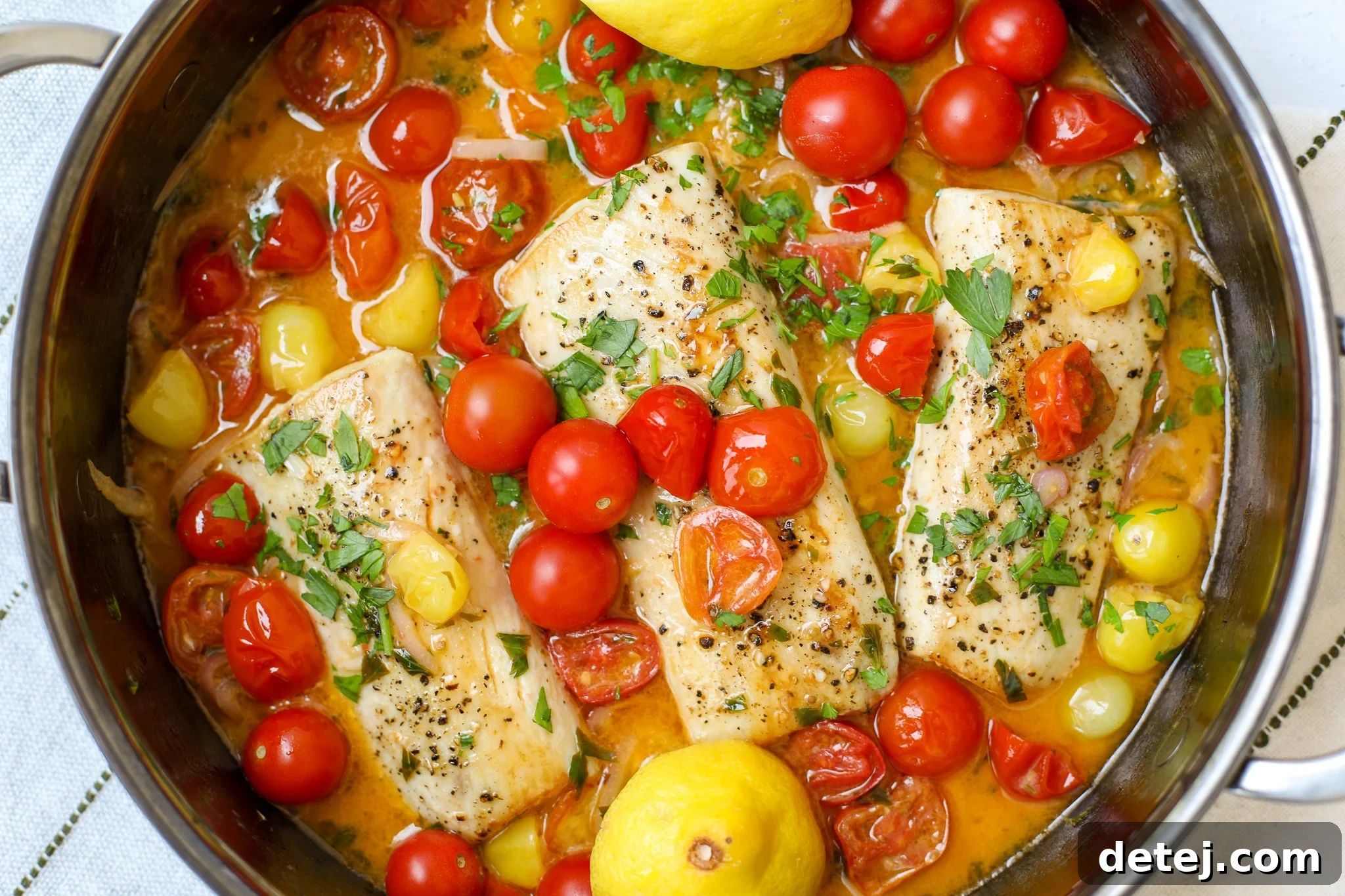
Savor the Flavor: Easy Lemon Butter Mahi Mahi with Cherry Tomatoes
Prepare to elevate your weeknight dining with a truly spectacular dish: this Lemon Butter Mahi Mahi with Cherry Tomatoes. Simple yet incredibly flavorful, this recipe might just become your new favorite way to enjoy fish. Imagine flaky, tender mahi mahi infused with bright lemon, rich butter, savory garlic, and sweet blistered cherry tomatoes, all cooked to perfection in a single pan. Best of all, this restaurant-quality meal comes together in under 30 minutes, making cleanup a breeze and giving you more time to savor every bite.
When the craving for an elegant, flavorful meal strikes, but time is short, this skillet Mahi Mahi recipe is my go-to. Much like Pan Seared Halibut with Lemon Butter or Lemon Butter Baked Cod, it celebrates vibrant, citrus-forward flavors and boasts a lightning-fast cooking time. This versatility makes it ideal for a quick family dinner or impressive enough for entertaining guests any night of the week.
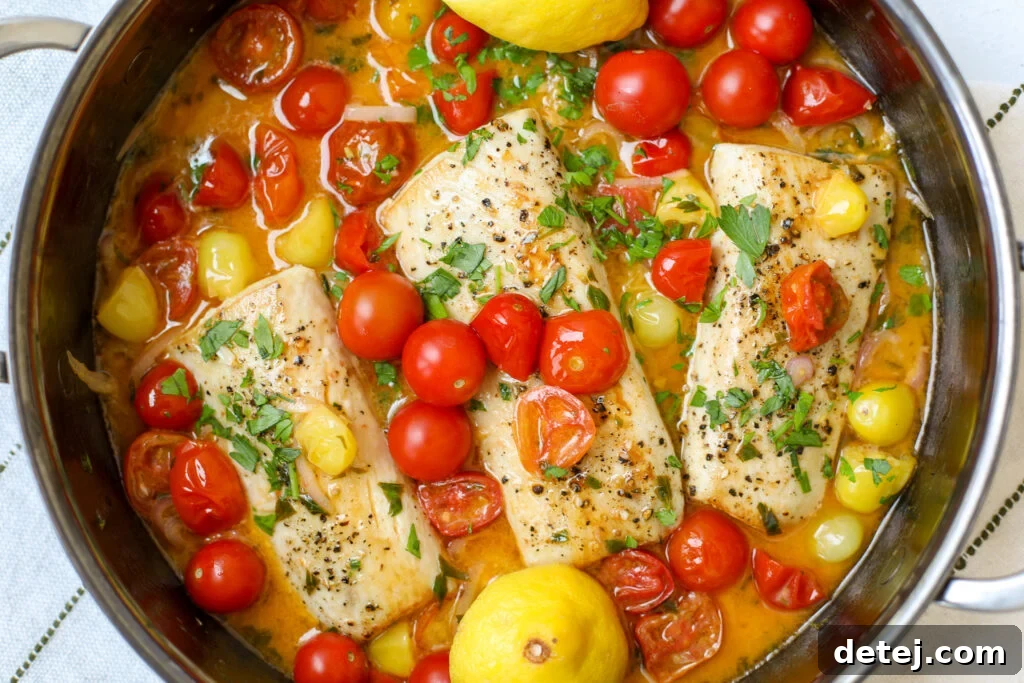
Contrary to popular belief, cooking fish at home doesn’t have to be intimidating. Mahi mahi, in particular, is exceptionally easy to prepare, requiring only a quick sear on each side. Paired with a simple side dish like a light pasta, fluffy couscous, or perfectly roasted vegetables, you can have a wholesome, delicious dinner on the table in what feels like no time at all. This recipe offers a flexible serving size, yielding four lighter portions or two generous, hearty servings. If you’re hosting a dinner party or simply have a larger appetite, consider doubling the recipe to ensure everyone gets enough of this delightful dish!
What is Mahi Mahi?
Mahi Mahi, also charmingly known as dolphinfish (though it has no relation to the mammal dolphin family), is a widely celebrated and delectable white fish. It’s prized for its mild, slightly sweet flavor profile, which makes it incredibly versatile and appealing even to those who aren’t typically big fish eaters. Its flesh is firm and meaty, yet cooks up to a beautifully moist and tender, flaky texture that is truly a joy to eat.
Unlike oilier fish like salmon, mahi mahi is a lean protein, meaning it’s crucial not to overcook it. Its delicate nature demands a swift cooking process – typically just 3-4 minutes per side is all it takes to achieve perfection, whether you’re grilling, broiling, or searing it. When cooked correctly, mahi mahi maintains its succulent juices and offers a satisfying bite without any chewiness. Its ability to absorb flavors from marinades and sauces makes it an excellent canvas for vibrant ingredients like the lemon and butter in this recipe, allowing these elements to shine without being overpowered. This makes it a fantastic choice for home cooks looking to experiment with fresh seafood.
Why You’ll Love This Lemon Butter Mahi Mahi Recipe
This Lemon Butter Mahi Mahi isn’t just another fish recipe; it’s a culinary experience designed for maximum enjoyment with minimal effort. Here’s why you’ll find yourself coming back to it again and again:
- Effortlessly Delicious: Achieve restaurant-quality taste and presentation from the comfort of your own kitchen, no special skills required.
- Lightning Fast: From prep to plate, this meal is ready in under 30 minutes, making it perfect for busy weeknights when you need a quick yet satisfying dinner.
- One-Pan Wonder: Say goodbye to mountains of dishes! Everything cooks in a single skillet, simplifying cleanup and letting you relax after your meal.
- Bright & Balanced Flavors: The zesty lemon cuts through the richness of the butter, while sweet cherry tomatoes and aromatic garlic and shallots create a harmonious, irresistible sauce.
- Healthy & Wholesome: Mahi mahi is a lean source of protein and omega-3s, making this dish a nutritious choice that doesn’t compromise on flavor.
- Incredibly Versatile: Easily adaptable to your preferences. Pair it with almost any side, from hearty pastas to light salads, for a meal tailored to your mood.
Key Ingredients for Flavorful Mahi Mahi
Each ingredient in this recipe plays a vital role in building the incredible depth of flavor that makes this Lemon Butter Mahi Mahi so special. Here’s a closer look at what you’ll need and why:
- Mahi Mahi Fillets: I recommend using two 7-ounce boneless, skinless fillets, totaling about 14 ounces. When selecting mahi mahi, look for firm, translucent flesh with no strong “fishy” odor. If you purchase fillets with skin, simply remove it before cooking. Fresh is always best, but high-quality frozen mahi mahi, properly thawed, works beautifully too.
- Olive Oil: A good quality olive oil is essential for coating your skillet. It helps the mahi mahi fillets develop that beautiful, golden-brown sear and prevents sticking, contributing to the overall flavor of the dish. Extra virgin olive oil will add a subtle fruity note.
- Butter: The cornerstone of our luscious lemon butter sauce. Using salted butter not only adds richness but also helps season the sauce from the very beginning. For a slightly different flavor profile, you could also use unsalted butter and adjust the salt to taste.
- Garlic: Freshly minced garlic is non-negotiable here. Its pungent, aromatic qualities are crucial for building the foundational savory flavor of the sauce. Avoid pre-minced garlic if possible, as fresh cloves offer a much more vibrant taste.
- Lemon Juice: Freshly squeezed lemon juice is the star that brings brightness and acidity to the sauce. It cuts through the richness of the butter, creating a perfectly balanced and incredibly palatable flavor. Always opt for fresh lemons over bottled juice for the best, most vibrant results.
- Cherry Tomatoes: These small, sweet gems are cooked until they blister, their skins softening and bursting open to release their concentrated sweetness. This process intensifies their natural sugars, adding an irresistible sweet-yet-savory pop to the dish that complements the fish beautifully. Grape tomatoes can be used as a substitute.
- Shallot: Often described as a milder, more delicate cousin to the onion, finely diced shallot adds a subtle, sweet, and aromatic onion-like flavor without overpowering the other ingredients. It builds a crucial layer of complexity in the sauce.
- Fresh Parsley: Chopped fresh parsley is more than just a garnish; it’s a bright, refreshing addition to the sauce. Like lemon juice, it helps to lighten the butter sauce and adds a lovely herbaceous note. Flat-leaf (Italian) parsley is generally preferred for its flavor.
- Kosher Salt and Cracked Black Pepper: These fundamental seasonings are essential for enhancing all the other flavors. Seasoning the fish and sauce at various stages ensures a well-rounded and delicious final dish. Adjust quantities to your personal preference.
- Chicken Stock: A small amount of chicken stock is used to deglaze the pan and bring all the rich pan drippings and flavors together, transforming the sautéed mixture into a cohesive, flavorful sauce. Vegetable broth can be used for a pescatarian option, or even a splash of dry white wine for an extra layer of sophistication.
Step-by-Step: How to Make Lemon Butter Mahi Mahi
Creating this exquisite Lemon Butter Mahi Mahi is simpler than you might think. Follow these detailed steps to achieve perfect results every time:
- Warm the Pan: Begin by heating 1-2 tablespoons of olive oil in a large sauté pan or skillet over medium-high heat. Allow the pan to get adequately hot – you should see a slight shimmer in the oil before adding the fish. This initial high heat is key to achieving a beautiful sear.
- Prepare the Mahi Mahi: While the pan heats, gently pat your mahi mahi fillets dry with paper towels. This crucial step removes any excess moisture from the surface of the fish, which is vital for developing a crisp, golden-brown crust during searing. Once dry, generously season both sides of the fillets with kosher salt and freshly cracked black pepper.
- Sear the Fish to Perfection: Carefully place the seasoned mahi mahi fillets into the hot pan. Sear for approximately 3 minutes on each side. The goal is a lovely golden-brown crust. After searing, reduce the heat to low and continue cooking the fish for another 1-2 minutes, or until it reaches an internal temperature of 145°F (63°C) and flakes easily with a fork. Remove the cooked fish from the pan and set it aside on a plate, tented with foil to keep warm.
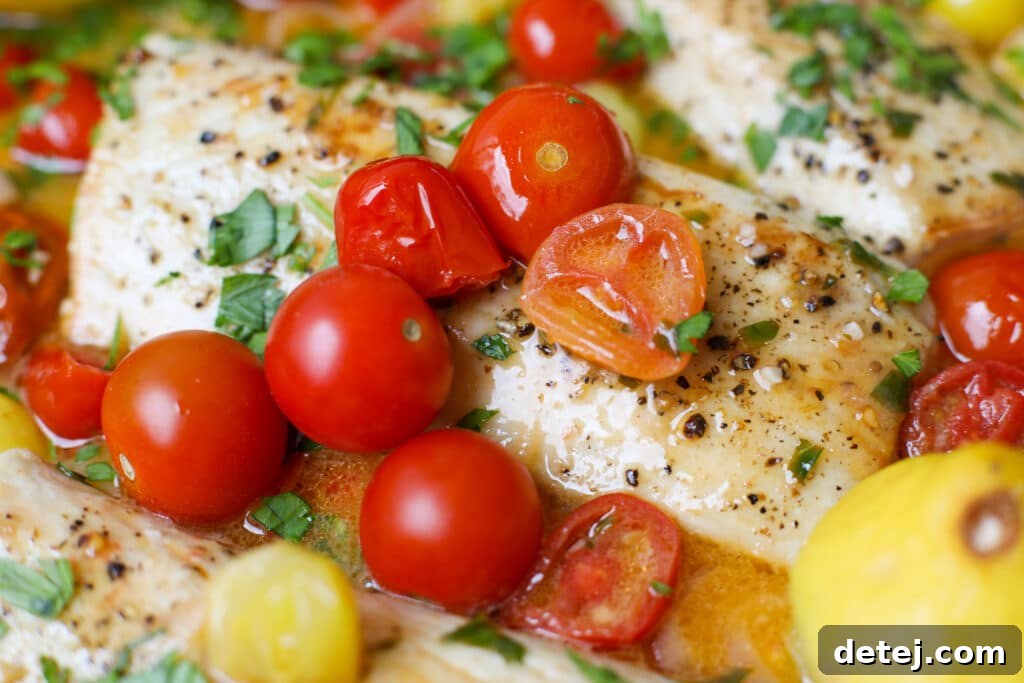
- Craft the Flavorful Sauce: Using the same pan (don’t clean it, those browned bits are flavor!), add the 6 tablespoons of butter and melt it over medium heat. Once the butter is melted and slightly foaming, add the finely diced shallots and minced garlic. Sauté them gently for 1-2 minutes until they become fragrant and softened, but not browned. Next, add the 1.5 cups of cherry tomatoes to the pan. Season with a pinch of kosher salt and a few turns of cracked black pepper. Continue to cook, stirring occasionally, until the tomatoes begin to blister and burst open, releasing their sweet juices.
- Deglaze and Finish the Sauce: Once the tomatoes have beautifully blistered, pour in ¼-⅓ cup of chicken stock to deglaze the pan. Use a wooden spoon to scrape up any flavorful browned bits from the bottom. Allow the chicken stock to simmer and reduce slightly. Then, stir in the 2 tablespoons of fresh squeezed lemon juice and 1.5 tablespoons of chopped fresh parsley. Continue to simmer the sauce for another minute or two, allowing it to thicken just a touch and for all the flavors to meld together.
- Assemble and Serve: Carefully nestle the cooked mahi mahi fillets back into the warm lemon butter sauce. Spoon a generous amount of the sauce and some of the cooked tomatoes over each fillet. Garnish the finished dish with extra freshly chopped parsley and a few fresh tomato slices for a pop of color and freshness. Serve immediately and prepare to enjoy a truly unforgettable meal!
Expert Tips for Mahi Mahi Success
Achieving perfectly cooked mahi mahi with a rich, flavorful sauce is easy when you keep a few key tips in mind:
- Pat Your Fish Dry: This is a non-negotiable step for a perfect sear. Excess moisture on the surface of the fish will steam it rather than sear it, preventing that coveted golden-brown crust. Use paper towels to thoroughly dry each fillet before seasoning.
- Season Just Before Cooking: While seasoning is vital, the timing matters for fish. Apply kosher salt and pepper to your mahi mahi fillets right before you place them in the hot pan. If you salt fish too far in advance, the salt will draw moisture out to the surface, making it difficult to achieve a good sear.
- Avoid Overcooking: Mahi mahi is a lean fish and cooks very quickly. Overcooking will result in dry, tough, and rubbery fish, which is a common mistake. Keep a close eye on it! The fish is fully cooked when its flesh turns opaque and flakes easily with a fork, or when it reaches an internal temperature of 145°F (63°C) as measured with an instant-read meat thermometer at its thickest part. Aim for just-cooked perfection.
- Don’t Overcrowd the Pan: For an optimal sear and even cooking, ensure there’s enough space between your fish fillets in the pan. If you’re doubling the recipe or using a smaller skillet, sear the fish in batches. Overcrowding lowers the pan’s temperature and traps steam, leading to less browning and a softer crust.
- Use a Quality Skillet: A good heavy-bottomed skillet, such as cast iron or stainless steel, will distribute heat evenly and maintain its temperature, which is essential for consistent searing.
- Manage Your Heat: Start with medium-high heat for searing to get that initial crust, then reduce it to low to finish cooking through gently. This prevents burning the exterior while the interior cooks.
Serving Suggestions to Complement Your Fish
This Lemon Butter Mahi Mahi is incredibly versatile and pairs beautifully with a variety of sides. Whether you’re aiming for a hearty meal or something lighter, here are some suggestions to round out your plate:
For a more substantial and satisfying meal, consider serving your fish alongside classic starchy sides that can soak up every drop of that delicious lemon butter sauce:
- Creamy Mashed Potatoes: Their velvety texture and subtle flavor provide a comforting contrast to the bright fish.
- Lebanese Rice with Orzo: A flavorful rice pilaf with tender orzo offers a delightful textural and aromatic complement.
- Fluffy White or Brown Rice: Simple and effective, rice provides a neutral base that lets the fish shine.
- Quinoa: For a protein-packed, gluten-free option, quinoa is an excellent choice.
- Pasta: A light linguine or spaghetti, perhaps tossed with a touch of olive oil and garlic, is perfect for absorbing the sauce. Consider a Greek Pasta Salad if you prefer a cooler option.
- Crusty Bread: Don’t underestimate the simple pleasure of a warm, crusty baguette for sopping up all the glorious lemon butter sauce.
If you prefer to keep your meal on the lighter side, focus on fresh or roasted vegetables that provide a vibrant contrast and added nutrition:
- Roasted Asparagus: Its earthy notes and slight bitterness cut through the richness of the butter.
- Steamed Green Beans with Almonds: A simple, elegant, and healthy choice.
- Sautéed Spinach or Kale: Quick and nutritious, these greens are perfect with seafood.
- Simple Garden Salad: A crisp salad with a light vinaigrette offers refreshing crunch. Try this Sautéed Spring Vegetable Salad for a unique twist.
- Zucchini Noodles or Cauliflower Rice: Great low-carb alternatives that maintain a light feel.
Consider pairing this dish with a crisp, dry white wine like Sauvignon Blanc or Pinot Grigio to enhance the citrus and seafood flavors.
Frequently Asked Questions
Here are some common questions about cooking and enjoying mahi mahi:
What does mahi mahi taste like?
Mahi mahi is celebrated for its mild, clean, and slightly sweet flavor. It’s significantly less “fishy” tasting than some other popular varieties like swordfish or salmon, making it very approachable. Its firm yet tender and flaky white flesh readily absorbs the flavors of marinades and sauces, making it an incredibly versatile fresh fish option for various culinary styles.
Can I use a different type of fish in this recipe?
Absolutely! If mahi mahi isn’t available or you prefer another white fish, several flaky, mild-tasting varieties make excellent substitutes. Good options include cod, haddock, halibut, snapper, or even tilapia. While the texture and subtle flavor nuances will vary slightly depending on your choice of fish, these reliable alternatives will still yield a delicious meal with the lemon butter sauce.
How long do leftovers last, and how should I store them?
Cooked mahi mahi with lemon butter and tomatoes can be stored in an airtight container in the refrigerator for up to three to four days. To reheat, gently warm the leftovers in the microwave or a skillet over low heat until just warmed through. Be careful not to overheat, as this can dry out the fish.
Can I freeze this recipe?
Yes, you can freeze this lemon butter mahi mahi recipe! Place the cooked fish and sauce in a freezer-safe container or heavy-duty freezer bag, ensuring as much air is removed as possible to prevent freezer burn. It will keep well for up to three months. When you’re ready to enjoy it, thaw it overnight in the refrigerator and then reheat gently as described above.
Is mahi mahi a healthy choice?
Yes, mahi mahi is an excellent choice for a healthy diet! It’s a lean protein source, rich in essential nutrients like B vitamins (B3, B6, B12), phosphorus, potassium, and selenium. It also contains beneficial omega-3 fatty acids, which are great for heart health and brain function. As a low-calorie and low-fat option, it fits well into most healthy eating plans.
Where can I buy fresh mahi mahi?
Mahi mahi is commonly found at most well-stocked grocery stores, fish markets, and even in the frozen seafood section. When buying fresh, always look for bright, firm, and translucent flesh with no strong odor. If purchasing frozen, choose reputable brands and ensure there are no signs of freezer burn.
Can I grill or bake mahi mahi instead of searing?
While this recipe specifically focuses on searing in a pan, mahi mahi is incredibly versatile and can be grilled or baked as well. For grilling, brush the fillets with olive oil and cook over medium-high heat for about 3-5 minutes per side. For baking, place the seasoned fillets on a baking sheet, often with a little liquid or butter, and bake at 400°F (200°C) for 10-15 minutes, or until cooked through. The lemon butter sauce can still be made separately and poured over the cooked fish.
Lemon Butter Mahi Mahi Recipe Card
Lemon Butter Mahi Mahi Recipe
4 servings
Pin Recipe
★
★
★
★
Leave a Review »
Equipment
- ☐
1 sauté pan
Ingredients
- ☐ 1-2 tablespoons olive oil
- ☐ 14 ounces mahi mahi, two 7 ounce fillets or similar
- ☐ 6 tablespoons butter
- ☐ ½ cup shallot, finely diced
- ☐ 1 tablespoon garlic, minced, about 2-3 cloves
- ☐ 1.5 cups cherry tomatoes
- ☐ pinch kosher salt, to season
- ☐ few turns cracked black pepper , to season
- ☐ ¼-⅓ cup chicken stock, deglaze the pan
- ☐ 2 tablespoons lemon juice, fresh squeezed
- ☐ 1.5 tablespoons parsley , chopped small, extra as garnish
Instructions
Warm
-
Heat the olive oil in a sauté pan over medium high heat.
Prepare
-
Pat the mahi mahi dry with a paper towel, removing any excess moisture. Then, season the mahi mahi fillets with kosher salt and cracked black pepper.
Sear
-
Add the fish to the pan, and sear for 3 minutes on each side. Next, reduce the heat to low. Continue cooking the fish for another 1-2 minutes. Then, remove it from the pan, and set it aside.
Cook
-
Using the same pan, add the butter and melt over medium heat. Once melted, add the shallots and minced garlic. Let them sweat for 1-2 minutes before adding the tomatoes. Season with kosher salt and cracked black pepper.
Once the tomatoes have blistered, deglaze the pan with chicken stock. Once the chicken stock reduces, add the fresh squeezed lemon juice and chopped parsley. Simmer until the sauce reduces a touch.
Assemble
-
Nestle the cooked mahi mahi into the lemon butter sauce. Top it with a few spoonfuls of the sauce and some of the cooked tomatoes. Garnish the finished dish with freshly chopped parsley and tomatoes, serve immediately, and enjoy!
Notes
Nutrition
We hope this detailed guide encourages you to try making this incredible Lemon Butter Mahi Mahi with Cherry Tomatoes. It’s truly a dish that combines elegance with ease, promising a delicious and memorable meal without the fuss. Enjoy!