
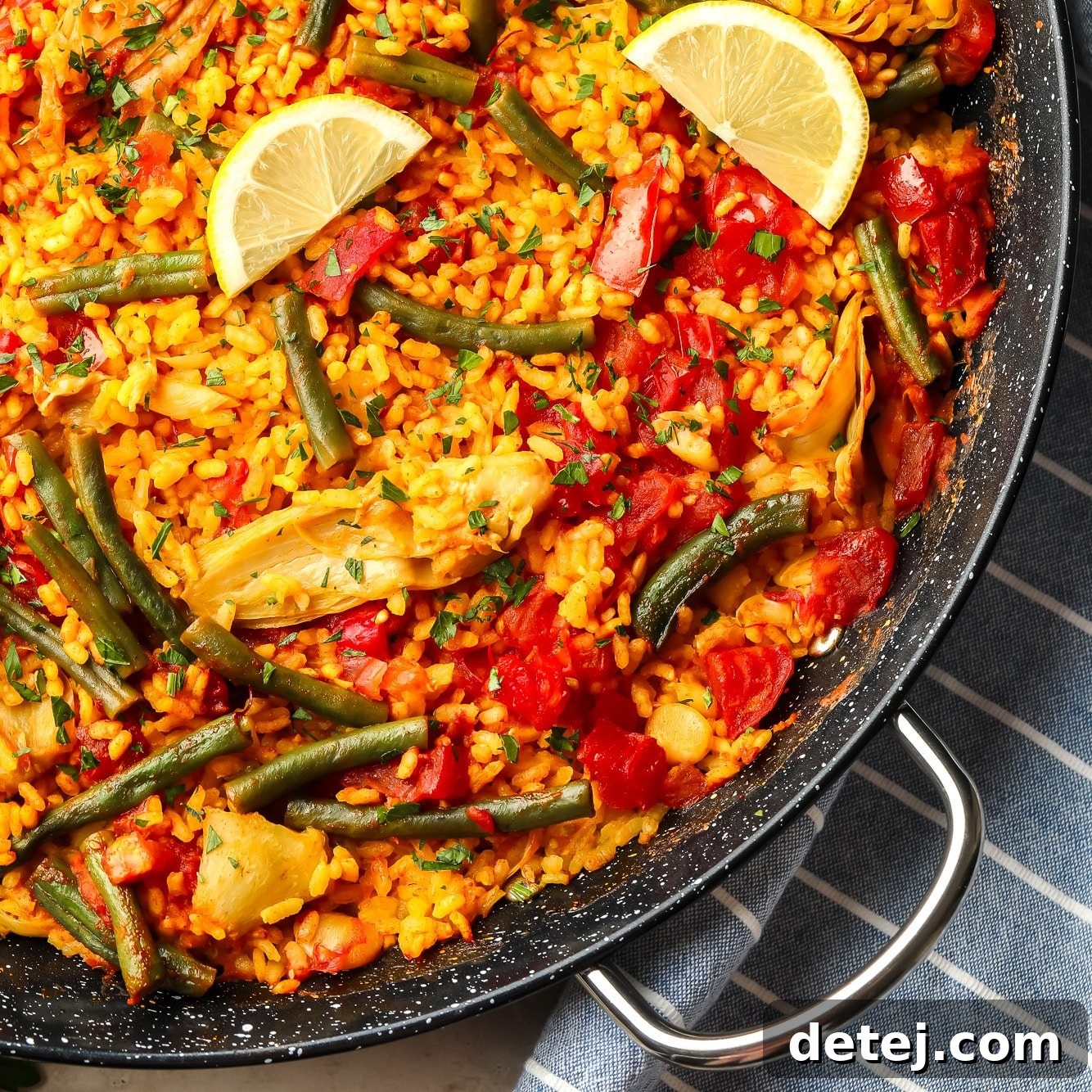
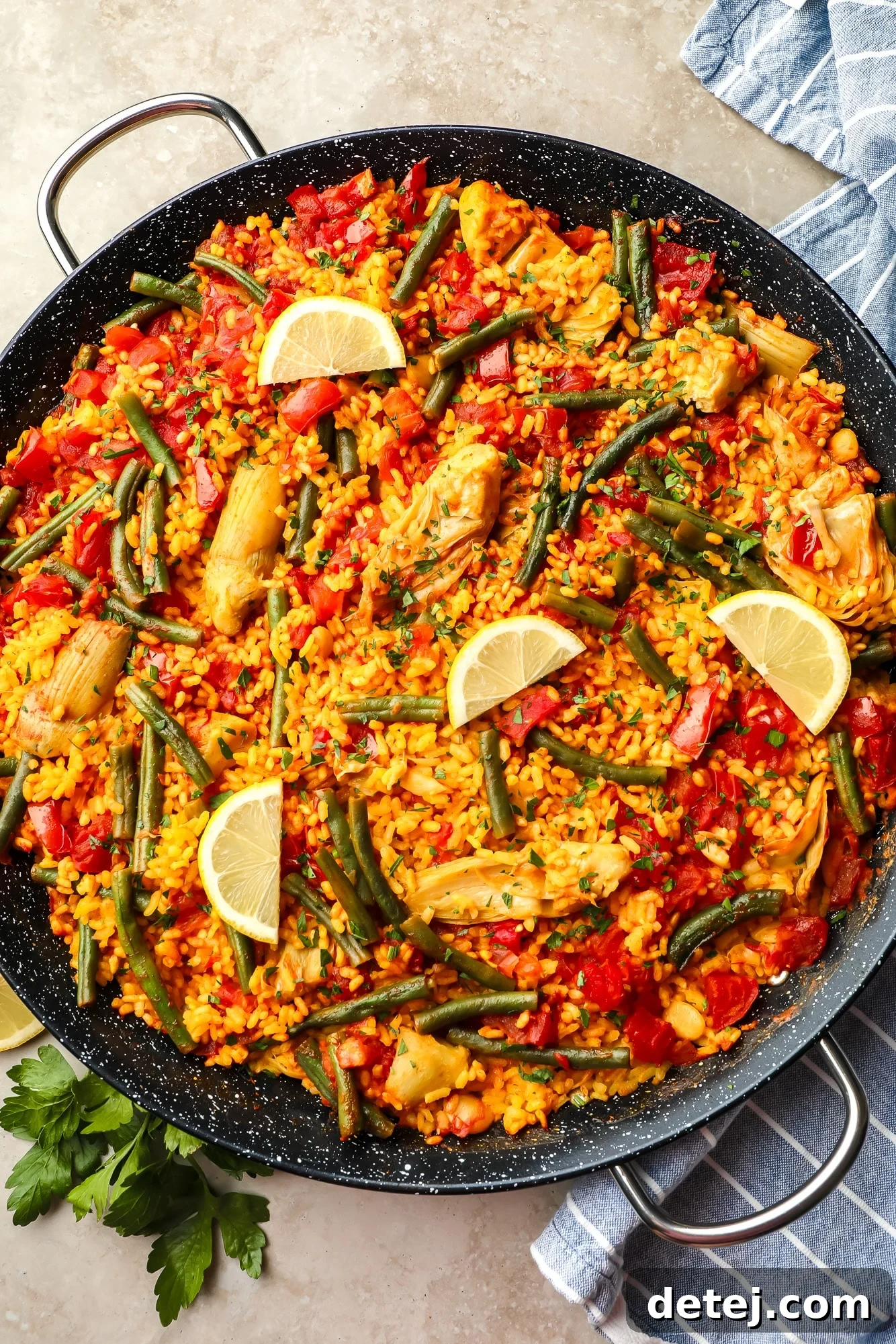
Welcome to the vibrant world of Spanish cuisine, reimagined for the modern, plant-based kitchen! This irresistible one-pan Vegan Paella recipe is a true culinary gem, offering tender, saffron-infused rice, a kaleidoscope of colorful vegetables, and that coveted, crunchy golden-brown crust known as socarrat. It’s an impressive, date-night worthy meal that surprisingly requires minimal effort, proving that gourmet flavors can be achieved with simplicity and fresh ingredients.
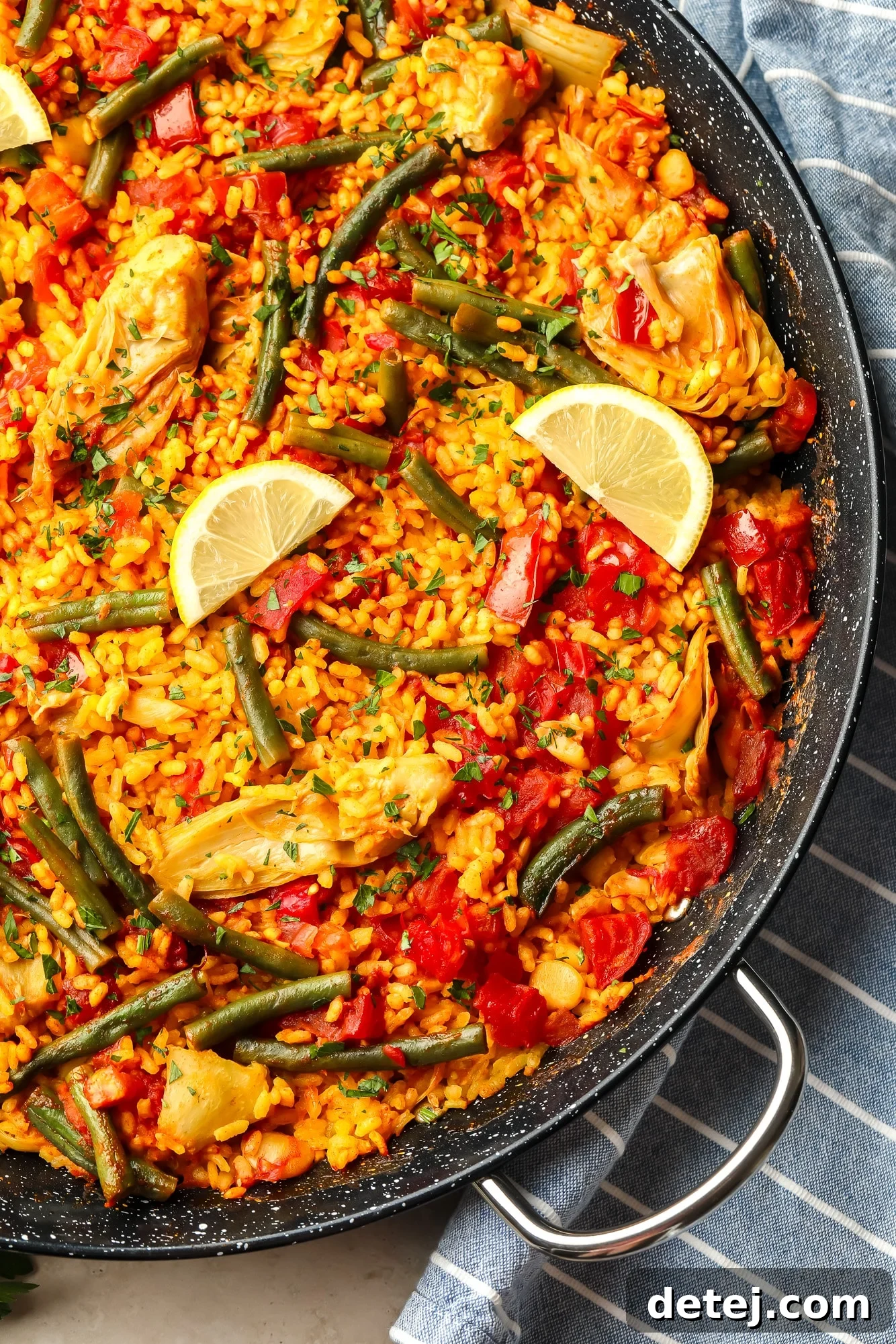
Many assume paella is a complex dish, exclusive to seasoned Spanish chefs. However, this vegan rendition demystifies the classic, making it incredibly accessible for home cooks. Our recipe features a rich tapestry of garden-fresh ingredients like crisp green beans, tender artichoke hearts, juicy tomatoes, and creamy butter beans, all nestled within fragrant, golden saffron rice. It’s a symphony of textures and flavors that will transport your taste buds straight to the sun-drenched coasts of Spain.
What truly sets this easy vegan paella apart is its one-pan preparation, which comes together in approximately 30-35 minutes. While a traditional paella pan is ideal for achieving the perfect socarrat, any wide, shallow skillet will work beautifully in a pinch. Plus, its versatility is unmatched – feel free to customize it with your favorite seasonal vegetables, legumes, or plant-based proteins to create a dish that’s uniquely yours.
Whether you’re planning a special celebration, an intimate date night, or simply seeking a comforting yet elegant weeknight dinner, this Spanish-inspired masterpiece is guaranteed to impress. Its captivating aroma and delightful flavors make it a dish you’ll want to master and enjoy on repeat, year-round. Prepare to fall in love with the magic of homemade vegan paella!
What is Paella? A Culinary Journey to Spain
Paella (pronounced pie-AY-yah) is arguably Spain’s most iconic dish, a magnificent rice creation originating from the Valencia region. Traditionally, it’s prepared in a large, shallow paella pan, where saffron-infused rice is cooked slowly with a medley of ingredients such as meat (like rabbit or chicken), fresh seafood, and various vegetables. The dish is renowned for its vibrant colors, complex aromas, and, most importantly, the prized socarrat – a delicious, crunchy, caramelized crust that forms at the bottom of the pan.
Historically, paella was a humble farmer’s meal, cooked outdoors over an open fire using whatever fresh ingredients were readily available from the fields or nearby wetlands. Over centuries, it evolved into a celebratory dish, embodying the spirit of communal dining and Spanish hospitality. The saffron, a luxurious spice derived from the crocus flower, is crucial not only for its distinctive earthy-floral flavor but also for imparting that characteristic golden hue to the rice, symbolizing the sun.
While traditional paella often features animal proteins, its essence lies in the harmonious blend of rice, spices, and fresh produce. This makes it a perfect candidate for a plant-based transformation. By artfully swapping meat and seafood for an abundance of vibrant vegetables, hearty beans, and other plant-based proteins, we can create a vegan paella that respects its culinary heritage while catering to modern dietary preferences. This version truly captures the soul of paella – fragrant, flavorful, colorful, and crowned with a perfect socarrat – without compromising on taste or tradition. It’s not just a dish; it’s an experience, a celebration of Spanish flavors made accessible for everyone.
Crafting Your Own Vegan Paella: Step-by-Step Perfection
Making an authentic-tasting Vegan Paella is simpler than you might imagine. The key is in understanding the technique and honoring the ingredients. Follow these steps for a truly memorable culinary experience.
Preparation is Key: Before you begin, ensure all your ingredients are prepped and ready. Mince your garlic, cut your green beans, drain and rinse your butter beans, quarter your artichoke hearts, and dice your tomatoes. Having everything at hand will make the cooking process smooth and enjoyable.
Ingredients
- 2 tablespoons olive oil
- 5 cloves garlic, minced
- 1 1/2 cups cut green beans
- 15 ounce can butter beans, drained and rinsed
- 1 cup artichoke hearts, quartered (frozen or canned)
- 3 medium tomatoes, diced (about 2 cups)
- 2 teaspoons smoked paprika
- 1 teaspoon saffron threads
- 1 1/2 teaspoons salt
- 6 cups vegetable broth
- 2 1/2 cups bomba rice
For Garnish
- Lemon slices
- Flat leaf parsley, chopped
Instructions
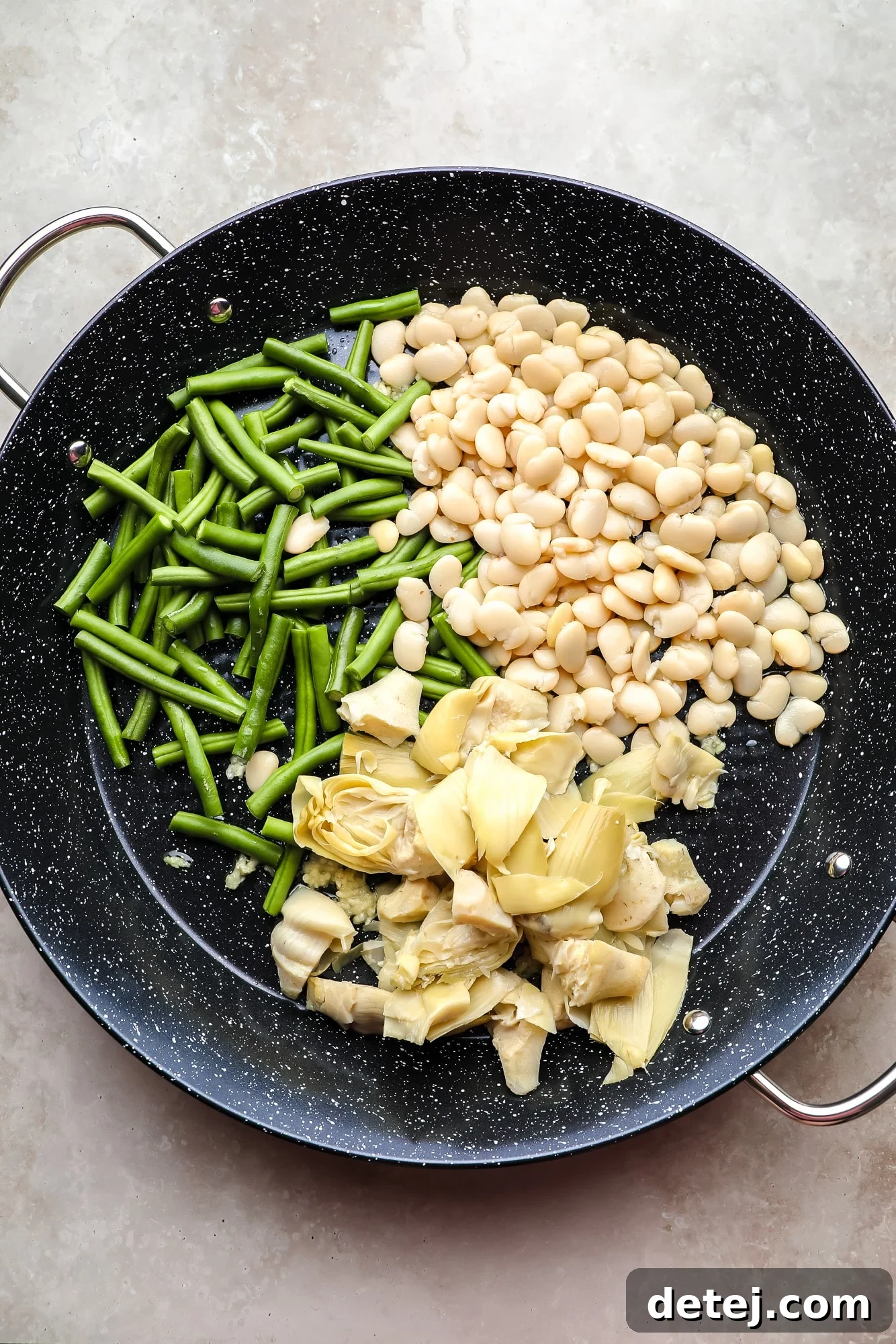
- Sauté the Aromatics and Vegetables: Begin by heating the olive oil in a 14-inch paella pan (or any wide, shallow skillet) over medium-high heat. Once the oil shimmers, add the minced garlic, cut green beans, creamy butter beans, and quartered artichoke hearts. Sauté these vibrant ingredients for about 3-4 minutes, allowing them to soften slightly and release their flavors. This initial sauté builds the foundational flavors of your paella.
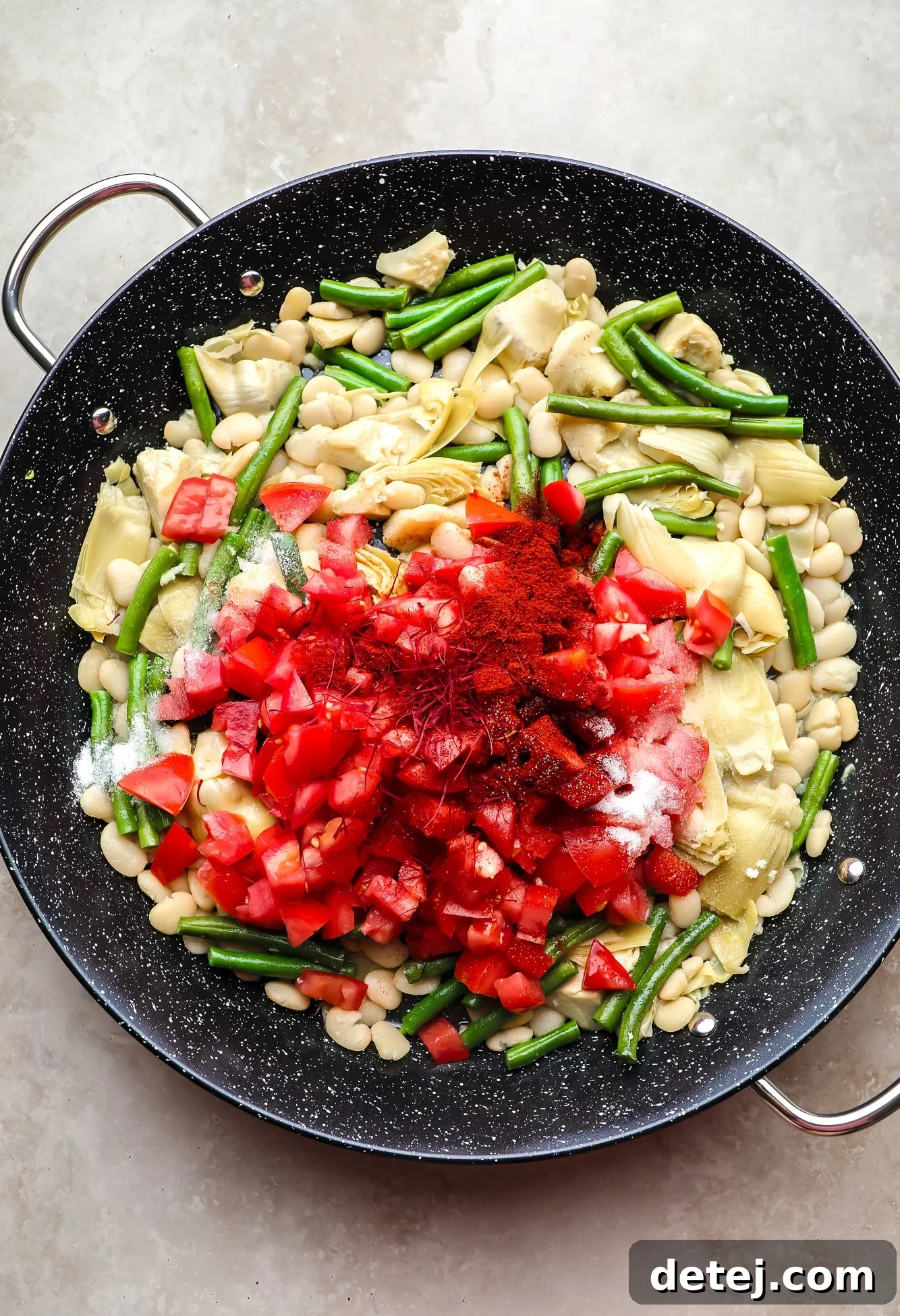
- Infuse with Flavor: Next, stir in the diced tomatoes, aromatic smoked paprika, precious saffron threads, and salt. Mix everything together thoroughly to ensure the spices are evenly distributed and the saffron begins to release its golden color and distinctive perfume. Pour in the vegetable broth, bringing the mixture to a gentle boil.
- Add the Rice (The Crucial Step): Once the broth mixture is boiling, carefully sprinkle the bomba rice evenly into the pan. Distribute it as uniformly as possible to ensure even cooking. Bring the mixture back to a boil.
- Simmer and Resist the Urge to Stir: As soon as it returns to a boil, reduce the heat to medium-low. You want a gentle simmer, where the rice is cooking steadily but not aggressively bubbling. Adjust the heat as necessary. This is the most critical instruction: DO NOT STIR THE PAELLA AFTER THIS POINT! Stirring prevents the formation of the glorious socarrat, the crispy crust at the bottom, which is the hallmark of a truly great paella. If your rice remains crunchy after the broth has cooked off, it might indicate that your heat was a bit too high during the simmer. Simply add about 1/4 cup more broth and continue cooking until tender.
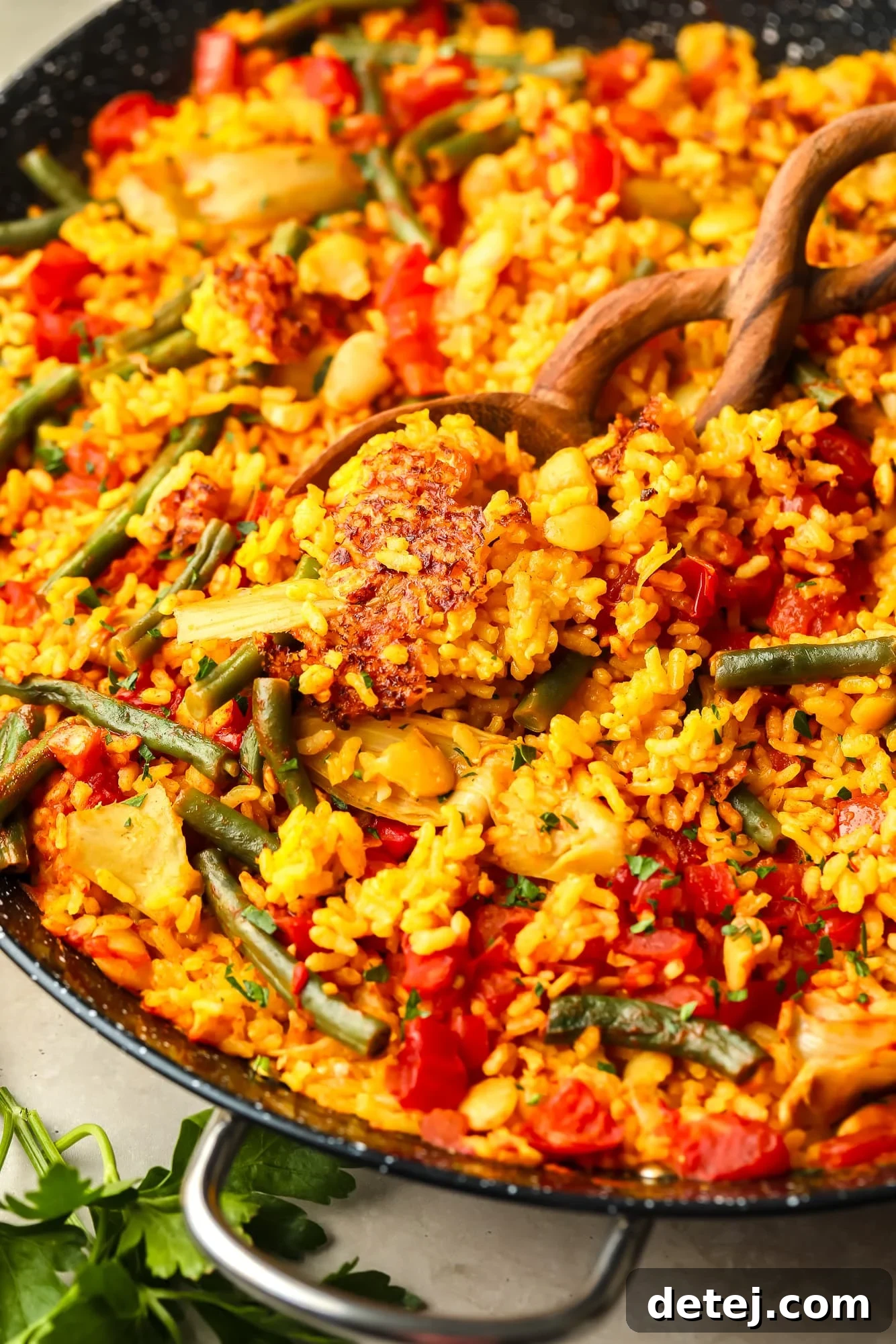
- Achieving the Socarrat: Allow the paella to simmer, uncovered, for 15-20 minutes, or until the rice is tender and has absorbed all the liquid. If using a wide paella pan, gently rotate the pan every 5-10 minutes for even cooking, but still resist stirring the rice itself. Toward the end of the cooking time, listen carefully for soft crackles or pops coming from the bottom of the pan. This is the sound of the socarrat forming! You should also begin to notice a delightful, nutty aroma. As soon as you hear these sounds or catch that distinct smell, remove the pan from the heat immediately.
- The Perfect Socarrat: A perfectly formed socarrat is golden brown and deliciously crispy, offering a wonderful textural contrast to the tender rice. If you smell any burning, remove the paella from the heat instantly – we’re aiming for toasted, not charred!
- Garnish and Serve: Once off the heat, let the paella rest for a few minutes before garnishing. Adorn your vibrant vegetable paella with fresh lemon slices and a sprinkle of chopped flat-leaf parsley. Serve immediately and savor every spoonful. The combination of tender rice, flavorful vegetables, and the irresistible crunch of the socarrat creates an unforgettable dining experience.
That beautiful golden socarrat, formed at the bottom of the pan, is truly the best part of the paella experience. It’s a testament to patience and proper heat management, and its nutty, toasted flavor is what elevates a good paella to a great one!
Frequently Asked Questions About Vegan Paella
Do I have to make paella in a paella pan?
While a traditional paella pan, with its wide, shallow design, is excellent for promoting even rice cooking and ideal socarrat formation, it’s not strictly necessary. Any 12 to 14-inch shallow, nonstick skillet will work effectively. The key is a pan with a large surface area that allows the rice to spread out in a thin layer, which helps the broth evaporate consistently and encourages the socarrat to form.
What can I use as a substitute for saffron?
Saffron is unique for its distinct flavor and vibrant color. If you can’t find saffron threads, or they are out of your budget, you have a couple of options. You can use 1 teaspoon of saffron powder as a direct substitute. For a color substitute that offers a different, but still pleasant, flavor profile, try 1 teaspoon of turmeric. While turmeric will provide a beautiful golden hue, its taste is earthier and less floral than saffron. For the most authentic flavor, saffron is always recommended, but these alternatives can still yield a delicious dish.
I can’t find bomba rice. What should I use instead?
Bomba rice is considered the gold standard for paella because of its exceptional ability to absorb liquid without becoming mushy, while maintaining a firm texture. If bomba rice is unavailable, Calasparra rice is an excellent alternative, sharing many of bomba’s qualities. Arborio rice, commonly used for risotto, is also an acceptable substitute. It absorbs a lot of liquid and provides a creamy texture, though it may not hold its shape quite as perfectly as bomba or Calasparra. Avoid using long-grain rice varieties, as they tend to become sticky and don’t achieve the desired paella texture.
What else can I add to vegetarian paella?
The beauty of vegetarian paella lies in its adaptability! You can easily enhance this dish with a variety of other vegetables and plant-based proteins. Consider adding diced red bell peppers, sliced zucchini, green olives, a diced shallot, vibrant peas, sliced mushrooms, hearty cannellini beans, or chopped asparagus. For an extra protein boost, top your paella with crispy air fryer tofu, flavorful vegan chorizo, or tender slices of seitan chicken. If you want to pay a tasty nod to paella’s seafood roots, my Vegan Scallops would also be a fantastic addition, offering a unique texture and flavor. Don’t hesitate to experiment with what’s fresh and in season!
How long does vegan paella last, and how should I reheat it?
Vegan paella is undoubtedly at its best when enjoyed fresh, within a few hours of cooking, especially to fully appreciate the crispy socarrat. However, if you find yourself with delicious leftovers, they can be stored in an airtight container in the refrigerator for up to 5 days. To reheat, the best method is to warm the leftover paella in a lightly oiled skillet over medium heat. This helps to re-crisp the bottom layer and restore some of that desirable texture. Alternatively, you can simply warm it through in the microwave, though this method won’t bring back the crispiness of the socarrat. Freezing paella is an option, but be aware that the rice can become somewhat mushy upon thawing and reheating, affecting the texture.
Vegan Paella
This easy one-pan Vegan Paella recipe is irresistible, with its tender saffron-infused rice, colorful vegetables, and crunchy golden brown crust. It’s a date-night worthy meal without a whole lot of effort!
Prep Time: 10 mins
Cook Time: 25 mins
Total Time: 35 mins
Servings: 6 servings
Ingredients
- 2 tablespoons olive oil
- 5 cloves garlic, minced
- 1 1/2 cups cut green beans
- 15 ounce can butter beans, drained and rinsed
- 1 cup artichoke hearts, quartered (frozen or canned)
- 3 medium tomatoes, diced (about 2 cups)
- 2 teaspoons smoked paprika
- 1 teaspoon saffron threads
- 1 1/2 teaspoons salt
- 6 cups vegetable broth
- 2 1/2 cups bomba rice
For garnish
- lemon slices
- flat leaf parsley, chopped
Instructions
- In a 14-inch paella pan (or any wide, shallow skillet), add the oil and warm over medium-high heat. Once the oil is hot, add the garlic, green beans, butter beans and artichokes and sauté for about 3-4 minutes.
- Add the tomatoes, smoked paprika, saffron and salt. Mix everything together well, then pour in the broth.
- Bring the mixture to a boil, then sprinkle the rice in, trying to distribute it evenly throughout the pan.
- Bring the mixture to a boil again, then reduce heat to medium-low. You want to see the rice is cooking, but not boiling hard, so adjust heat as necessary. Don’t stir after this point!
- Simmer for 15-20 minutes, uncovered, until the rice is tender and the broth is cooked off. Carefully rotate the pan every 5 minutes or so. If for some reason the rice is still crunchy after the broth has cooked off, add 1/4 cup more broth and continue cooking. This means your heat was a bit too high.
- Once the broth is about cooked off, listen for any crackles or pops from the bottom of the pan. You should also smell a nutty aroma from the crust forming. As soon as you hear any pops, remove from heat. If it smells like it’s burning at all, remove from heat immediately. You are hoping for a golden, crisp rice crust.
- Garnish with lemon slices and chopped parsley, if desired and serve.
Notes
- Leftovers will keep in the refrigerator for up to 5 days. Reheat in a well oiled pan or microwave until warm.
- Paella can be frozen, but the rice will become rather mushy.
- Feel free to add any extra protein to the vegan paella, like vegan chicken, scallops or even tofu.
Nutrition
- Serving: 1 of 6 servings
- Calories: 461 kcal
- Carbohydrates: 88g
- Protein: 13g
- Fat: 6g
- Saturated Fat: 1g
- Polyunsaturated Fat: 1g
- Monounsaturated Fat: 4g
- Sodium: 1858mg
- Potassium: 678mg
- Fiber: 9g
- Sugar: 7g
- Vitamin A: 1531 IU
- Vitamin C: 13mg
- Calcium: 56mg
- Iron: 3mg
Course: Main Dish
Cuisine: Spanish
Author: Nora Taylor
Did you make this recipe? Mention @nora_cooks_vegan_ or tag #noracooks!