
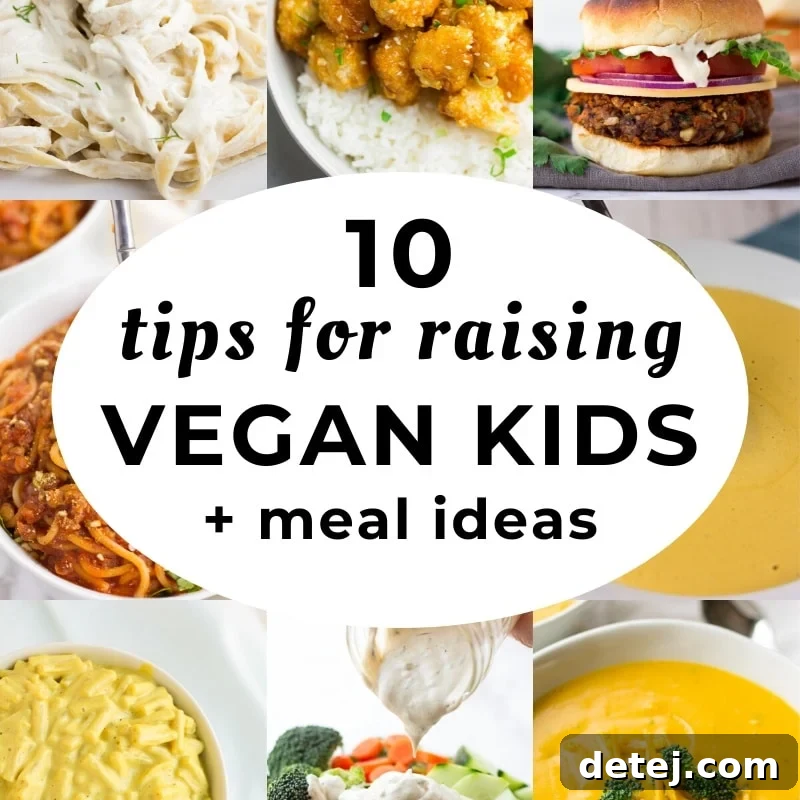
Embarking on a plant-based journey with your family can be incredibly rewarding, but it often comes with unique challenges, especially when it comes to keeping little ones happy and well-nourished. If you’re looking for guidance on raising vegan kids, you’ve come to the right place! This comprehensive guide offers 10 invaluable tips and a wealth of kid-friendly vegan meal ideas for breakfast, lunch, and dinner, ensuring your family enjoys delicious and healthy plant-based living.

Are you eager to embrace a vegan lifestyle but unsure how to ensure your children receive all the nutrients they need while still enjoying their meals? I understand completely, and I’m here to offer practical support and inspiration!
With over a decade of personal experience feeding my own family a diverse and delicious vegan diet, I’ve navigated countless mealtimes, from the triumphs of discovering new favorites to the challenges of catering to a truly picky palate. My three children are a perfect microcosm of childhood eating habits: one was notoriously selective, another has always been an adventurous eater, and my youngest comfortably sits somewhere in the middle, displaying preferences that shift with the wind. Through it all, I’ve gathered a wealth of insights and strategies, particularly for those moments when you feel like you’re battling a tiny food critic. My ultimate goal is to empower you to transform meal times from a source of stress into moments of joy and connection for your entire plant-based family.
It’s crucial to remember that what works for one child might not work for another. Children are individuals with evolving tastes and preferences. For instance, my twins, now approaching their twelfth birthday, never developed a strong fondness for fruit in the way many kids do, whereas my four-year-old absolutely adores almost every type of fruit – making it an incredibly easy and healthy snack option for him. Similarly, while my older children weren’t particularly swayed by dips for their vegetables, my youngest will enthusiastically devour generous portions of Brussels sprouts and broccoli if he has a flavorful dip to accompany them! Understanding and adapting to these individual differences is key to successful and stress-free vegan parenting.
10 Essential Tips for Raising Happy, Healthy Vegan Kids
1. Empower Your Kids: Involve Them in Meal Planning and Preparation.
One of the most effective ways to encourage children to try and enjoy new vegan foods is by giving them a sense of ownership and involvement. Ask your kids for their input when planning the weekly menu. Let them browse through kid-friendly vegan recipes with you, allowing them to choose what looks appealing. This simple act of choice can dramatically increase their willingness to eat what’s served. Beyond planning, involve them in the entire food journey: if possible, start a small garden together to grow fresh produce, visit local farmer’s markets to explore seasonal fruits and vegetables, and most importantly, get them hands-on in the kitchen. From washing vegetables to stirring ingredients and even simple baking tasks, their participation fosters a positive relationship with food and teaches valuable life skills.
2. Embrace Familiar Flavors: Veganize Their Favorite Comfort Foods.
Transitioning to a plant-based diet doesn’t mean sacrificing beloved family meals. In fact, one of the easiest ways to ensure success with picky eaters, or any child for that matter, is to offer vegan versions of dishes they already know and love. Think about their current favorites: spaghetti with “meat” sauce, cheesy burritos, hearty “meatballs,” classic burgers, or creamy mac and cheese. These can all be deliciously recreated with plant-based ingredients. While it’s great to introduce new vegan recipes, ensuring a foundation of familiar flavors helps children (and adults!) feel comfortable and satisfied. Don’t shy away from modern vegan alternatives; they can be absolute game-changers. Brands like Gardein offer fantastic chickenless nuggets, vegan sliced and shredded cheeses are readily available, and Tofurky slices make for quick and easy sandwiches. My older kids, for instance, are huge fans of Beyond and Impossible burgers when we dine out – these options make vegan eating exciting and accessible.
3. Harness the Power of Green Smoothies, and Let Them Help Blend.
Green smoothies are an incredible tool for incorporating nutrient-dense greens, fruits, and healthy fats (like nuts and seeds) into a child’s diet, often without them even realizing it. There was a period when my twins eagerly enjoyed a refreshing green smoothie, and even now, they’ll occasionally ask for one. My four-year-old, however, is not as keen on the texture, preferring to chew his food. But here’s a trick: he loves to sip from my cup! So, whenever I make myself a green smoothie, I always share it with him. The key is to make it a positive experience. Let your kids pick some of the ingredients, add them to the blender, and even press the buttons (with supervision!). The fun of creation often leads to a willingness to taste. Just remember, avoid forcing it; pressure can lead to resentment and turn them off smoothies entirely.
4. Respect Their Palate: Keep Food Components Separate Sometimes.
As an adult, I often enjoy the convenience and aesthetic of a beautifully combined “buddha bowl” or a mixed plate of grains, protein, and vegetables. However, many children, especially those with sensitive palates or textural preferences, can find mixed foods overwhelming. They might prefer to identify and eat each component individually. If we’re having a meal like tofu-rice-veggie bowls, I’ll often serve the ingredients separately on their plate. This simple adaptation allows them to control what they eat and in what order, reducing mealtime anxiety and encouraging them to try each part. For meals where it’s easily achievable, offering deconstructed dishes can be a game-changer for a child with picky eating habits.
5. Stock Up: Keep a Wide Variety of Delicious Vegan Snacks Readily Available.
Active children need frequent fuel throughout the day, and having a diverse selection of healthy, accessible vegan snacks on hand is crucial. The possibilities are truly endless! Think beyond just fruits and vegetables (though they are excellent). Stock your pantry and fridge with items like pretzels or pretzel thins, often paired with hummus for a protein boost. Offer fresh vegetables with hummus, rice crackers, tortilla chips and salsa, or various energy bars like Larabars, Luna Bars, or Clif Bars (always check ingredients for vegan certification). Toast with avocado or a nut butter, popcorn, vegan-friendly cereals with non-dairy milk, vegan yogurts, applesauce cups or squeezies, dried fruit, and homemade trail mix are all fantastic options. Providing a variety ensures they can grab a satisfying and nutritious snack in the afternoon or evening without resorting to less healthy choices, keeping their energy levels stable and hunger at bay.
6. Celebrate with Sweet Treats: The Joy of Vegan Desserts.
Desserts are often associated with celebration and joy, and delicious vegan desserts are a fantastic way to introduce someone to the plant-based lifestyle in a positive and exciting manner. Showing your children (and their friends!) that veganism isn’t about deprivation but about delicious indulgence can be incredibly impactful. From rich vegan chocolate cake and classic chocolate chip cookies to quick vegan mug cakes and vibrant funfetti vegan cupcakes, the world of vegan baking is vast and incredibly satisfying. Baking together is a fun family activity that also creates lasting memories and reinforces the idea that vegan food can be every bit as enjoyable as its conventional counterparts.
7. Offer Abundance: Ensure Your Kids Have Plenty of Fruit.
While vegetables can sometimes be a harder sell, most children naturally gravitate towards the sweetness and vibrant flavors of fruit. Offering a wide variety of fruits can help ensure they’re getting essential vitamins, minerals, and fiber. Even if your kids aren’t enthusiastic about vegetables, they’ll likely enjoy a generous serving of fruit. Some perennial kid favorites in our household include crisp apples, creamy bananas, juicy oranges, sweet strawberries, tangy raspberries, antioxidant-rich blueberries, succulent peaches and nectarines, tropical pineapple and mango, and tender pears. Keep a fruit bowl easily accessible and consider cutting up larger fruits into bite-sized pieces for convenient snacking. Fruit can also be a fantastic natural sweetener in smoothies or oatmeal.
8. Simplify Mealtime: Avoid Cooking Separate Meals for Your Children.
As a parent, I’ve definitely fallen into the trap of cooking separate meals for my children in the past, and I can attest that it quickly leads to immense stress and added workload. The goal is to cultivate a “one family meal” philosophy. While planning your week’s meals, keep your children’s general preferences in mind. Even if the main dish isn’t their absolute favorite, always offer a few simple, plant-based sides you know they enjoy. This could be sliced apples, a piece of whole-grain bread, steamed corn, or any other safe foods. If, on a rare occasion, they genuinely dislike what’s been prepared, I do offer my older children the option to quickly prepare something simple like a peanut butter and jelly sandwich. This approach teaches them to try new foods while also respecting their autonomy, without creating a situation where you become a short-order cook.
9. Foster a Positive Relationship with Food: Avoid Stress and Anxiety.
The most important gift you can give your children regarding food is a positive, relaxed relationship with eating. Celebrate and enjoy mealtimes as a family, making them a time for connection rather than conflict. Avoid making food a “big deal” or discussing diets, calorie counting, or other restrictive behaviors in front of them. Eating vegan is not a “diet” in the restrictive sense, but rather a compassionate, healthful, and delicious way of life. Encourage “intuitive eating,” helping them learn to listen to their own bodies for hunger and fullness cues. For more insightful guidance on this topic, I highly recommend exploring Ellen Satter’s Division of Responsibility in Feeding. Her principles have been incredibly helpful in reducing mealtime power struggles and fostering healthy eating habits.
10. Cultivate Autonomy: Allow Age-Appropriate Food Decisions Outside the Home.
This tip might be viewed as a bit controversial by some, but it’s an essential part of raising independent individuals. As your children mature, they will inevitably need to learn to make their own decisions about food, particularly when they are outside the home at friends’ houses, school, or social events. The exact age at which this autonomy begins will vary greatly depending on your family’s values and your child’s maturity level. While you can continue to control the food choices within your own home, it’s vital to foster open communication and provide them with the knowledge and confidence to make informed choices. Ultimately, they will decide for themselves whether they will continue to identify as vegan. My personal belief is that leading with kindness, openness, and equipping them with a strong foundation of plant-based knowledge is always the most effective and loving approach.
Delicious Kid-Friendly Vegan Meal Ideas for Every Time of Day
Energizing Vegan Breakfast Options
- Peanut Butter Toast: A timeless classic, easily customized with or without jelly, or topped with nutritious banana slices for added sweetness and potassium.
- Creamy Avocado Toast: For children who enjoy the rich, healthy fats of avocado, this makes for a satisfying and trendy breakfast. Add a sprinkle of everything bagel seasoning for older kids.
- Hearty Oatmeal: A warm and comforting start to the day. Customize with fresh or frozen blueberries (always a freezer staple!), a dash of cinnamon, or a drizzle of maple syrup.
- Crunchy Cereal: Serve with your child’s favorite non-dairy milk (almond, soy, oat, or rice milk). Always remember to double-check the ingredient list to ensure the cereal itself is vegan-friendly.
- The Best Green Smoothie: A fantastic way to pack in nutrients. Blend spinach (you won’t taste it!), banana, a fruit of choice, and non-dairy milk for a vibrant, healthy drink.
- Savory Tofu Scramble: A protein-packed alternative to scrambled eggs, easily seasoned with turmeric for color and nutritional yeast for a cheesy flavor.
- Fluffy Vegan Pancakes: A weekend treat that can be made healthier with whole-wheat flour and topped with fresh fruit and a touch of maple syrup.
- Crispy Vegan Waffles: Similar to pancakes, waffles offer a delightful texture and are perfect for loading up with berries or a dollop of vegan whipped cream.
- Vegan Breakfast Sausage: My older kids particularly enjoy the convenience and taste of Gardein brand vegan breakfast sausages, a great savory addition to any breakfast plate.
Wholesome Vegan Lunchbox Ideas
- Diverse Sandwiches:
- PB & J: The ultimate classic.
- Hummus Sandwich: Spread hummus on bread, add crisp lettuce, thin cucumber slices, and perhaps a few cherry tomato halves.
- Tofurky & Vegan Cheese: My older kids practically live on these! Simple, satisfying, and reminiscent of deli sandwiches.
- Pita with Hummus and Veggies: A delightful and dippable alternative.
- Chickpea “Tuna” Salad Sandwiches or Wraps: A flavorful and protein-rich option that mimics the texture and taste of tuna salad.
- Easy Vegan Burritos: Quick to assemble or warm up. My kids are big fans of Amy’s non-dairy frozen burritos for a convenient lunch.
- Leftovers from Dinner: A fantastic way to minimize food waste and simplify meal prep. We often pack dinner leftovers for lunch the next day.
- Creamy Vegan Mac and Cheese: A universally loved comfort food that translates beautifully into a plant-based version, perfect for a thermos.
- Vegan Nuggets: Gardein brand remains a household favorite. Serve with a side of ketchup or their preferred dip.
- Add Vegetable Sides: Always include a portion of vegetables. Think steamed peas, green beans, carrot sticks (perhaps with vegan ranch), cucumber slices, corn, steamed broccoli florets, or cherry tomatoes – whatever your child prefers.
- The Magic of Dip! This cannot be stressed enough for vegetable consumption. My youngest will eat an astounding amount of vegetables if he has a dip he genuinely enjoys. His current favorite is a savory peanut sauce, but a classic vegan ranch dressing is also a consistent winner.
Diverse and Delicious Vegan Dinners
- Comforting Pasta Dishes:
- Hearty Lasagna: Layered with rich tomato sauce, vegan ricotta, and savory vegetables.
- Creamy Alfredo: Made with a luscious cashew-based sauce.
- Classic Mac and Cheese or Baked Mac and Cheese: The ultimate kid-pleaser.
- Instant Pot Spaghetti: A quick and easy weeknight solution.
- Butternut Squash Mac and Cheese with Peas: A clever way to sneak in extra veggies.
- Baked Ziti: A comforting casserole layered with pasta, marinara, and vegan cheese.
- Stuffed Jumbo Shells: Filled with savory vegan ricotta and spinach.
- Mushroom Stroganoff: A rich and earthy dish.
- Vibrant Vegan Pesto Pasta: Fresh and flavorful, often a hit with kids.
- Spaghetti and Easy Vegan Meatballs: A satisfying and familiar family favorite.
- Versatile Tofu Dishes:
- Crispy Baked Orange Tofu: A sweet and tangy delight reminiscent of orange chicken.
- Sriracha Tofu: For kids who enjoy a little kick, adjustable spice levels.
- Vegan “Butter Chicken”: A rich and creamy Indian-inspired dish, often made with tofu or chickpeas.
- Peanut Tofu Bowls: Tofu coated in a delicious peanut sauce, served over rice and veggies.
- Flavorful Marinated Tofu: Simple to prepare and versatile for various meals.
- Easy Baked Tofu Nuggets: A healthier alternative to chicken nuggets, served with “fries” or oven-baked potato wedges.
- Exciting Mexican Nights:
- Vegan Tacos with Tofu or Lentil “Meat”: Fun and customizable for everyone.
- Cheesy Vegan Quesadillas: With black beans and vegetables, a quick and satisfying option.
- “Chick’n” Burritos: Packed with plant-based protein and flavor.
- The Best Vegan Enchiladas: A hearty and flavorful casserole.
- Zesty Sofritas: A seasoned tofu crumble perfect for bowls or tacos.
- Ultimate Fully Loaded Vegan Nachos: A fun family-style meal.
- Hearty Burritos: Custom-built with favorite fillings.
- Cauliflower Walnut Mushroom Tacos: A surprisingly delicious and meaty plant-based filling.
- Other Global Favorites & Comfort Foods:
- Flavorful BBQ Sandwiches: Made with soy curls or shredded jackfruit.
- Homemade Pizza: A family favorite, topped with shreddable vegan cheese and plant-based sausage.
- Hearty Vegan Meatloaf: A comforting classic.
- Creamy Mashed Potatoes and Rich Vegan Gravy: The ultimate comfort side.
- Biscuit-Topped Pot Pie or Classic Vegan Pot Pie: Warm and satisfying, packed with vegetables.
- The Best Black Bean Veggie Burgers: Serve on buns with all their favorite toppings.
- Messy Vegan Sloppy Joes: A fun, kid-approved meal.
- Grilled Cheese and Creamy Tomato Soup: A comforting duo perfect for any evening.
- Sweet & Sour Orange Cauliflower: A delicious and healthy alternative to orange chicken.
- Warm Soups & Hearty Chili:
- Ultimate Vegan Chili: Served with fluffy cornbread and a dollop of vegan sour cream.
- Broccoli Cheese Soup: Creamy and savory, a clever way to serve broccoli.
- Easy Vegan Potato Soup: Comforting and hearty.
- Nutrient-Rich Lentil Soup: A staple, packed with protein and fiber.
- Flavorful Black Bean Soup: Simple yet satisfying.
- Super Creamy Cauliflower Kale Soup: A velvety soup that hides its greens well.
- Classic Minestrone Soup: Full of vegetables and pasta.
- Comforting Vegan “Chicken” Noodle Soup: A plant-based version of the ultimate cold remedy.
*This article has been thoughtfully updated and expanded from its original posting in June 2017 to provide the most current and comprehensive guidance for your plant-based family journey.