
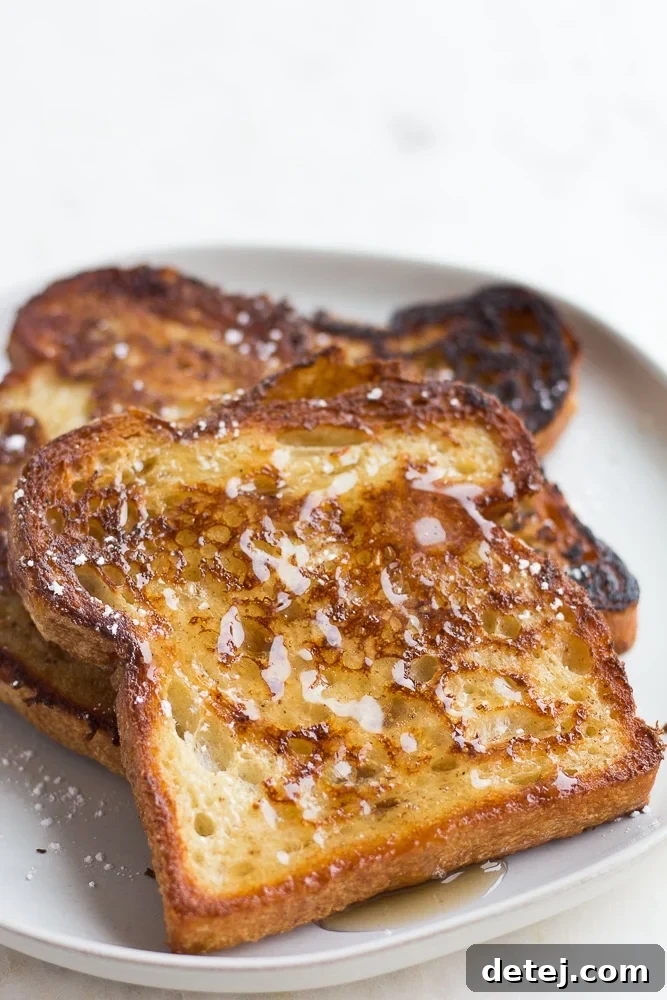
Discover the ultimate guide to making the BEST Vegan French Toast! This incredibly easy recipe comes together in just 10 minutes, using simple, everyday ingredients you likely already have in your pantry. Say goodbye to eggs – you won’t miss them at all in this wonderfully indulgent weekend morning breakfast. A special secret ingredient ensures these French toast slices are unbelievably crisp on the outside, delightfully soft on the inside, and absolutely perfect in every bite!
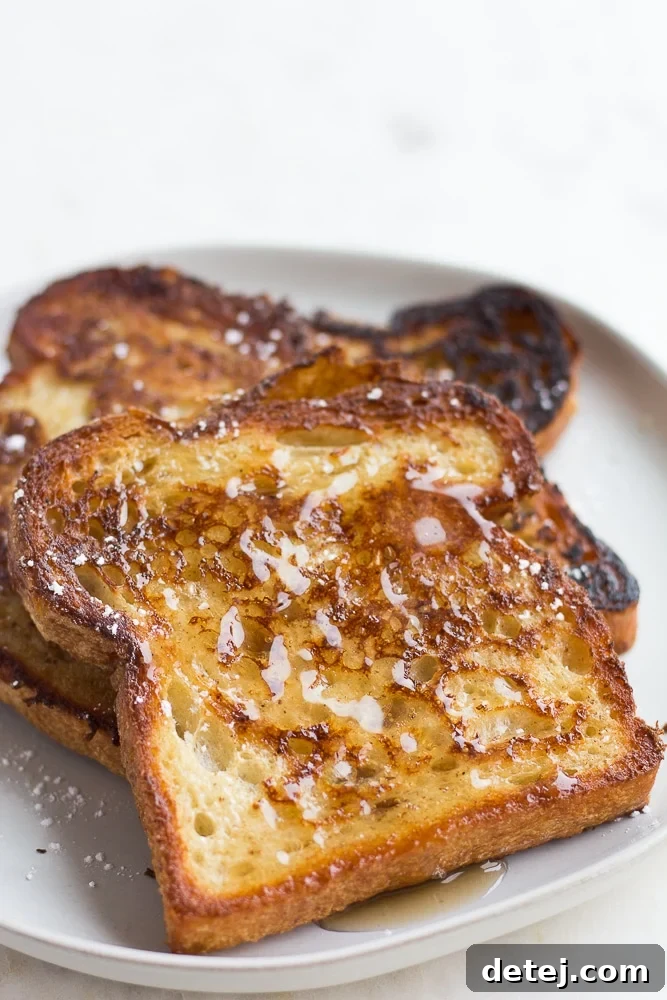
For many, French toast evokes comforting childhood memories, a staple for leisurely weekend mornings. It was certainly one of the first dishes I learned to make for myself as a child. Growing up, our kitchen wasn’t a hub of elaborate cooking or baking; convenience foods often filled our pantry, from canned spaghetti to pop tarts. Yet, French toast was a consistent exception, a simple, fast, and undeniably delicious treat we frequently prepared, especially on Saturdays and Sundays. The golden slices, bathed in a sweet, custardy batter and cooked to perfection, symbolized the relaxation of the weekend.
When I first ventured into developing a vegan version, I approached it with a healthy dose of skepticism. The idea of recreating that classic, egg-rich texture and flavor without any animal products seemed daunting. I’d seen other vegan French toast recipes, but I honestly doubted they could capture the nostalgic essence of the breakfast I cherished. Could an egg-free batter truly deliver the creamy interior and crispy exterior I remembered so fondly?
My doubts, I’m thrilled to report, were utterly unfounded! The results shocked my family and me. The very first batch of this vegan French toast vanished from the plate in under five minutes. Each bite offered a harmonious blend of textures – wonderfully creamy on the inside, never soggy, with a satisfyingly crisp crust, all infused with warm notes of cinnamon and vanilla. This recipe proved to be not just a good vegan alternative, but unequivocally the perfect French toast, period. And the best part? It’s SO incredibly easy to make, transforming your breakfast routine into a delightful culinary experience!
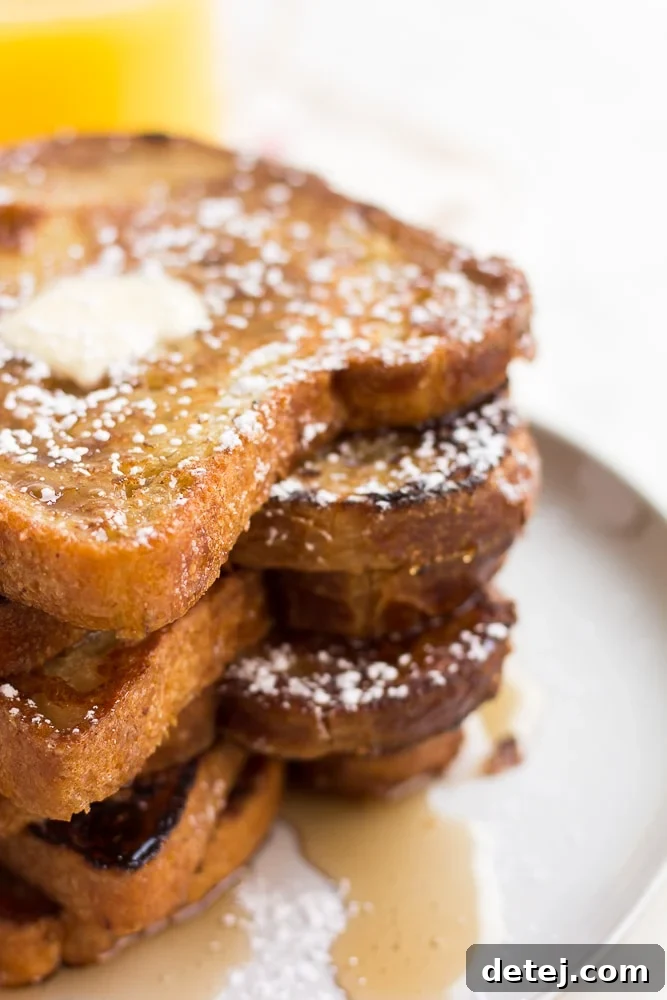
The Magic Behind Egg-Free: How to Make Vegan French Toast Without Eggs
The quest for truly exceptional vegan French toast often begins with replacing the egg. In traditional recipes, eggs serve multiple critical roles: binding the batter, contributing to a rich flavor, and creating that signature golden-brown, slightly custardy texture. Replicating this without eggs might seem like a culinary conundrum, but the solution is surprisingly simple and relies on a few common pantry staples working in perfect harmony.
My “secret ingredient” for achieving that coveted crisp exterior and perfectly set interior is none other than **cornstarch**. This unassuming powder is a fantastic thickening agent that, when cooked, helps create a beautiful, slightly crispy crust on your French toast. It works like magic as the bread cooks in the pan, ensuring each slice has that irresistible crunch without being greasy.
Beyond cornstarch, the winning vegan French toast batter combines several other key ingredients. You’ll start with a non-dairy milk – unsweetened soy milk is my preferred choice for its neutral flavor and creamy consistency, but almond, cashew, or oat milk work wonderfully too. A small amount of **ground flaxseeds** (just a teaspoon or so) acts as a natural binder, often referred to as a “flax egg” when mixed with water. While we’re not making a full flax egg here, the ground flaxseeds still contribute to the batter’s thickness and help hold everything together. Then, we add **1/2 teaspoon of baking powder**. Trust me on this one; baking powder is a game-changer, providing a subtle lift and contributing to that desirable fluffy, non-soggy interior. A touch of **maple syrup** sweetens the batter, while **cinnamon and vanilla** infuse it with the classic, comforting aromas and flavors we all love in French toast. Together, these ingredients create a robust, flavorful, and incredibly effective egg-free batter that will redefine your breakfast expectations.
Crafting Perfection: A Step-by-Step Guide to Vegan French Toast
Making vegan French toast is not only as easy as, but often even simpler than, its traditional counterpart. With just a few straightforward steps, you can transform ordinary bread into an extraordinary breakfast. Here’s how to master this delightful dish:
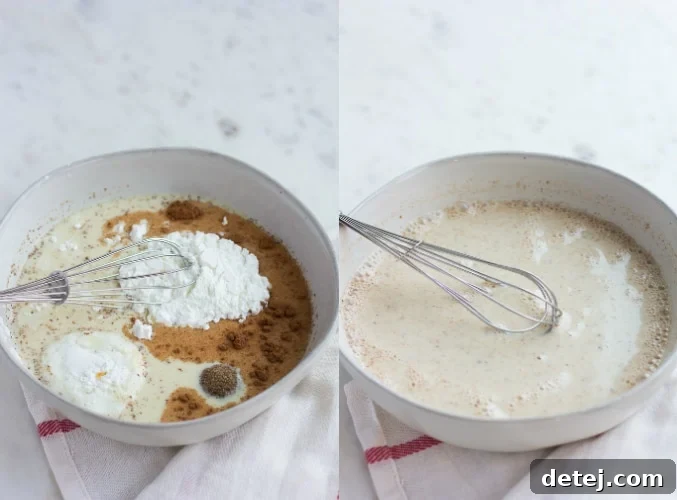
- Prepare the Batter: In a shallow bowl – make sure it’s wide enough to comfortably fit a slice of bread – whisk together all the batter ingredients: unsweetened non-dairy milk, cornstarch, ground flaxseeds, baking powder, ground cinnamon, pure maple syrup, and vanilla extract. Whisk thoroughly until the mixture is smooth and lump-free. The cornstarch, in particular, needs to be fully incorporated to prevent clumping and ensure an even coating. Set the bowl aside for a moment.
- Heat Your Pan: Place a large frying pan or griddle over medium-high heat. Add 1-2 tablespoons of vegan butter or a neutral oil like coconut oil. Allow it to melt and shimmer, ensuring it lightly coats the cooking surface. Maintaining the right pan temperature is crucial for achieving that perfect golden-brown crust without burning.
- The Dip and Cook: Just before dipping your bread, give the batter a quick whisk again. Cornstarch tends to settle at the bottom, so a stir ensures an even consistency for each slice. Take a piece of your chosen bread and immerse it in the batter, allowing it to soak on each side for about 10 seconds. This allows the bread to absorb enough liquid to become creamy inside, but not so much that it becomes soggy.
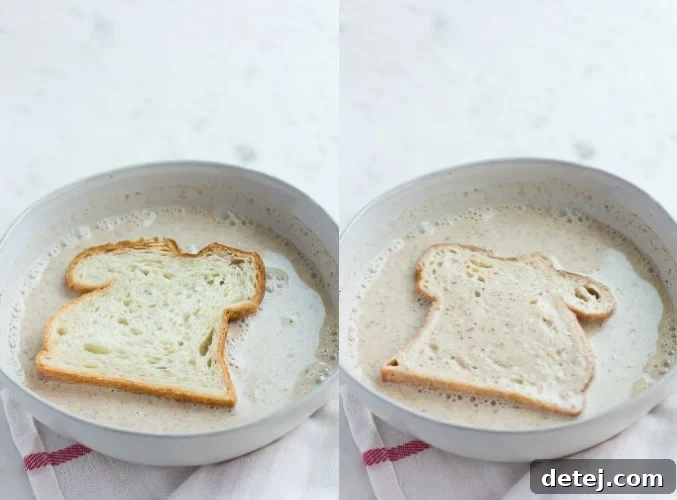
- Cook to Golden Perfection: Carefully transfer the battered bread to the hot pan. Cook for approximately 2-3 minutes per side, or until each side is beautifully golden brown and crispy. Resist the urge to press down on the bread, as this can squeeze out the batter and make it dense. As you cook successive pieces, you may need to add a little more vegan butter or oil to the pan to maintain even cooking and prevent sticking.
- Serve Immediately: Repeat the process with the remaining bread slices and batter. French toast is always best served fresh and hot. Arrange your golden creations on plates and prepare for a truly delightful breakfast experience.
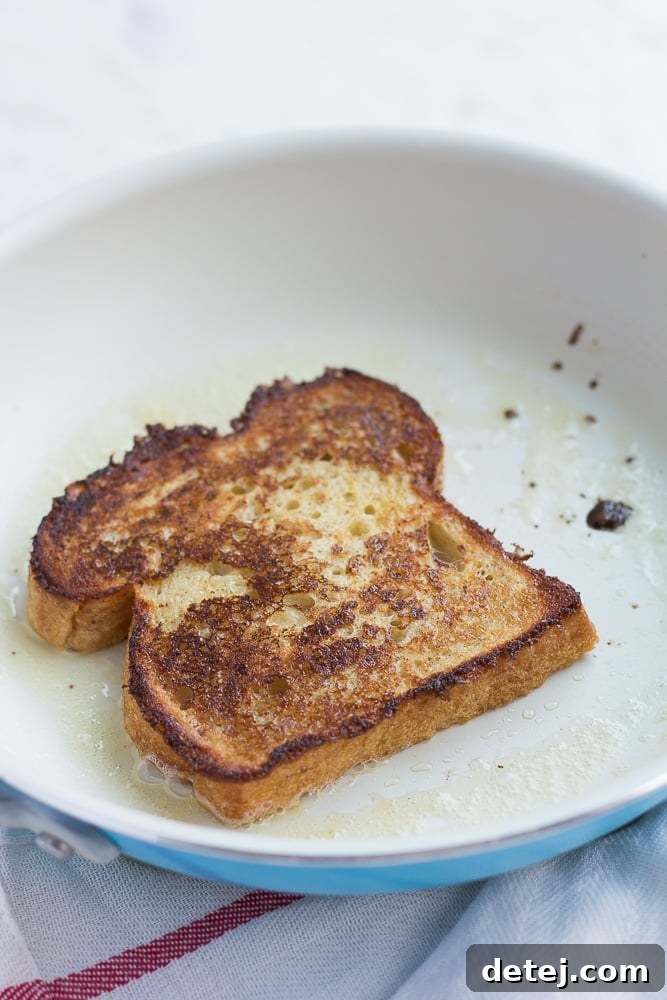
Choosing the Best Bread for Vegan French Toast
The foundation of great French toast lies in the bread you choose. It’s not just about the flavor, but also the texture and ability to absorb the batter without falling apart or becoming overly soggy. While it might seem counterintuitive, soft sandwich bread is generally not recommended for French toast. Its tender crumb can quickly become saturated, leading to a limp and unappetizing result.
For the absolute best vegan French toast, opt for a quality loaf that is slightly stale or day-old. The drier texture allows the bread to soak up the batter more effectively without disintegrating. I personally find that a good loaf of ciabatta, a day or two old, works wonders, offering a fantastic chew and structural integrity. Other excellent choices include:
- French Bread: A classic for a reason, its crusty exterior and airy interior are perfect.
- Sourdough: Offers a delightful tang that beautifully complements the sweet batter. Its firm texture holds up well to soaking.
- Challah or Brioche (Vegan Versions): If you can find vegan challah or brioche, these rich, slightly sweet breads create an incredibly decadent French toast.
- Artisan Loaves: Rustic, thick-cut artisan breads with a dense crumb and good crust are often ideal.
- Day-Old Baguette: While smaller, slices from a baguette can make charming, individual portions of crispy French toast.
The key is thickness: thicker slices (at least 3/4 to 1 inch) provide a better balance between the crispy exterior and creamy interior. Smaller loaves or thinner slices are certainly fine; you’ll just end up with more pieces of French toast, which is rarely a bad thing! Experiment with different breads to discover your favorite texture and flavor combination.
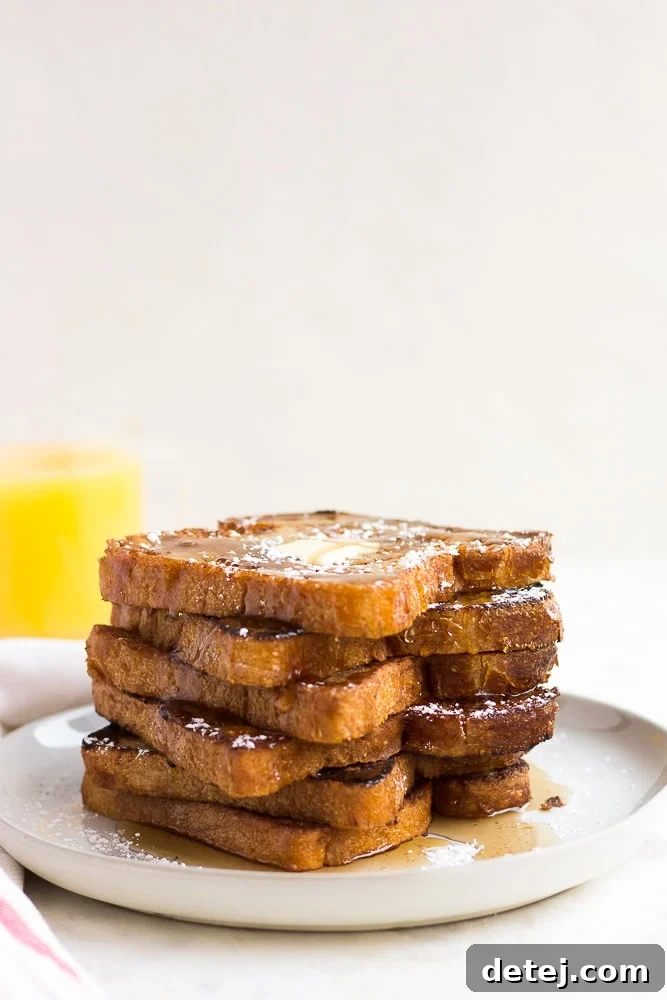
Why Choose Vegan French Toast? Beyond Deliciousness!
While the incredible taste and texture of this vegan French toast are reason enough to try it, there are several compelling reasons to embrace plant-based breakfast options. For starters, vegan French toast is an excellent choice for individuals with egg or dairy allergies, allowing them to enjoy a classic comfort food safely. It’s also a fantastic option for those looking to reduce their consumption of animal products for ethical or environmental reasons, without sacrificing flavor or satisfaction.
From a nutritional standpoint, swapping out eggs and dairy for plant-based alternatives can often mean a reduction in cholesterol and saturated fat, while increasing fiber intake (especially with whole-grain bread and flaxseeds). This recipe proves that you don’t need animal products to create a breakfast that’s both hearty and incredibly satisfying. It’s a testament to the versatility and deliciousness of plant-based cooking, offering a lighter yet equally indulgent start to your day.
Perfecting Your Vegan French Toast: Tips & Tricks for Success
Achieving French toast perfection is within your reach with these simple tips:
- Batter Consistency: Your batter should be thick enough to coat the bread without being overly gloopy. If it seems too thin, add another half teaspoon of cornstarch. If it’s too thick, a splash more non-dairy milk will thin it out.
- Don’t Overcrowd the Pan: Cook French toast in batches to avoid overcrowding the pan. This allows for even browning and prevents the pan temperature from dropping too much, which can lead to soggy results.
- Even Cooking: Ensure your pan is evenly heated. If you notice hotspots, adjust the heat or move the French toast around slightly.
- Serving Temperature: French toast is best served immediately after cooking. If you’re making a large batch, you can keep cooked slices warm in a single layer on a baking sheet in a low oven (around 200°F/95°C) while you finish the rest.
Creative Topping Ideas to Elevate Your Breakfast
Once your vegan French toast is perfectly cooked, the fun truly begins with toppings! While classic maple syrup and powdered sugar are always winners, don’t be afraid to get creative:
- Fresh Fruit: Berries (strawberries, blueberries, raspberries), sliced bananas, peaches, or grilled pineapple add natural sweetness and a burst of color.
- Vegan Whipped Cream: A dollop of coconut whipped cream or a store-bought vegan whipped topping adds a luxurious touch.
- Nut Butters: A drizzle of almond butter, peanut butter, or cashew butter provides protein and a creamy texture.
- Chocolate: Vegan chocolate chips, chocolate syrup, or a sprinkle of cocoa powder can satisfy any sweet tooth.
- Nuts & Seeds: Toasted pecans, walnuts, slivered almonds, or a sprinkle of hemp seeds add crunch and nutrients.
- Compotes & Jams: Homemade fruit compotes or your favorite berry jam can offer a deeper, richer fruit flavor.
Storage and Reheating Tips for Leftover Vegan French Toast
While this vegan French toast is undeniably best when served fresh, you might find yourself with a few slices left over. Fortunately, they can be stored and reheated, though they won’t be quite as crispy as when first made. This recipe does not freeze particularly well if you want to maintain optimal texture, as freezing can lead to a slightly mushy consistency upon reheating.
For best results, store any leftover French toast in an airtight container in the refrigerator for up to 2-3 days. When ready to enjoy, the best way to reheat them to restore some crispiness is in a toaster oven or a regular oven preheated to 350°F (175°C) for about 5-10 minutes, or until warmed through and lightly re-crisped. You can also quickly reheat them in a frying pan over medium heat for a few minutes per side. Microwaving is possible for speed, but it will result in a softer texture.
I genuinely hope you enjoy this fantastic Vegan French Toast recipe and that it brings as much joy to your mornings as it has to ours! It’s a truly delightful way to start any day, proving that plant-based breakfasts can be just as comforting, indulgent, and satisfying as their traditional counterparts.
Want more delicious vegan breakfast recipes? Be sure to check out some of our other favorites:
- Simple Vegan Pancakes
- Best Ever Vegan Waffles
- Savory Tofu Scramble
- Easy Vegan Quiche
- Cinnamon Sugar Vegan Donuts
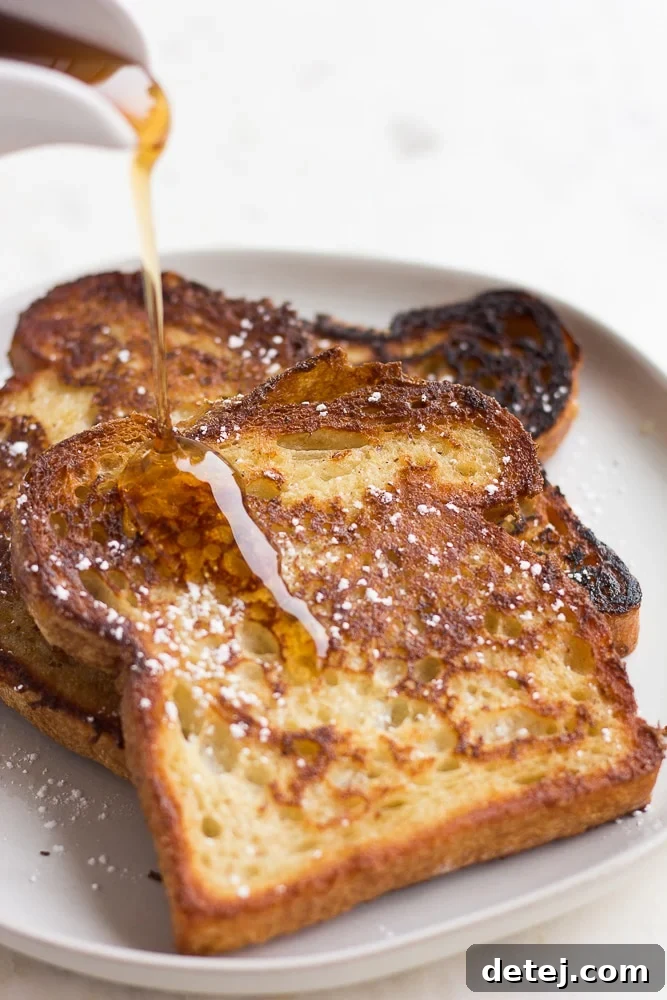

Vegan French Toast
Pin
Comment
Ingredients
Instructions
-
In a shallow bowl, wide enough to hold a piece of bread, whisk together the soy milk, cornstarch, ground flaxseeds, baking powder, cinnamon, maple syrup and vanilla until smooth.
-
Heat a little bit of vegan butter or coconut oil in a frying pan over medium-high heat until melted and shimmering. Whisk the batter again right before dipping bread, as the cornstarch will settle to the bottom of the bowl.
-
Dip each side of a bread slice in the batter and let it soak for about 10 seconds. Then, add the bread to the hot pan and cook for 2-3 minutes on each side, until beautifully golden brown and crispy. Add more vegan butter or oil to the pan as needed in between pieces of bread.
-
Serve immediately with your desired toppings such as maple syrup, powdered sugar, or fresh fruit.
Notes
- You may use any kind of unsweetened non-dairy milk, such as soy, coconut, almond, cashew or oat milk.
- For gluten-free vegan French toast, simply use your favorite gluten-free bread.
- This recipe is best enjoyed fresh, as it does not freeze well and may lose its crisp texture upon reheating from frozen.