
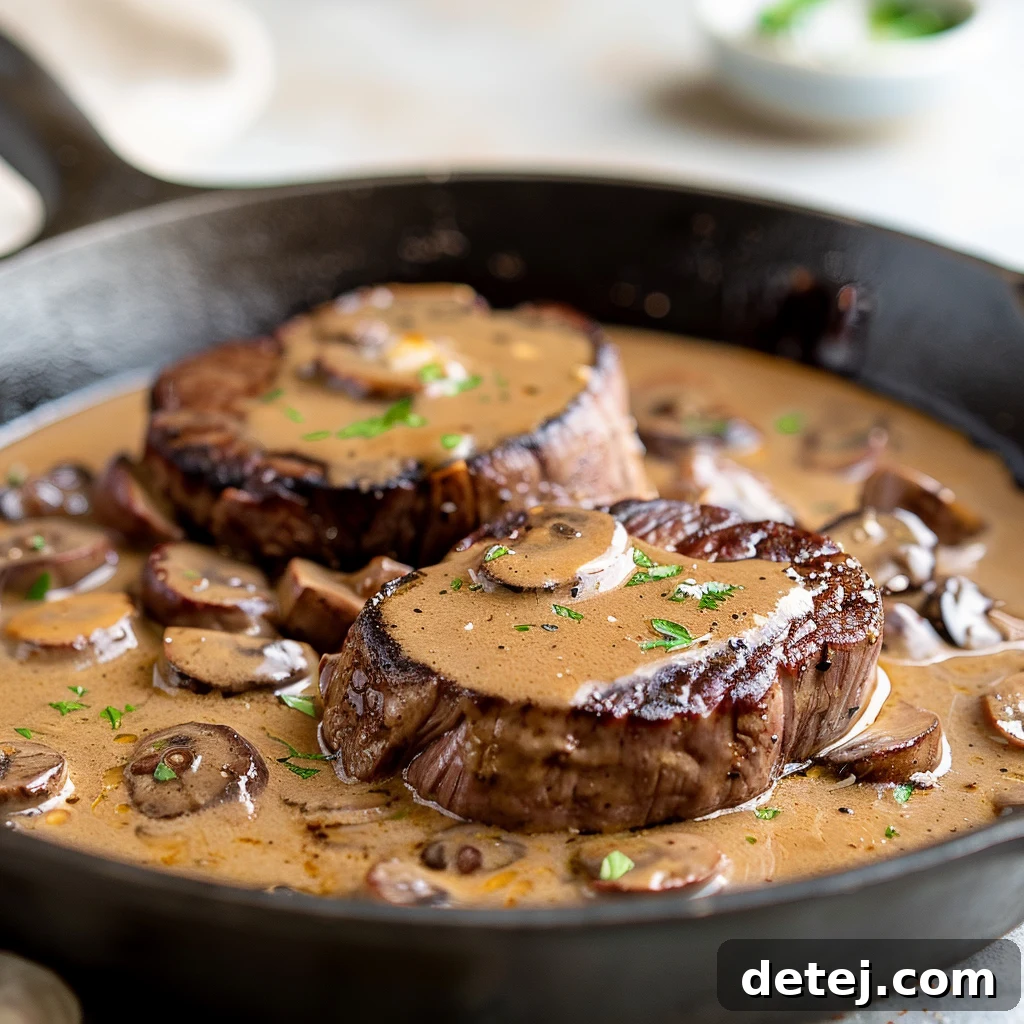
The Ultimate Guide to Perfectly Cooked Steak Diane: A Restaurant-Quality Recipe at Home
Imagine a steak so tender it melts in your mouth, enveloped in a rich, creamy, and subtly tangy sauce that elevates every bite. That’s the magic of Steak Diane. Far from being an overly complicated dish, this classic French-American steak preparation is an approachable yet incredibly impressive meal perfect for special occasions or simply elevating a weeknight dinner. This comprehensive guide will walk you through every step, from selecting the finest cut of beef to mastering the searing technique and crafting the iconic sauce. Get ready to transform your kitchen into a gourmet haven and impress your palate with a dish that consistently delivers exquisite flavor and texture. Say goodbye to mediocre steak dinners and embrace the culinary art of Steak Diane!
Choosing the Perfect Cut for Your Steak Diane
The foundation of any exceptional steak dish lies in the quality and type of meat you choose. For Steak Diane, where the steak is often pounded thin and cooked quickly, selecting the right cut is paramount. It influences not only the tenderness and juiciness but also how well it absorbs the rich flavors of the Diane sauce. Let’s explore the key factors to consider when making your selection, ensuring your culinary masterpiece begins with the perfect canvas.
Prioritizing Tenderness and Marbling
Tenderness is arguably the most crucial factor for a truly delightful Steak Diane. Cuts with less connective tissue will naturally yield a more succulent and enjoyable eating experience. When it comes to tenderness, the undisputed champions are:
- Beef Tenderloin (Filet Mignon): This cut is renowned for its unparalleled tenderness, offering a buttery, melt-in-your-mouth texture. It’s lean but incredibly fine-grained, making it ideal for the delicate cooking process of Steak Diane. Its mild flavor also allows the rich Diane sauce to truly shine, making it a top choice for a classic Steak Diane.
- Ribeye: While perhaps not as fork-tender as the tenderloin, the ribeye is celebrated for its abundant marbling – intramuscular fat that renders during cooking, infusing the meat with incredible juiciness and a robust, beefy flavor. If you prefer a richer taste and slightly firmer texture, a thin-cut ribeye can be an excellent choice, as its fat content provides a deeper flavor profile that stands up well to the bold sauce.
- New York Strip (Striploin): Offering a fantastic balance between tenderness and flavor, the New York Strip boasts good marbling along with a satisfying chew. It holds up beautifully to searing and provides a substantial beefy taste that complements the sauce without being overpowering. Its firm texture makes it easy to handle and cook to perfection.
Beyond the cut, look for steaks with good marbling. These flecks of fat enhance both the flavor and juiciness of the steak, ensuring a more luxurious final product. Well-marbled meat guarantees a tender, moist, and flavorful bite every time.
Thickness and Uniformity
The traditional Steak Diane preparation often involves pounding the steaks to an even thickness, typically around ½ to ¾ inch. This ensures rapid and uniform cooking, which is crucial for achieving that perfect medium-rare without drying out the meat. When selecting your steaks, aim for cuts that are already relatively uniform in thickness, or be prepared to pound them yourself. A consistent thickness prevents some parts from being overcooked while others remain undercooked, ensuring a consistently tender steak. This also helps in achieving a perfect sear across the entire surface.
Budget-Friendly Alternatives and Quality Grades
While premium cuts offer the most luxurious experience, delicious Steak Diane is achievable on various budgets. If tenderloin or ribeye are beyond your current budget, consider these excellent alternatives:
- Sirloin Steak: A more economical choice, sirloin offers good flavor and can be quite tender, especially the top sirloin. When pounded thin, it performs well for Steak Diane, offering a satisfying texture and taste at a lower cost.
- Flank Steak or Skirt Steak: These cuts are more fibrous and benefit greatly from pounding and quick searing. While they offer a distinct texture, their robust flavor pairs wonderfully with the Diane sauce. Remember to slice them against the grain for maximum tenderness to ensure an enjoyable eating experience.
Beyond the cut, understanding USDA beef grades can further guide your selection. Prime beef is the highest quality, with abundant marbling, offering the most tender and flavorful experience. This is often found in high-end steakhouses. It is followed by Choice, which is still very high quality and widely available in most supermarkets, providing an excellent balance of flavor and tenderness. Select beef is leaner and less tender but can still be enjoyable if prepared correctly, often benefiting from marinating or pounding. For Steak Diane, aiming for Choice or Prime will yield the best results, though a well-prepared Sirloin can also be fantastic.
Armed with the knowledge of selecting the ideal steak, you’re now poised to move to the next critical phase: preparing and seasoning your chosen cuts. These initial steps are fundamental to building the layers of flavor and ensuring your Steak Diane achieves its legendary tenderness and succulence. Let’s unlock the secrets to perfect preparation that sets the stage for culinary success.
Essential Steak Preparation: From Pounding to Perfect Seasoning
Bringing Steaks to Room Temperature
A frequently overlooked but vital step in steak preparation is allowing your steaks to come to room temperature before cooking. Remove them from the refrigerator approximately 30-60 minutes prior to cooking, depending on their thickness. This crucial step ensures that the meat cooks more evenly from edge to center, preventing a cold interior that often results in an overcooked exterior and an undercooked core. Room temperature steaks also sear better, contributing to a more flavorful crust and overall juicier result because the heat can penetrate more uniformly, reducing the cooking time needed to reach the desired internal temperature.
Pounding for Tenderness and Uniformity
For a truly authentic Steak Diane, pounding the steaks to an even thickness is a traditional and highly recommended step. Place each steak between two sheets of plastic wrap or parchment paper. Using a meat mallet or the bottom of a heavy skillet, gently but firmly pound the steaks to an even thickness of about ½ to ¾ inch. This not only tenderizes tougher cuts by breaking down muscle fibers but also ensures consistent cooking times and a larger surface area for searing and sauce coverage. This technique also helps to ensure that the entire steak cooks to the same doneness, resulting in a more enjoyable and consistent texture.
The Importance of a Dry Surface
Before any seasoning or cooking begins, it is imperative to thoroughly pat your steaks dry with paper towels. Any residual moisture on the surface of the meat will steam rather than sear, hindering the development of that coveted deep brown, flavorful crust known as the Maillard reaction. This chemical reaction is responsible for creating hundreds of complex flavor compounds and the appealing browned exterior that gives steak its rich taste. A dry surface allows for direct contact with the hot pan, promoting superior caramelization and locking in the natural juices. Don’t underestimate this simple step; it makes a profound difference in the final taste and appearance of your Steak Diane.
Perfecting Your Seasoning Blend
While a simple yet generous application of coarse sea salt and freshly cracked black pepper is often all that’s needed to highlight the natural flavor of a high-quality steak, don’t hesitate to personalize your seasoning blend for Steak Diane. Consider adding a touch of garlic powder or onion powder for an aromatic depth that complements the beef. Dried herbs like thyme or rosemary can also infuse the meat with beautiful herbaceous notes, enhancing the overall profile. The key is to season generously on both sides of the steak, ensuring every bite is infused with flavor. Apply the seasoning evenly, then gently press it into the meat with your fingertips to help it adhere and ensure even distribution.
Brief Rest After Seasoning
After seasoning, allow the steaks to rest for another 10-15 minutes. This brief period allows the salt to draw out some moisture, which then reabsorbs, carrying the flavors deeper into the meat through osmosis. It’s a small step that makes a noticeable difference in the overall taste and succulence of your Steak Diane, resulting in a more deeply seasoned and flavorful final dish.
With your carefully selected steaks now perfectly prepared and seasoned, you’ve laid the groundwork for an outstanding meal. The next step is where the transformation truly happens: mastering the cooking process. This section will guide you through achieving that coveted perfect sear, ideal doneness, and incredible juiciness that define a truly magnificent Steak Diane.
Mastering the Searing and Cooking Technique
The art of cooking Steak Diane lies in achieving a rapid, high-heat sear to lock in juices and develop a rich crust, followed by careful monitoring to reach your desired doneness. This precise technique ensures the steak remains tender and succulent, ready to be coated in its signature sauce. Follow these steps for an impeccable cooking experience.
Selecting Your Pan and Achieving High Heat
For the best sear, a heavy-bottomed skillet is essential. Cast iron or stainless steel pans are ideal as they retain heat exceptionally well and distribute it evenly across the cooking surface. Place your chosen skillet over medium-high to high heat. The pan should be smoking slightly before you add the steak, indicating it’s hot enough for that perfect, immediate sear. A proper preheat is non-negotiable for developing the delicious, savory crust that is a hallmark of perfectly cooked steak, as it ensures the Maillard reaction occurs quickly and effectively.
The Searing Technique
Add a tablespoon of high smoke-point oil (like grapeseed, canola, or avocado oil) or clarified butter to the screaming hot pan. Once the oil shimmers, carefully lay the steaks into the pan, ensuring not to overcrowd it. Cook the steaks undisturbed for 2-3 minutes per side for thin cuts, or 3-5 minutes for slightly thicker steaks, depending on how you like your steak. Resist the temptation to move or flip them prematurely; this static contact with the hot surface is what creates that deeply flavorful, mahogany-brown crust. You’ll know it’s time to flip when the steak easily releases from the pan without sticking.
Achieving Desired Doneness
Cooking times are highly dependent on the steak’s thickness and your preferred level of doneness. While visual cues are helpful, an instant-read meat thermometer is your best friend for precision. Insert it into the thickest part of the steak, away from any bone, for the most accurate reading:
- Rare: 120-125°F (49-52°C) – Cool red center, very tender.
- Medium-Rare: 130-135°F (54-57°C) – Warm red center, juicy and tender (often considered ideal for Steak Diane, as it allows the steak to remain moist and flavorful).
- Medium: 135-140°F (57-60°C) – Warm pink center, slightly firmer.
- Medium-Well: 140-145°F (60-63°C) – Slightly pink center, mostly gray.
- Well-Done: 150°F+ (66°C+) – No pink, very firm (generally not recommended for premium cuts).
Remember that the steak’s internal temperature will rise by a few degrees as it rests, so remove it from the heat just before it reaches your target temperature, accounting for carryover cooking.
Basting for Enhanced Flavor (Optional)
During the final minute or two of cooking, you can add a tablespoon of butter to the pan along with aromatics like fresh thyme, rosemary sprigs, or crushed garlic cloves. Tilt the pan slightly and use a spoon to continuously baste the melted butter and infused juices over the steaks. This technique adds an extra layer of flavor, creates a glossy finish, and ensures the steak remains incredibly moist and rich, picking up the nuanced flavors of the herbs and garlic.
The Critical Resting Period
Once your steaks have reached their desired internal temperature, immediately remove them from the pan and transfer them to a warm plate or cutting board. Tent them loosely with foil and allow them to rest for at least 5-10 minutes. This resting period is not optional; it’s absolutely essential. During cooking, the muscle fibers contract, pushing the juices to the center of the steak. Resting allows these juices to redistribute throughout the meat, resulting in a significantly more tender, moist, and flavorful steak. Skipping this step will cause the juices to run out onto your plate when you cut into it, leaving you with dry meat and a less satisfying experience. This patience is rewarded with superior texture and juiciness.
With your perfectly seared and rested steaks awaiting their grand finale, it’s time to turn your attention to the heart of Steak Diane: its iconic, rich, and creamy sauce. This sauce isn’t just an accompaniment; it’s a star in its own right, harmonizing all the flavors and textures into a truly unforgettable dish.
Crafting the Signature Creamy & Savory Steak Diane Sauce
The Steak Diane sauce is more than just a topping; it’s the element that truly defines and elevates this classic dish. It’s a complex yet perfectly balanced concoction of savory, tangy, and rich flavors that cling beautifully to the seared beef. Crafting this sauce in the same pan used for the steak ensures you capture all the delicious fond (browned bits) left behind, creating an unparalleled depth of flavor. Let’s delve into creating this velvety masterpiece.
Deglazing for Deep Flavor
The first step in building your sauce is to deglaze the pan. After removing the rested steaks, return the hot skillet to the stove over medium heat. Add a splash of brandy or cognac (traditionally used for its aromatic depth and slight sweetness) to the pan. Immediately scrape the bottom of the pan with a wooden spoon, loosening all the caramelized brown bits (fond) that cling there. This fond is packed with incredible flavor, formed from the searing process, and is the secret to a rich sauce. Allow the alcohol to reduce by half, cooking off the raw alcohol smell and concentrating its essence, which adds a beautiful depth to the sauce.
If you prefer not to use alcohol, beef broth or even red wine can be used for deglazing, offering a similar, albeit slightly different, flavor profile. The key is to dissolve those flavorful browned bits, creating the foundation for your sauce.
Building the Flavor Profile: Aromatics and Umami
Once deglazed, it’s time to introduce the aromatic and savory backbone of the sauce. Add a tablespoon of butter to the pan, then sauté finely minced shallots until softened and fragrant, about 1-2 minutes. Shallots offer a milder, sweeter flavor than onions, perfect for this elegant sauce. Follow with minced garlic, cooking for another 30 seconds until aromatic, being careful not to burn it, as burnt garlic can turn bitter. These aromatics lay a crucial foundation for the sauce’s complexity, adding layers of savory depth.
Next, stir in key flavor agents: Worcestershire sauce for its distinctive umami depth, savory notes, and a subtle tang, and Dijon mustard for a piquant kick and creamy texture. The combination of these ingredients creates a harmonious balance that perfectly complements the rich beef, adding complexity without overpowering the steak’s natural flavor. A dash of hot sauce like Tabasco is an optional addition here for a touch of heat, mirroring some traditional Steak Diane recipes.
The Creamy Finish
Pour in your beef stock or broth and bring the mixture to a gentle simmer, allowing it to reduce slightly and concentrate the flavors. This reduction process intensifies the savory notes. Finally, introduce the heavy cream. This is where the sauce truly transforms, developing its signature luscious, velvety texture. Stir continuously until the sauce thickens to your desired consistency – it should be able to coat the back of a spoon. Season with salt and freshly ground black pepper to taste, adjusting the balance of flavors as needed. Ensure the sauce is perfectly seasoned to bring out all its intricate components.
The Grand Finale: Assembling and Serving Your Steak Diane
The moment has arrived to unite the perfectly cooked steaks with their rich, velvety sauce. This final step is where all your efforts culminate in a dish that is as visually appealing as it is delicious. The aroma alone will captivate your senses, promising an extraordinary dining experience.
Final Assembly and Presentation
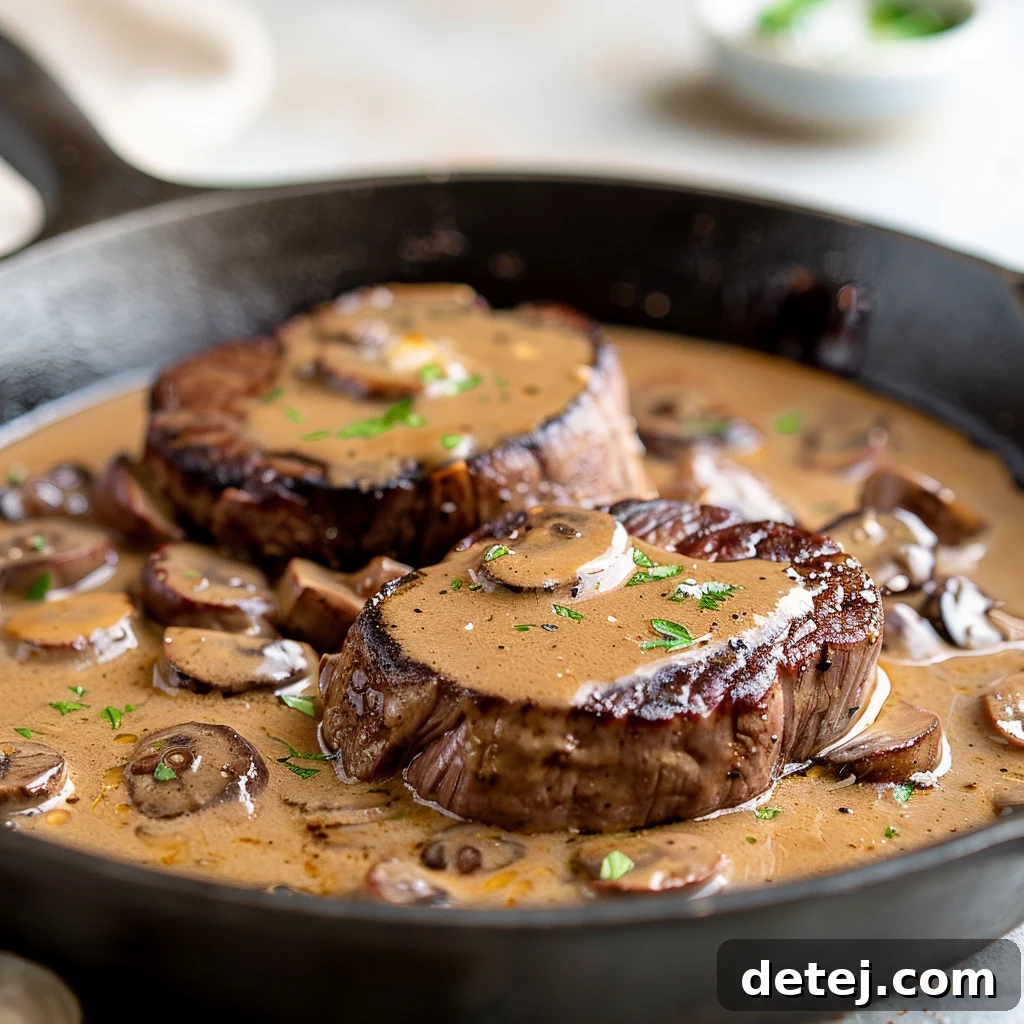
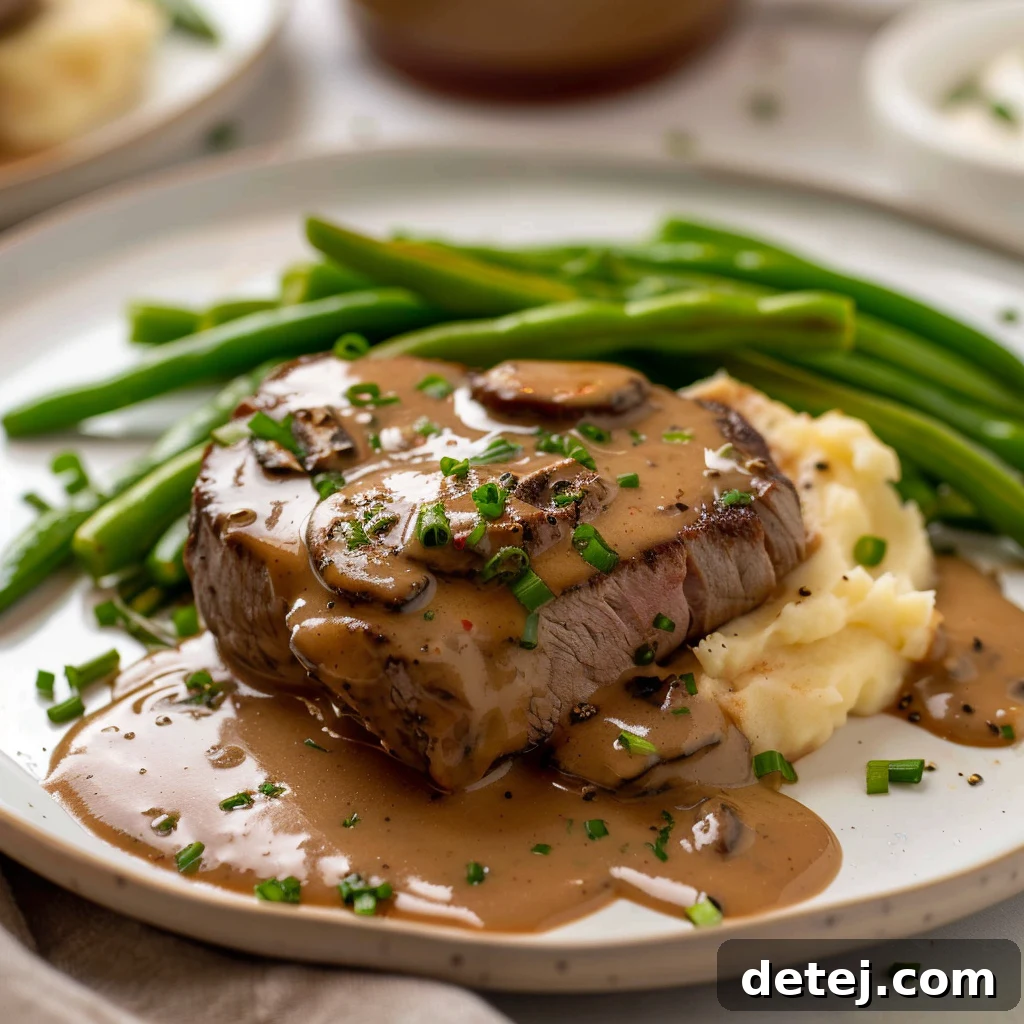
Return the rested steaks to the pan with the simmering Diane sauce, or arrange them on individual plates. Spoon the warm, fragrant sauce generously over each steak, ensuring every inch is coated in its luxurious embrace. The juices released during the steak’s resting period will mingle with the sauce, further enriching its flavor and texture. Garnish with a sprinkle of fresh minced parsley, which adds a vibrant pop of color and a fresh herbal note that cuts through the richness of the dish, providing a beautiful contrast and enhancing the overall presentation.
Recommended Accompaniments and Pairings
To complete your Steak Diane meal, consider serving it with classic accompaniments. Creamy mashed potatoes or crispy roasted potatoes are perfect for soaking up every last drop of the delectable sauce, ensuring no flavor goes to waste. Steamed or roasted green vegetables, such as asparagus, green beans, or broccoli, provide a lovely textural contrast and a fresh counterpoint to the rich steak, balancing the meal. A light, crisp green salad with a simple vinaigrette can also be a wonderful addition, offering a refreshing element.
For wine enthusiasts, a medium-bodied red wine like a Pinot Noir, Merlot, or a lighter Cabernet Sauvignon would pair beautifully with Steak Diane, complementing its richness without overpowering the delicate sauce. If you used brandy or cognac in your sauce, a glass of the same can create a cohesive and sophisticated pairing, enhancing the dish’s flavor profile even further.
As you present this beautiful creation, your loved ones will be drawn in by the irresistible flavors and eye-catching presentation.
Krystel’s Cooking
Your Culinary Masterpiece Awaits
From carefully selecting the ideal cut of beef and meticulously preparing it, to mastering the precise searing technique and crafting the legendary creamy Diane sauce, this guide has equipped you with all the knowledge and tips to create a truly exceptional meal. Steak Diane, once a theatrical tableside preparation, is now an accessible gourmet dish for your home kitchen, promising culinary delight with every forkful.
Now it’s your turn to shine in the kitchen. Gather your ingredients, revisit these expert techniques, and embark on a culinary journey that promises impressive results. Whether you’re aiming to recreate a nostalgic classic or simply explore new depths of flavor, perfectly cooked Steak Diane is a dish that consistently delivers. Enjoy the process, savor the incredible flavors, and delight in the accolades from your family and friends!
Classic Steak Diane Recipe
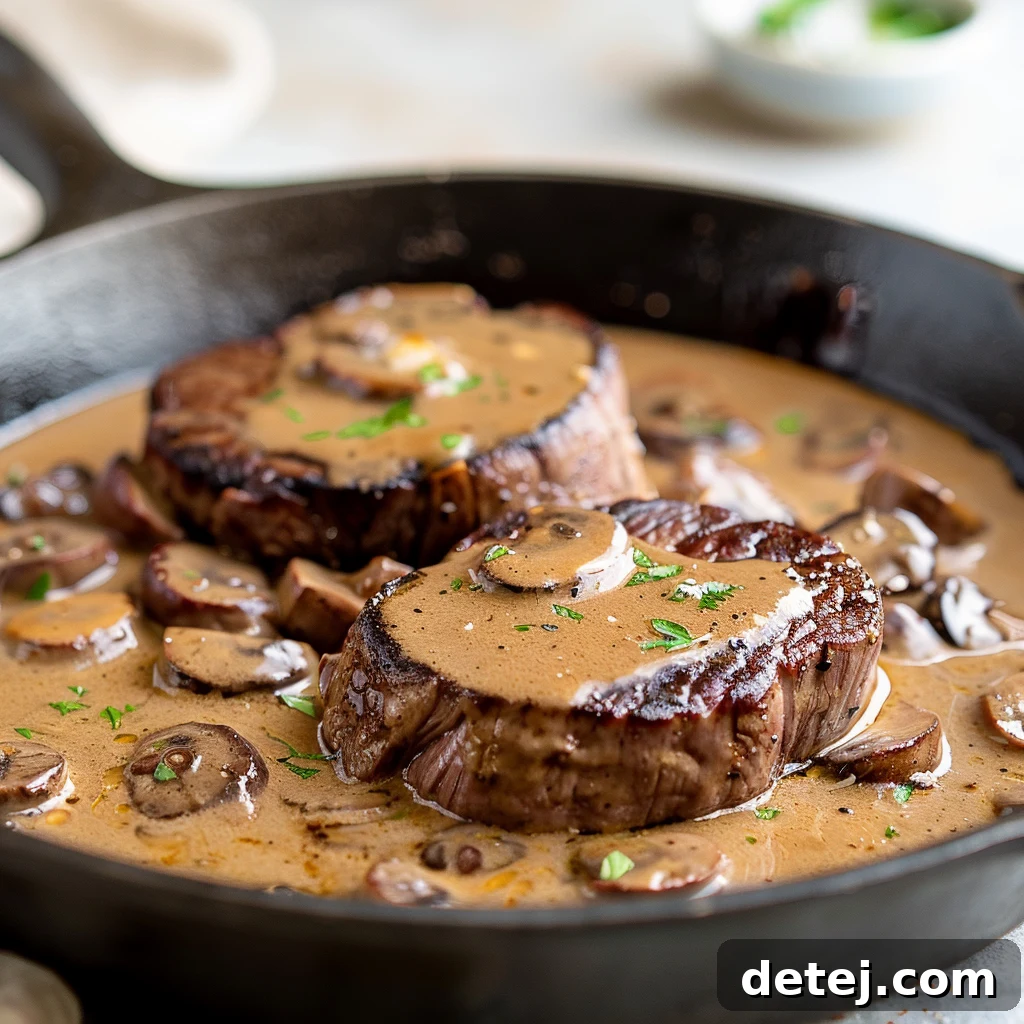
This classic Steak Diane recipe yields perfectly seared steaks in a rich, creamy, and savory sauce. Ideal for a gourmet meal at home.
Servings: 4
Prep Time: 10 mins
Cook Time: 20 mins
Total Time: 30 mins
Author: Krystel
Ingredients
- 2 tablespoons butter, divided
- 4 (approx. 6 oz each) steaks (e.g., beef tenderloin, ribeye, or sirloin), preferably pounded to ½-¾ inch thickness
- Salt, to taste
- Freshly ground black pepper, to taste
- 8 ounces mushrooms, sliced
- 1 shallot, finely diced
- 1 teaspoon minced garlic
- 1 tablespoon fresh squeezed lemon juice
- 2 teaspoons Dijon mustard
- ½ cup beef stock (or ¼ cup brandy/cognac + ¼ cup beef stock for deglazing)
- 2 tablespoons heavy whipping cream
- 1 tablespoon fresh parsley, minced, for garnish
Instructions
- Bring steaks to room temperature for 30-60 minutes and thoroughly pat them dry with paper towels. Season generously with salt and pepper on both sides. If not already done, pound steaks to a uniform ½-¾ inch thickness.
- In a large, heavy-bottomed skillet (e.g., cast iron), melt 1 tablespoon of butter over medium-high heat until shimmering and just starting to brown.
- Carefully place seasoned steaks in the hot skillet, ensuring not to overcrowd the pan (cook in batches if necessary). Sear for 2-4 minutes per side, depending on thickness and desired doneness (aim for an internal temperature of 130-135°F / 54-57°C for medium-rare).
- Remove cooked steaks from the pan and transfer to a plate. Tent loosely with foil and allow to rest for 5-10 minutes while you prepare the sauce. This resting step is crucial for juicy steaks.
- Return the skillet to medium heat. Add the remaining 1 tablespoon of butter. Sauté sliced mushrooms for 2-3 minutes until softened and lightly browned.
- Add the finely diced shallot and cook for 1 minute until fragrant. Stir in the minced garlic and cook for another 30 seconds, being careful not to burn it.
- Deglaze the pan: Pour in beef stock (or brandy/cognac if using, allowing it to reduce by half first, then add beef stock), scraping up any browned bits (fond) from the bottom of the pan with a wooden spoon. Allow the liquid to simmer and reduce slightly for about 1 minute.
- Stir in the fresh squeezed lemon juice and Dijon mustard. Whisk until well combined.
- Slowly whisk in the heavy whipping cream. Bring the sauce to a gentle simmer and cook for 1-2 minutes, stirring occasionally, until it thickens slightly and coats the back of a spoon. Season the sauce with salt and pepper to taste, adjusting flavors as needed.
- Return the rested steaks to the pan, spooning the sauce and mushrooms generously over them.
- Garnish with fresh minced parsley and serve immediately. Enjoy your perfectly crafted Steak Diane!