
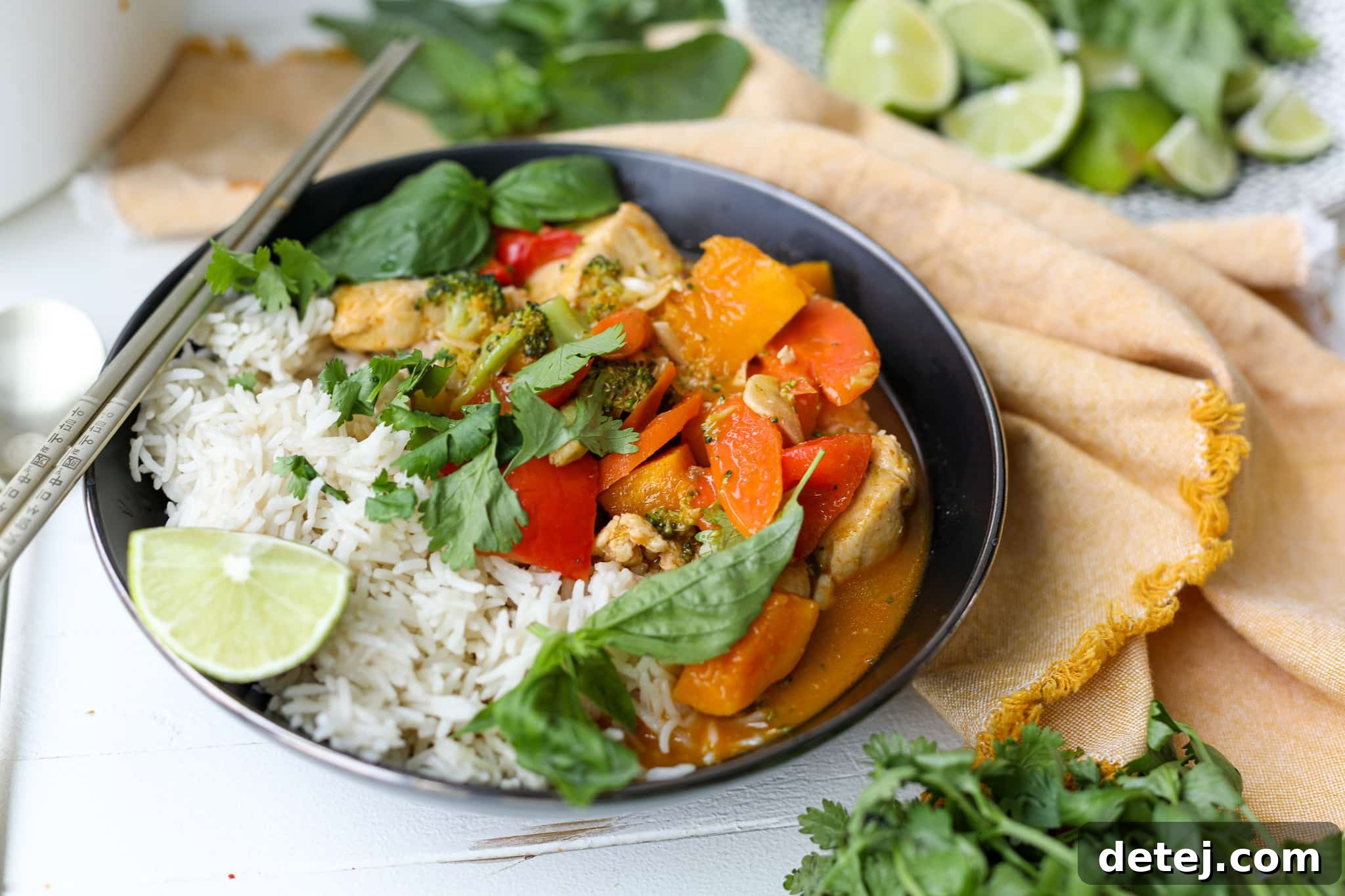
Craving a cozy, vibrant, and utterly delicious meal to warm your soul? Look no further than this incredible Thai Red Curry Chicken and Vegetables recipe. Perfect for those chilly evenings, this dish is a symphony of flavors, combining tender, succulent chicken with a medley of fresh, wholesome vegetables, all swimming in the most aromatic and irresistibly creamy red curry broth. It’s not just a meal; it’s an experience that brings the exotic tastes of Thailand right to your dinner table, making weeknights feel like a culinary adventure.
Serving this delightful curry alongside fluffy jasmine rice creates the ultimate comfort food combination. Enhance its natural beauty and zest with a generous sprinkle of freshly chopped cilantro, fragrant basil leaves, and bright lime wedges. This dish is designed to be a family favorite, offering a balanced and hearty meal that satisfies everyone, from the most discerning palates to the pickiest eaters. Prepare to impress and delight with a homemade Thai red curry that’s both healthy and bursting with authentic taste.
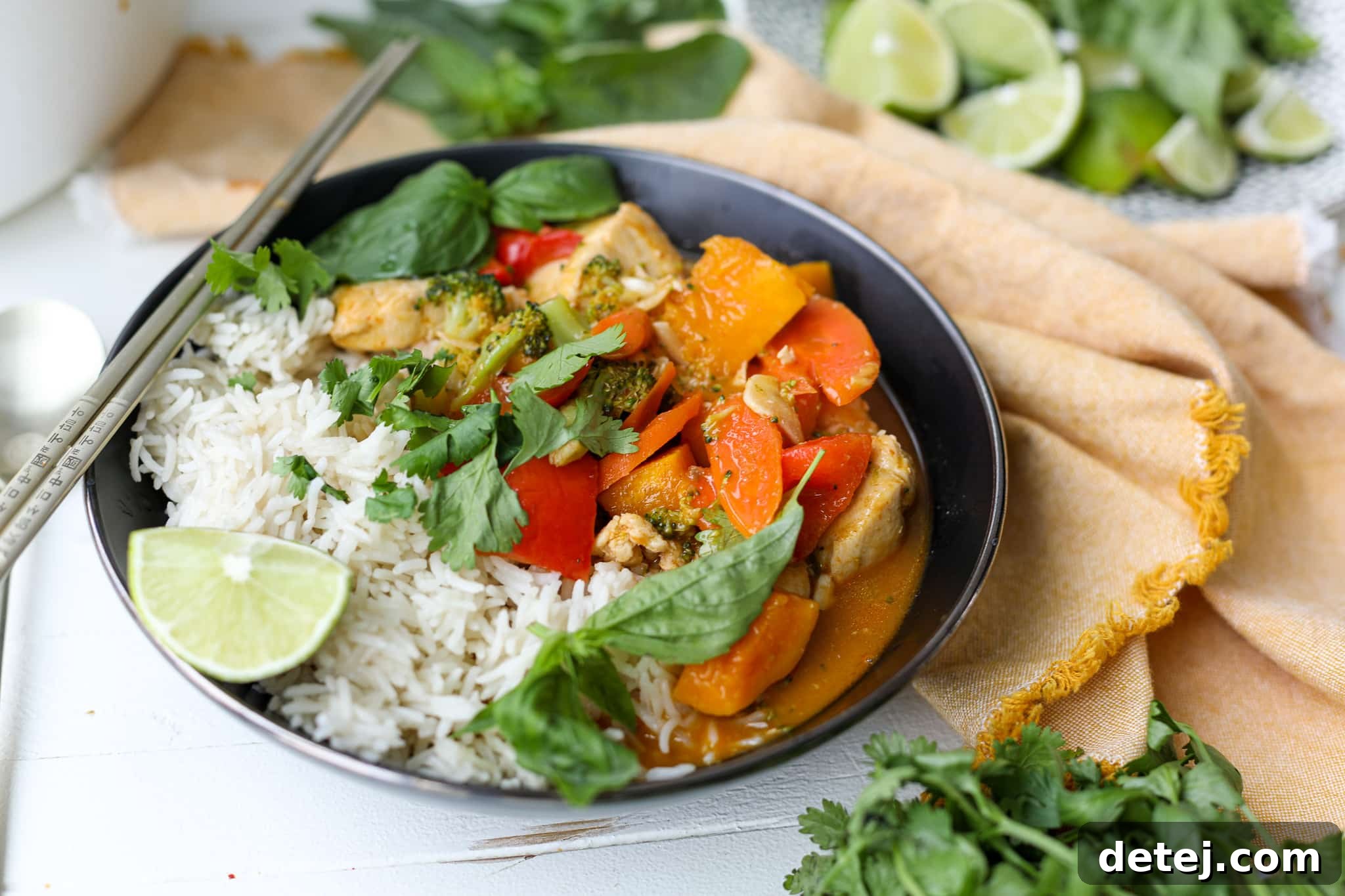
Why You’ll Love This Thai Red Curry Recipe
This Thai Red Curry Chicken and Vegetables recipe isn’t just another dinner idea; it’s a culinary journey that promises satisfaction and flavor in every spoonful. Here are several compelling reasons why this dish will quickly become a cherished favorite in your recipe collection:
- Unforgettable Flavor and Robust Nutrition: This chicken curry is a perfect fusion of bold, aromatic flavors and exceptional nutritional value. It delivers a warm, comforting, and deeply satisfying dinner that energizes your body without leaving you feeling heavy or sluggish. The richness of the red curry paste combined with fresh ginger and garlic creates an incredibly complex and inviting aroma that will fill your kitchen.
- Effortlessly Customizable: One of the greatest joys of this recipe is its incredible flexibility. You have complete freedom to swap out or add any vegetables you desire, making it truly your own. Whether you prefer bell peppers, green beans, bamboo shoots, mushrooms, or even different types of squash, this recipe adapts beautifully. For a delightful twist, consider using succulent shrimp, tender beef, or even firm tofu as an alternative to chicken, opening up a world of dietary possibilities.
- Quick and Convenient Weeknight Meal: Despite its gourmet taste, this Thai Red Curry is surprisingly quick to prepare, making it an ideal choice for busy weeknights. With active cooking time kept to a minimum, you can have a restaurant-quality meal on the table faster than ordering takeout.
- Hearty and Wholesome: Packed with lean protein from the chicken and a generous serving of vitamins and fiber from the colorful vegetables, this curry is a wholesome option that contributes to a balanced diet. The coconut milk base offers healthy fats, ensuring you feel satiated and nourished.
- Family-Friendly Appeal: The inviting flavors and comforting warmth of this curry make it a hit with all ages. You can easily adjust the spice level to suit everyone’s preference, ensuring even the youngest members of your family can enjoy this delightful dish. It’s a fantastic way to introduce new flavors and textures in an appealing way.
- An Authentic Taste of Thailand at Home: While adapted for home cooking convenience, this recipe captures the essence of traditional Thai red curry. It brings together the sweet, savory, spicy, and tangy elements that define this beloved cuisine, allowing you to enjoy an authentic experience without leaving your kitchen.
The Essential Ingredients for Thai Red Curry
Crafting the perfect Thai Red Curry starts with selecting the right ingredients. Each component plays a vital role in building the rich, layered flavors of this beloved dish. Here’s a detailed look at what you’ll need:
Protein: The Heart of Your Curry
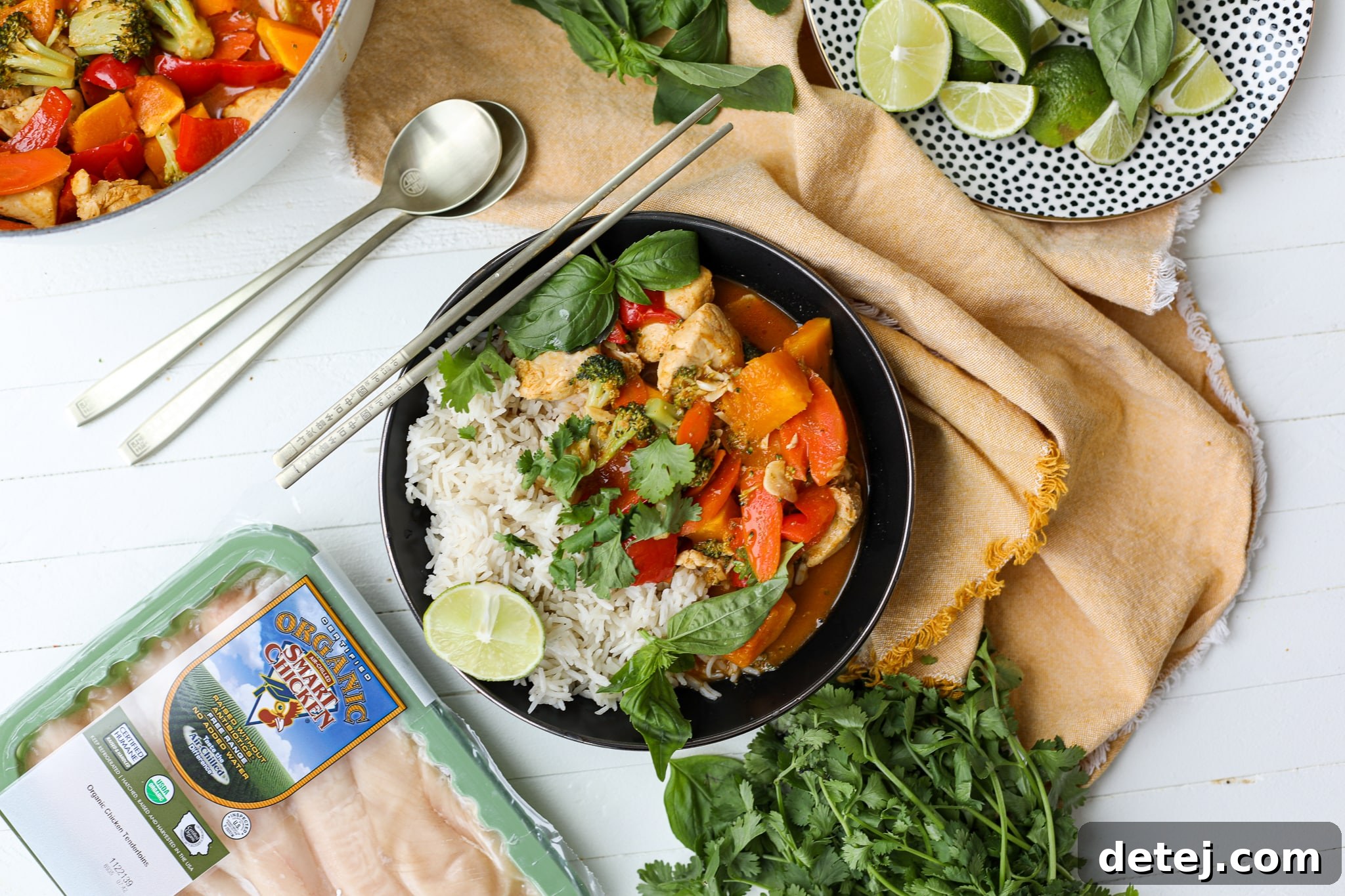
Chicken Tenderloin: For this recipe, we recommend using a pound of high-quality chicken tenderloin. Cube it into bite-sized pieces for even cooking and easy eating. Chicken breast or thighs are also excellent choices; thighs will offer a richer flavor and remain incredibly tender, while breasts are a leaner option. Ensure your chicken is cut uniformly to cook at the same rate.
The Flavor Foundation: Oils and Aromatics
Avocado Oil: A neutral oil like avocado oil or vegetable oil is crucial for sautéing the chicken and aromatics. Its high smoke point and mild flavor ensure that the chicken browns beautifully without imparting any unwanted taste, unlike olive oil, which can introduce a distinct Mediterranean note that clashes with Thai flavors.
Seasoning (Kosher Salt and Cracked Black Pepper): Simple yet essential. Seasoning the chicken to taste during cooking enhances its natural flavors and ensures a well-rounded dish.
Fresh Garlic & Ginger: These aromatic powerhouses are non-negotiable for authentic Thai flavor. You’ll need to peel and finely mince fresh ginger, and similarly, peel and either thinly slice or mince your garlic cloves. Their pungent, spicy notes form the aromatic backbone of the curry.
The Core Thai Flavors: Paste, Broth, and Creaminess
Red Curry Paste: This is the star ingredient! You’ll typically need 2-3 tablespoons of red curry paste. The amount can be adjusted based on your desired level of spice and curry intensity. Start with 2 tablespoons if you prefer a milder flavor, and add more to taste. Quality paste makes a significant difference, so choose a reputable brand.
Broth (Chicken Bone Broth or Stock): Chicken bone broth is highly recommended for deglazing the pan and adding remarkable depth of flavor and nutritional benefits to the curry base. If bone broth isn’t available, regular chicken stock or broth will work perfectly well, providing a savory foundation.
Coconut Milk (Full-Fat or Lite): Full-fat coconut milk is key to achieving a luxuriously creamy and rich broth. However, if you’re aiming for a lighter sauce, lite coconut milk is a suitable alternative. Just be aware that the consistency and richness will be slightly different.
The Flavor Balancers: Sweet, Sour, Umami
Light Brown Sugar: A touch of light brown sugar helps to balance the heat of the curry paste and the richness of the coconut milk, adding a subtle sweetness that is characteristic of authentic Thai cuisine.
Fresh Lime Juice: Always opt for freshly squeezed lime juice. Its bright, zesty acidity cuts through the richness of the curry, adding a crucial tangy note that elevates all the other flavors.
Fish Sauce (Optional, but Recommended): Though optional, a small amount (1 teaspoon) of fish sauce contributes an unparalleled depth of umami and a savory complexity that is hard to replicate. Be cautious, as a little goes a very long way! If you’re not a fan or prefer a vegetarian option, you can omit it.
Low Sodium Soy Sauce (Replacement for Fish Sauce): If you choose to omit the fish sauce, compensate by adding 2 teaspoons of low sodium soy sauce to maintain a savory balance in the broth.
The Vegetable Medley: Color, Texture, and Health
Red Bell Pepper: Diced or sliced, red bell pepper adds a touch of sweetness, a pleasant crunch, and a vibrant color to the dish. Cut it to a similar size as your chicken pieces for visual appeal and even distribution.
Carrots: Sliced diagonally into ¼-inch thick pieces, carrots contribute natural sweetness, a firm texture, and a beautiful orange hue. Ensure they are sliced uniformly for consistent cooking.
Butternut Squash: Pre-softened and cubed butternut squash adds a creamy texture and a sweet, earthy flavor that complements the curry perfectly. Pre-cooking it ensures it becomes tender without turning mushy in the final dish.
Broccoli: Softened broccoli florets provide a pop of green, a slight bitterness that balances the richness, and essential nutrients. Like the squash, pre-softening prevents it from becoming waterlogged or overcooked in the curry.
Garnishes: The final touches! Serve this dish with cooked rice, a generous sprinkle of freshly chopped cilantro and basil leaves, and fresh lime wedges for an added burst of freshness and aroma. These not only enhance the visual appeal but also add layers of flavor and texture.
Expert Tips for a Perfect Thai Red Curry
Achieving a truly outstanding Thai Red Curry requires attention to a few key details. These tips and tricks will help you elevate your dish from good to absolutely exceptional, ensuring rich flavors and perfect textures every time:
- Coconut Milk Choice and Preparation: While full-fat canned coconut milk is recommended for its rich creaminess and luscious texture, don’t hesitate to use lite coconut milk if you prefer a thinner sauce or are watching calories. Regardless of your choice, always shake the can well before opening to ensure the cream and liquid are fully incorporated. This prevents a separated, watery broth.
- Mastering Fish Sauce: Fish sauce is a potent ingredient that adds a crucial layer of umami and authentic Thai flavor. However, its strong taste means a little truly goes a long way. Start with the recommended teaspoon and taste before adding more. If you’re vegetarian or simply not a fan, you can confidently omit it. In its place, be sure to use 2 teaspoons of low-sodium soy sauce to maintain a similar savory depth in the broth.
- Selecting the Right Cooking Oil: Always use a neutral oil, such as avocado oil or vegetable oil, when cooking your chicken and aromatics. These oils have a high smoke point and won’t impart any distinct flavor to your dish, allowing the true Thai spices and ingredients to shine through. Olive oil, with its distinct flavor profile, is best avoided for this type of cuisine.
- Pre-Softening Tough Vegetables: For harder vegetables like butternut squash and broccoli, pre-softening them *before* adding them to the curry pot is a game-changer. This ensures they cook evenly and become tender without turning mushy from prolonged simmering.
- Butternut Squash: You can roast cubed butternut squash in the oven until slightly tender, or microwave it for a quicker method. If microwaving a whole squash, pierce the skin several times with a knife to allow steam to escape and prevent it from bursting. Cover it with a damp paper towel and microwave for 3-5 minutes, or until the skin feels soft enough to peel. Once cooled, peel, deseed, and cube it. Remember, you want it just tender, not fully cooked, as it will continue to cook in the curry.
- Broccoli: Blanch broccoli florets in boiling water for 1-2 minutes, or microwave them according to package directions. Again, aim for slightly tender, vibrant green florets, as they will finish cooking in the simmering sauce. This method ensures your broccoli retains a pleasant bite and doesn’t get soggy.
- Don’t Rush the Aromatics: When sautéing the minced ginger and garlic, take your time (20-30 seconds). Cook them just until they are fragrant, but be careful not to burn them, as this can lead to a bitter taste. This brief sauté unlocks their full aromatic potential.
- Deglazing for Flavor: After sautéing your vegetables, deglazing the pan with chicken stock is an important step. This process helps to lift all the flavorful browned bits from the bottom of the pot, incorporating them back into your sauce and adding a rich layer of complexity.
- Adjusting Spice Levels: The heat of red curry paste can vary significantly between brands and batches. Always taste your curry broth after adding the paste and adjust with more paste if you prefer it spicier, or a touch more coconut milk or sugar if you need to temper the heat.
- Garnishes for Freshness: Don’t underestimate the power of fresh garnishes! Cilantro, basil, and lime wedges are not just for show; they add vibrant color, fresh aroma, and crucial tangy notes that brighten the entire dish.
- Optimal Vegetable Sizing: Try to cut all your vegetables and chicken into roughly the same bite-sized pieces. This promotes even cooking, ensures every spoonful offers a balanced mix of ingredients, and makes the dish more enjoyable to eat.
Step-by-Step: How to Make Thai Red Curry with Chicken and Vegetables
Follow these detailed steps to create a flavorful and comforting Thai Red Curry that will become a staple in your kitchen:
- Brown the Chicken: Begin by heating one tablespoon of avocado oil in a large Dutch oven or heavy-bottomed pot over medium-high heat. Once the oil is shimmering and hot, add your cubed chicken tenderloin. Season the chicken generously with a pinch of kosher salt and freshly cracked black pepper. Sauté the chicken until it is cooked through and lightly browned on all sides. Once cooked, remove the chicken from the pot and set it aside, along with any accumulated juices.
- Sauté Aromatics and Curry Paste: Add the remaining avocado oil to the same pot. Reduce the heat slightly to medium. Immediately add the minced ginger and thinly sliced or minced garlic. Sauté for about 20-30 seconds, stirring constantly, until the aromatics become fragrant and lightly golden – be careful not to burn them. Next, stir in the red curry paste, mixing it well with the ginger and garlic until a wonderfully aromatic paste forms. Cook for another minute to bloom the spices.
- Add Vegetables and Deglaze: Introduce the diced red bell peppers and diagonally sliced carrots to the pot. Stir well to coat them in the curry paste. Sauté for 4-5 minutes, allowing the vegetables to soften slightly and absorb the flavors. Pour in the chicken stock to deglaze the pan, scraping up any browned bits from the bottom of the pot with a wooden spoon. These bits are packed with flavor!
- Combine and Simmer: Return the cooked chicken and its juices back into the pot. Pour in the full-fat coconut milk, add the fresh lime juice, optional fish sauce, and light brown sugar. If you are omitting the fish sauce, be sure to add 2 teaspoons of low sodium soy sauce at this stage. Stir all the ingredients thoroughly until well combined.
- Finish with Softened Vegetables: Bring the curry mixture to a gentle boil, then reduce the heat to a low simmer. Add the pre-softened butternut squash and broccoli florets to the pot. Season the entire dish with additional kosher salt and pepper to taste, adjusting to your preference. Allow the curry to simmer for another 5-7 minutes, or until all the ingredients are heated through and the vegetables are tender-crisp.
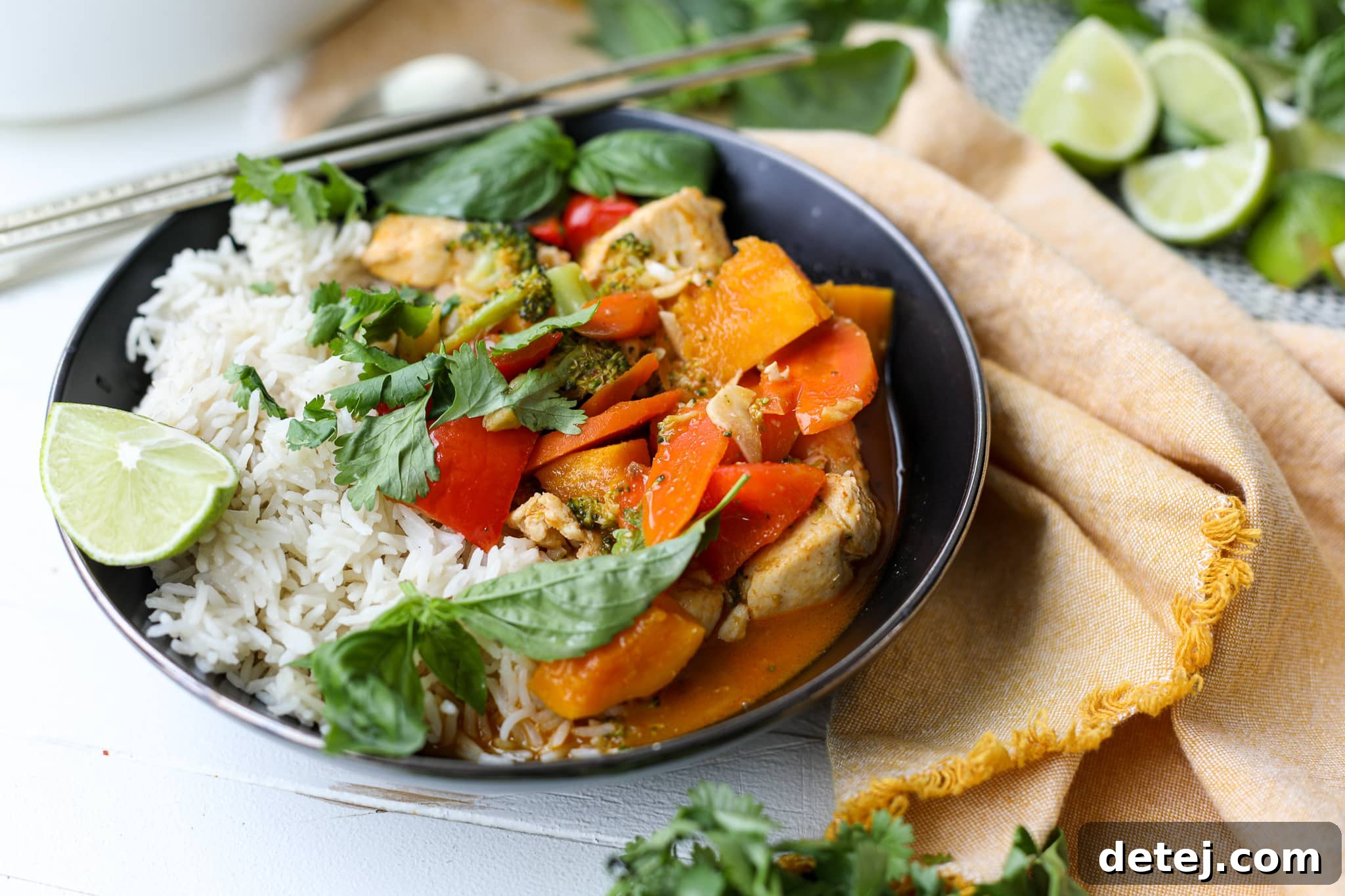
- Serve and Garnish: Ladle the steaming Thai Red Curry into bowls. Serve it alongside perfectly cooked jasmine rice. For an authentic and vibrant finish, generously top each serving with freshly chopped cilantro, fragrant basil leaves, and fresh lime wedges. Enjoy this cozy and flavorful meal!
Storage and Meal Prep for Thai Red Curry
This Thai Red Curry is not only delicious freshly made but also excellent for meal prepping. Properly stored, it maintains its robust flavors and comforting qualities for several days, making it a convenient option for future meals.
- Refrigeration: Store any leftover Thai Red Curry in an airtight container in the refrigerator for up to 3-4 days. The flavors often deepen and meld beautifully overnight, making it even more delicious the next day.
- Reheating: To reheat, simply transfer your desired portion to a microwave-safe bowl and heat in the microwave until warmed through. Alternatively, you can gently warm it on the stovetop over medium-low heat, stirring occasionally, until it reaches your preferred temperature. If the sauce has thickened too much, you can add a splash of chicken broth or water to thin it out slightly.
- Freezing (for longer storage): Thai Red Curry freezes exceptionally well. Allow the curry to cool completely before transferring it to freezer-safe containers or heavy-duty freezer bags. It can be stored in the freezer for up to 2-3 months.
- Thawing and Reheating Frozen Curry: When ready to enjoy, transfer the frozen curry to the refrigerator to thaw overnight. Once thawed, reheat it gently on the stovetop or in the microwave as described above. Note that vegetables like broccoli might become slightly softer in texture after freezing and thawing, but the flavor will remain fantastic.
- Meal Prep Tip: Cook a larger batch of rice separately and store it in individual portions. This way, you can quickly assemble a fresh meal by simply reheating the curry and serving it with freshly warmed rice, basil, cilantro, and lime wedges. The nutritional information provided below does not include the cooked rice, basil, cilantro, and lime wedges, so factor those in for your overall meal planning.
Frequently Asked Questions About Thai Red Curry
Absolutely! This recipe is incredibly versatile. Instead of chicken tenderloin, you can easily use boneless, skinless chicken thighs for a richer flavor, or even shrimp for a quicker-cooking seafood option. For a vegetarian alternative, firm tofu or tempeh are excellent choices; just be sure to press and sauté them until golden brown before adding them to the curry.
Yes, this curry is a fantastic make-ahead meal! The flavors often deepen and become even more harmonious overnight. Simply prepare the curry as directed, allow it to cool, then store it in an airtight container in the refrigerator for up to 3-4 days. Reheat gently on the stovetop or in the microwave as needed, and serve over tender rice or cooked rice noodles for a quick and delicious meal.
The spice level largely depends on the red curry paste you use. To make it milder, start with 1.5 tablespoons of curry paste and taste before adding more. To increase the heat, add an extra ½ to 1 tablespoon of curry paste, or include a finely minced fresh red chili (like bird’s eye chili) along with the ginger and garlic. A dash of sriracha or chili oil at the end can also add a quick boost of spice.
Feel free to get creative with your vegetables! Great additions include green beans, snow peas, sliced mushrooms (cremini or shiitake), bamboo shoots, baby corn, spinach (stirred in at the very end), or even different colored bell peppers. Remember to pre-soften any tougher vegetables like potatoes or sweet potatoes if you choose to add them.
This recipe can easily be made gluten-free by ensuring all your ingredients are certified gluten-free. Most red curry pastes are naturally gluten-free, but always check the label. If using soy sauce as a fish sauce substitute, opt for tamari, which is a gluten-free soy sauce.
Other Thai-Inspired Recipes to Explore
If you’ve enjoyed the vibrant flavors of this Thai Red Curry, you’re in for a treat with these other delightful recipes that bring the essence of Thai cuisine to your home:
- Family Style Chicken Fajitas: While not strictly Thai, this dish offers a similar satisfaction with bold flavors and a customizable setup, perfect for family dining.
- Chicken Satay with Spicy Peanut Sauce: Dive deeper into Thai appetizers with these succulent grilled chicken skewers served with a rich, spicy peanut dipping sauce. A perfect starter or light meal.
- Green Curry with Tofu and Vegetables: For another classic Thai curry experience, try a vibrant green curry. The Green Curry Paste is typically spicier and offers a different aromatic profile. It pairs wonderfully with tofu and a range of green vegetables like eggplant, bamboo shoots, and green beans.
- Pad See Ew (Thai Stir-Fried Noodles): Explore the world of Thai noodles with this popular stir-fry featuring wide rice noodles, Chinese broccoli, egg, and your choice of protein, all coated in a savory, slightly sweet sauce.
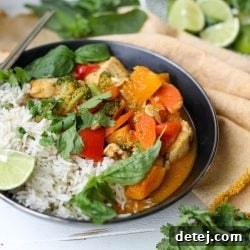
Thai Red Curry Chicken and Vegetables
Sarah Thomas-Drawbaugh
Yield:
4
servings
25
25
50
Pin Recipe
Leave a Review »
Equipment
- 1 large Dutch oven
Ingredients
- 1 lb. chicken tenderloin, cubed into bite-sized pieces
- 2 tablespoons avocado oil, divided
- kosher salt, to taste
- cracked black pepper, to taste
- 2 teaspoons ginger, peeled and minced
- 2 teaspoons garlic, 2-3 cloves, minced
- 2-3 tablespoons red curry paste, adjust to desired spice level
- 1 medium red bell pepper, diced or sliced
- 2 small-medium carrots, peeled and sliced diagonally, ¼ inch thick
- ¾ cup chicken bone broth, or regular chicken broth
- 13.66 ounces full-fat coconut milk, option to use lite instead
- 1 tablespoon light brown sugar
- 1 tablespoon fresh lime juice, freshly squeezed
- 1 teaspoon fish sauce, optional, for umami
- 2 teaspoons low sodium soy sauce, use if omitting fish sauce
- ½ cup butternut squash, softened in advance and diced
- ½ cup broccoli florets, softened in advance
Sides and Garnishes
- 1 cup rice, cooked according to package directions (yields about 2 cups cooked)
- 2 tablespoons fresh basil, freshly chopped
- 2 tablespoons fresh cilantro, freshly chopped
- 1 lime, cut into wedges
Instructions
-
Heat one tablespoon of avocado oil in your Dutch oven pot over medium-high heat. Once hot, add the cubed chicken and season it with a pinch of kosher salt and black pepper. Cook until the chicken is cooked through and lightly browned. Remove the chicken from the pot and set it aside.
-
Add the remaining avocado oil to the pot. Then, add the minced ginger and garlic. Sauté for 20-30 seconds, or until fragrant, being careful not to burn them. Next, add the red curry paste and stir well to combine with the aromatics.
-
Add the diced red bell peppers and thinly sliced carrots to the pot. Stir well to coat the vegetables in the curry paste. Sauté for 4-5 minutes, allowing them to soften slightly. Deglaze the pan with the chicken stock, scraping up any browned bits from the bottom.
-
Return the cooked chicken and its juices back into the pot. Add the coconut milk, fresh lime juice, fish sauce (if using), and light brown sugar. Stir all ingredients well. If omitting fish sauce, remember to add 2 teaspoons of low sodium soy sauce instead.
-
Bring the mixture to a soft boil, then reduce the heat to a simmer. Add the pre-softened butternut squash and broccoli. Season with additional kosher salt and pepper to taste. Continue to simmer until everything is heated through and the vegetables are tender.
-
Serve the Thai Red Curry in a bowl alongside cooked rice. Garnish generously with freshly chopped cilantro, basil leaves, and fresh lime wedges before serving.
Notes
Nutrition
Calories: 430kcal,
Carbohydrates: 12g,
Protein: 28g,
Fat: 31g,
Saturated Fat: 20g,
Polyunsaturated Fat: 2g,
Monounsaturated Fat: 7g,
Trans Fat: 0.01g,
Cholesterol: 73mg,
Sodium: 523mg,
Potassium: 834mg,
Fiber: 2g,
Sugar: 6g,
Vitamin A: 4164IU,
Vitamin C: 57mg,
Calcium: 59mg,
Iron: 4mg
Main Course
American
430
Sarah Thomas-Drawbaugh