
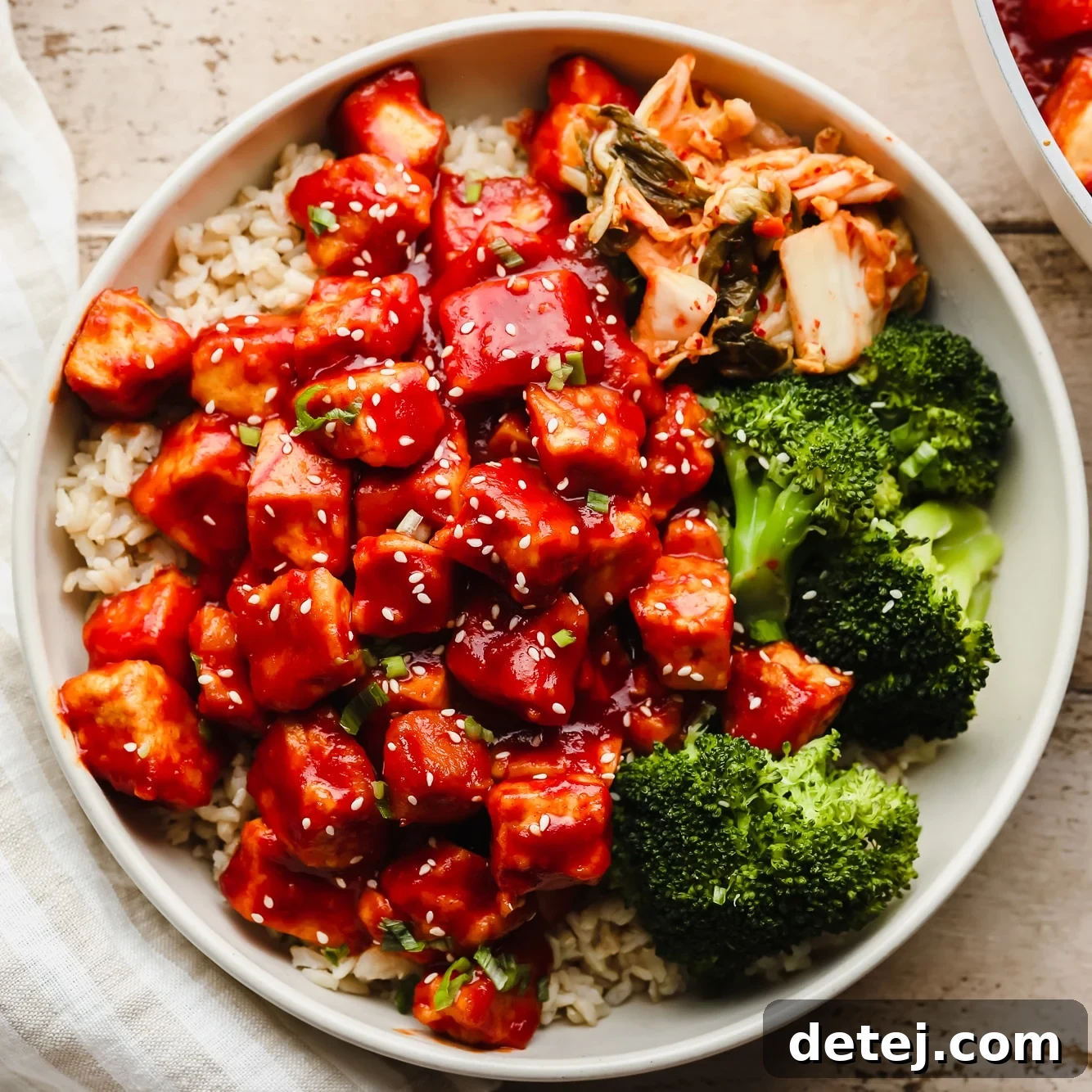
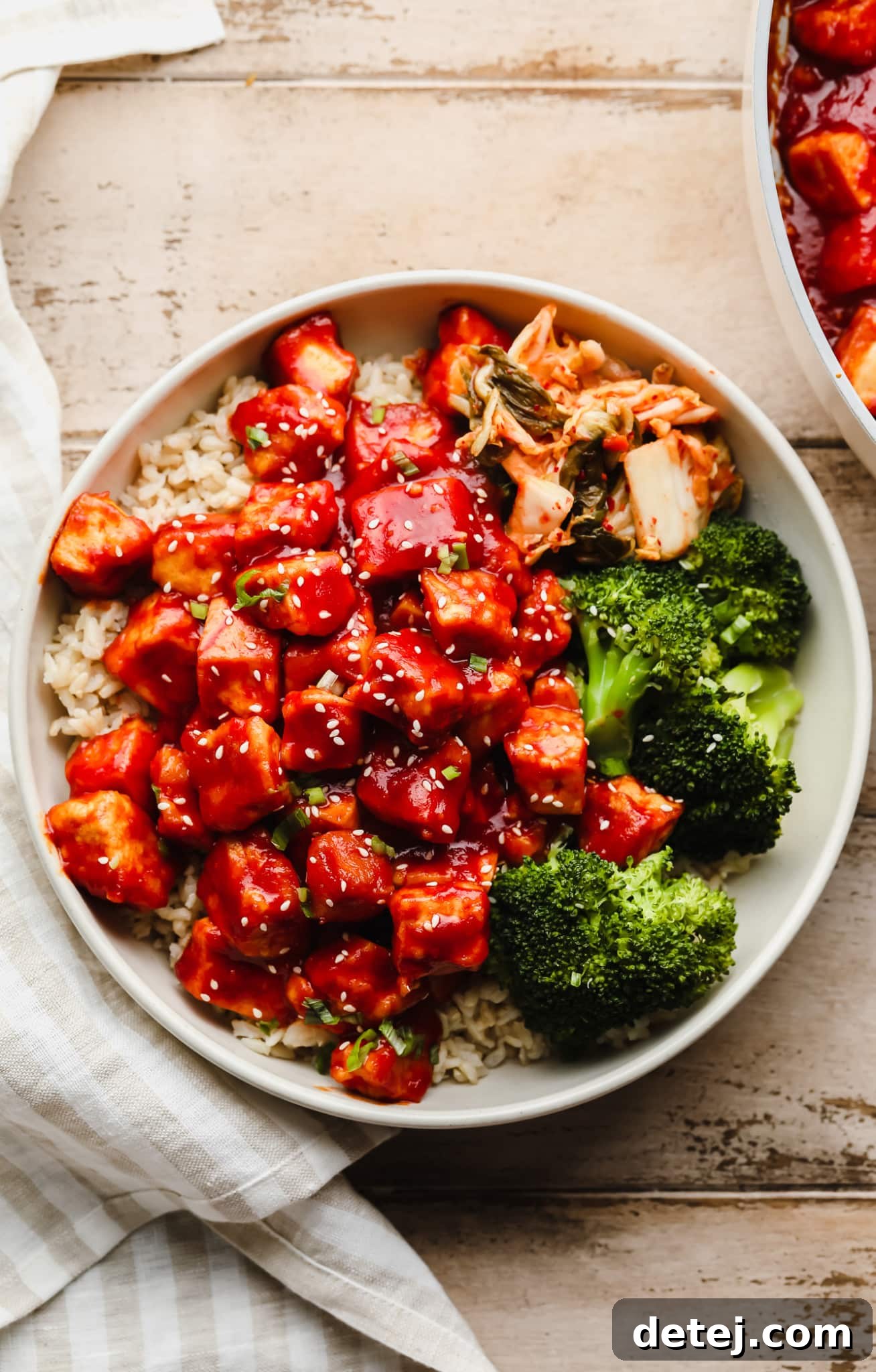
Gochujang Tofu, the Korean-inspired sensation, brings a delightful fusion of crispy textures and a vibrant, spicy-savory glaze to your table. Imagine perfectly baked tofu, golden and crunchy, enveloped in a rich, fiery red chili sauce that’s bursting with complex flavors. This recipe transforms humble tofu into an unforgettable culinary experience, proving that plant-based dishes can be incredibly exciting and deeply satisfying. Whether you’re a seasoned chef or a home cook looking for a new weeknight favorite, this Gochujang Tofu is designed to impress with its simplicity and incredible taste. It’s an exceptionally versatile dish, ready to be the star of your rice bowls, a flavorful addition to stir-fries, or even a spicy filling for creative tacos.
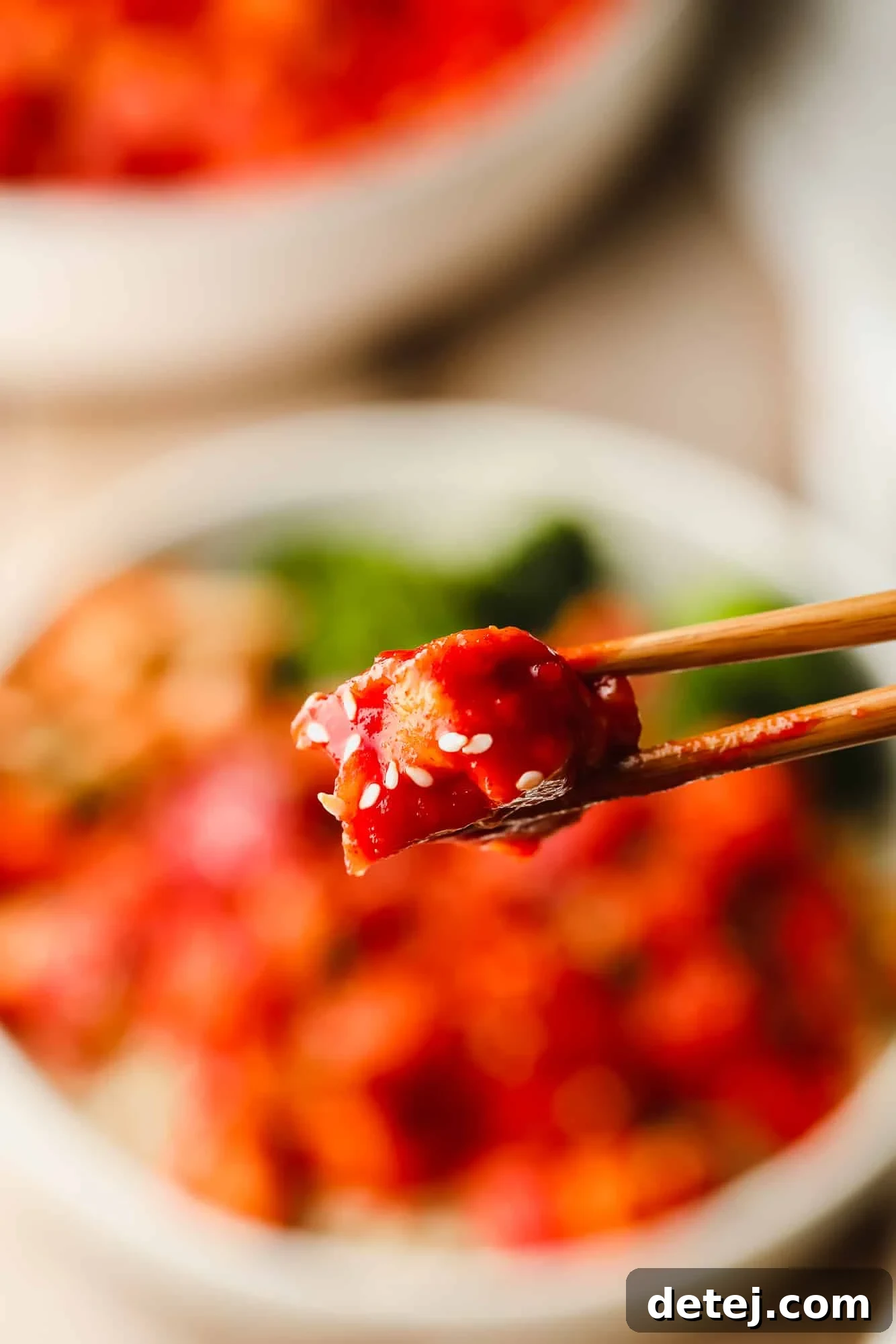
Crispy, Spicy Gochujang Tofu: A Flavor Adventure
There are countless ways to prepare tofu, but achieving that coveted crispy exterior, especially when paired with a bold, sticky sauce, elevates it to another level. This Gochujang Tofu recipe stands out as a prime example of culinary magic, offering a quick and straightforward path to a deeply flavorful meal that never compromises on taste. The journey begins with preparing the tofu, a crucial step that ensures each bite is perfectly crunchy, providing a delightful contrast to the luscious sauce.
The secret to truly crispy tofu lies in proper preparation and cooking. After gently pressing out excess moisture, the tofu pieces are lightly coated in cornstarch, creating a thin, almost invisible shell that crisps up beautifully when cooked. While various methods can achieve this—pan-frying for a quick sear, air-frying for convenience and minimal oil, or baking for an even, hands-off approach—this recipe focuses on baking, offering a consistent and reliable crispness. Once golden and crunchy, these tofu bites are then ready to be tossed in our star component: the rich, aromatic Gochujang sauce.
The sauce is where this dish truly shines, a harmonious blend of spicy, savory, and subtly sweet notes. It coats each crispy tofu piece, transforming it into a vibrant, ruby-red jewel. Gochujang, a fundamental ingredient in Korean cuisine, lends its distinctive heat and fermented depth, creating a flavor profile that’s both invigorating and incredibly balanced. While undoubtedly appealing to those who love a bit of heat, the spice level is adaptable, allowing you to tailor it to your preference without losing any of its savory complexity or tangy undertones. Ready in about an hour from start to finish, Gochujang Tofu is perfect for a satisfying weeknight dinner or an impressive addition to any meal, promising a flavor-packed experience every time.
Essential Ingredients for Your Gochujang Tofu
Crafting the perfect Gochujang Tofu requires a careful selection of ingredients that contribute to both the crispy texture and the rich, balanced flavor of the sauce. Here’s a detailed look at what you’ll need, along with helpful notes and substitution ideas:
- Extra-Firm Tofu: This is the cornerstone of our crispy tofu. The key here is “extra-firm” or at least “firm” tofu, as softer varieties contain too much water and will not achieve the desired crispy texture. Pressing out excess water is a non-negotiable step; it makes the tofu denser, allowing it to absorb flavors better and crisp up beautifully when cooked.
- Cornstarch: A magical ingredient for crispiness! When coated in cornstarch, the tofu forms a light, dry layer that turns wonderfully crunchy in the oven. If you don’t have cornstarch, arrowroot starch is an excellent gluten-free alternative that performs similarly.
- Olive Oil: Used for coating the tofu before baking, helping it achieve a golden-brown crispness. While the recipe uses olive oil, any neutral cooking oil like avocado or vegetable oil can be used.
- Salt: A simple seasoning for the tofu, enhancing its natural flavor before it meets the spicy sauce.
- Tomato Sauce: This serves as the foundational base for our Gochujang sauce, providing a rich, slightly acidic backdrop. It’s crucial to use plain crushed tomato sauce without any added herbs, spices, or sugars, allowing the Gochujang and other seasonings to truly shine.
- Gochujang Paste: The star of the show! Gochujang is a savory, sweet, and spicy fermented Korean chili paste made from gochugaru (Korean chili powder), glutinous rice, fermented soybean powder (meju), barley malt, and salt. Its complex umami depth is irreplaceable. If you’re sensitive to heat, start with 1 tablespoon and adjust to your taste. Always check the label to ensure it’s vegan, as some brands may contain non-vegan ingredients.
- Low Sodium Soy Sauce: Provides the essential salty and umami notes without overpowering the dish. Using low sodium soy sauce allows for better control over the overall saltiness of the sauce, ensuring a balanced flavor profile. For a gluten-free option, use tamari.
- Granulated Sugar: A critical balancing agent for the Gochujang’s heat and fermented notes. Sugar adds a touch of sweetness that rounds out the flavors beautifully. Brown sugar, cane sugar, or coconut sugar are all excellent substitutes. Do not skip this ingredient, as it’s essential for a well-rounded sauce.
- Rice Vinegar: Adds a bright, tangy acidity that cuts through the richness of the sauce and enhances its overall vibrancy. If rice vinegar isn’t available, apple cider vinegar can be used as a close substitute in a pinch, though it has a slightly different flavor profile.
- Water: Used to adjust the consistency of the sauce, ensuring it’s smooth and easily coats the tofu.
- Toasted Sesame Oil: A finishing touch that infuses the sauce with a distinctive nutty aroma and deep umami flavor. While you can use olive oil or vegetable oil, the sauce will lack that unique aromatic depth that toasted sesame oil provides, making it highly recommended for an authentic Korean-inspired taste.
- Fresh Garlic: Minced garlic cloves are essential for adding pungent, aromatic depth to the sauce. Fresh garlic offers a much more robust flavor than garlic powder.
- Fresh Ginger: Grated fresh ginger provides a warm, spicy, and zesty counterpoint to the other ingredients, elevating the sauce’s complexity. Like garlic, fresh ginger is preferred for its vibrant flavor.
Step-by-Step Guide to Making Gochujang Tofu
Making delicious Gochujang Tofu is simpler than you might think. Follow these steps for a perfectly crispy and flavor-packed dish:
Preparing the Crispy Tofu
- Press the Tofu: This is the most crucial step for achieving crispy tofu. Unwrap your block of extra-firm tofu and place it between several layers of paper towels or a clean tea towel. Place a heavy object on top, such as a cast-iron skillet or a stack of heavy cookbooks. Allow it to press for at least 20-30 minutes to remove as much excess moisture as possible. The drier the tofu, the crispier it will become.
- Preheat Oven & Prep Pan: While the tofu is pressing, preheat your oven to 400°F (200°C). Line a baking sheet with parchment paper to prevent sticking and ensure easy cleanup. If you prefer, you can also pan-fry or air-fry the tofu (see notes below for alternative methods).
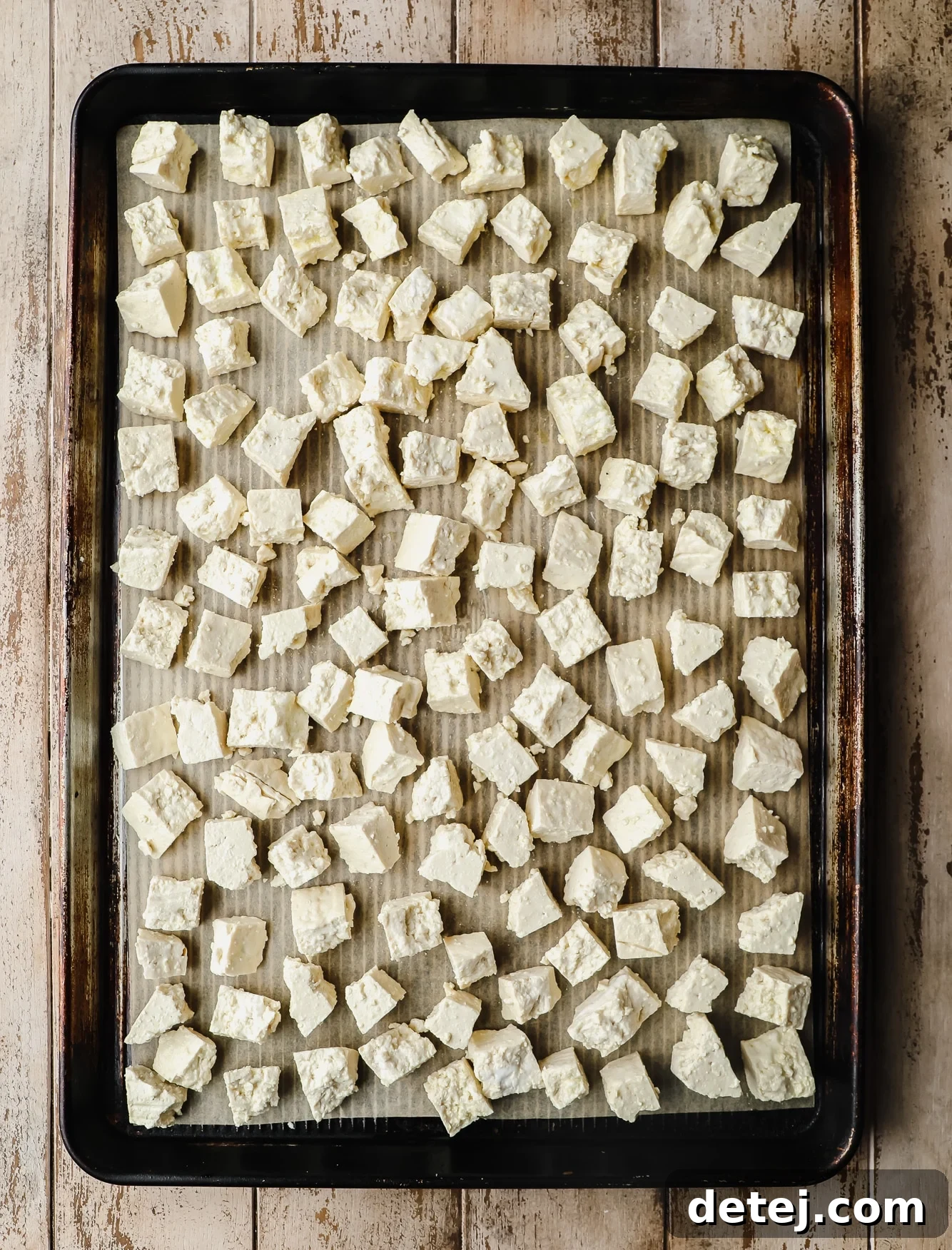
- Cut and Coat the Tofu: Once pressed, slice the tofu block into 6 even slabs. Then, instead of dicing, rip these slabs into irregular, bite-sized pieces. Tearing the tofu creates more craggy, uneven surfaces, which results in extra crispy edges. Place the torn tofu pieces into a large bowl or a zip-top bag. Add the cornstarch, olive oil, and salt. Gently toss or shake the bag until all the tofu pieces are evenly coated. The cornstarch forms a thin, dry layer that will crisp up beautifully.
- Bake the Tofu: Arrange the coated tofu pieces in a single layer on your prepared baking sheet, ensuring they aren’t overcrowded. This allows air to circulate, promoting even crisping. Bake for 25-30 minutes, or until the tofu is golden brown and delightfully crispy on the outside. Halfway through baking (around 12-15 minutes), flip the pieces to ensure even browning. Once baked, set the crispy tofu aside while you prepare the sauce.
Crafting the Gochujang Sauce
- Combine Sauce Ingredients: While the tofu bakes, grab a large skillet (one that’s big enough to comfortably hold all the crispy tofu later). Add the tomato sauce, Gochujang paste, low sodium soy sauce, granulated sugar, rice vinegar, water, toasted sesame oil, minced garlic, and grated fresh ginger to the skillet.
- Cook the Sauce: Stir all the ingredients together thoroughly until well combined. Bring the mixture to a gentle boil over medium heat, stirring occasionally. Once it reaches a boil, reduce the heat to a simmer. Continue to stir frequently for about 5 minutes, allowing the flavors to meld and the sauce to slightly thicken.
- Thicken the Sauce (Optional): If you prefer an extra thick and sticky sauce, create a cornstarch slurry. In a small bowl, whisk together 1 tablespoon of cornstarch with 2 tablespoons of cold water until smooth. Stir this slurry into the simmering Gochujang sauce. Continue stirring gently until the sauce reaches your desired thick consistency.
Finishing and Serving
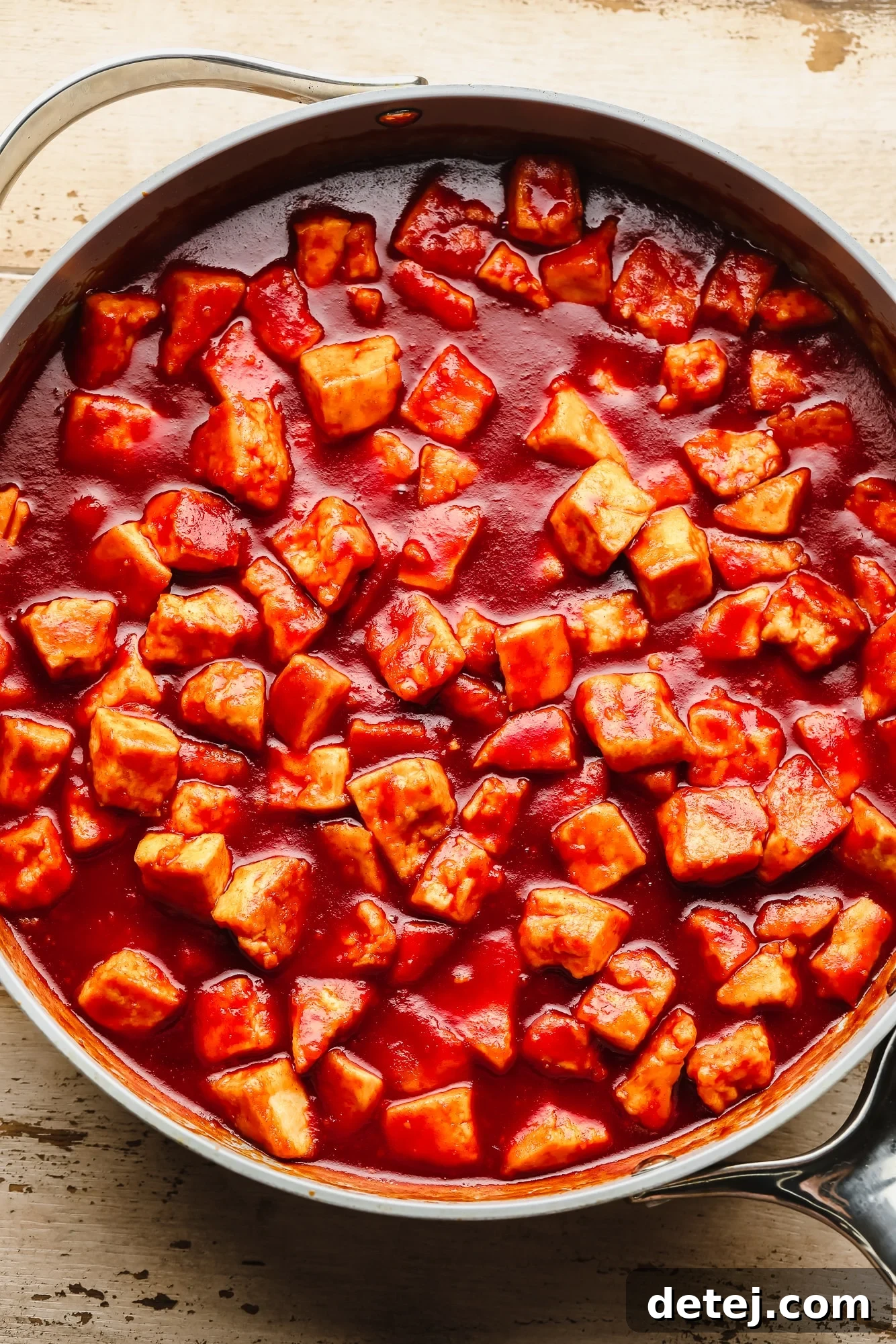
- Combine Tofu and Sauce: Once your tofu is crispy and the sauce is ready, add the baked crispy tofu pieces directly into the skillet with the Gochujang sauce. Gently toss and stir until every piece of tofu is thoroughly coated in the vibrant, spicy glaze.
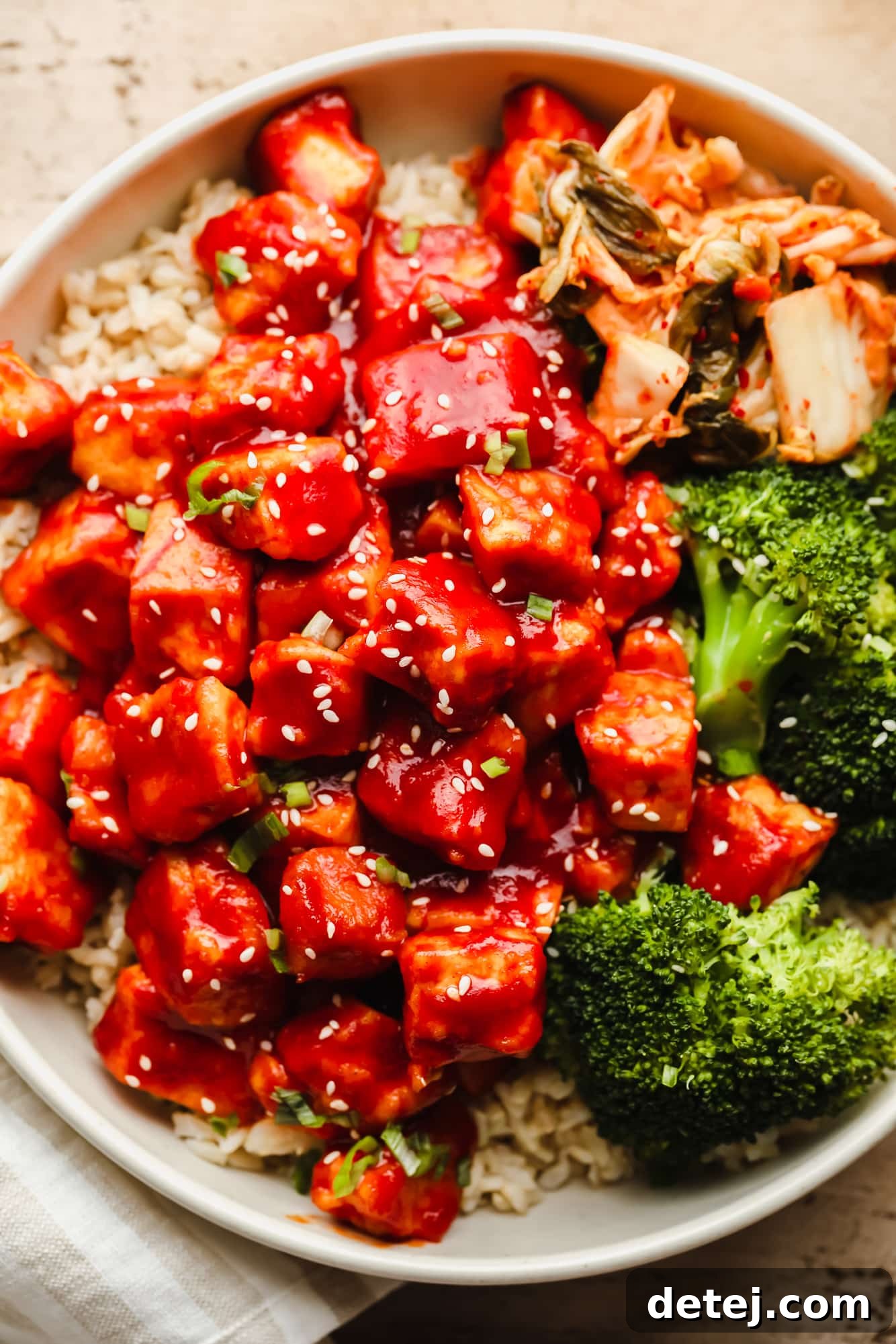
- Serve and Enjoy: Remove the skillet from the heat. Your Gochujang Tofu is now ready to be served! It’s wonderfully versatile and pairs perfectly with a bowl of fluffy rice or noodles. Enhance your meal with a side of steamed broccoli or green beans, and a dollop of kimchi for an authentic touch. For extra flavor and visual appeal, sprinkle with sesame seeds and chopped green onions before serving. Enjoy this flavorful and satisfying dish!
Frequently Asked Questions About Gochujang Tofu
Here are some common questions to help you master your Gochujang Tofu:
- Where can I buy Gochujang paste? Gochujang is becoming increasingly popular and can typically be found in the international or Asian food aisle of most major grocery stores. For a wider selection and potentially better prices, check dedicated Korean markets or Asian supermarkets. When purchasing, always check the ingredient label to ensure it is vegan-friendly, as some traditional versions may contain non-vegan ingredients. If you’re feeling adventurous, you can also explore making homemade Gochujang.
- Is all Gochujang vegan? No, not all Gochujang is vegan. While the primary ingredients (chili powder, glutinous rice, fermented soybeans) are plant-based, some brands might include ingredients like fish sauce or other animal-derived products for deeper umami. Always read the label carefully to ensure it aligns with your dietary preferences.
- Can I make the Gochujang sauce ahead of time? Absolutely! Preparing the sauce in advance is a great time-saver. Simply make it as directed, allow it to cool completely, and then store it in an airtight container in the refrigerator for 2 to 3 days. When you’re ready to serve, gently reheat the sauce in a skillet and then add your freshly baked crispy tofu just before serving to maintain its texture.
- How should you serve Gochujang Tofu? The versatility of Gochujang Tofu is one of its best features! The simplest and most classic way is over a bowl of steaming rice or your favorite noodles, accompanied by a side of crisp steamed broccoli or vibrant green beans, and a sprinkle of authentic kimchi. It also shines as a flavorful protein in nourishing buddha bowls, adding a spicy kick to colorful vegetable stir-fries, or mixed into spicy noodle dishes. For a creative twist, try it in Korean-inspired vegan tacos or even as a vibrant addition to certain soups.
- How do you store leftovers? Any leftover Gochujang Tofu can be stored in an airtight container in the refrigerator for 4 to 5 days. While the tofu may lose some of its crispiness upon refrigeration, the flavors will still be fantastic. Reheat gently in a skillet or microwave.
- Can I make this recipe gluten-free? Yes! The only ingredient that typically contains gluten is soy sauce. Simply substitute low sodium soy sauce with tamari (which is gluten-free) or a certified gluten-free soy sauce alternative. Ensure your Gochujang paste is also gluten-free, as some brands might contain wheat.
- How can I adjust the spice level? The spice level is easily customizable. For less heat, reduce the amount of Gochujang paste to 1 tablespoon. For more heat, you can increase it to 3 tablespoons, or even add a pinch of gochugaru (Korean chili powder) or red pepper flakes to the sauce.
Tips for Gochujang Tofu Perfection
- Don’t Skip Pressing: We can’t stress this enough! Pressing the tofu thoroughly is the single most important step for achieving that desired crispy texture.
- Even Coating is Key: Ensure every piece of tofu is evenly coated with cornstarch. This creates a uniform crispy exterior. Using a large zip-top bag and shaking it gently works wonders.
- Don’t Overcrowd the Pan: When baking the tofu, arrange the pieces in a single layer with a little space between them. Overcrowding will steam the tofu instead of crisping it, leading to a softer texture. Use two baking sheets if necessary.
- Taste and Adjust the Sauce: Before adding the tofu, taste the Gochujang sauce and adjust the sugar, soy sauce, or vinegar to your preference. Some prefer it sweeter, others tangier or spicier.
- Garnish for Freshness and Crunch: A sprinkle of sesame seeds, sliced green onions, or even some fresh cilantro can add a burst of freshness and visual appeal to your finished dish.
Explore More Tofu Creations
If you loved this Gochujang Tofu recipe, you’re in for a treat! Tofu is an incredibly versatile ingredient, capable of absorbing a myriad of flavors and textures. Dive into these other fantastic tofu recipes to expand your culinary repertoire:
- Sweet and Sour Tofu: A classic takeout favorite, perfectly balanced between tangy and sweet.
- Crispy Sesame Tofu: Crunchy, nutty, and coated in a irresistible sesame glaze.
- General Tso’s Tofu: Recreate the beloved Chinese-American dish with a plant-based twist.
- Baked Orange Tofu: Zesty and vibrant, this citrus-infused tofu is a delightful burst of flavor.
- Baked BBQ Tofu: Smoky and savory, perfect for sandwiches, salads, or main dishes.
Gochujang Tofu Recipe
Gochujang Tofu
Crispy baked tofu is tossed in a spicy chili sauce in this Gochujang Tofu recipe. It’s a flavor and spice-packed dish to use in rice bowls, stir fries, tacos, and more.
Prep Time: 20 mins
Cook Time: 35 mins
Tofu Pressing Time: 30 mins
Total Time: 1 hr 25 mins
Servings: 3 servings
Pin Recipe
Ingredients
Crispy Tofu
- 15 ounce block extra-firm tofu
- 1 tablespoon cornstarch
- 1 tablespoon olive oil
- 1/4 teaspoon salt
Gochujang Sauce
- 1/4 cup tomato sauce
- 2 tablespoons gochujang paste (ensure it’s vegan friendly)
- 2 tablespoons low sodium soy sauce
- 2 tablespoons granulated sugar
- 2 tablespoons rice vinegar
- 2 tablespoons water
- 1 teaspoon toasted sesame oil
- 3 cloves garlic, minced
- 1 teaspoon grated fresh ginger
Instructions
Prepare the tofu
- Press the tofu by wrapping it in paper towels or a clean tea towel and place a heavy cast iron pan or other heavy items on top of the tofu. Let it press for 20-30 minutes to remove excess moisture.
- Meanwhile, preheat the oven to 400°F (200°C) and line a baking sheet with parchment paper. Alternatively, you can pan fry or air fry the tofu (see Notes).
- Slice the pressed tofu into about 6 even slices, then rip the slices into bite-sized pieces for extra cragginess. Place them in a large bowl, add the cornstarch, olive oil, and salt, and toss gently to coat all the tofu pieces evenly.
- Transfer the coated tofu to the prepared baking sheet, arranging it in an even layer without overcrowding. Bake for 25-30 minutes, flipping halfway through, until golden and crispy on the outside. Set aside.
While the tofu bakes, make the gochujang sauce
- In a large skillet (one big enough to hold the tofu later), combine all the sauce ingredients: tomato sauce, gochujang paste, low sodium soy sauce, granulated sugar, rice vinegar, water, toasted sesame oil, minced garlic, and grated fresh ginger. Stir well to combine.
- Bring the sauce to a boil over medium heat, stirring occasionally. Once boiling, reduce the heat to a simmer and cook, stirring frequently, for 5 minutes until it thickens slightly.
- Optional: For an extra thick sauce, mix 1 tablespoon of cornstarch with 2 tablespoons of water in a small bowl to create a slurry. Stir this slurry into the simmering sauce until it reaches your desired consistency.
- Add the baked crispy tofu to the skillet with the sauce. Stir gently to ensure all the tofu pieces are thoroughly coated. Remove from heat immediately.
- Serve over rice or noodles, perhaps with a side of steamed broccoli and kimchi. Garnish with sesame seeds and green onions, if desired. Enjoy your delicious Gochujang Tofu!
Notes
- For less heat, use only 1 tablespoon of Gochujang paste. Adjust to your spice preference.
- Instead of baking, you may also pan fry the tofu or air fry tofu until crispy, if desired.
Nutrition
Serving: 1 of 3 servings | Calories: 242kcal | Carbohydrates: 20g | Protein: 14g | Fat: 12g | Saturated Fat: 2g | Polyunsaturated Fat: 5g | Monounsaturated Fat: 6g | Sodium: 684mg | Potassium: 153mg | Fiber: 2g | Sugar: 10g | Vitamin A: 110IU | Vitamin C: 4mg | Calcium: 192mg | Iron: 2mg
Course: Main Course
Cuisine: Korean-inspired
Author: Nora Taylor
Did you make this recipe? Mention @nora_cooks_vegan_ or tag #noracooks!