
Are you tired of starting your mornings in a rush, scrambling to throw together a complicated breakfast? Imagine a world where your breakfast is not only delicious and comforting but also surprisingly easy to prepare. This dream can become your reality with a beloved Southern classic: fluffy buttermilk biscuits paired with rich, savory sausage gravy.
In this comprehensive guide, we’ll show you how to simplify your mornings and elevate your breakfast routine with an easy-to-follow, mouthwatering recipe for buttermilk biscuits and sausage gravy. With just a handful of readily available ingredients and a few straightforward steps, you’ll be able to enjoy a scrumptious, homemade breakfast that will delight your taste buds and set a wonderful tone for your entire day. So, let’s dive in and discover the secrets to making your mornings a breeze with this foolproof method!
Unlock the Secret to Perfect, Flaky Buttermilk Biscuits
For many, the perfect biscuit is the heart and soul of a truly satisfying breakfast experience. When it comes to buttermilk biscuits, achieving that ideal balance of flakiness, tenderness, and a delicate crumb is an art form that, thankfully, can be mastered by anyone. We’re here to share our foolproof method for creating the most heavenly buttermilk biscuits you’ve ever tasted, guaranteeing light, airy layers every time.
The Essential Role of Buttermilk in Biscuits
First and foremost, let’s talk about the key ingredient: buttermilk. This tangy, slightly acidic dairy liquid is what gives the biscuits their signature flavor and contributes significantly to their tender texture. The acidity in buttermilk reacts with the baking soda present in your recipe (often alongside baking powder), producing carbon dioxide bubbles. These bubbles are essential for the biscuits’ rise, creating those coveted light and airy pockets within the dough. For the best results, always use full-fat buttermilk; its richness not only enhances the flavor but also adds an extra layer of moisture and indulgence to your finished biscuits, making them truly unforgettable.
Mastering the Cold Butter Technique for Flakiness
The secret to wonderfully flaky biscuits lies in how you incorporate the butter. It’s crucial that your butter is very cold. When cold butter is cut or grated into the flour, it creates tiny, distinct pockets of butter throughout the dough. As the biscuits bake in a hot oven, these cold butter pieces melt, releasing steam. This steam pushes the layers of dough apart, resulting in those irresistible, distinct flaky layers. The ideal method involves grating very cold butter directly into your dry ingredients or cutting it into small, pea-sized cubes. Work quickly with your fingertips or a pastry blender to mix the butter into the flour until the mixture resembles coarse crumbs, being careful not to let the butter warm up too much from the heat of your hands.
Gentle Handling for Tender Dough
Another crucial technique for achieving light and fluffy biscuits is how you handle the dough. The golden rule of biscuit making is to avoid overmixing or overworking the ingredients. Excessive kneading or stirring develops the gluten in the flour, which can lead to tough, dense biscuits instead of the tender, melt-in-your-mouth texture we desire. Instead, gently incorporate the dry and wet ingredients using a fork or a silicone spatula until they are just combined. The dough should still look a bit shaggy and loose – this is perfectly fine and indicates you’ve maintained its delicate structure.
The Art of Cutting Biscuits: No Twisting Allowed!
Properly cutting out your biscuits is more important than you might think for an even rise and beautiful appearance. To ensure your biscuits puff up beautifully, use a sharp biscuit cutter and press straight down firmly without twisting. Twisting the cutter can seal the edges of the dough, which inhibits the biscuit from rising fully and forming those delightful layers. Lightly flour your cutter between each cut to prevent sticking. For even more consistent results, you can lightly refrigerate the cut biscuits for a few minutes before baking; this helps keep the butter firm and contributes to a better rise.
The Perfect Bake: Harnessing Oven Heat
Now, let’s talk about baking. To achieve that coveted golden-brown exterior and tender, fully cooked interior, preheat your oven to the specified high temperature (typically around 400-425°F or 200-220°C). This initial burst of intense heat is critical. It rapidly activates the leavening agents and creates steam from the melting butter and buttermilk, causing the biscuits to rise quickly and dramatically. After the first few minutes, some recipes suggest slightly reducing the temperature. This allows the biscuits to continue cooking through to the center without becoming overly browned on the outside. This strategic temperature management ensures a perfect balance of color, texture, and doneness.
The Irresistible Reward: Your First Bite
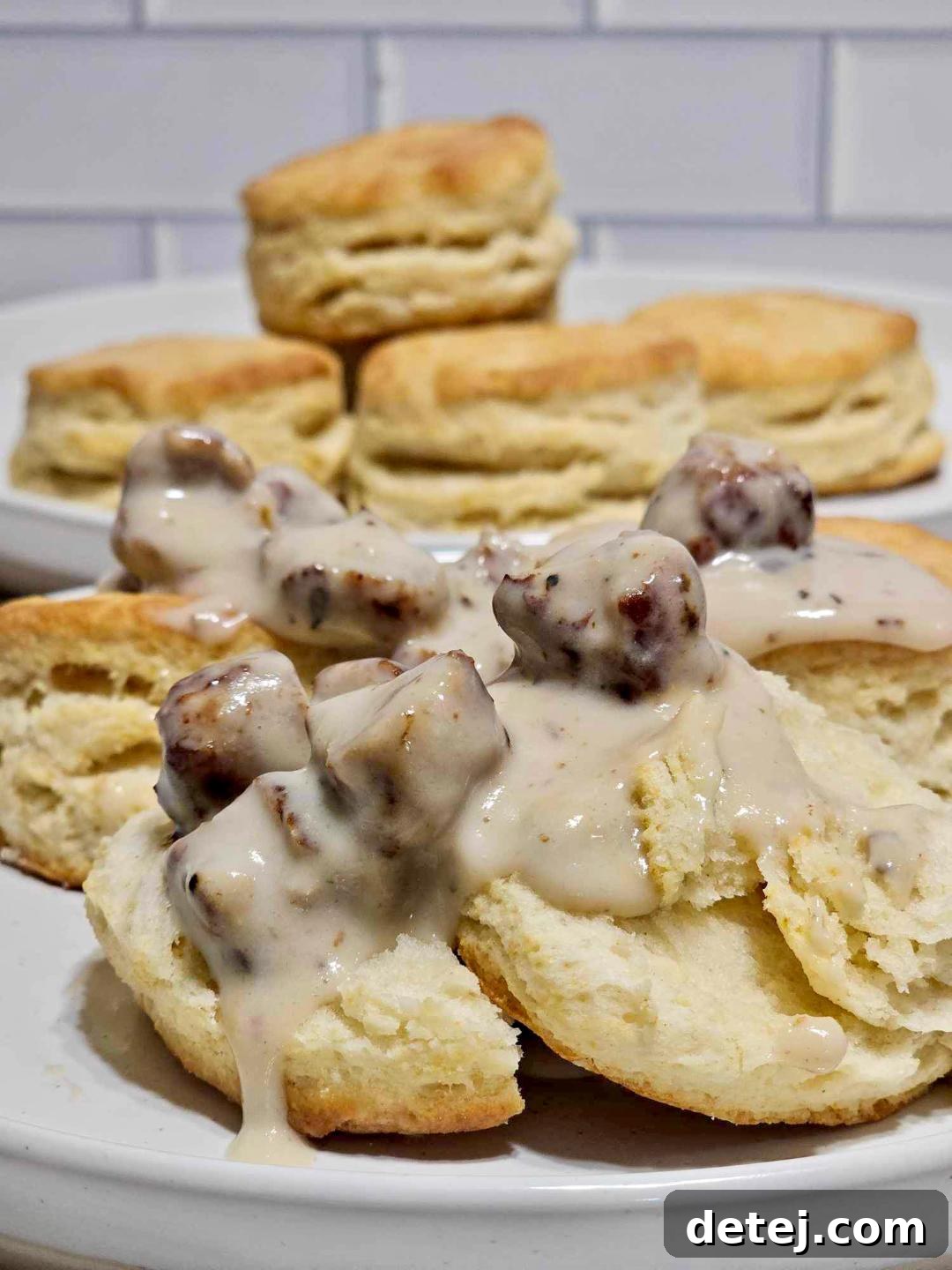
And finally, the moment of truth – taking that first glorious bite into a warm, freshly baked buttermilk biscuit. The texture should be undeniably light and airy, with a delicate, layered crumb that practically melts in your mouth. The flavor is a delightful symphony of rich butteriness, perfectly balanced by the subtle tanginess from the buttermilk. It’s a truly delicious and comforting experience that will undoubtedly have you reaching for seconds, and perhaps even thirds. With a little practice and attention to these fine details, you’ll soon be whipping up batches of these delightful treats that will earn you rave reviews from family and friends, all begging for your secret recipe. So, grab your apron, roll up your sleeves, and get ready to become a biscuit-baking pro. Your taste buds will certainly thank you!
Mastering the Art of Savory Sausage Gravy
Once you’ve conquered the art of baking those perfect, flaky buttermilk biscuits, it’s time to complete this classic Southern breakfast ensemble with its essential counterpart: rich, creamy, and deeply savory sausage gravy. This indulgent sauce is the perfect complement to warm, buttery biscuits, transforming a simple meal into an extraordinary culinary experience. While making sausage gravy might seem a little intimidating at first, with a few straightforward tips and tricks, you’ll be a master of this comforting sauce in no time.
Choosing the Best Sausage: The Foundation of Flavor
The flavor of your gravy truly begins with the sausage itself. For the most robust and delicious taste, opt for a high-quality breakfast sausage that is well-seasoned, ideally a blend of pork and savory spices like sage. This forms the foundational flavor of your gravy and is paramount to its success. Depending on your personal preference, you can choose between a mild sausage for classic comfort or a spicy variety to add an exciting kick to your breakfast. The goal is a flavorful sausage that provides character without being excessively greasy.
Properly Cooking the Sausage: Building Depth
Before transforming it into a luscious gravy, it’s important to properly cook the sausage. Crumble the sausage into a hot skillet over medium heat and cook it thoroughly until it’s beautifully browned and fully cooked through. As it cooks, use a spoon or spatula to break up the sausage into smaller, uniform pieces. This ensures that the savory sausage is evenly distributed throughout the gravy, guaranteeing that every single bite is packed with delicious sausage goodness and texture. Don’t rush this step; the browning adds depth of flavor to your gravy.
Crafting the Roux: The Secret to Creaminess
Once the sausage is cooked, the next crucial step is to create the roux, which will serve as the thickening agent for your gravy. A roux is a mixture of fat and flour cooked together, forming a smooth, lump-free base. For sausage gravy, you’ll typically use the flavorful rendered fat left in the skillet from the cooked sausage. If there isn’t quite enough (aim for about 2-3 tablespoons), you can add a pat of butter to supplement. Sprinkle all-purpose flour directly over the cooked sausage and fat, stirring constantly over medium heat for 1-2 minutes. This brief cooking time is essential; it cooks out the raw flour taste and ensures your gravy will be silky smooth, preventing any grittiness or lumps. Continue stirring until the flour is lightly toasted and fully incorporated with the fat.
Adding Liquid: Achieving the Perfect Gravy Consistency
With your roux perfectly formed, it’s time to transform it into creamy gravy by adding liquid. Whole milk is the traditional choice, as its richness imparts a luxurious creaminess that beautifully complements the savory sausage. Slowly pour in the milk, a little at a time, while continuously whisking vigorously. This constant whisking is absolutely vital to prevent lumps from forming and to create a perfectly smooth, velvety sauce. Continue cooking and stirring until the gravy reaches your desired consistency. Remember that the gravy will continue to thicken slightly as it simmers and cools, so aim for a consistency that is perhaps just a touch thinner than your final ideal. If it becomes too thick, simply whisk in a splash more milk; if it’s too thin, a brief additional simmer will help it reduce and thicken.
Seasoning and Simmering: Melding the Flavors
As your gravy simmers and thickens, it’s essential to continue stirring occasionally to prevent it from sticking to the bottom of the skillet or forming a skin on the surface. This also helps all the wonderful flavors meld together harmoniously. Now is the time to season generously with freshly ground black pepper – a hallmark of authentic sausage gravy. Taste and adjust with salt as needed, keeping in mind that sausage can be quite salty on its own. For an extra layer of flavor, consider adding a pinch of cayenne pepper for a subtle warmth or a dash of dried sage to enhance the sausage notes. Let the gravy simmer gently for a few minutes, allowing the flavors to deepen and fully integrate. This meticulous attention to detail will result in a breakfast dish that truly impresses even the most discerning palates.
Your Go-To Homemade Recipe for Buttermilk Biscuits and Sausage Gravy
Ready to bring this comforting Southern classic to your kitchen table? This streamlined recipe combines the best techniques for light, flaky biscuits and rich, savory gravy, ensuring a delicious and satisfying breakfast without any unnecessary fuss. Gather your ingredients, and let’s create a morning masterpiece that will quickly become a family favorite!
Buttermilk Biscuits: Ingredients & Method
- 2 ½ cups all-purpose flour
- 2 tablespoons baking powder
- 1 teaspoon salt
- ½ cup (1 stick) very cold unsalted butter, grated or cut into small cubes
- 1 cup + 3 tablespoons cold buttermilk
- Preheat your oven to 400°F (200°C). Line a baking sheet with parchment paper.
- In a large mixing bowl, whisk together the flour, baking powder, and salt until well combined.
- Add the very cold butter to the dry ingredients. Using your fingertips or a pastry blender, quickly cut the butter into the flour mixture until it resembles coarse crumbs with some pea-sized pieces of butter remaining.
- Make a well in the center of the mixture and pour in the cold buttermilk. Stir gently with a silicone spatula or fork until the dough just comes together. Be careful not to overmix; it should still look a bit shaggy.
- Turn the dough out onto a lightly floured surface. Gently knead it 3-4 times, just enough to bring it together without overworking.
- Pat the dough into a rectangle about ¾ to 1-inch thick. For extra flakiness, you can perform a simple fold: fold one-third of the dough over the middle, then fold the other third over that. Rotate the dough and repeat this process 1-2 more times.
- Roll or pat the dough to a final thickness of about 1 inch. Using a 3-inch biscuit cutter (or a glass), cut out biscuits, pressing straight down without twisting.
- Place the biscuits on the prepared baking sheet, ensuring they are slightly touching for softer sides or spaced apart for crispier edges.
- Bake for 15-20 minutes, or until the tops are golden brown and the biscuits are fully risen and cooked through.
Savory Sausage Gravy: Ingredients & Method
- 1 pound ground breakfast sausage (mild or spicy, as preferred)
- ¼ cup all-purpose flour
- 2 ½ – 3 cups whole milk (or a mix of milk and light cream)
- Salt and freshly ground black pepper to taste
- Optional: Pinch of cayenne pepper or dried sage
- In a large skillet over medium heat, crumble the breakfast sausage. Cook, stirring occasionally, until the sausage is browned and thoroughly cooked. Break up any large pieces as it cooks.
- Once cooked, drain off most of the excess grease, leaving about 2-3 tablespoons of rendered fat in the skillet. If you don’t have enough fat, add a tablespoon of butter.
- Sprinkle the ¼ cup of flour over the cooked sausage and fat. Stir continuously for 1-2 minutes, cooking the flour to create a roux. This will prevent a raw flour taste.
- Slowly pour in 2 ½ cups of milk while whisking constantly to prevent lumps. Continue whisking and stirring, scraping any browned bits from the bottom of the pan, until the gravy begins to thicken and simmer.
- Reduce the heat to low and let it simmer for 5-7 minutes, stirring frequently, until it reaches your desired consistency. If it becomes too thick, add a little more milk, a tablespoon at a time, until perfect.
- Season generously with salt and freshly ground black pepper. Taste and adjust seasonings as needed. Add cayenne or sage if using.
- Serve immediately over warm buttermilk biscuits.
Enjoying Delicious Homemade Breakfast on a Budget
Indulging in a hearty, homemade breakfast doesn’t have to strain your wallet. Buttermilk biscuits and sausage gravy, at their core, are incredibly budget-friendly dishes, making them a smart and delicious choice for economical mornings without overspending. Here’s how you can savor this delightful meal while keeping your finances firmly in check.
Smart Ingredient Sourcing for Savings
The foundation of a budget-friendly meal starts with strategic ingredient sourcing. Flour, baking powder, salt, butter, and buttermilk are common pantry staples that are generally inexpensive, especially when purchased efficiently. For the sausage, actively look for sales and discounts on ground breakfast sausage. Often, store-brand or generic sausages offer comparable flavor at a significantly lower price point than national brands. Keep a close eye on weekly grocery circulars and stock up on non-perishable items like flour when they are on sale or consider buying in bulk from warehouse clubs. Planning your meals in advance and sticking to a detailed shopping list can also help you avoid unnecessary impulse purchases that inflate your grocery bill.
Strategic Meal Planning and Preparation
One of the most effective ways to save money, and time, is through thoughtful meal planning and preparation. Decide on your meals for the week, including your biscuit and gravy breakfast, which allows you to create a precise shopping list, preventing food waste and ensuring you have everything on hand. Consider dedicating a bit of time on a weekend to make a larger batch of biscuit dough and freezing it, either as a whole disc or pre-cut biscuits. This way, you can simply pull them out and bake them on busy weekday mornings, saving precious time. Similarly, extra sausage gravy can be portioned into freezer-safe containers and frozen, ready to be reheated in minutes. This proactive approach saves both time and money, making delicious homemade breakfasts accessible even on hectic days.
Creative Customizations for Added Value
While classic biscuits and gravy are undeniably fantastic on their own, you can easily add variety and elevate the dish without significantly increasing costs. A sprinkle of freshly shredded cheddar cheese, a garnish of vibrant chopped green onions or chives, or even a dollop of sour cream or Greek yogurt can introduce new textures and flavors with minimal expense. If you have any leftover cooked vegetables, such as sautéed spinach, diced bell peppers, or onions, finely chop them and stir them into the gravy for added nutrition, color, and an extra layer of flavor. These small, inexpensive additions can transform a simple meal into something that feels more gourmet and satisfying, proving that eating well on a budget is entirely possible.
Troubleshooting Common Issues and Quick Fixes
Even the most experienced home cooks can encounter minor challenges. If your biscuits turn out tough or dense, the most likely culprit is overmixing the dough; remember to handle it minimally. For biscuits that don’t rise adequately, ensure your baking powder is fresh and that your butter and buttermilk are very cold. If your gravy is too thin for your liking, let it simmer gently for a few more minutes to reduce, or whisk a small amount of flour with a tablespoon of cold water to create a slurry and stir it in. If it’s too thick, simply add a splash more milk, a tablespoon at a time, until the desired consistency is achieved. Don’t be afraid to experiment and learn from each batch – that’s an integral part of the rewarding journey of homemade cooking!
Serving Suggestions and Delicious Variations
While buttermilk biscuits and sausage gravy are a match made in culinary heaven, there are countless ways to enhance, expand, or vary this classic Southern breakfast to suit your taste and occasion. For a more complete and hearty meal, consider serving your biscuits and gravy alongside perfectly scrambled eggs, crispy strips of bacon, or even a light and refreshing fresh fruit salad to balance the richness. If you crave a spicier kick, a dash of your favorite hot sauce stirred into the gravy, or a sprinkle of red pepper flakes added with the flour, can elevate the heat. You can also experiment with different types of ground meat for your gravy; consider using ground turkey or chicken sausage for a lighter version, or even chorizo for a distinctly Spanish-inspired flavor. For a delicious vegetarian twist, try making a mushroom gravy using sautéed finely chopped mushrooms and vegetable broth. The versatility of this dish allows for endless culinary creativity, ensuring you can enjoy a different version every time.
Treat yourself to a delicious and budget-friendly homemade breakfast that will leave your taste buds thanking you.
Krystel’s Cooking
Conclusion: Embrace Your Delicious Mornings
In conclusion, simplifying your mornings and elevating your breakfast experience has never been easier or more delicious thanks to the timeless appeal of easy buttermilk biscuits and savory sausage gravy. By embracing the straightforward techniques outlined in this article – from mastering the cold butter method for incredibly flaky biscuits to perfecting the roux for a rich, creamy gravy – you unlock the ability to create a truly comforting and satisfying meal right in your own kitchen. This isn’t merely about cooking; it’s about reclaiming your mornings, nourishing your body with wholesome, homemade goodness, and savoring the simple pleasures of a well-prepared meal.
So, why wait for a special occasion to treat yourself? Take action today. Gather your ingredients, roll up your sleeves, and embark on a culinary journey that promises delightful flavors and stress-free starts to your day. Remember, a well-started morning truly sets the tone for a successful and joyful day. As the enduring adage wisely reminds us, “Breakfast is the most important meal of the day,” and with this irresistible recipe, it can also be the most delicious and rewarding.
Recipe: Classic Buttermilk Biscuits and Sausage Gravy
Yields: 8 servings
Prep Time: 15 minutes
Cook Time: 30 minutes
Total Time: 45 minutes
Author: Krystel
Ingredients for Buttermilk Biscuits:
- 2 ½ cups all-purpose flour
- 2 tablespoons baking powder
- 1 teaspoon salt
- ½ cup (1 stick) very cold unsalted butter, grated or cut into small cubes
- 1 cup + 3 tablespoons cold buttermilk
Ingredients for Savory Sausage Gravy:
- 1 pound ground breakfast sausage (mild or spicy, as preferred)
- ¼ cup all-purpose flour
- 2 ½ – 3 cups whole milk (or a mix of milk and light cream)
- Salt and freshly ground black pepper to taste
- Optional: Pinch of cayenne pepper or dried sage
Instructions for Buttermilk Biscuits:
- Preheat your oven to 400°F (200°C). Line a baking sheet with parchment paper.
- In a large mixing bowl, whisk together the flour, baking powder, and salt until well combined.
- Add the very cold butter to the dry ingredients. Using your fingertips or a pastry blender, quickly cut the butter into the flour mixture until it resembles coarse crumbs with some pea-sized pieces of butter remaining.
- Make a well in the center of the mixture and pour in the cold buttermilk. Stir gently with a silicone spatula or fork until the dough just comes together. Be careful not to overmix; it should still look a bit shaggy.
- Turn the dough out onto a lightly floured surface. Gently knead it 3-4 times, just enough to bring it together without overworking.
- Pat the dough into a rectangle about ¾ to 1-inch thick. For extra flakiness, you can perform a simple fold: fold one-third of the dough over the middle, then fold the other third over that. Rotate the dough and repeat this process 1-2 more times.
- Roll or pat the dough to a final thickness of about 1 inch. Using a 3-inch biscuit cutter (or a glass), cut out biscuits, pressing straight down without twisting.
- Place the biscuits on the prepared baking sheet, ensuring they are slightly touching for softer sides or spaced apart for crispier edges.
- Bake for 15-20 minutes, or until the tops are golden brown and the biscuits are fully risen and cooked through.
Instructions for Savory Sausage Gravy:
- In a large skillet over medium heat, crumble the breakfast sausage. Cook, stirring occasionally, until the sausage is browned and thoroughly cooked. Break up any large pieces as it cooks.
- Once cooked, drain off most of the excess grease, leaving about 2-3 tablespoons of rendered fat in the skillet. If you don’t have enough fat, add a tablespoon of butter.
- Sprinkle the ¼ cup of flour over the cooked sausage and fat. Stir continuously for 1-2 minutes, cooking the flour to create a roux. This will prevent a raw flour taste.
- Slowly pour in 2 ½ cups of milk while whisking constantly to prevent lumps. Continue whisking and stirring, scraping any browned bits from the bottom of the pan, until the gravy begins to thicken and simmer.
- Reduce the heat to low and let it simmer for 5-7 minutes, stirring frequently, until it reaches your desired consistency. If it becomes too thick, add a little more milk, a tablespoon at a time, until perfect.
- Season generously with salt and freshly ground black pepper. Taste and adjust seasonings as needed. Add cayenne or sage if using.
- Serve immediately over warm buttermilk biscuits.