
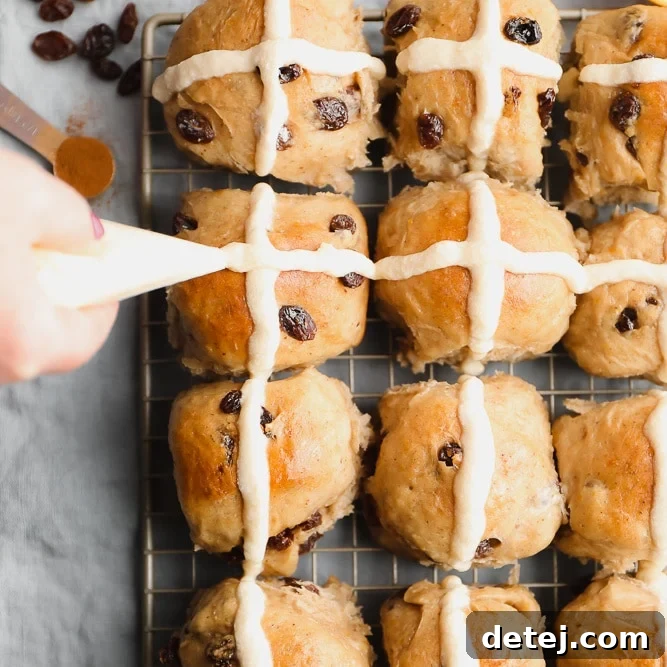
Vegan hot cross buns are unbelievably soft and fluffy with the perfect amount of sweetness. They are filled with aromatic spices, bright orange zest, and plump, juicy raisins, all beautifully adorned with a vibrant orange glaze cross. This plant-based recipe ensures everyone can enjoy this beloved Easter tradition.
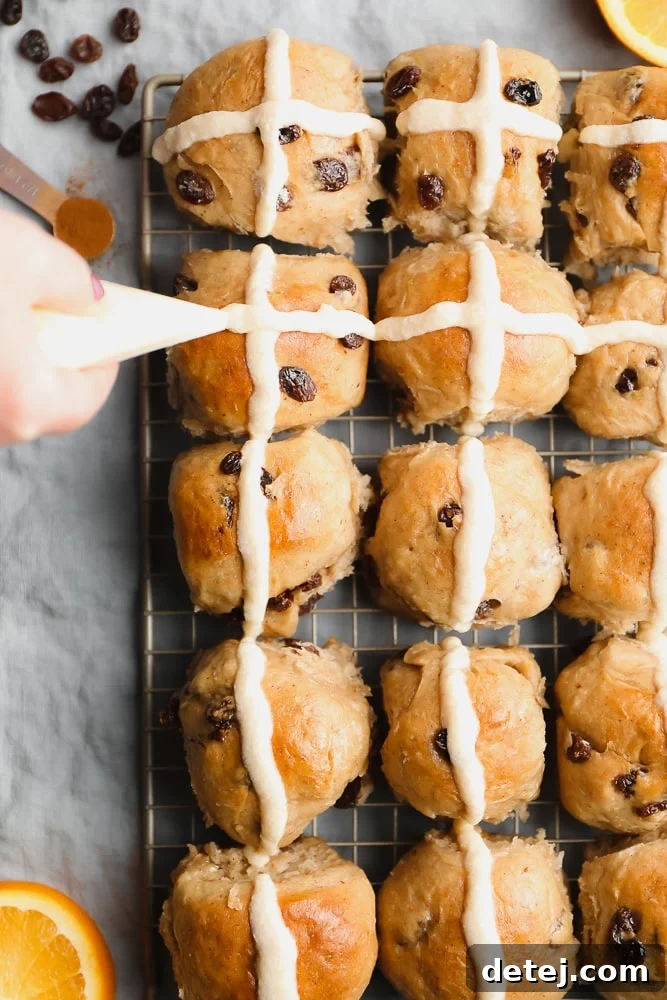
The Ultimate Guide to Baking Delicious Vegan Hot Cross Buns
As Easter approaches, the aroma of freshly baked hot cross buns traditionally fills kitchens worldwide. These sweet, spiced treats, marked with an iconic cross, have been a symbol of the Easter season for centuries, deeply rooted in history and tradition, particularly enjoyed on Good Friday. For those following a plant-based diet, or simply looking for a delightful vegan alternative, this recipe delivers on all fronts: incredible flavor, pillowy texture, and that unmistakable holiday spirit.
Our vegan hot cross buns are not just a substitute; they are a celebration in themselves. Each bite offers a harmonious blend of warm spices, bright citrus notes from orange zest, and the delightful chewiness of plump raisins. Topped with a simple yet irresistible orange glaze, these buns are sure to become a cherished part of your Easter baking tradition. Forget dry, dense buns – prepare for a batch of exceptionally soft, tender, and utterly addicting hot cross buns that will impress vegans and non-vegans alike.
The Rich History and Significance of Hot Cross Buns
The tradition of hot cross buns is rich with history, dating back to at least the 14th century, though some sources trace spiced buns even further back to ancient pagan rituals. The distinctive cross on top is believed to represent the crucifixion of Jesus, making them a staple for Good Friday and the broader Easter period. In folklore, hot cross buns baked on Good Friday were said to never go moldy and were sometimes kept for medicinal purposes or as good luck charms for sailors.
Originally, the cross was typically made from a flour and water paste applied before baking, creating a distinct, slightly crisp texture. Over time, many recipes evolved to use a sweet icing or glaze for the cross, adding an extra layer of sweetness and visual appeal. Regardless of the cross method, these buns have consistently represented hope, renewal, and the arrival of spring, making them a comforting and meaningful treat. By creating a vegan version, we honor this cherished tradition while making it accessible and enjoyable for everyone.
Exploring more plant-based delights for your holiday table? Don’t miss our curated collection of 40 Vegan Easter Recipes to complete your festive spread.
What Makes These Vegan Hot Cross Buns So Irresistibly Delicious?
Imagine the perfect harmony between a tender, slightly sweet dinner roll and a rich, spiced pastry – that’s the essence of these hot cross buns. They strike a balance that makes them utterly addicting, prompting you to reach for another before you’ve even finished the first.
Our recipe elevates the classic hot cross bun by infusing the dough with a generous blend of warming spices: fragrant cinnamon, subtle nutmeg, and a hint of exotic allspice. These spices are beautifully complemented by the bright, aromatic zest of fresh oranges, adding a layer of citrusy brightness that truly makes the flavors sing. A touch of sugar ensures the buns are sweet enough to feel like a treat but not overwhelmingly so, allowing the other flavors to shine.
The texture is paramount. Each bun boasts an incredibly soft, fluffy, and tender crumb, a result of careful dough handling and the right balance of ingredients. Throughout this delicate dough, you’ll find an abundance of plump, juicy raisins or currants, bursting with natural sweetness. After baking, a simple sugar glaze is brushed onto the warm buns, creating a wonderfully sticky and shiny exterior. Finally, the iconic cross is piped on with a vibrant orange-flavored icing, adding both visual charm and another layer of zesty sweetness. It’s a symphony of textures and flavors that embodies comfort and celebration.
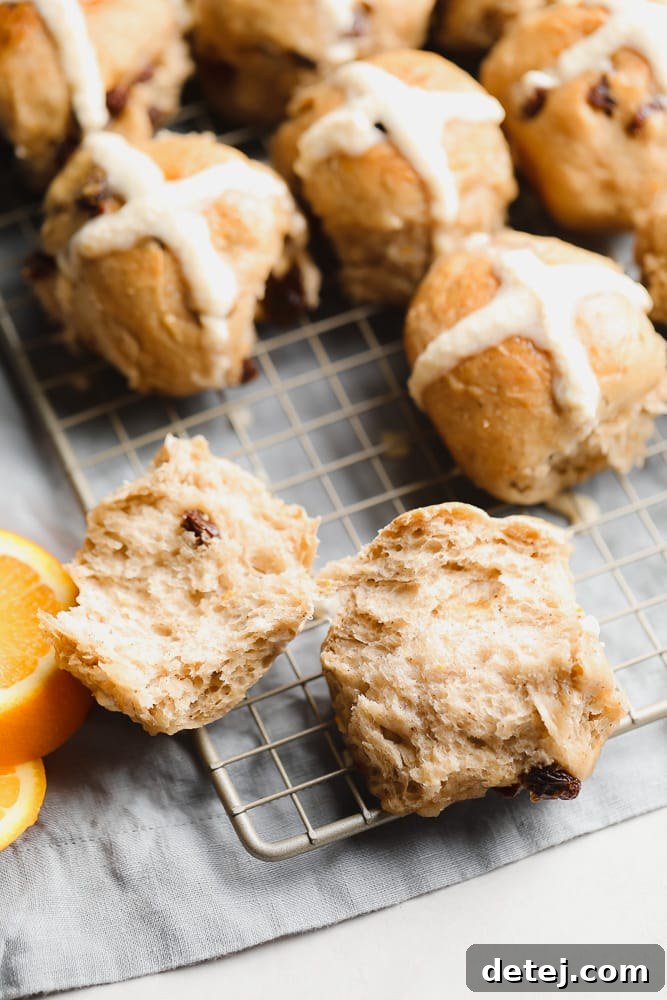
Baking these vegan hot cross buns is not just a recipe; it’s a delightful yearly project that can be enjoyed by the whole family. Kids, in particular, will love getting involved in the fun, especially when it comes to the exciting step of piping on the decorative crosses!
Essential Tips for Baking Perfect Vegan Hot Cross Buns
Achieving perfectly soft and fluffy hot cross buns is easier than you might think with a few key considerations and techniques. These tips will help ensure your baking project is a resounding success:
- Yeast Selection is Key: For a quicker and more straightforward process, we highly recommend using instant yeast (also known as rapid-rise yeast). This type of yeast can be mixed directly with dry ingredients and typically results in shorter rise times. If you only have regular active dry yeast on hand, it will work perfectly fine, but be prepared for slightly longer proofing periods. Always ensure your yeast is fresh and active for the best rise.
- Embrace a Sticky Dough: A common mistake when baking yeast rolls is to add too much flour. Resist the urge to keep adding flour until your dough is completely non-sticky. A slightly sticky, soft dough is crucial for achieving that wonderfully tender and fluffy texture in your finished buns. If the dough is too stiff, your rolls will turn out dense and dry. When working with sticky dough, simply flour your hands lightly to prevent sticking, rather than incorporating excessive flour into the dough itself.
- Mastering Smooth Rolls: To achieve beautifully smooth, round buns, proper shaping is important. After the first rise, gently punch down the dough to release the air. Then, divide the dough into equal pieces (a kitchen scale can help with consistency). To shape each piece into a smooth ball, take a piece of dough and gently pull its edges downwards, tucking them underneath to create tension on the top surface. Pinch the seams together at the bottom. Place the smoother top side up on your baking sheet. This video from Sally’s Baking Addiction offers an excellent visual guide for shaping rolls perfectly.
- The Bright Zest of Orange (Optional but Recommended): The orange zest adds a vibrant, fresh citrus note that beautifully complements the spices in these buns. While optional, it truly elevates the flavor profile and is highly recommended. If you prefer to omit the orange flavor entirely, you can simply leave out the orange zest from the dough. For the icing cross, you can substitute the orange juice with a small amount of water or a non-dairy milk to achieve the right consistency without the citrus hint.
- Achieving the Perfect Rise: Yeast doughs love warm, draft-free environments for rising. During the first rise, place your oiled bowl covered with plastic wrap in a warm spot, such as a slightly warm (but not hot) oven (turned off!), or near a sunny window. Patience is key; the dough should roughly double in size. For the second rise, the buns won’t double as dramatically, but they should look visibly puffed up before baking.
- Don’t Skip the Sugar Glaze: While an extra step, the sugar glaze that’s brushed on immediately after baking is vital. It creates a wonderfully sticky, shiny, and slightly caramelized exterior that adds to the authentic hot cross bun experience. It also helps lock in moisture, contributing to the buns’ softness.
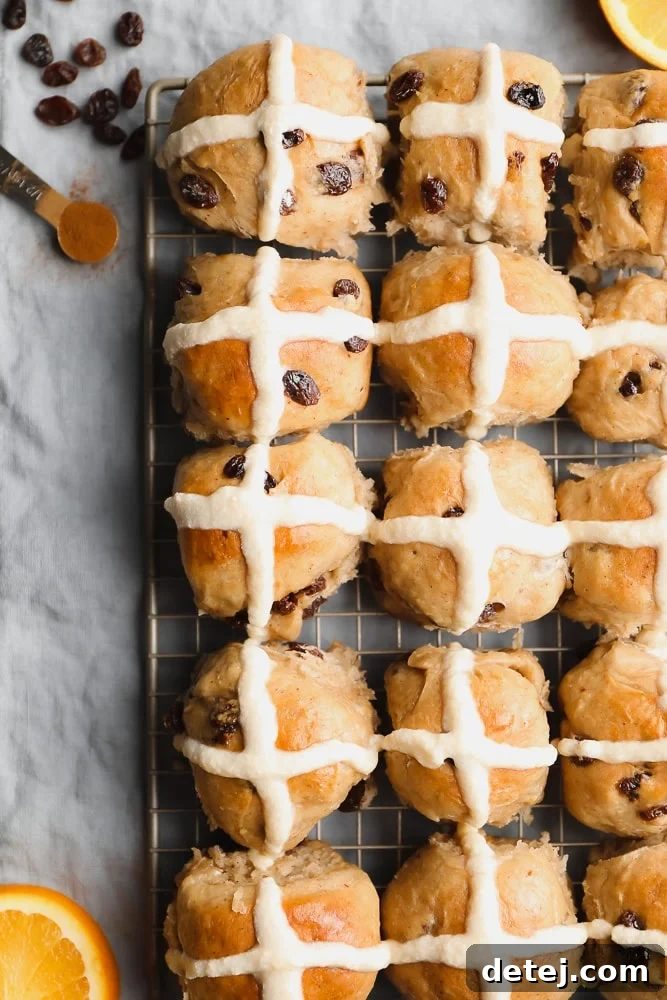
More Vegan Brunch Recipes for Your Easter Table
If you’re planning a full vegan Easter brunch, these hot cross buns are just the beginning! Here are some other delectable plant-based recipes that pair wonderfully and will impress all your guests:
- 1 Hour Vegan Cinnamon Rolls: For another sweet, doughy treat that’s quick and easy.
- Vegan Blueberry Scones: Light, flaky, and bursting with fresh blueberries.
- Easy Vegan Quiche: A savory and satisfying main dish for any brunch spread.
- Vegan Crepes: Versatile and elegant, perfect for sweet or savory fillings.

Vegan Hot Cross Buns
Vegan hot cross buns are unbelievably soft and fluffy with the perfect amount of sweetness. They are filled with spices, orange zest and juicy raisins and decorated with an orange glaze cross.
Prep Time: 1 hour 20 minutes
Cook Time: 25 minutes
Total Time: 1 hour 45 minutes
Servings: 15 buns
Ingredients
Hot Cross Buns
- 4 cups all purpose flour, plus more as needed
- 1 tablespoon instant yeast*
- 1/2 cup granulated sugar
- 1 1/2 teaspoons ground cinnamon
- 1/2 teaspoon ground nutmeg
- 1/2 teaspoon ground allspice
- 1 teaspoon salt
- 1 1/2 cups unsweetened soy milk, warmed
- 6 tablespoons vegan butter, softened
- 1 cup raisins or currants
- Zest of 1 orange, optional but good
Sugar Glaze
- 1/4 cup water
- 1/4 cup granulated sugar
Orange Glaze for Crosses
- 3/4 cup powdered sugar
- 2 tablespoons vegan butter, softened
- 1 teaspoon pure vanilla extract
- 2-3 tablespoons fresh orange juice*
Instructions
Prepare the Dough
- In the bowl of a stand mixer fitted with a dough hook (or a large mixing bowl if kneading by hand), combine the 4 cups of all-purpose flour, instant yeast, granulated sugar, ground cinnamon, ground nutmeg, allspice, and salt. Mix these dry ingredients thoroughly to ensure even distribution.
- Next, add the warmed unsweetened soy milk, softened vegan butter, the raisins or currants, and the optional orange zest. If using a stand mixer, begin mixing on low speed for about 5 minutes. Continue mixing until a cohesive dough forms and begins to pull away from the sides of the bowl. If the dough appears too wet, add additional flour gradually, 1/4 cup at a time, until the desired consistency is reached.
- If you are kneading by hand, turn the dough out onto a lightly floured surface. Knead vigorously for approximately 10 minutes, incorporating more flour as needed (a tablespoon at a time) to prevent excessive sticking, but being careful not to make the dough too stiff.
- The final dough should be slightly sticky to the touch, smooth, and elastic. It’s crucial not to incorporate too much flour during this stage, as over-flouring will result in dense, heavy buns that won’t rise properly and will lack that signature soft texture.
First Rise
- Lightly grease a large clean bowl with oil. Transfer the dough into the prepared bowl, turning it once to coat the entire surface with oil. Cover the bowl tightly with plastic wrap or a clean kitchen towel and place it in a warm, draft-free location. Allow the dough to rise for 30-45 minutes, or until it has visibly doubled in size.
Shape the Rolls
- Generously grease a 9×13 inch baking pan, or prepare two 8-9 inch round baking pans, with vegan butter or cooking spray.
- Gently punch down the risen dough to release the accumulated air. Transfer the dough to a lightly floured surface and divide it into 15 equal pieces. For the smoothest possible finish, take each piece of dough and pull its edges downwards, tucking them beneath to form a tight, smooth ball. Place the smoother side of each shaped roll face up onto your prepared baking pan(s), arranging them snugly next to each other, but allowing a little space for further expansion.
Second Rise
- Cover the baking pan(s) with a clean tea towel or plastic wrap. Allow the rolls to undergo their second rise for approximately 30 minutes. During this stage, they will puff up noticeably but typically won’t double in size as much as during the first rise.
- While the buns are undergoing their second rise, preheat your oven to 350 degrees F (175 degrees C).
Bake
- Carefully place the pan(s) into the preheated oven and bake for 20-25 minutes. The buns are done when they turn a beautiful golden brown on top and sound hollow when tapped on the bottom.
Prepare the Sugar Glaze
- While the hot cross buns are baking, prepare the sticky sugar glaze. In a small saucepan, combine the 1/4 cup of water and 1/4 cup of granulated sugar. Bring the mixture to a boil over medium heat, stirring occasionally. Allow it to simmer for 2-3 minutes, or until the sugar has completely dissolved and the syrup slightly thickens. Remove from heat and set aside.
Prepare the Orange Glaze for Crosses
- In a medium bowl, whisk together the powdered sugar, softened vegan butter, and pure vanilla extract until smooth. Gradually add the fresh orange juice, 1 tablespoon at a time, until you achieve a thick but pipeable consistency. The glaze should be smooth enough to flow but firm enough to hold its shape. Transfer the glaze to a piping bag (or a zip-top bag with a tiny corner snipped off) and refrigerate until the buns are ready for decoration.
Finishing Touches and Serving
- As soon as the hot cross buns come out of the oven, immediately brush them generously with the prepared warm sugar syrup. This step provides that characteristic sticky, glossy finish and adds an extra layer of sweetness.
- Allow the buns to cool on a wire rack for at least 20 minutes before proceeding with the icing. Once cooled slightly, retrieve your orange glaze. Pipe the icing over the buns in a cross pattern. Serve warm or at room temperature, and savor every spiced, sweet bite!
- To store any leftover rolls, cover them tightly with plastic wrap or place them in an airtight container. They will remain fresh and soft at room temperature for up to 2 days, or can be refrigerated for 4-5 days. For longer storage, hot cross buns also freeze exceptionally well; simply wrap them individually in plastic wrap, then place in a freezer-safe bag for up to 2-3 months. Thaw and gently reheat before serving for best results.
Notes and Troubleshooting
- Gluten-Free Adaptation: While this recipe has not been specifically tested with gluten-free flour, a high-quality 1:1 gluten-free baking mix (which often includes xanthan gum) would be the most suitable substitute. Please note that gluten-free doughs can behave differently and may require slight adjustments to liquid content or rise times. If you try a gluten-free version, we’d love to hear about your results!
- Yeast Type Flexibility: As mentioned in our tips, instant yeast (also known as rapid-rise yeast) is convenient for its faster activation and no-proof start. However, if active dry yeast is what you have, simply activate it in a portion of the warmed soy milk with a pinch of sugar for about 5-10 minutes until foamy before adding it to the dry ingredients. Expect rise times to be slightly longer, typically an additional 15-30 minutes for each rise.
- Non-Dairy Milk Alternatives: While unsweetened soy milk is recommended for its richness and protein content, which contributes to a good crumb structure, you can certainly experiment with other unsweetened non-dairy milks. Almond, cashew, oat, or even coconut milk (from a carton, not canned) can be used interchangeably. Be aware that subtle flavor and texture differences might occur.
- The Importance of the Sugar Glaze: Though it might seem like an extra step, the post-bake sugar glaze is highly recommended. It not only provides a beautiful shine and delightful stickiness but also helps to keep the buns moist and tender for longer. Skipping it will still yield delicious buns, but they may lack that classic hot cross bun sheen and mouthfeel.
Nutrition Information
Serving: 1 of 15 buns
Calories: 266 kcal
Carbohydrates: 50g
Protein: 4g
Fat: 6g
Saturated Fat: 1g
Trans Fat: 1g
Sodium: 216mg
Potassium: 150mg
Fiber: 2g
Sugar: 16g
Vitamin A: 337 IU
Vitamin C: 1mg
Calcium: 41mg
Iron: 2mg
Recipe Metadata
Course: Breakfast
Cuisine: American
Author: Nora Taylor
Serving, Storage, and Reheating Suggestions
Vegan hot cross buns are truly at their best when served warm, straight from the oven or gently reheated. Enjoy them as a delightful breakfast pastry, a special brunch item, or an afternoon snack with your favorite hot beverage. They are fantastic on their own, but can also be split and spread with a dollop of vegan butter, fruit jam, or even a swirl of nut butter for an extra treat.
Storage: To maintain their optimal freshness and softness, store leftover hot cross buns in an airtight container at room temperature for up to 2 days. If you need to keep them longer, they can be refrigerated for up to 4-5 days. Be sure to cover them well to prevent them from drying out.
Freezing for Later: Hot cross buns freeze beautifully! Once completely cooled, wrap individual buns tightly in plastic wrap, then place them in a freezer-safe bag or container. They can be stored in the freezer for up to 2-3 months. When you’re ready to enjoy them, simply thaw at room temperature or gently reheat from frozen.
Reheating: For best results, reheat hot cross buns in a preheated oven at 300°F (150°C) for about 5-10 minutes, or until warmed through and soft. You can also quickly warm them in a microwave for 15-30 seconds, though this can sometimes alter their texture slightly. Whichever method you choose, they’ll be wonderfully soft and fragrant, just like they were freshly baked.
Customizing Your Vegan Hot Cross Buns: Variations to Try
While the classic recipe is a winner, don’t hesitate to get creative and customize your hot cross buns with different add-ins and flavor profiles:
- Chocolate Chip Hot Cross Buns: Replace half or all of the raisins with vegan chocolate chips for a rich, decadent twist that kids (and adults!) will adore.
- Mixed Dried Fruit: Instead of just raisins or currants, try a blend of dried cranberries, chopped apricots, or even candied citrus peel for a more complex fruity flavor.
- Different Zests: While orange is traditional, lemon zest or a combination of lemon and orange can offer a slightly different, equally delightful citrus aroma.
- Spice Variations: Experiment with other warm spices like a pinch of ground ginger or cardamom for an extra layer of complexity.
- Nutty Addition: A handful of finely chopped pecans or walnuts can add a pleasant crunch and nutty flavor to the dough.
- Apple & Cinnamon: Add finely diced apple (peeled) along with extra cinnamon for an autumnal feel.
Frequently Asked Questions About Vegan Hot Cross Buns
Here are some common questions you might have when making these delicious plant-based hot cross buns:
Can I make the dough ahead of time?
Yes, you can! After the first rise, you can gently punch down the dough, cover it tightly, and refrigerate it overnight (up to 24 hours). The cold temperature will slow down the yeast activity. The next day, let the dough come to room temperature for about 30-60 minutes before proceeding with shaping and the second rise. This can be a great way to spread out your baking process.
My buns didn’t rise, what went wrong?
The most common reasons for dough not rising include inactive yeast, liquid that was too hot (killing the yeast) or too cold (slowing it down too much), or not providing a warm enough environment for proofing. Ensure your yeast is fresh, and your soy milk is warmed to around 105-115°F (40-46°C) – warm to the touch but not hot. Also, make sure your rising area is draft-free and sufficiently warm.
Can I make them without a stand mixer?
Absolutely! The instructions include guidance for hand kneading. While a stand mixer makes the process easier, kneading by hand is a fantastic workout and just as effective. Ensure you knead for the full 10 minutes to develop the gluten adequately for that soft, chewy texture.
How can I make the crosses perfectly?
For crisp, even crosses, ensure your icing is thick enough to hold its shape but still flow. A piping bag with a small round tip (or a Ziploc bag with a tiny corner snipped) provides the most control. Practice on a plate first if you’re nervous! For perfectly straight lines, you can use a ruler or a steady hand. If you prefer the traditional flour paste cross, mix about 1/2 cup all-purpose flour with 3-4 tablespoons of water until a thick, pipeable paste forms, then pipe it onto the unbaked buns before putting them in the oven.
Are these suitable for freezing?
Yes, these hot cross buns freeze exceptionally well. Once they are completely cooled, you can wrap them individually in plastic wrap and then place them in a freezer-safe bag or container for up to 2-3 months. Thaw at room temperature and reheat gently for the best experience.
Baking vegan hot cross buns is a truly rewarding experience, filling your home with wonderful aromas and your heart with holiday cheer. This recipe is designed to be straightforward yet yields incredibly delicious results, making it perfect for both seasoned bakers and those new to yeast doughs. Embrace the tradition, enjoy the process, and delight in sharing these soft, spiced, and beautifully glazed buns with your loved ones this Easter season.
Did you make this recipe?
Mention @nora_cooks_vegan_ or tag #noracooks!