
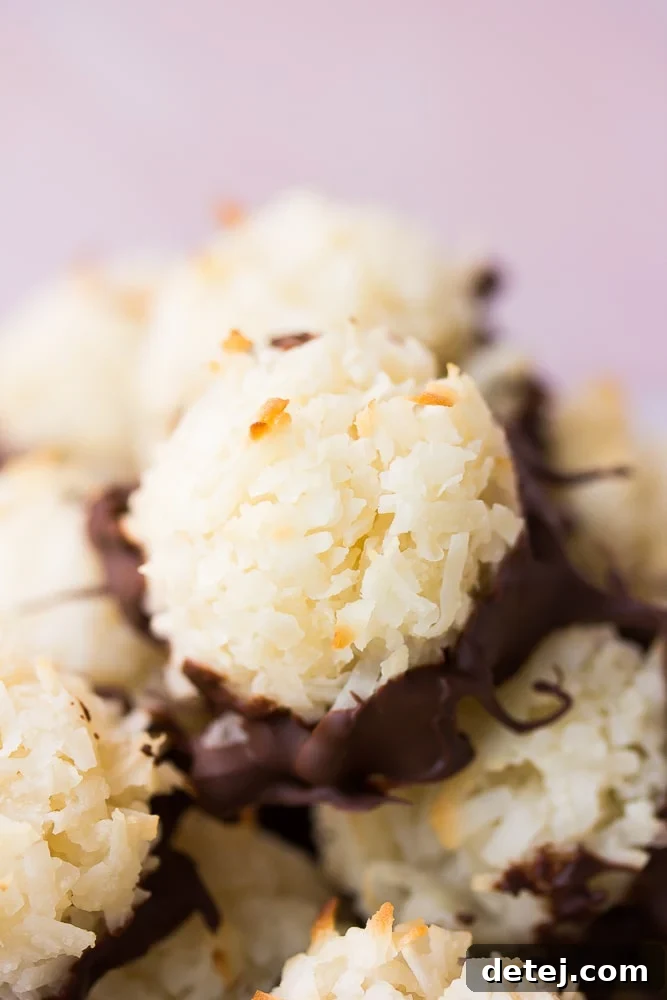
Irresistible Vegan Coconut Macaroons: Chewy, Sweet & Gluten-Free
Experience pure delight with these Vegan Coconut Macaroons! Sweet, incredibly chewy, and moist on the inside with a perfectly golden, lightly toasted exterior. These delightful cookies are naturally gluten-free, made with just a handful of simple ingredients, and come with an optional rich chocolate dip for an extra touch of decadence.
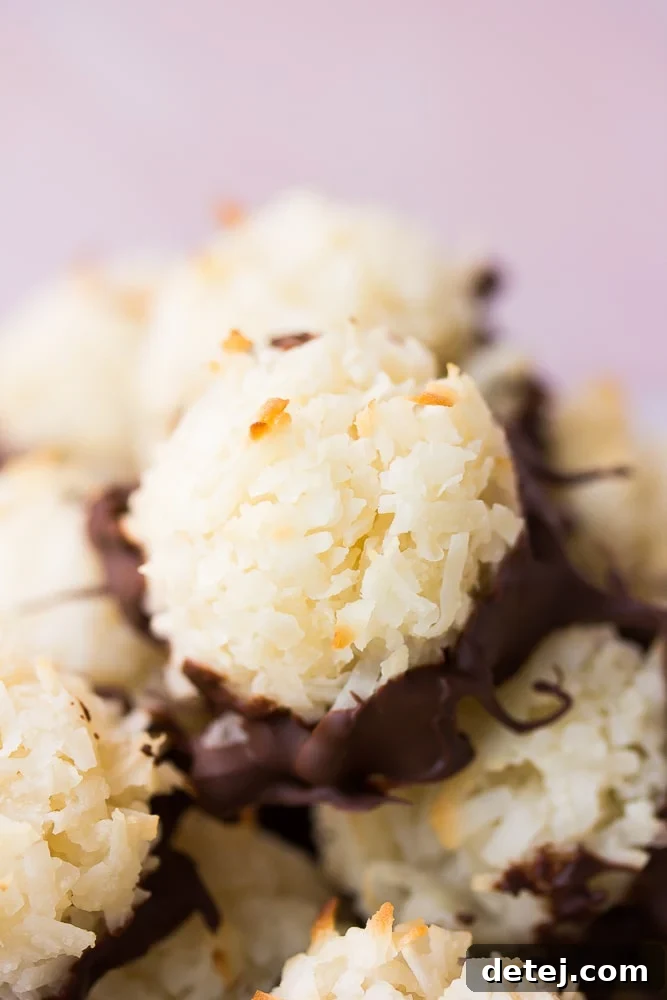
There’s something inherently comforting and utterly delicious about a classic coconut macaroon. That delightful chewiness, the sweet, tropical flavor, and the irresistible toasted edges make them a beloved treat worldwide. But what if you’re following a vegan or gluten-free diet? Traditionally, macaroons rely heavily on egg whites and condensed milk, making them off-limits for many. Fear not, because we’ve cracked the code to creating the most incredible **Vegan Coconut Macaroons** that rival their traditional counterparts in every way!
This recipe transforms the beloved classic into a plant-based masterpiece, ensuring everyone can indulge in these delightful, naturally gluten-free cookies. With just six core ingredients (plus optional chocolate for dipping), you’ll be amazed at how easy it is to whip up a batch of these ultra-chewy, perfectly sweet, and wonderfully moist macaroons right in your own kitchen.
Macaroons vs. Macarons: Understanding the Difference
Before diving into this amazing recipe, let’s clarify a common culinary confusion. Many people often mix up “macaroons” and “macarons.” While their names sound similar, they are distinctly different confections:
- Macaroon: This is the star of our recipe today! Macaroons are typically dense, chewy, mound-shaped cookies primarily made from shredded coconut, sugar, and an egg white binder, often enriched with sweetened condensed milk. They boast a rustic appearance and a wonderfully chewy texture. Our vegan version masterfully replicates this texture using clever plant-based alternatives.
- Macaron: These are delicate French sandwich cookies. Macarons are made from almond flour, egg whites, and sugar, resulting in smooth, crisp shells with ruffled “feet.” They are typically filled with ganache, buttercream, or jam, and have a much more refined, airy, and delicate texture compared to macaroons.
So, rest assured, you’re here for the delightful, coconut-centric macaroons, and we promise this vegan recipe delivers all the texture and flavor you crave without any animal products!
The Vegan Transformation: How We Made Macaroons Plant-Based and Gluten-Free
Crafting a truly authentic vegan macaroon required a bit of culinary experimentation. The traditional recipe relies on two key animal-derived ingredients: egg whites for binding and structure, and condensed milk for sweetness, moisture, and that signature chewy texture. After several delightful trials, we discovered the perfect plant-based substitutes that work their magic beautifully:
- Aquafaba for Egg Whites: The liquid from a can of chickpeas, known as aquafaba, is an incredible discovery in vegan baking. When whipped, it mimics egg whites, creating stiff peaks that provide the essential binding and light, airy texture needed to form the macaroons. It’s truly a game-changer!
- Full-Fat Coconut Cream/Milk for Condensed Milk: To replace the richness and moisture of condensed milk, we turn to full-fat coconut milk. Specifically, using the thick, creamy part from a can of chilled coconut milk provides that luxurious texture and subtle coconut flavor that elevates these macaroons to perfection.
This intelligent combination ensures our vegan macaroons are not only delicious but also naturally gluten-free and incredibly satisfying.
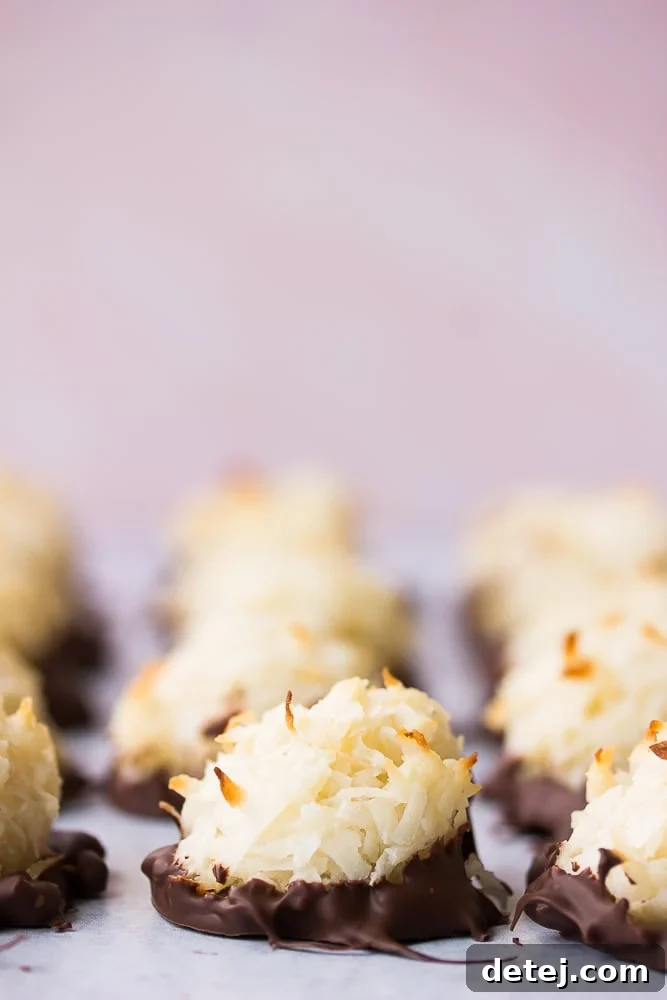
Why You’ll Fall in Love with These Vegan Coconut Macaroons
Once you try these macaroons, you’ll understand why they’ve become a staple in many vegan kitchens. They are truly addictive and offer a delightful experience for your taste buds and dietary preferences:
- Naturally Gluten-Free: Made without any wheat or gluten-containing flours, these cookies are perfect for those with celiac disease or gluten sensitivities, ensuring everyone can enjoy a delicious treat.
- Oil-Free (in the base recipe): The richness comes from the full-fat coconut milk, eliminating the need for added oils in the cookie mixture itself, making them a slightly lighter option without compromising on flavor or texture.
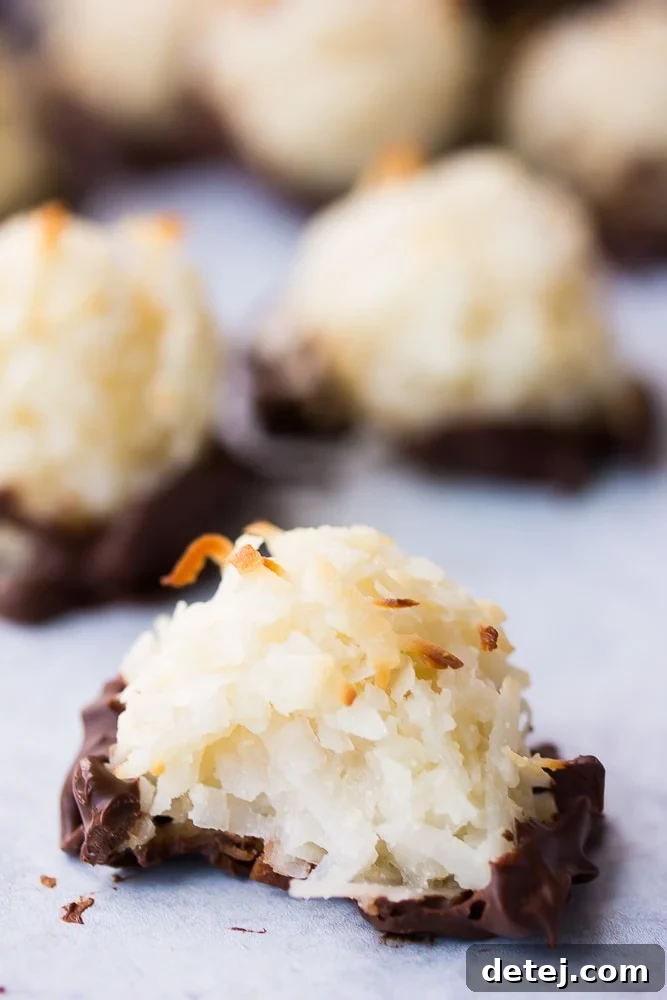
- Chewy, Moist, and Sweet in the Middle: Each bite promises a tender, moist interior bursting with sweet coconut flavor. The texture is exactly what you expect from a perfect macaroon – delightfully chewy without being overly dense.
- Slightly Toasty on the Outside: The baking process gives these macaroons a beautiful golden-brown exterior, adding a subtle crispness and a wonderful toasted coconut aroma that enhances the overall flavor profile.
- Easy to Make: With straightforward steps and minimal ingredients, even novice bakers can achieve impressive results. This recipe is designed to be approachable and enjoyable to follow.
- Optional Chocolate Dipped Perfection: While amazing on their own, dipping these macaroons in dairy-free melted chocolate takes them to an entirely new level. The bittersweet chocolate perfectly complements the sweet coconut, creating an irresistible flavor combination.
These qualities combine to create a cookie that isn’t just a substitute for the traditional version but a delightful confection in its own right.
How to Make the Best Vegan Coconut Macaroons: A Step-by-Step Guide
Creating these delightful **gluten-free and vegan coconut macaroons** is a straightforward process. Follow these detailed steps to ensure perfectly chewy and flavorful cookies every time.
Preparation is Key
- Preheat Oven & Prepare Baking Sheet: Begin by preheating your oven to 325 degrees F (160 degrees C). Line a large baking sheet with parchment paper. This prevents sticking and ensures easy removal of your delicate macaroons.
- Process Coconut (Optional for Texture Preference): If you prefer a finer texture for your shredded coconut, you can briefly pulse the sweetened coconut flakes in a food processor or high-powered blender. Be careful not to over-process; you just want to break them into smaller pieces, not turn them into butter, as over-blending will release oils and negatively affect the texture of your macaroons.
Crafting the Macaroon Mixture
- Prepare Coconut Milk Mixture: Open a can of full-fat coconut milk (it’s best if it’s been refrigerated, allowing the cream to separate). Scoop out the thick, creamy white part from the top until you have about 1/2 cup. Then, add 1/4 cup of the more watery liquid from the bottom of the can, totaling 3/4 cup. If the coconut cream is very firm, microwave it for 10-20 seconds until it softens slightly but isn’t hot.
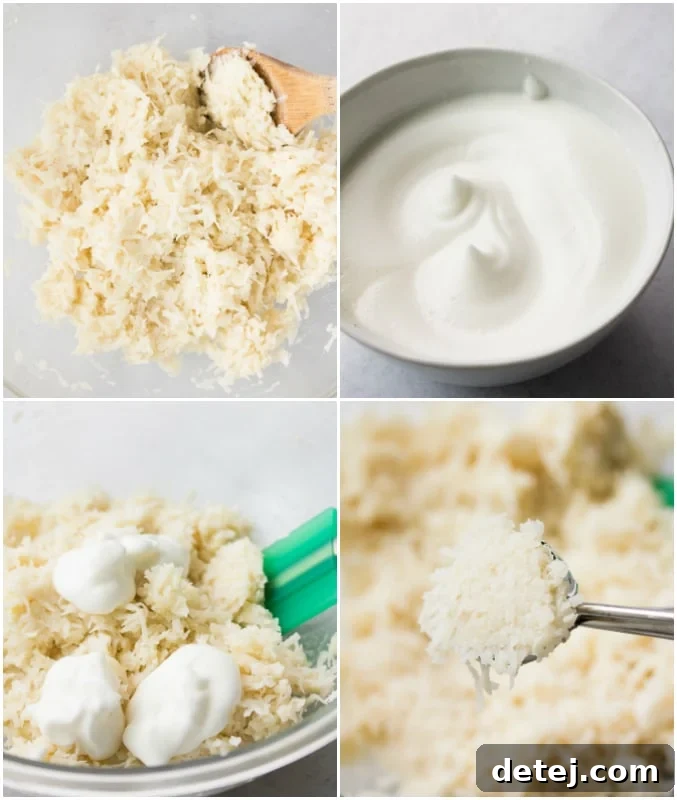
- Combine Dry & Wet Ingredients: In a large mixing bowl, combine the prepared coconut milk/cream with the 14 ounces of sweetened coconut flakes, 1/2 cup of almond flour, 1 teaspoon of pure vanilla extract, 1/2 teaspoon of almond extract (if using), and 1/4 teaspoon of salt. Mix all ingredients thoroughly with a large spoon until everything is well incorporated and a cohesive dough forms.
The Aquafaba Magic
- Whip the Aquafaba: This is where the magic happens! Pour the liquid from a can of chickpeas into a separate medium-sized bowl. Add 1/4 teaspoon of cream of tartar (this is optional but highly recommended as it helps stabilize the aquafaba and ensures stiffer peaks). Using a hand mixer, beat the aquafaba on high speed for 3-6 minutes, or until stiff peaks form. You’ll know it’s ready when the mixture holds its shape and doesn’t droop when you lift the beaters.
- Fold Aquafaba into Coconut Mixture: Gently measure out 4 heaping tablespoons of the whipped aquafaba and carefully fold it into your coconut mixture. Use a spatula to gently incorporate it, preserving as much of the airiness as possible. Stir just until combined; do not overmix, or you risk deflating the aquafaba.
Baking Your Macaroons
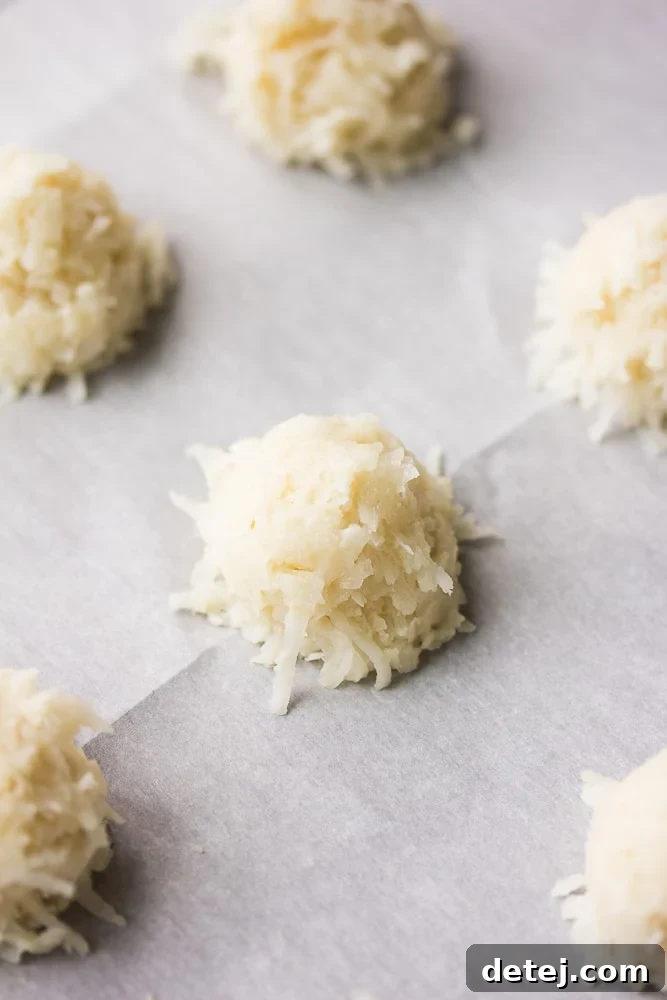
- Scoop and Shape: Using a small cookie scoop or a tablespoon, form heaping tablespoons of the mixture into small mounds. Place them onto your prepared baking sheet, leaving about an inch of space between each macaroon. Their shape will hold well during baking.
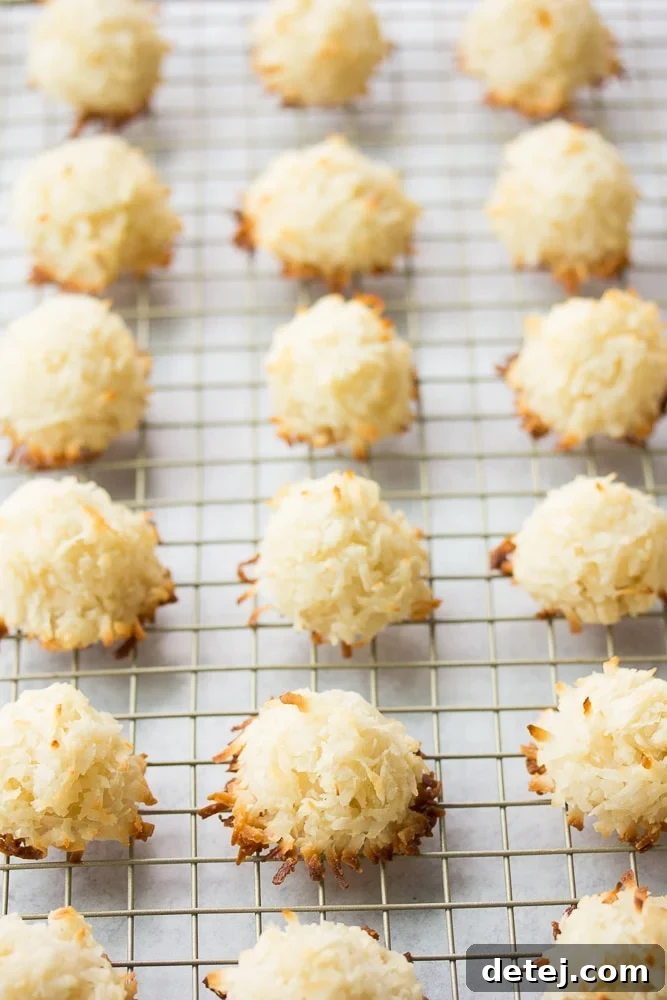
- Bake to Golden Perfection: Place the baking sheet in the preheated oven and bake for 23-25 minutes. The macaroons are ready when their tops and edges are beautifully golden and lightly toasted. Keep an eye on them to prevent over-browning.
- Cooling: Once baked, remove the tray from the oven. Let the macaroons cool on the baking sheet for a few minutes to firm up slightly. They can be quite fragile when warm. Then, carefully transfer them to a wire cooling rack to cool completely. This helps them achieve their perfect chewy texture.
Optional Chocolate Dip
- Melt the Chocolate: If you desire a chocolate dip, melt 8 ounces of dairy-free chocolate chips or chopped chocolate bars. You can do this in a microwave-safe bowl, heating in 30-second intervals and stirring well after each interval until the chocolate is smooth and fully melted. Alternatively, use a double boiler method for a gentler melt.
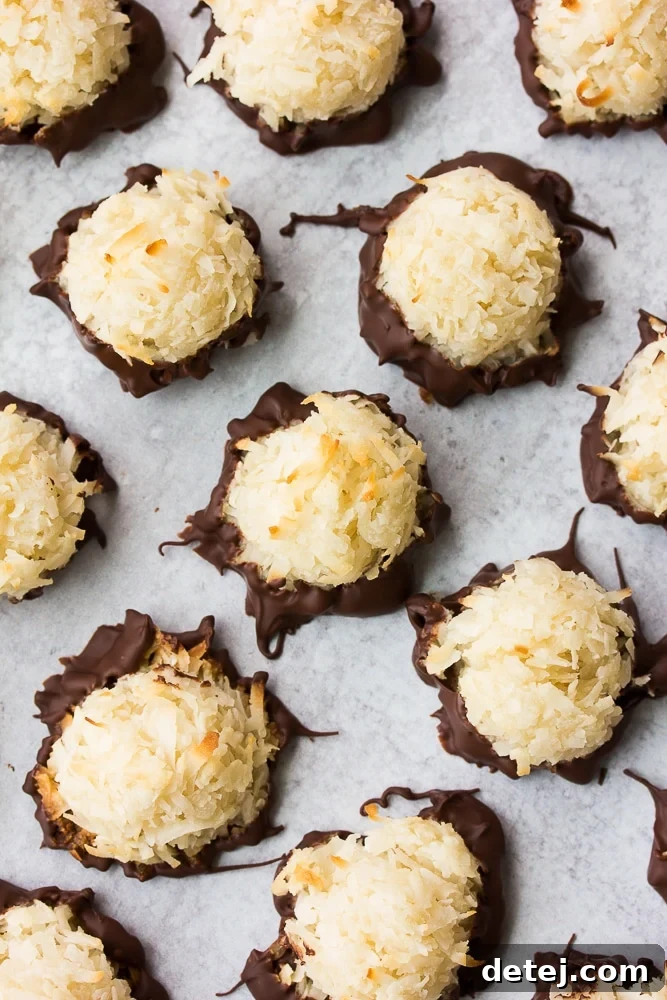
- Dip & Set: Carefully dip the bottom of each cooled macaroon into the melted chocolate. A fork can be helpful here as the macaroons are delicate. Place the chocolate-dipped macaroons back onto the parchment paper-lined baking sheet.
- Chill to Set: Transfer the baking sheet to the refrigerator for 10-15 minutes, or until the chocolate has completely set. This creates a firm, satisfying chocolate base.
Expert Tips for Perfect Vegan Coconut Macaroons
Achieving the ideal vegan coconut macaroon is simple with a few helpful pointers:
- Cold Coconut Milk is Crucial: For the best results, ensure your can of full-fat coconut milk has been refrigerated for at least 24 hours. This allows the thick cream to separate from the watery liquid, making it easier to scoop out the desired consistency.
- Don’t Over-Whip Aquafaba: While stiff peaks are essential, be mindful not to over-whip aquafaba past that point, as it can start to break down.
- Gentle Folding: When incorporating the whipped aquafaba, use a gentle folding technique to maintain its aeration. This contributes to the macaroons’ light and chewy texture.
- Avoid Overbaking: Keep a close eye on your macaroons as they bake. They should be golden on the edges and top, but not dark brown, to retain their moist interior. Oven temperatures can vary, so adjust baking time as needed.
- Quality Chocolate Matters: If opting for the chocolate dip, choose a high-quality dairy-free chocolate that melts smoothly for the best finish and flavor.
- Even Scooping: Use a cookie scoop or consistent tablespoon measure to ensure uniformly sized macaroons. This helps them bake evenly.
Serving Suggestions for Your Vegan Coconut Macaroons
These delightful vegan macaroons are versatile and can be enjoyed in various ways:
- Coffee or Tea Companion: They pair wonderfully with a hot cup of coffee, tea, or even a glass of plant-based milk for a comforting afternoon treat.
- Dessert Platter Addition: Arrange them on a dessert platter for parties or gatherings. Their unique texture and flavor will be a hit.
- Gift Giving: Package them in a decorative box or bag for a thoughtful homemade gift that’s perfect for friends, family, or neighbors, especially those with dietary restrictions.
- After-Dinner Sweet: Enjoy one or two as a light yet satisfying sweet ending to any meal.
Storing and Freezing Vegan Coconut Macaroons
One of the many advantages of these vegan coconut macaroons is how well they store, making them perfect for meal prepping your sweet cravings!
- Room Temperature: Store any leftover macaroons in an airtight container at room temperature for up to 4-5 days. They retain their delicious texture remarkably well.
- Refrigerator: For an extended shelf life, you can keep them in the refrigerator for at least a week. The chill might make them slightly firmer, but they’re still wonderfully chewy.
- Freezer Friendly: These cookies freeze beautifully! Simply place them in a freezer-safe bag or container, separating layers with parchment paper if stacking. They can be stored in the freezer for several months. In fact, many people (including us!) enjoy eating them straight from the freezer for a surprisingly delightful, firm, and chewy cold treat!
Frequently Asked Questions About Vegan Coconut Macaroons
Here are answers to some common questions you might have:
- Can I use unsweetened coconut flakes? You can, but you may need to increase the sugar content slightly to achieve the desired sweetness. Sweetened flakes contribute to both flavor and moisture.
- What if I don’t have cream of tartar? While optional, cream of tartar helps stabilize the aquafaba and results in firmer, more reliable peaks. If omitted, your aquafaba might take longer to whip or be slightly less stable, but it should still work.
- Can I substitute almond flour? If you have an almond allergy, you might be able to substitute regular all-purpose flour, brown rice flour, or a gluten-free all-purpose flour blend for the almond flour. If doing so, remember to omit the almond extract. Perform a small test batch first to ensure desired texture.
- Why are my macaroons crumbly? This could be due to not enough moisture (ensure you get enough coconut cream), or possibly over-processing the coconut flakes. Ensure the mixture is well combined and slightly sticky before baking.
- Why are my macaroons flat? If your aquafaba wasn’t whipped to stiff peaks, or if it was over-folded into the mixture, your macaroons might spread more. Ensure the aquafaba holds its shape before folding.
More Delicious Vegan & Gluten-Free Desserts to Explore
If you loved these **vegan and gluten-free coconut macaroons**, be sure to check out these other fantastic plant-based dessert recipes:
- Irresistible Chickpea Blondies
- Homemade Vegan Peanut Butter Cups
- Perfect Vegan Gluten-Free Chocolate Chip Cookies
- Decadent No-Bake Layered Raspberry Vegan Cheesecake
The Ultimate Vegan Coconut Macaroons Recipe
Vegan Coconut Macaroons
Yields 28 cookies | Prep time: 15 minutes | Cook time: 25 minutes | Total time: 40 minutes
These Vegan Coconut Macaroons are the epitome of sweet, chewy, and moist, featuring a delightful, lightly toasted exterior. They are a naturally gluten-free cookie that’s remarkably easy to prepare with only 6 essential ingredients (+ optional chocolate for dipping).
Rated 4.56 out of 5 stars (9 ratings)
Ingredients
Main Macaroon Mixture
- 3/4 cup full-fat coconut milk (use mostly the creamy white part from a chilled can)
- 14 ounces sweetened coconut flakes
- 1/2 cup almond flour
- 1 teaspoon pure vanilla extract
- Optional: 1/2 teaspoon almond extract
- 1/4 teaspoon salt
For the Aquafaba Egg Substitute
- Liquid from 1 standard can of chickpeas (approximately 1/2 cup)
- 1/4 teaspoon cream of tartar (optional, but highly recommended for stability)
Optional Chocolate Dip
- 8 ounces dairy-free chocolate chips or chopped dairy-free chocolate bar
Instructions
- Preheat your oven to 325°F (160°C) and line a large baking sheet with parchment paper.
- Prepare your coconut milk: From a chilled can of full-fat coconut milk, scoop out the thick, creamy white part until you have 1/2 cup. Add approximately 1/4 cup of the watery liquid from the can to reach a total of 3/4 cup. If the coconut cream is very firm, microwave it for 10-20 seconds to soften it slightly.
- In a large bowl, combine the prepared coconut milk/cream, sweetened coconut flakes, almond flour, vanilla extract, almond extract (if using), and salt. Stir well with a large spoon until all ingredients are thoroughly combined and form a cohesive mixture.
- For the Aquafaba: Pour the liquid from a can of chickpeas into a medium-sized bowl. Add 1/4 teaspoon of cream of tartar. Using a hand mixer, beat on high speed until stiff peaks form (this typically takes 3-6 minutes). The aquafaba should hold its shape when the beaters are lifted.
- Carefully measure 4 heaping tablespoons of the whipped aquafaba and gently fold it into the coconut mixture. Stir just until combined, being careful not to deflate the aquafaba.
- Using a small cookie scoop or a tablespoon, scoop heaping amounts of the mixture and form them into mounds on the prepared baking sheet. Leave about 1 inch of space between each macaroon.
- Bake in the center of your preheated oven for 23-25 minutes, or until the tops and edges are beautifully golden and lightly toasted.
- Allow the macaroons to cool on the baking sheet for 10 minutes before carefully transferring them to a wire rack to cool completely. They are fragile when warm.
- Optional Chocolate Dip: If desired, melt the dairy-free chocolate chips in a small microwave-safe bowl. Heat in 30-second intervals, stirring thoroughly after each, until smooth and fully melted.
- Gently dip the bottom of each cooled macaroon into the melted chocolate, using a fork to handle them as they are delicate. Return the chocolate-dipped macaroons to the parchment-lined baking sheet.
- Place the baking sheet in the refrigerator for about 10 minutes to allow the chocolate to set completely. Enjoy!
Notes
- The calorie count listed includes the optional chocolate dip.
- For a finer coconut texture, you can pulse the sweetened coconut flakes briefly in a food processor or blender. Be careful not to over-blend, as this will release oils and can negatively impact the macaroon’s texture.
- If you have an almond allergy, you may substitute regular all-purpose flour, brown rice flour, or a gluten-free all-purpose flour blend for the almond flour. Remember to omit the almond extract in this case.
Nutrition Information (per 1 cookie with optional chocolate dip)
Serving: 1 cookie | Calories: 129kcal | Carbohydrates: 13g | Protein: 2g | Fat: 9g | Saturated Fat: 7g | Sodium: 62mg | Potassium: 69mg | Fiber: 2g | Sugar: 9g | Vitamin C: 1mg | Calcium: 17mg | Iron: 1mg
Recipe Details
Course: Dessert
Cuisine: American
Author: Nora Taylor
Conclusion
These **Vegan Coconut Macaroons** are a testament to the fact that delicious, satisfying desserts don’t need to compromise on dietary preferences. Whether you’re vegan, gluten-free, or simply looking for a delightful and easy-to-make sweet treat, this recipe promises a perfect balance of chewy texture, sweet coconut flavor, and a hint of toasted goodness. Share them with loved ones or keep them all to yourself – either way, you’re in for a truly delightful experience. Happy baking!