
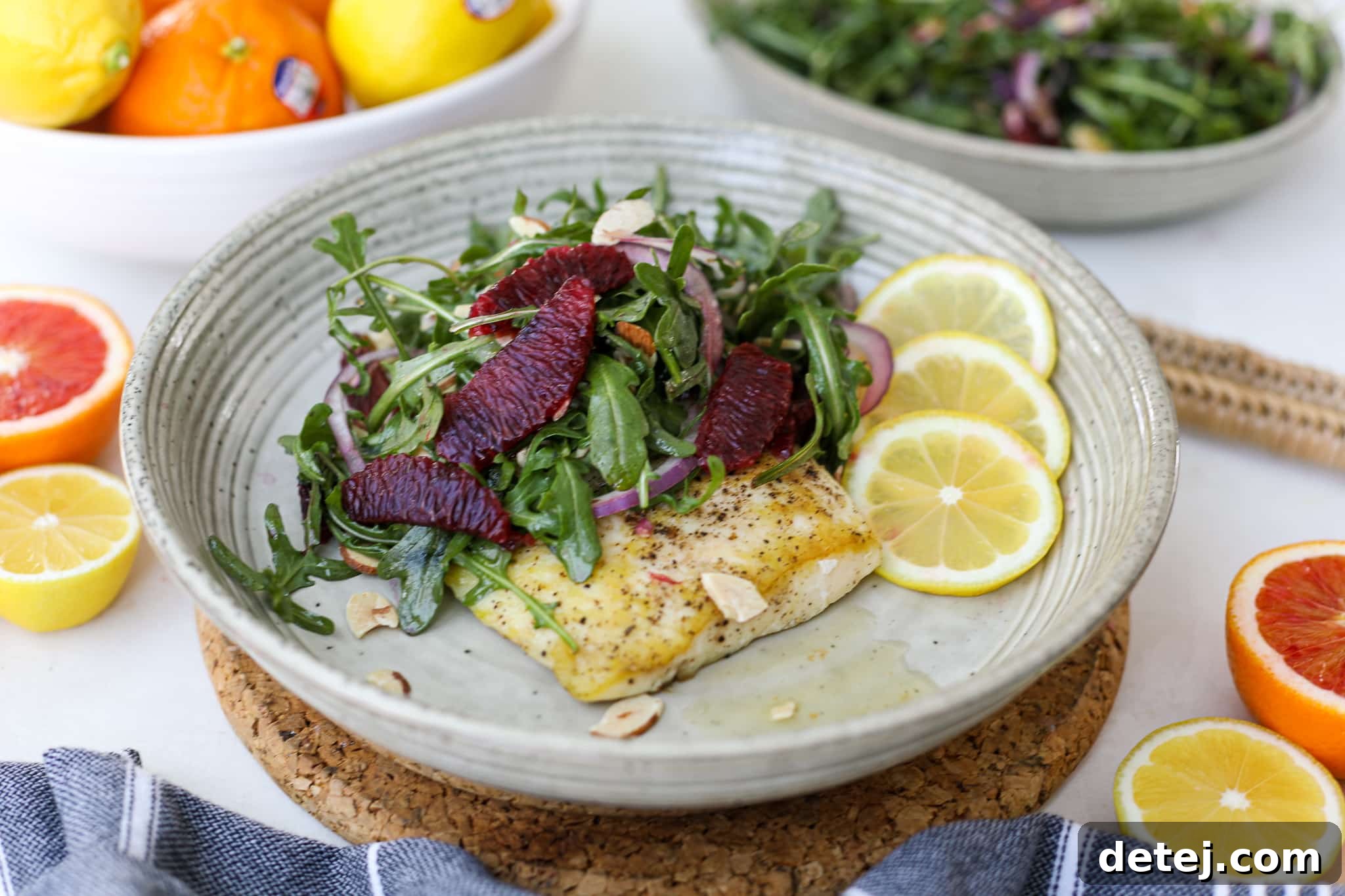
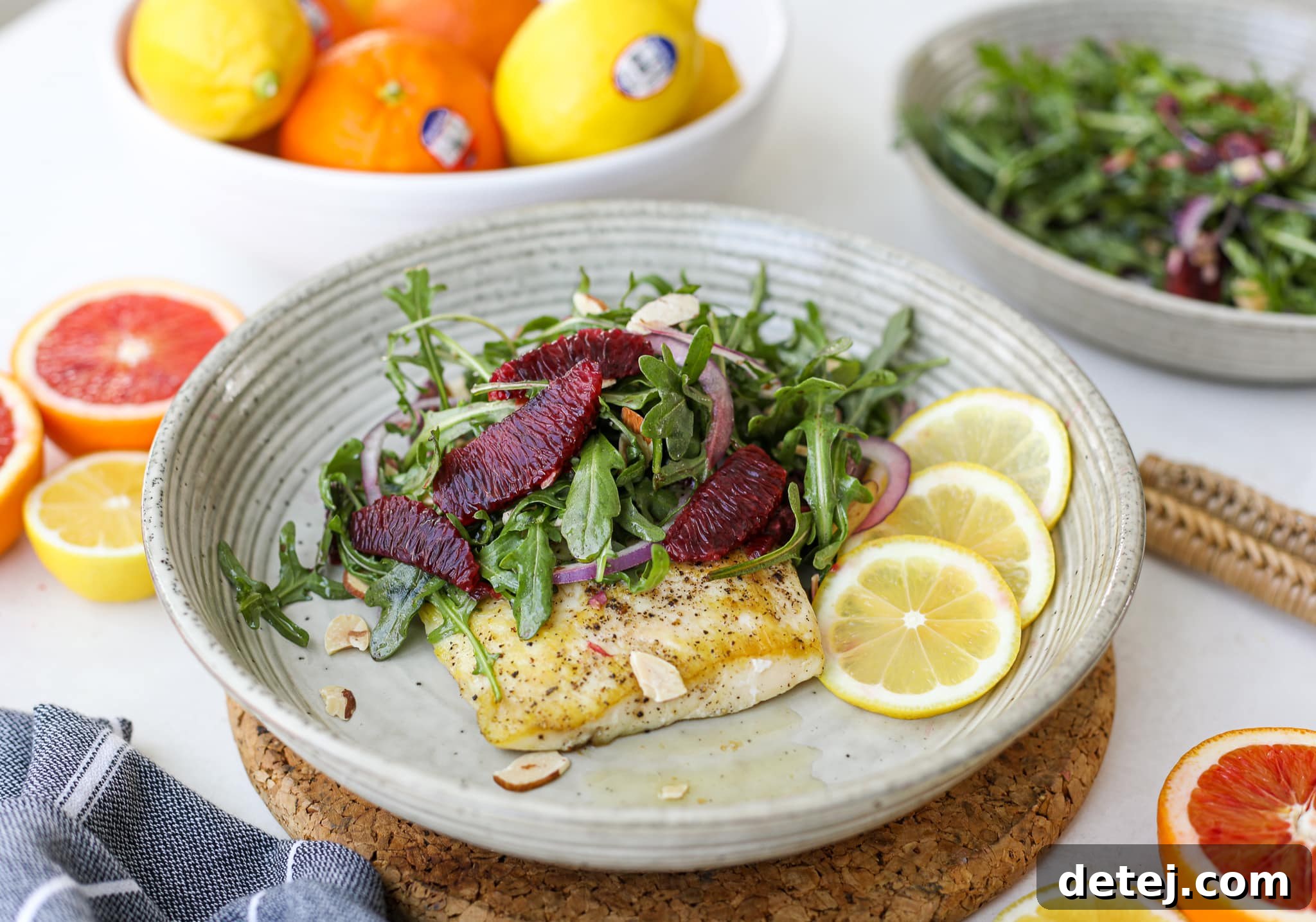
Transform your weeknight dinner into an extraordinary culinary experience with this exquisite Pan-Seared Halibut with White Wine Lemon Butter Sauce and a vibrant Citrus Salad. This dish promises to delight your senses with its delicate flavors, flaky texture, and bright, refreshing zest. Imagine perfectly seared halibut, kissed with a rich, tangy lemon butter sauce infused with white wine, all complemented by a light and lively citrus salad. It’s not just a meal; it’s an occasion, designed to be both simple to prepare and impressively delicious.
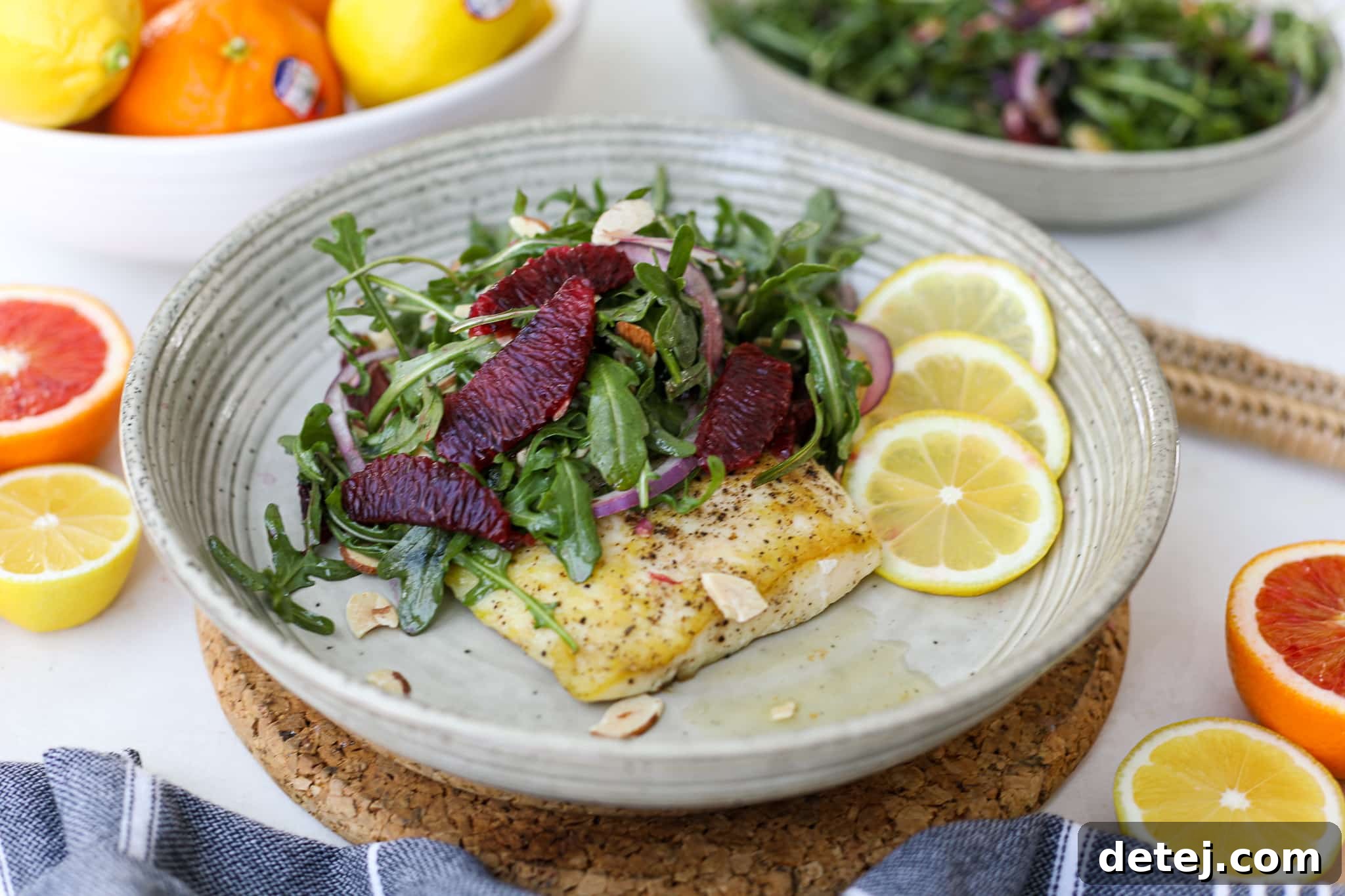
At the heart of this recipe’s brilliant flavor profile are fresh, high-quality citrus fruits. We’ve chosen Sunkist® lemons and Sunkist® blood oranges for their unparalleled quality and distinct characteristics. Sunkist® blood oranges boast a truly unique, crimson interior that makes them a stunning addition to salads, sauces, desserts, or even craft cocktails. Their sweet-tart flavor adds depth and visual appeal. Sunkist® lemons, on the other hand, deliver that classic, invigorating tartness and bright tang that is simply indispensable in countless dishes, including our decadent butter sauce. Their versatility makes them perfect for elevating pretty much any culinary creation!
About Sunkist Growers
When you choose Sunkist® fruit, you’re not just picking up citrus; you’re supporting a legacy spanning over 130 years. Sunkist Growers is a remarkable cooperative, wholly owned and passionately operated by thousands of family citrus growers across California and Arizona. These dedicated families benefit from ideal growing conditions, combining generations of expertise with sustainable practices to cultivate truly premium, high-quality fruit. Their commitment ensures that every lemon and blood orange brings unparalleled freshness and flavor to your table, making them the perfect choice for our recipe.
This delightful recipe was proudly sponsored by Sunkist Growers. While I was compensated for my time in developing and sharing this recipe, rest assured that all opinions and culinary recommendations expressed here are authentically my own, reflecting my genuine appreciation for their exceptional produce.
The Perfect Halibut: Why Pan-Searing is Best & Pro Tips
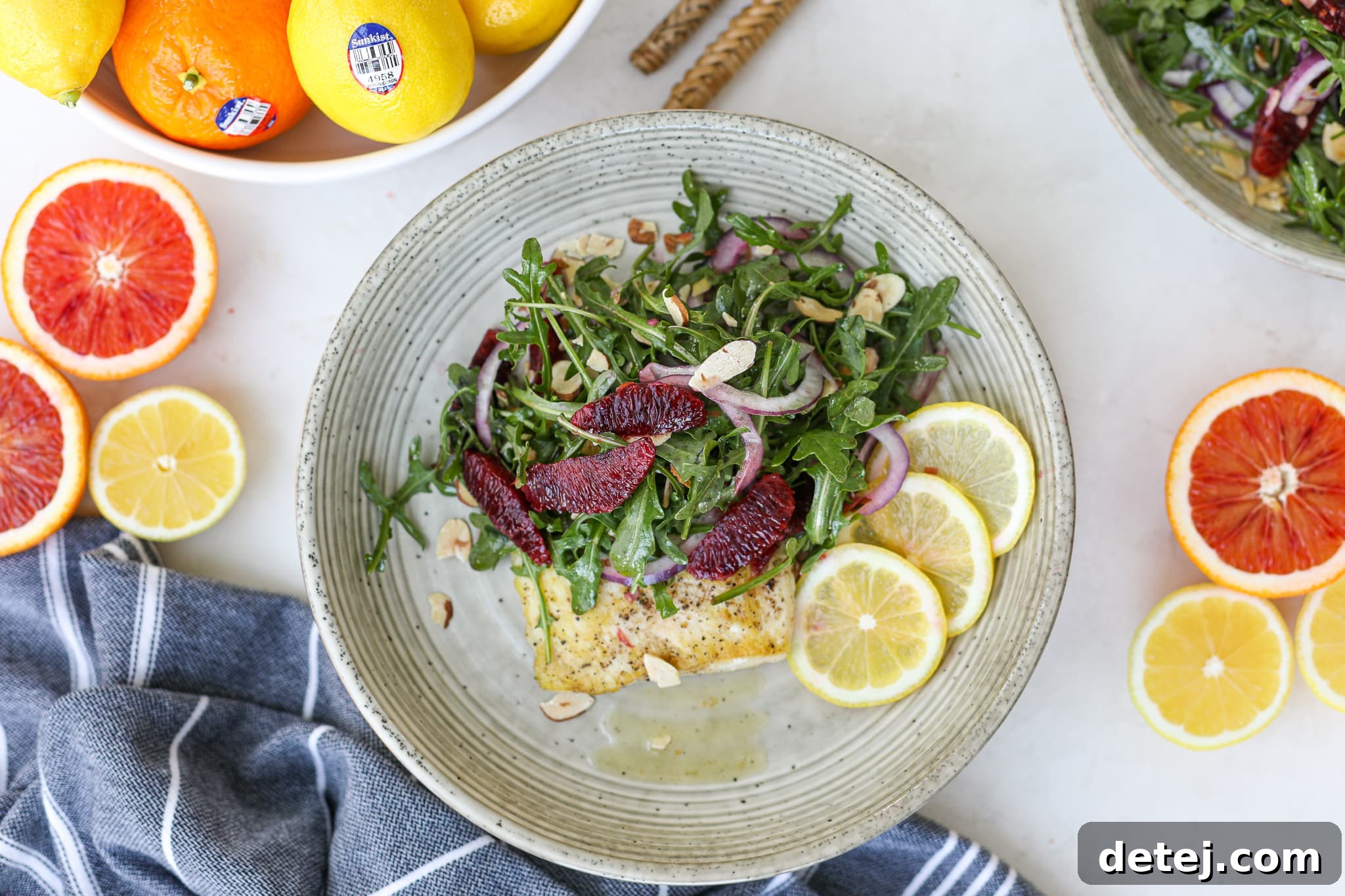
Halibut is celebrated for its firm, white flesh and mild, sweet flavor, making it a favorite among seafood lovers. Pan-searing is arguably one of the best methods to cook halibut, as it creates a beautifully golden-brown crust while keeping the interior moist and tender. This technique not only enhances its natural flavor but also locks in its delicate texture. To achieve restaurant-quality results at home, consider these expert tips:
- **Choose the Right Pan:** The secret to a perfect sear starts with your cookware. Always use a flat, non-stick skillet. A ridged grill pan, while useful for some applications, won’t provide the continuous contact needed for that coveted, even golden crust on your fish. A flat surface ensures every inch of the halibut can caramelize beautifully.
- **Temperature is Key:** Preheat your non-stick skillet over medium-high heat before adding any oil. Once the pan is sufficiently hot, add your chosen oil (avocado oil is excellent due to its high smoke point) and wait until it shimmers but doesn’t smoke. This ensures immediate searing and prevents the fish from sticking.
- **Pat Your Fish Dry:** Moisture is the enemy of a good sear. Before seasoning, thoroughly pat your halibut fillets dry with paper towels. This crucial step removes surface moisture, allowing the fish to develop a crisp, flavorful crust rather than steaming in its own juices.
- **Don’t Overcrowd the Pan:** Cook fillets in batches if necessary, ensuring there’s ample space around each piece. Overcrowding lowers the pan temperature and leads to steaming instead of searing.
- **Resist the Urge to Move:** Once the halibut hits the hot pan, leave it undisturbed for the first 4-5 minutes. This allows the crust to form without tearing. Use a fish spatula for a gentle, precise flip.
- **Perfect Doneness:** The ideal internal temperature for halibut varies slightly depending on your preference. For a beautifully flaky, tender, and moist medium, aim for an internal temperature of 130-135°F (54-57°C). If you prefer it more well-done, cook to 140°F (60°C). For medium-rare, target 125°F (52°C), and rare at 120°F (49°C). A digital meat thermometer inserted into the thickest part of the fillet is your best friend here. For this pan-seared halibut recipe, cooking to a medium temperature was truly perfect, yielding a fish that was flaky, tender, and wonderfully moist.
- **Let it Rest:** Just like with steak, a short resting period of 2-3 minutes after cooking allows the juices to redistribute, resulting in a more succulent and flavorful fish.
Mastering Citrus Segmentation
Segmenting citrus, also known as creating “supremes,” might sound fancy, but it’s a straightforward technique that dramatically enhances the eating experience of your citrus salad. Removing the bitter pith and fibrous membranes reveals the pure, juicy fruit segments, making them burst with flavor and creating a more elegant presentation. Here’s how to do it:
- **Prepare Your Orange:** Start by placing your blood orange (or any citrus) on a cutting board. Using a sharp paring knife or a small chef’s knife, carefully slice off both ends of the orange, just enough to expose the flesh.
- **Remove the Peel and Pith:** Stand the orange upright on one of its flat ends. Following the natural curve of the fruit, slice downwards to remove the outer skin and the white pith beneath it. Work your way around the orange, making sure to remove all white pith, as it can be quite bitter. You want to see the vibrant fruit segments exposed.
- **Segment the Fruit:** Once the segments are exposed, you’ll clearly see the thin, translucent membranes that hold the orange together. Hold the orange in one hand over a bowl (to catch any juice!). With your paring knife, carefully slice along one side of a membrane, from the outside towards the center. Then, make a second slice along the other side of the same membrane. The pure, membrane-free orange segment should easily “pop out.”
- **Repeat and Collect Juice:** Continue this process for all the orange segments. As you work, the bowl will collect not only the beautiful segments but also any delicious juice. Don’t discard this juice; it adds an extra layer of flavor to your salad dressing!
This technique creates a more refined salad and makes the citrus much more enjoyable to eat, free from any chewy or bitter bits.
How to Prepare This Exquisite Dish
Prepare the Citrus Salad
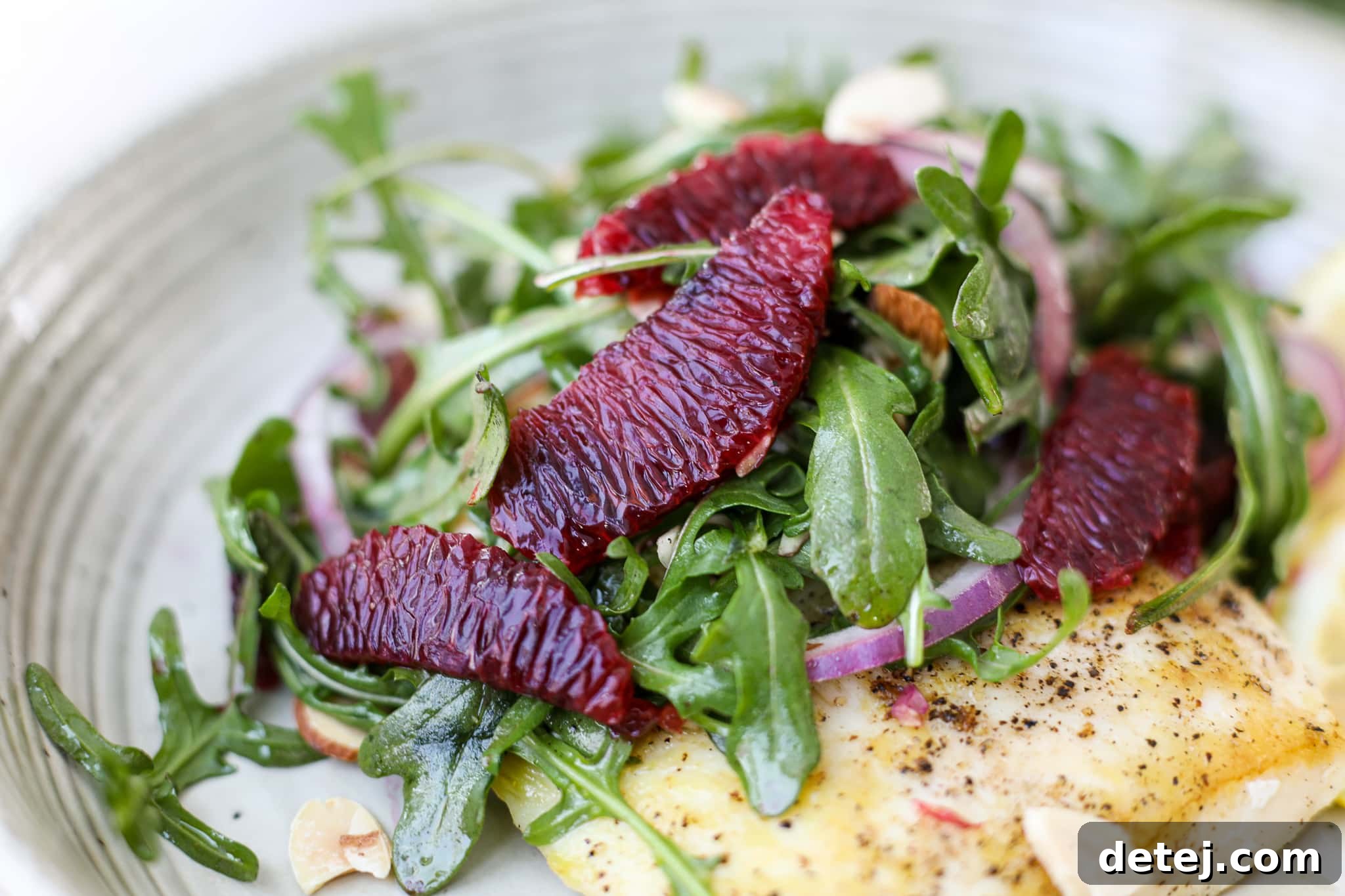
The citrus salad brings a refreshing crunch and tangy brightness that perfectly balances the richness of the halibut and butter sauce. Begin by segmenting two vibrant blood oranges following the detailed instructions provided above. Next, in a spacious mixing bowl, combine your fresh arugula. Drizzle it generously with a good quality olive oil, then season lightly with kosher salt and freshly cracked black pepper. Gently toss the arugula until each leaf is lightly coated and glistening. Finally, artfully arrange the segmented blood oranges, thinly sliced red onion, and toasted almond slices over the arugula. A final gentle toss ensures all components are well distributed, creating a harmonious blend of flavors and textures. Set this beautiful salad aside to be added just before serving.
Prepare the Pan-Seared Halibut
Achieving a perfectly pan-seared halibut is simpler than you might think with the right technique. First, ensure your halibut fillets are completely dry by patting them thoroughly with a paper towel. This critical step guarantees a crisp sear. Season both sides of the fish generously with kosher salt and black pepper, then lightly drizzle with avocado oil. Heat a non-stick skillet over medium-high heat, adding a touch more avocado oil once the pan is hot. When the oil begins to shimmer but not smoke, carefully place the halibut, meat-side down, into the pan. Sear for 4-5 minutes without moving the fish – this allows a beautiful, golden crust to form. Using a thin, sturdy fish spatula, gently flip the fillets and continue cooking for another 3-4 minutes, or until the fish is no longer translucent in the center and feels slightly firm to the touch. Be careful not to overcook; if the fish feels hard, it has gone too far. Remember, cooking times may vary based on the thickness of your fillets, but aim for an internal temperature of 130-135 degrees F for a tender, flaky result. Once cooked, remove the halibut from the pan and let it rest momentarily.
Prepare the White Wine Lemon Butter Sauce
This luscious white wine lemon butter sauce is the crowning glory of the dish, adding incredible depth and acidity. Using the same pan where you seared the halibut (those flavorful bits at the bottom are gold!), add two tablespoons of unsalted butter. Once the butter has melted and is gently bubbling, add the minced garlic and sauté for just 1 minute until fragrant. Be careful not to let it brown. Next, pour in the fresh-squeezed lemon juice (Sunkist, of course!) and the dry white wine. Bring the mixture to a gentle boil and allow it to reduce by approximately half, concentrating its flavors beautifully. Reduce the heat to low, then whisk in the remaining butter, allowing it to melt and emulsify into a rich, smooth sauce. Taste the sauce and season accordingly with kosher salt and black pepper, adjusting as needed to achieve a perfect balance of tangy, savory, and rich notes. Serve this exquisite sauce immediately over your perfectly cooked halibut.
Assemble the Dish
Bringing all the elements together is the final, satisfying step. Carefully transfer a pan-seared halibut fillet to each serving plate. Spoon a generous amount of the warm, fragrant white wine lemon butter sauce over the fish, allowing it to coat the flaky flesh. Finally, crown your dish with a vibrant mound of the prepared citrus salad, letting its fresh colors and crisp textures contrast beautifully with the golden halibut. Serve immediately and enjoy this harmonious symphony of flavors and textures!
Storage
Should you be fortunate enough to have any leftovers, store them properly to maintain their freshness. Place the cooked halibut and the lemon butter sauce in separate airtight containers in the refrigerator. They will keep well for up to three to four days. When reheating, gently warm the fish and sauce in the microwave or a low-heat oven until just warmed through to prevent overcooking the fish. For the salad, it’s always best to store it separately from the main components to prevent the greens from wilting and to preserve its crisp texture. Reassemble the dish when ready to enjoy again.
Frequently Asked Questions
Absolutely! This recipe is incredibly versatile. Any mild, firm white fish will work wonderfully. Excellent substitutes include cod, tilapia, grouper, snapper, or even sea bass. Keep in mind that cooking times may vary slightly depending on the thickness and type of fish you choose, so be sure to monitor the internal temperature for perfect doneness.
The citrus salad already provides a fresh accompaniment, but to make it a more substantial meal, consider serving the halibut over a bed of fluffy white or brown rice. Alternatively, a side of perfectly al dente pasta, perhaps tossed with a hint of olive oil and fresh parsley, would also be a fantastic choice. Steamed asparagus, roasted broccoli, or even quinoa would also complement the flavors beautifully.
The best way to tell if halibut is cooked through is by checking its internal temperature with a digital meat thermometer. For a medium-cooked, flaky fillet, aim for 130-135°F (54-57°C). Visually, the fish should be opaque throughout, and when gently flaked with a fork, it should separate easily. Avoid overcooking, as halibut can become dry if left on the heat for too long.
While the sauce is best when made fresh and served immediately, you can prepare the minced garlic and squeeze the lemon juice in advance. You can also partially reduce the white wine. When ready to serve, simply combine these elements, add the butter, and finish the sauce quickly. This minimizes last-minute fuss and ensures maximum flavor and freshness.
Other Fish Recipes to Inspire You
If you loved this pan-seared halibut recipe and are looking for more delicious ways to incorporate fish into your diet, explore these other fantastic options from our kitchen:
- Pan-Seared Halibut with Cilantro Lime Dressing: A vibrant, zesty alternative for halibut lovers.
- Oven-Baked Cod with Cracker Topping: A comforting and crispy baked fish dish.
- Grilled Salmon with Corn Puree: A summer-inspired dish featuring smoky salmon and sweet corn.
- Oven-Roasted Salmon with Shaved Fennel Salad: An elegant and healthy option with delicate flavors.
- Blackened Salmon with Spicy Creamy Sauce: For those who enjoy a little kick and the convenience of an air fryer.

Pan-Seared Halibut with Lemon Butter and Citrus Salad
Sarah Thomas-Drawbaugh
Yield:
2 servings
25 mins
10 mins
35 mins
This Pan-Seared Halibut with White Wine Lemon Butter and Citrus Salad is the perfect way to brighten up your week. The halibut is soft and flaky, tasting amazing with the white wine lemon butter sauce. Don’t forget the simple yet flavorful citrus salad for an extra punch of texture and flavor.
Pin Recipe
Leave a Review »
Equipment
-
1 non-stick skillet
-
1 mixing bowl
Ingredients
Halibut
- 12 ounces halibut, divided into two 6-ounce fillets
- 1.5 tablespoons avocado oil, for pan searing
- kosher salt, to season the fish
- black pepper, to season the fish
White Wine Lemon Butter
- ¼ cup unsalted butter, divided
- 2 teaspoons garlic, minced, about 2 cloves
- 2 tablespoons lemon juice, fresh squeezed, Sunkist Growers
- ¼ cup dry white wine, Sauvignon Blanc or similar
- kosher salt, to season
- black pepper, to season
Citrus Salad
- 3-4 cups arugula
- 1 tablespoon olive oil
- kosher salt, to taste
- cracked black pepper, to taste
- 2 blood oranges, segmented, Sunkist Growers
- ¼ – ½ cup red onion, thinly sliced
- ¼ cup almonds, sliced and toasted
Instructions
Prepare the Citrus Salad
-
Segment two blood oranges (refer to “Mastering Citrus Segmentation” above for detailed guidance). Add the arugula to a mixing bowl. Drizzle it with olive oil, kosher salt, and black pepper. Toss together until well coated. Next, top the arugula with the segmented oranges, thinly sliced red onion, and toasted almond slices. Gently toss everything together. Set aside.
Prepare the Pan-Seared Halibut
-
Pat the halibut dry with a paper towel. Season with kosher salt, black pepper, and a drizzle of avocado oil. Heat a non-stick skillet over medium-high heat. Add the avocado oil.
-
Once the oil is hot but not smoking, add the halibut meat-side down to the pan and sear for 4-5 minutes. Do not move the fish in the pan, as you want to get an optimal sear.
-
Using a fish spatula, carefully flip the fish and cook for another 3-4 minutes or until the fish is no longer translucent and is slightly firm to the touch. If it feels hard, it is overcooked. Cooking time will depend on the size of the fillets. The internal temperature should be 130-135 degrees F for a flaky, soft fish. Remove the fish from the pan.
Prepare the White Wine Lemon Butter Sauce
-
Using the same pan, add 2 tablespoons of unsalted butter.
-
Once the butter is melted, add the minced garlic and sauté for 1 minute. Next, add the fresh-squeezed lemon juice and white wine. Bring to a gentle boil. Once reduced by about half, reduce the heat to low and add the remaining butter. Season with kosher salt and pepper. Taste and adjust as needed. Serve immediately.
Assemble the Dish
-
Add the pan-seared halibut to your plate, top with a spoonful of lemon butter sauce. Top with the citrus salad and serve!
Notes
Leftovers can be stored in an airtight container in the refrigerator for up to four days. Store the salad separately for best freshness.
Nutrition
Calories: 668kcal,
Carbohydrates: 11g,
Protein: 37g,
Fat: 52g,
Saturated Fat: 18g,
Polyunsaturated Fat: 6g,
Monounsaturated Fat: 25g,
Trans Fat: 1g,
Cholesterol: 144mg,
Sodium: 127mg,
Potassium: 1053mg,
Fiber: 3g,
Sugar: 4g,
Vitamin A: 1329IU,
Vitamin C: 18mg,
Calcium: 118mg,
Iron: 1mg
Main Course
American
668
Sarah Thomas-Drawbaugh