
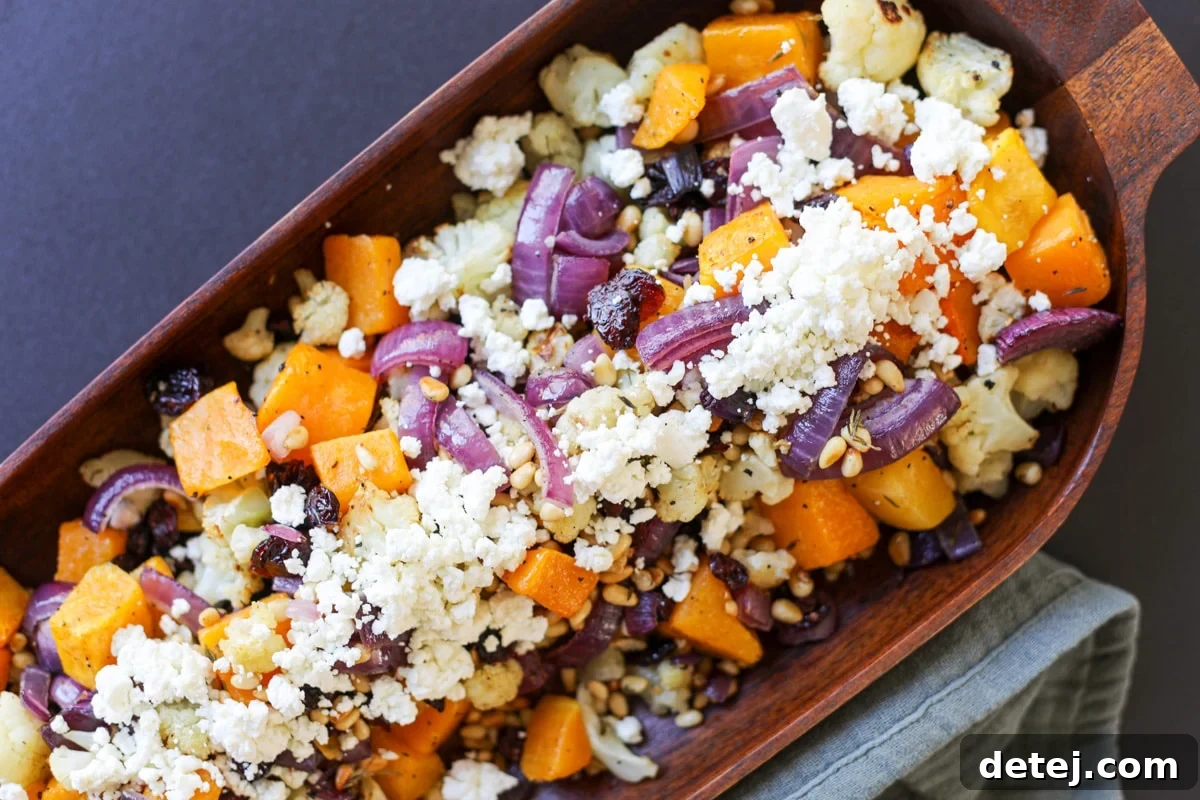
Delightful Roasted Butternut Squash, Cauliflower & Red Onion: Your Perfect Fall Side Dish
Embrace the vibrant flavors of autumn with this incredibly simple yet profoundly delicious recipe for Roasted Butternut Squash, Cauliflower, and Red Onion. This dish isn’t just a side; it’s a celebration of seasonal produce, transforming humble vegetables into a symphony of sweet, savory, and subtly tangy notes. Requiring minimal effort and just a handful of fresh ingredients, it’s destined to become a staple in your kitchen, adored by the entire family. Whether you’re planning a cozy weeknight dinner or a grand holiday feast, this roasted vegetable medley offers both elegance and comfort, making it an indispensable part of your culinary repertoire.
Seeking more inspiration for seasonal accompaniments? Explore our other cherished fall side dishes, like the savory Brussels Sprouts with Bacon, Pecans, Cranberries and Goat Cheese, the hearty Roasted Butternut Squash and Brussels Sprouts, or the innovative Cacio e Pepe Roasted Spaghetti Squash. Each recipe is designed to complement your main courses beautifully while bringing the warmth and richness of fall to your table.
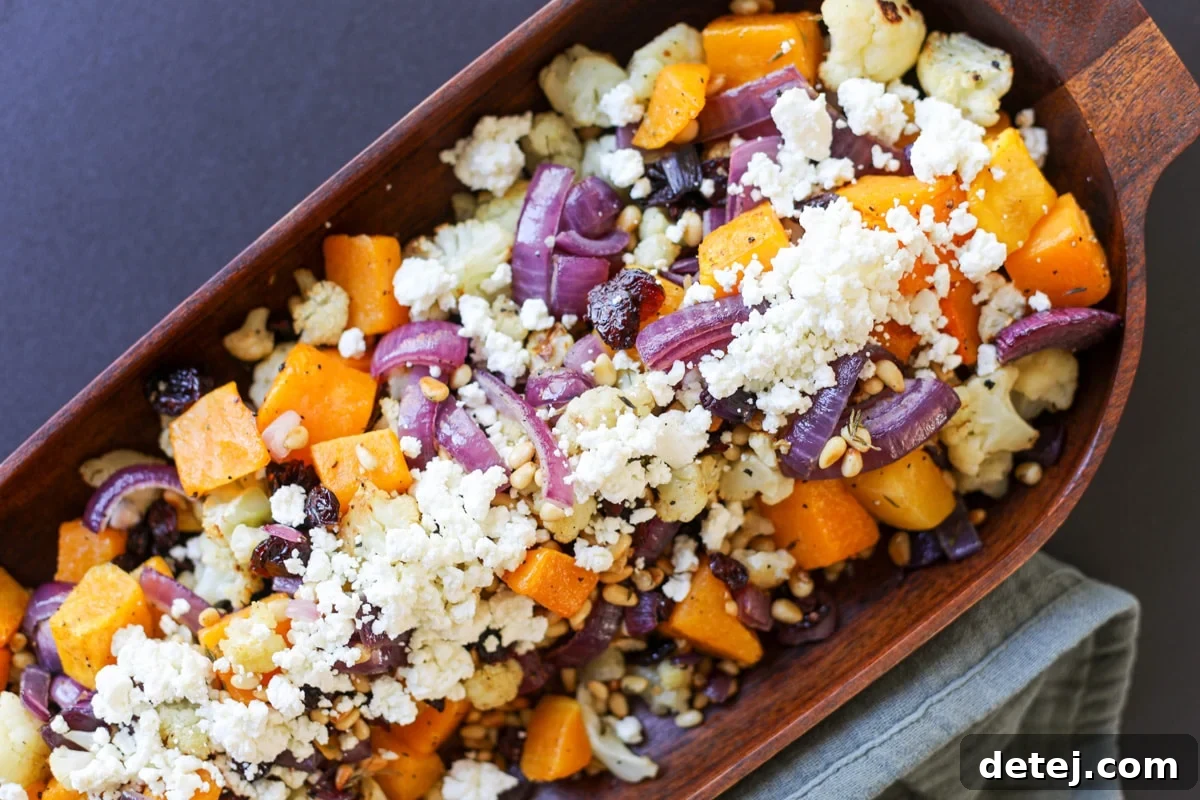
Table of Contents
Why You’ll Absolutely Love This Roasted Vegetable Medley
This roasted vegetable dish isn’t just another recipe; it’s a testament to how simple ingredients, when treated right, can create extraordinary flavors. Here are compelling reasons why this butternut squash, cauliflower, and red onion blend will become a cherished part of your meal rotation:
- Effortlessly Simple, Yet Exceptionally Flavorful: Crafted from readily available, fresh ingredients, this recipe proves that you don’t need a complex pantry to achieve gourmet taste. The magic happens with minimal fuss, making it accessible for even novice cooks.
- Quick Preparation for Busy Schedules: Life is hectic, but delicious meals don’t have to be a luxury. This dish comes together in under 40 minutes, including roasting time, making it an ideal choice for a nutritious and satisfying weeknight side.
- Remarkable Versatility: Its balanced flavor profile allows it to pair beautifully with an extensive range of main courses. Imagine it alongside succulent dishes like our Creamy Chicken and Vegetables, vibrant Salmon Tacos with Cabbage Apple Slaw, a hearty roast chicken, grilled steak, or even as a flavorful component in a grain bowl.
- The Ultimate Holiday Side Dish: Elevate your holiday spread without adding stress. This recipe strikes the perfect balance between being easy to prepare and looking sophisticated on any festive table, offering a lighter, vibrant counterpoint to richer holiday fare.
- Nutritionally Rich and Wholesome: Packed with vitamins, minerals, and fiber from the butternut squash and cauliflower, it’s a fantastic way to boost your vegetable intake. The addition of healthy fats from avocado oil and protein from pine nuts and goat cheese makes it a well-rounded and satisfying option.
- Easily Customizable: Whether you’re looking to add protein for a complete meal or swap out ingredients based on preference or availability, this recipe is incredibly adaptable, inviting creativity in the kitchen.
Essential Ingredients for Maximum Flavor
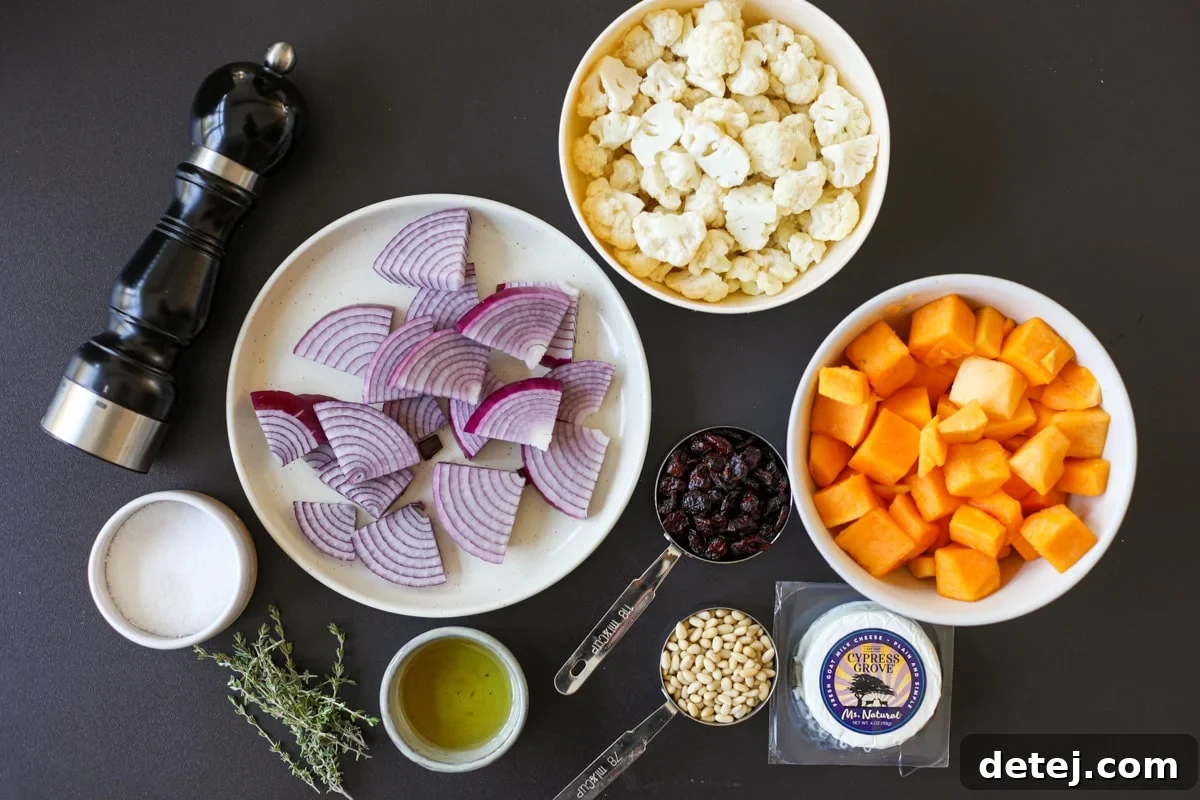
Crafting this delightful roasted vegetable dish begins with selecting quality ingredients. Each component plays a vital role in building the layers of flavor and texture that make this recipe truly special.
- Butternut Squash: You’ll need approximately 2.5 cups of cubed butternut squash. For optimal roasting and consistent texture, aim for uniform 1-inch cubes. Butternut squash offers a naturally sweet, nutty flavor that intensifies beautifully when roasted, providing a creamy interior and slightly caramelized edges.
- Cauliflower: Complementing the squash, 2.5 cups of cauliflower florets are required. Cut them to a similar size as the squash cubes to ensure even cooking. When roasted, cauliflower develops a tender, slightly smoky taste and a wonderfully crispy exterior, adding another dimension of texture.
- Red Onion: One large red onion, peeled and sliced into elegant half-moon cuts, then halved again for manageable pieces. Red onions caramelize wonderfully in the oven, releasing a gentle sweetness that balances the earthy flavors of the other vegetables. Its vibrant color also adds visual appeal.
- Avocado Oil: Drizzle your vegetables generously with avocado oil before roasting. Chosen for its high smoke point and neutral flavor, avocado oil ensures the vegetables roast perfectly without burning, contributing healthy monounsaturated fats. Extra virgin olive oil can be a substitute, but avocado oil is preferred for high-heat roasting.
- Seasoning: A generous hand with kosher salt and freshly cracked black pepper is all you need to bring out the inherent flavors of the produce. Season to taste, but don’t be shy – proper seasoning is key to delicious roasted vegetables.
- Fresh Thyme: About 2-3 teaspoons of fresh thyme leaves, removed from their stems, impart an aromatic, herbaceous note that perfectly suits fall flavors. Fresh herbs make a significant difference in brightness compared to dried ones.
- Pine Nuts: These delicate nuts add a buttery crunch and a subtle, distinctive flavor. Toasting them separately in a nonstick skillet is crucial for unlocking their full aroma and preventing them from burning during roasting. They provide a delightful textural contrast.
- Dried Cranberries: I personally love using craisins (a brand of dried cranberries) for their slightly less sugary profile, but any good quality dried cranberries will work wonderfully. Their sweet-tart chewiness offers a fantastic burst of flavor that cuts through the richness of the roasted vegetables and creamy goat cheese.
- Goat Cheese: A final flourish of 2-3 ounces of crumbled goat cheese introduces a creamy texture and a tangy, savory counterpoint. Its unique flavor profile rounds out the dish, adding a sophisticated touch that makes it feel elevated.
Creative Variations & Delicious Substitutions
One of the best aspects of this roasted vegetable recipe is its incredible adaptability. Feel free to experiment with these variations to suit your taste, dietary needs, or what you have on hand:
- Alternate Dried Fruits: If cranberries aren’t your preference or readily available, consider swapping them for other dried fruits. Golden raisins, chopped dried apricots, or even fresh pomegranate arils in season would offer similar sweet-tart bursts.
- Nutty Swaps: Pine nuts are wonderful, but toasted walnuts, pecans, or slivered almonds can provide a different yet equally delicious crunch and flavor profile. Ensure whatever nuts you choose are lightly toasted to maximize their aroma and texture.
- Boost the Protein for a Main Course: To transform this side dish into a satisfying main meal, incorporate your favorite protein. Chicken apple sausage, grilled chicken breast (sliced or cubed), air fryer salmon chunks, or even pan-seared halloumi cheese would all be excellent additions. For a plant-based protein boost, roasted chickpeas or cannellini beans tossed with the vegetables during the last 15 minutes of roasting are fantastic.
- Explore Other Vegetables: The beauty of roasting is its flexibility with vegetables. Feel free to swap or add other hearty vegetables. Broccoli florets, Brussels sprouts (halved), sweet potatoes (cubed), parsnips, or even regular potatoes (Yukon Gold or red potatoes work well) are all great options. Adjust roasting times slightly as needed; denser vegetables might require a few extra minutes.
- Herb and Spice Experimentation: While fresh thyme is fantastic, don’t hesitate to try other herbs like fresh rosemary, sage, or a sprinkle of dried Italian seasoning. For a warmer, spicier twist, add a pinch of smoked paprika, cumin, or even a touch of chili flakes along with your salt and pepper.
- Cheese Alternatives: If goat cheese isn’t your favorite, consider crumbled feta for a saltier tang, or a grating of Parmesan cheese for an umami kick. For a dairy-free option, nutritional yeast can add a cheesy flavor, or simply omit the cheese for a naturally vegan dish.
- A Touch of Sweetness: For those who enjoy a slightly sweeter profile, a drizzle of maple syrup or a dash of balsamic glaze over the roasted vegetables just before serving can add an extra layer of complexity and shine.
Expert Tips for Perfectly Roasted Vegetables
Achieving perfectly roasted vegetables is an art, but these simple tips will guide you to culinary success, ensuring every bite is tender on the inside and deliciously caramelized on the outside:
- Uniform Cubes are Key: When prepping your butternut squash and cauliflower, strive for uniform 1-inch cubes and florets. This consistency is crucial for even cooking, preventing some pieces from becoming mushy while others are still hard. The red onion slices should also be similarly sized.
- Don’t Overcrowd the Baking Tray: This is arguably the most important rule for roasting. If your vegetables are too packed together, they will steam instead of roast, resulting in soggy rather than crispy edges. Use two baking trays if necessary, ensuring a single layer with ample space between each piece for proper air circulation and browning.
- High Heat is Your Friend: Roasting at a high temperature, like 400°F (200°C), is essential for achieving that desirable golden-brown caramelization and tender interior. Lower temperatures tend to cook vegetables slowly without browning them adequately, while excessively high temperatures can burn the exterior before the inside is cooked through.
- The Power of Broiling: For an extra layer of crispiness and deeper caramelization, broil the roasted vegetables for 1-2 minutes at the very end. Keep a watchful eye on them, as broilers can be intense and brown quickly. This step is optional but highly recommended for superior texture.
- Season Generously and Evenly: Don’t underestimate the power of salt and pepper. Toss the vegetables thoroughly with oil and seasoning to ensure every piece is coated. This even distribution helps enhance the natural flavors during roasting.
- Flip for Even Roasting: Turning the vegetables halfway through the roasting process ensures even browning on all sides. This simple action helps prevent one side from becoming overly charred while the other remains pale.
- Prep Ahead for Convenience: To save time on busy days, you can prep the butternut squash, cauliflower, and red onion up to a day in advance. Store them in an airtight container in the refrigerator. Toast the pine nuts just before assembling to maintain their freshness and crunch.
Step-by-Step Guide: How to Craft This Delicious Dish
Follow these straightforward steps to create a show-stopping side dish that will impress without demanding hours in the kitchen.
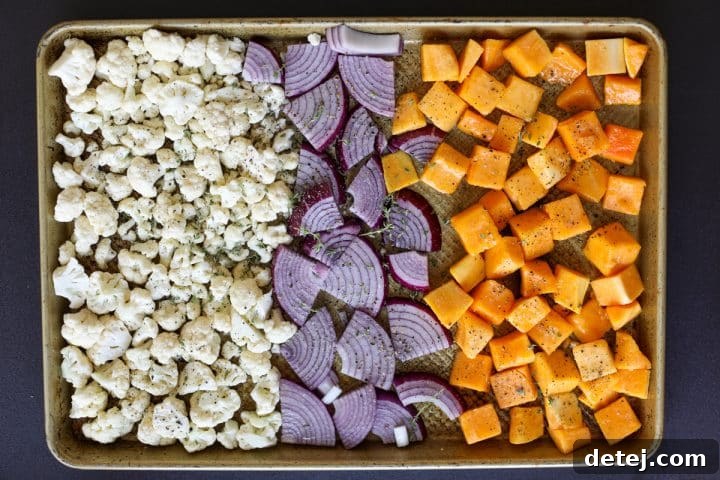
Step 1: Prepare for Roasting. Begin by preheating your oven to 400°F (200°C). Lightly spray a large baking tray with avocado oil spray, or drizzle with a bit of avocado oil and spread it evenly. This helps prevent sticking and promotes even browning. Arrange the cubed butternut squash, cauliflower florets, and sliced red onion onto the prepared baking tray. Drizzle generously with avocado oil, then season with kosher salt, freshly cracked black pepper, and sprinkle with fresh thyme leaves. Toss everything together thoroughly to ensure all vegetables are evenly coated with oil and seasoning. For best results, ensure the vegetables are spread in a single layer without overcrowding the tray; use a second tray if necessary. Roast in the preheated oven for 25-30 minutes, making sure to flip or stir the vegetables halfway through to encourage even caramelization.
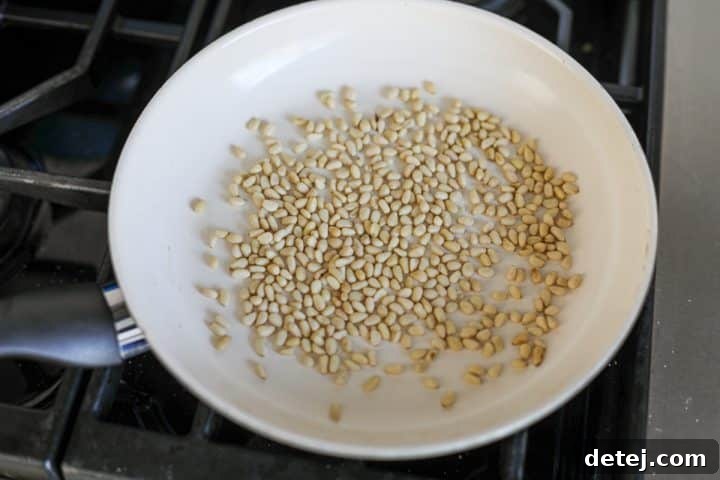
Step 2: Toast the Pine Nuts. While your vegetables are roasting, prepare the pine nuts. Add the pine nuts to a dry (no oil) nonstick pan over medium heat. Toast them gently, tossing frequently, until they turn a beautiful golden-brown and become fragrant. This usually takes only 2-4 minutes. Be extremely careful and attentive during this step, as pine nuts can go from perfectly toasted to burnt very quickly. Once golden, immediately remove them from the heat and transfer them to a small bowl or plate to cool, preventing further cooking from residual heat.
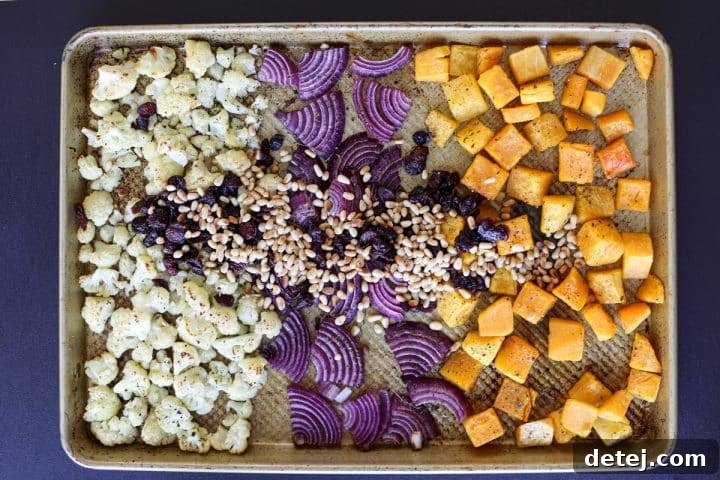
Step 3: Finish with Broiling (Optional but Recommended). After the initial roasting period, if you desire extra crispy vegetables with deeper caramelization, you can broil them. Carefully transfer the baking tray to the top rack of your oven and broil for an additional 1-2 minutes. Watch them continuously to prevent burning. Once achieved, remove the tray from the oven. Now, scatter the toasted pine nuts and dried cranberries evenly over the roasted vegetables on the baking tray. The warmth of the vegetables will slightly soften the cranberries, enhancing their flavor.
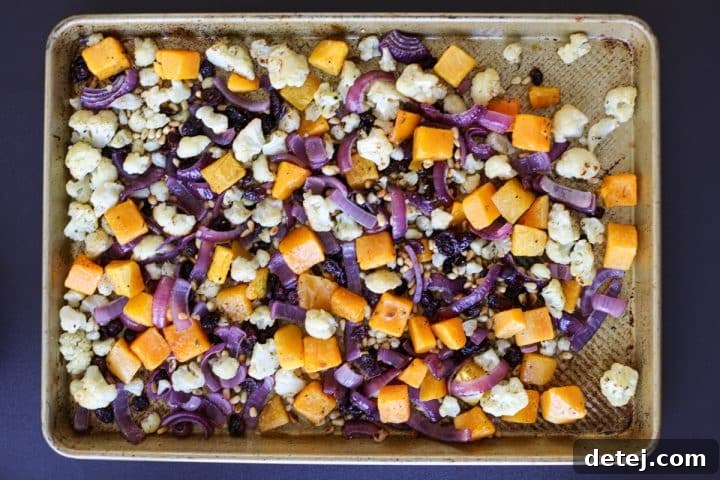
Step 4: Assemble and Serve. Gently toss all the ingredients together directly on the baking tray to combine the flavors and textures. The sweet cranberries and crunchy pine nuts will meld beautifully with the tender, savory vegetables. Carefully transfer the entire medley to an elegant serving bowl. To complete this exquisite side dish, crumble the fresh goat cheese over the top. The goat cheese will slightly soften from the residual heat, adding a creamy, tangy finish. Serve this delightful Roasted Butternut Squash, Cauliflower, and Red Onion warm and enjoy the harmonious blend of flavors and textures.
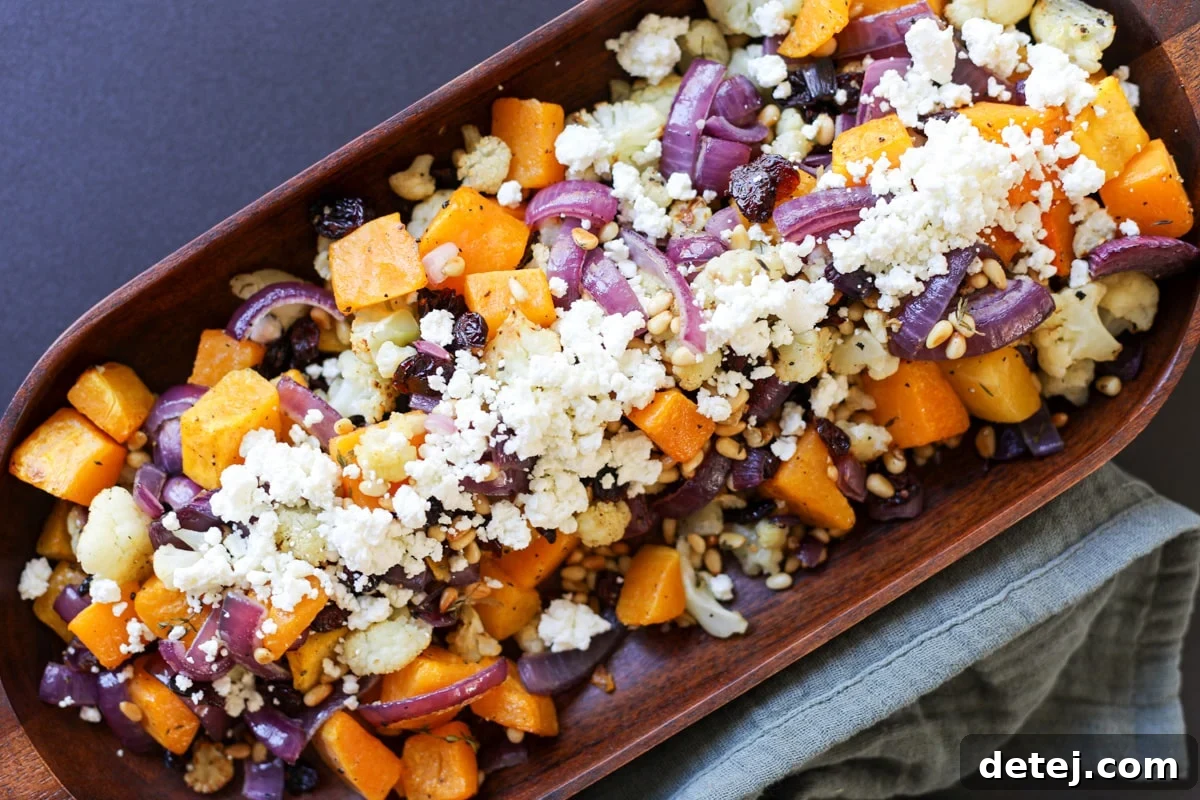
Serving Suggestions: Perfect Pairings
This versatile roasted vegetable dish is an ideal accompaniment to a wide variety of meals, seamlessly fitting into both casual weeknight dinners and elaborate holiday spreads. Here are some ideas to inspire your culinary pairings:
- Classic Main Courses: Serve it alongside roasted chicken, turkey, pork loin, or beef tenderloin. Its vibrant flavors and textures provide a refreshing contrast to rich meats.
- Seafood Delights: It pairs exceptionally well with flaky baked salmon, seared scallops, or grilled white fish, offering a light yet satisfying balance.
- Vegetarian & Vegan Mains: Complement a lentil loaf, black bean burgers, stuffed bell peppers, or a hearty mushroom Wellington. If serving to vegans, simply omit the goat cheese or use a plant-based alternative.
- Grain Bowls & Salads: Leftovers can be fantastic when added cold to a fresh green salad or warm grain bowl (with quinoa, farro, or rice) for a quick, healthy lunch.
- Holiday Feasts: A definite showstopper for Thanksgiving, Christmas, or Easter, offering a much-needed burst of color and fresh flavor amidst traditional heavy dishes.
- Brunch Favorite: Surprisingly delightful alongside egg dishes like a frittata or quiche, adding seasonal vegetable goodness to your brunch spread.
Storage and Reheating Tips for Leftovers
If you’re lucky enough to have any leftovers of this delicious roasted vegetable medley, here’s how to store and reheat them to maintain their quality and flavor:
- Storing Leftovers: Allow the roasted vegetables to cool completely to room temperature before transferring them to an airtight container. Store in the refrigerator for up to three to four days. Beyond this, the texture of the vegetables may begin to degrade.
- Reheating in the Microwave: For a quick reheat, place a portion of the vegetables in a microwave-safe dish. Heat on high for 1-2 minutes, stirring halfway through, until warmed through. Be aware that the vegetables may not retain their crispiness when reheated this way.
- Reheating in the Oven: To best preserve some of the crisp texture, preheat your oven to 350°F (175°C). Spread the leftover vegetables in a single layer on a baking tray. Reheat for 10-15 minutes, or until heated through and slightly re-crisped. This method is highly recommended for optimal texture.
- Reheating in an Air Fryer: For the crispiest results, an air fryer is an excellent option. Place the cold leftovers in a single layer in your air fryer basket. Air fry at 350°F (175°C) for 5-8 minutes, shaking the basket once or twice, until hot and slightly crispy.
Frequently Asked Questions
Here are answers to some common questions about making this roasted butternut squash, cauliflower, and red onion dish:
Beyond fresh thyme, several herbs and spices complement roasted butternut squash beautifully. Consider fresh rosemary for an earthy, pungent note, sage for a warm, slightly peppery flavor, or a blend of cumin and coriander for a Mediterranean twist. A dash of nutmeg can also enhance the squash’s natural sweetness.
What’s the best temperature to roast vegetables for optimal crispiness?
I consistently recommend roasting vegetables at a high temperature, specifically 400°F (200°C). At this heat, the vegetables caramelize and brown effectively on the outside, creating delicious crispy edges, while the interior becomes tender. Lower temperatures often result in steamed, less flavorful vegetables, lacking that desirable sear. Conversely, temperatures much higher than 400°F can risk burning the exterior before the denser vegetables are cooked through.
Can I swap something for cauliflower in this recipe?
While cauliflower’s texture and flavor profile are ideal for this dish, you can certainly experiment with alternatives. Broccoli florets or halved Brussels sprouts would be excellent substitutes, offering a similar cruciferous crunch and robust flavor when roasted. Just ensure they are cut to a consistent size for even cooking.
What can I use instead of butternut squash?
If butternut squash isn’t available or preferred, roasted sweet potatoes make an excellent substitute. Their similar sweetness and creamy texture when cooked will integrate well into the dish. Other hard winter squashes like acorn squash or delicata squash (seeds removed, no need to peel for delicata) could also work.
Can I use frozen butternut squash or cauliflower?
Yes, you can use frozen vegetables, though the texture might be slightly softer and they may take a bit longer to roast as they release more water. Do not thaw them before roasting; spread them directly on the baking tray (you might want to pat them dry first if they appear icy) and increase roasting time slightly until tender and caramelized.
Is this recipe suitable for a vegan diet?
Absolutely! This recipe is inherently plant-based, and to make it fully vegan, simply omit the goat cheese. The dish remains incredibly flavorful and satisfying even without it, or you can use a plant-based crumbled cheese alternative.
Can I prepare the vegetables ahead of time?
Yes, you can definitely do some prep work in advance. Cube the butternut squash, cut the cauliflower into florets, and slice the red onion. Store these prepped vegetables in separate airtight containers in the refrigerator for up to 1-2 days. This makes assembly on the day of cooking much faster.
More Inspiring Side Dish Recipes to Consider Trying
Expand your repertoire of delicious accompaniments with these other fantastic side dish ideas:
- Brussels Sprouts with Bacon, Pecans, Cranberries and Goat Cheese
- Lebanese Rice with Orzo
- Maple Butter Roasted Acorn Squash
- Greek Lemon Potatoes
- Roasted Carrots with Honey and Thyme
- Garlic Parmesan Green Beans
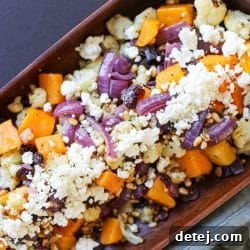
Roasted Butternut Squash, Cauliflower and Red Onion
Sarah Thomas-Drawbaugh
5 servings
20 mins
25 mins
45 mins
This Roasted Butternut Squash, Cauliflower and Red Onion recipe is the perfect side dish for fall, offering a delightful blend of sweet, savory, and tangy flavors. Made from a few simple ingredients, it’s easy to prepare and guaranteed to be a family favorite.
Pin Recipe
No ratings yet
Leave a Review »
Equipment
- 1 baking tray
- 1 nonstick skillet
Ingredients
- 2.5 cups butternut squash, 1-inch cubes
- 2.5 cups cauliflower florets
- 1 large red onion, sliced into half moons and halved
- 2 tablespoons avocado oil, for roasting the vegetables
- Kosher salt, to season
- Cracked black pepper, to season
- 2-3 teaspoons fresh thyme, remove stems
- ½ cup dried cranberries, (craisins or similar for lower sugar)
- ⅓ cup pine nuts, toasted
- 2-3 ounces goat cheese, crumbled
Instructions
-
How to Make Roasted Butternut Squash, Cauliflower and Red Onion
- Preheat the oven to 400°F (200°C). Spray a baking tray with avocado oil spray or drizzle with avocado oil.
-
Roast the Vegetables
- Add the cubed butternut squash, cauliflower florets, and red onion to the baking tray. Drizzle with avocado oil, kosher salt, and cracked black pepper. Sprinkle the fresh thyme leaves over the top and toss well to coat everything evenly. Roast for 25-30 minutes, turning the vegetables halfway through. For extra crispy veggies, broil for 1-2 minutes at the end, watching closely to prevent burning.
-
Toast the Pine Nuts
- While the vegetables are roasting, add the pine nuts to a dry nonstick pan over medium heat. Toss frequently until golden-brown, then immediately remove from the heat and transfer to a separate dish to cool. Be careful, as they brown very quickly.
-
Assemble the Dish
- Once the vegetables are roasted, add the toasted pine nuts and dried cranberries to the baking tray. Toss everything together. Transfer the medley to a serving bowl and finish with crumbled goat cheese. Serve warm and enjoy.
Notes
How to Store: Store any leftover roasted vegetables in an airtight container in the refrigerator for three to four days. Reheat in the microwave until warmed through, or for best texture, reheat in a 350°F (175°C) oven or air fryer until hot and slightly re-crisped.
Nutrition
Serving: 1 serving (or 1/5th of the entire recipe) | Calories: 259kcal | Carbohydrates: 26g | Protein: 10g | Fat: 15g | Saturated Fat: 3g | Polyunsaturated Fat: 4g | Monounsaturated Fat: 6g | Cholesterol: 5mg | Sodium: 62mg | Potassium: 749mg | Fiber: 8g | Sugar: 4g | Vitamin A: 7600IU | Vitamin C: 42mg | Calcium: 95mg | Iron: 3mg
Sarah Thomas-Drawbaugh