
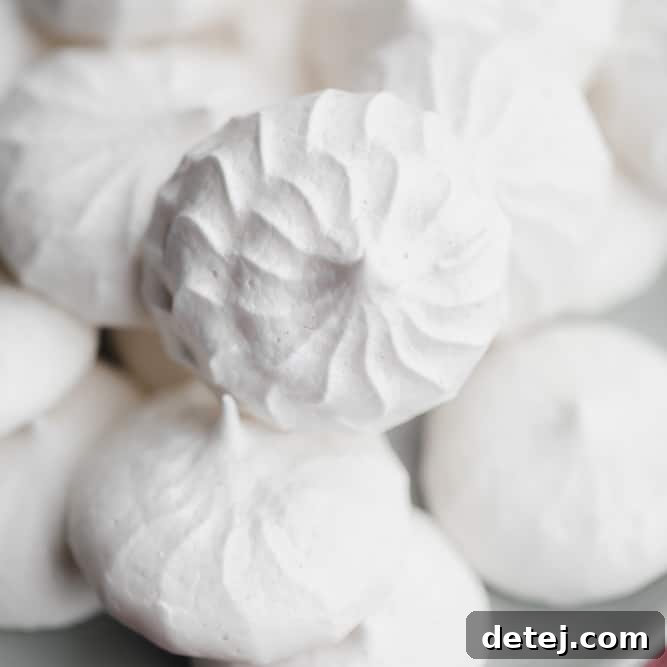
Exquisite Vegan Meringues: Light, Crispy, and Made with Aquafaba Magic
Discover the secret to perfectly sweet, crisp, and unbelievably light vegan meringues. Crafted with just four simple ingredients, these egg-free delights are so enchanting, no one will ever guess they’re plant-based!
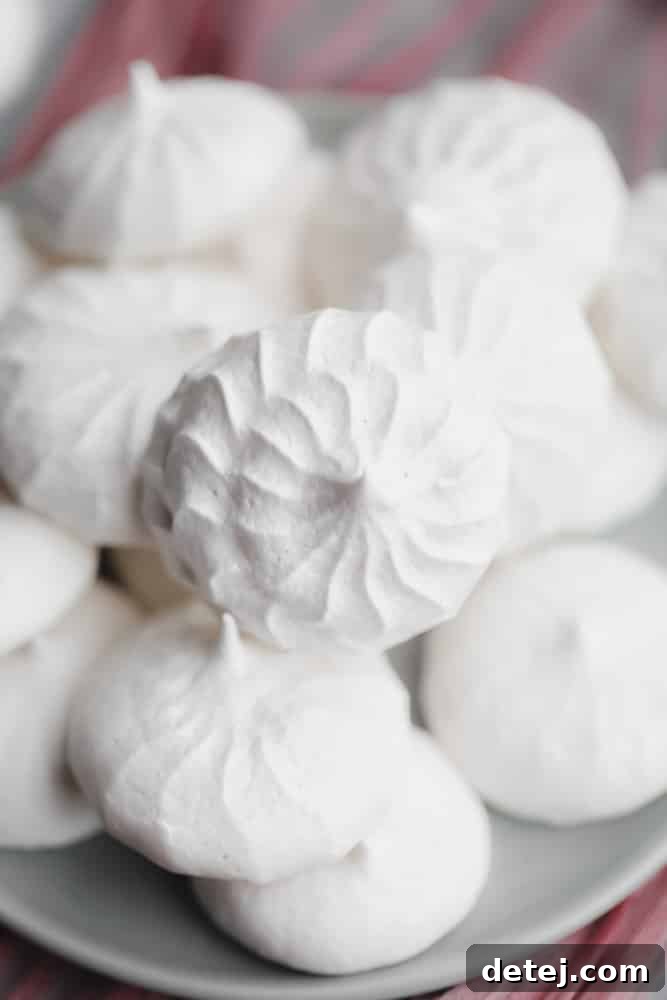
The culinary world has been revolutionized by a humble, often discarded ingredient: aquafaba. This extraordinary liquid, typically drained from a can of chickpeas, possesses truly miraculous properties, transforming into an invaluable staple for vegan bakers and chefs alike. My appreciation for aquafaba runs deep, having successfully harnessed its power to create a diverse array of delectable egg-free treats. From fluffy vegan whipped cream to rich Swiss meringue buttercream, and even elegant vegan eclairs, its versatility knows no bounds. Who could have predicted that the simple water from a can of chickpeas would emerge as the ultimate plant-based ingredient for so many culinary applications?
There was one challenge remaining to truly put aquafaba’s incredible strength to the ultimate test: crafting the perfect batch of Vegan Meringues. These ethereal, light, and wonderfully crispy cookies are astonishingly simple to prepare, requiring only four basic ingredients. The process involves whipping the aquafaba to airy perfection and then baking these delicate bites to achieve a melt-in-your-mouth texture that will impress every guest and satisfy any sweet craving. Get ready to experience the magic of aquafaba in these delightful, guilt-free treats!
Why You’ll Fall in Love with These Aquafaba Meringues
These vegan meringue kisses are more than just a dessert; they’re an experience. Prepare to be utterly enchanted by their irresistible qualities:
- Unbelievably Light and Airy: Each bite is a delicate cloud of sweetness that practically dissolves on your tongue.
- Perfectly Balanced Sweetness: They are just sweet enough to be satisfying without being overpowering, making them an ideal treat for any occasion.
- Effortlessly Simple to Make: Despite their sophisticated appearance, these meringues come together with surprising ease, even for novice bakers.
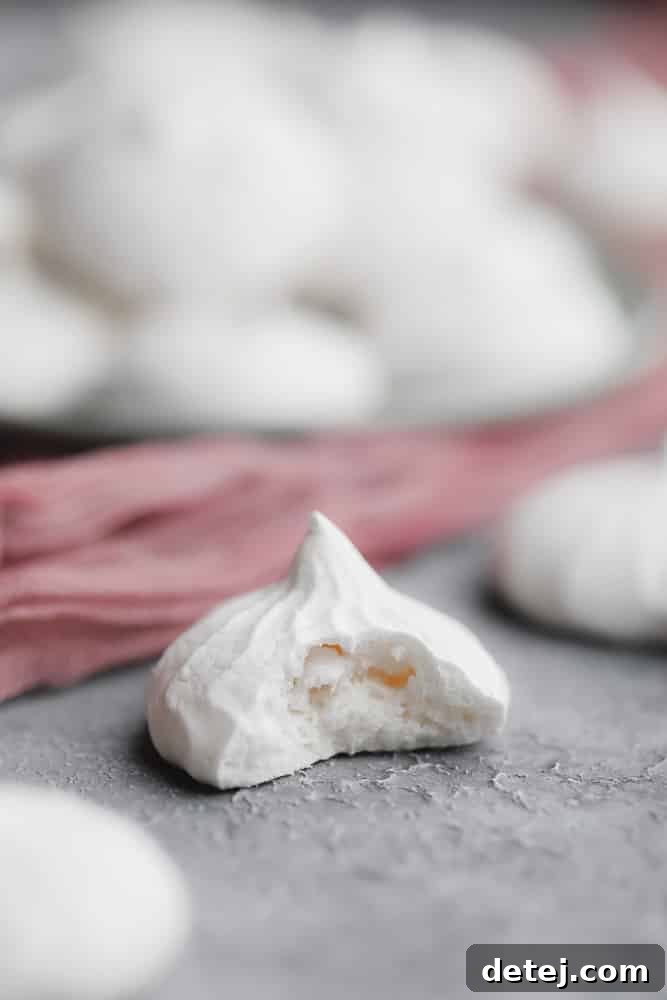
- Crisp Exterior, Fluffy Interior: Enjoy the delightful contrast of a delicate, crunchy shell giving way to a soft, marshmallow-like center.
- Completely Egg-Free and Dairy-Free: Perfect for those with allergies or following a plant-based diet, offering a guilt-free indulgence.
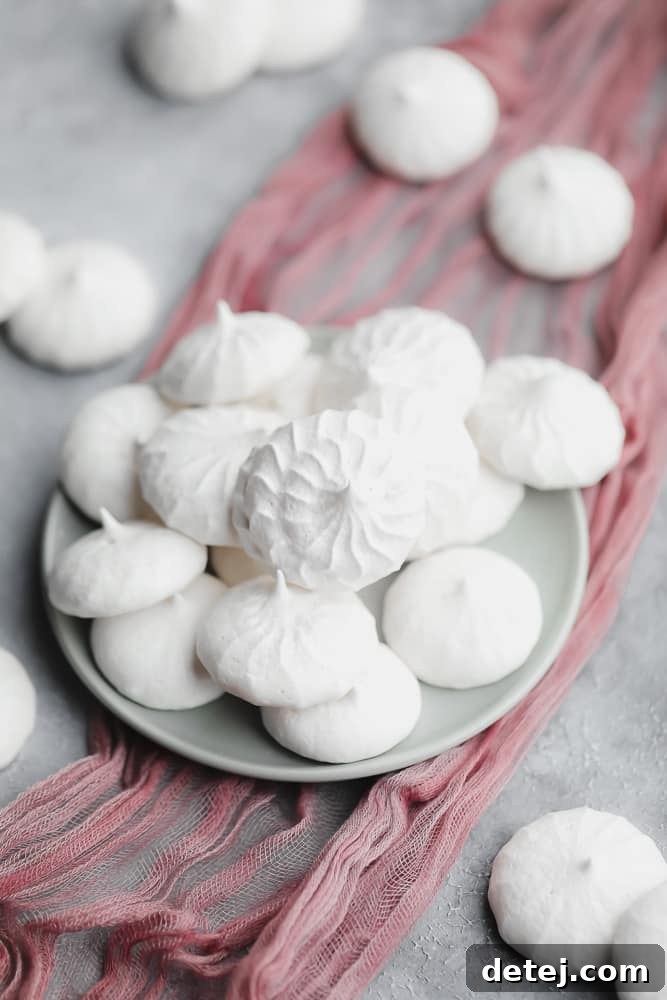
Understanding the Magic: What is Meringue?
To truly appreciate vegan meringues, it helps to understand their traditional counterpart. Meringue, at its core, is a classic confection made by whipping egg whites, typically with cream of tartar for stabilization, and gradually adding sugar. The whipping process incorporates air, creating a stiff, glossy, and marshmallow-like mixture. Once baked, traditional meringues develop a firm, crisp exterior while maintaining a light, airy, and sometimes slightly chewy interior.
The brilliance of vegan meringues lies in their ability to mimic this exact texture and structure, all thanks to aquafaba. This remarkable liquid, obtained from canned chickpeas, acts as a perfect plant-based substitute for egg whites. When whipped, aquafaba undergoes a similar transformation, forming stable peaks that can hold their shape, allowing for the creation of delicate, fluffy, and crispy vegan meringues that are virtually indistinguishable from their traditional egg-based cousins. It’s a testament to the incredible power of plant-based ingredients!
The Science Behind Aquafaba Meringues
The magic of aquafaba as an egg substitute isn’t just happenstance; it’s rooted in fascinating food science. Chickpea brine contains a complex mixture of proteins, starches, and other plant solids that, when agitated, behave remarkably similarly to egg whites. The whipping action denatures these proteins and starches, allowing them to form a stable foam by trapping air bubbles. The addition of cream of tartar, an acidic ingredient, further stabilizes this foam, much like it does with egg whites, helping the proteins maintain their structure and preventing collapse. Granulated sugar not only sweetens the meringue but also contributes to its structural integrity. The sugar crystals dissolve during whipping, forming a syrup that coats the air bubbles, reinforcing the foam and giving the meringues their characteristic glossy finish and crisp texture when baked at a low temperature for an extended period. This low and slow baking process dehydrates the meringues, locking in their airy structure and achieving that perfect crunchy shell.
Crafting Your Own Vegan Meringues: A Step-by-Step Guide
Making these delightful vegan meringues is a straightforward process, but attention to detail will ensure the best results. Follow these steps for perfect, light, and airy cookies:
- Prepare Your Workspace: Begin by preheating your oven to 200°F (95°C). This low temperature is crucial for slowly drying out the meringues without browning them. Line a large baking sheet (or two, if needed) with parchment paper. To keep the parchment paper from sliding, you can dab a small amount of meringue mixture under each corner before laying the paper down.
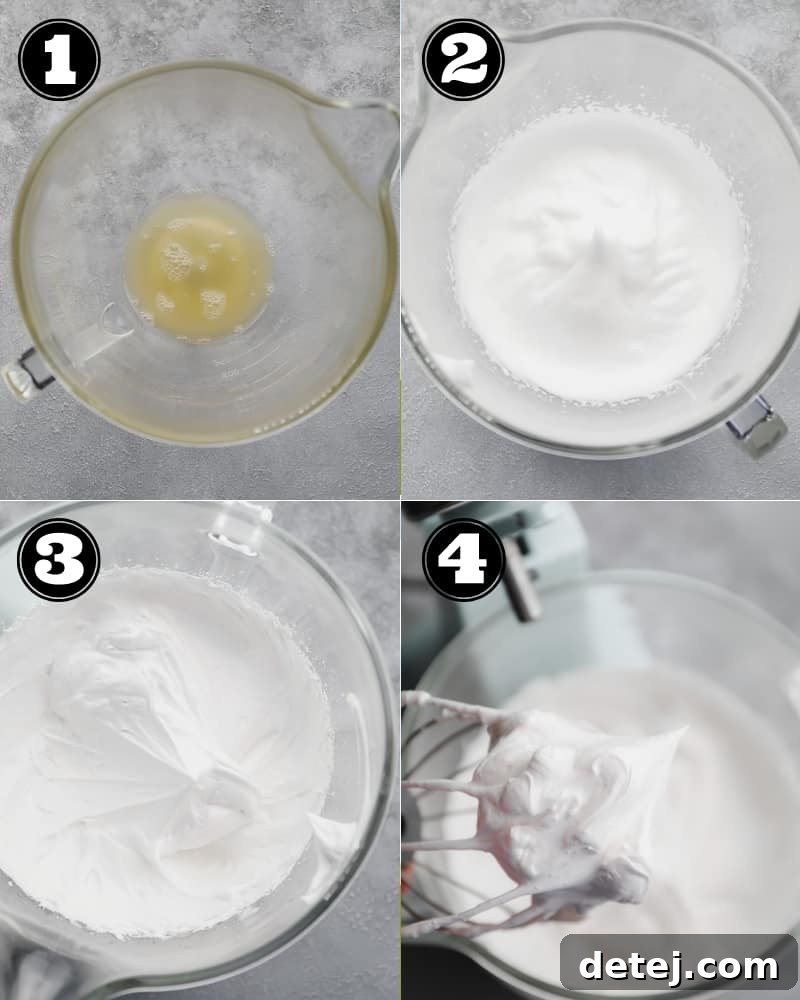
- Combine Aquafaba and Cream of Tartar: In a large, impeccably clean mixing bowl, add the aquafaba and cream of tartar. Ensure your bowl and whisk attachments are completely free of any grease or oil, as even a tiny amount can prevent the aquafaba from whipping properly.
- Whip to Soft Peaks: Using either a hand mixer or a stand mixer fitted with the whisk attachment, begin beating the mixture on high speed. Continue for about 5 minutes until soft peaks begin to form. These peaks will hold their shape briefly before gently falling.
- Gradually Add Sugar and Vanilla: With the mixer still running on high, slowly incorporate the granulated sugar, adding it a few tablespoons at a time. This gradual addition is essential to allow the sugar to fully dissolve and integrate into the aquafaba foam without deflating it. Once all the sugar is added, stir in the pure vanilla extract.
- Whip to Stiff Peaks: Continue beating the mixture for another 5 minutes, or until very stiff, glossy peaks form. When you lift the whisk, the peaks should stand upright without drooping. The mixture should be thick, smooth, and shiny. This indicates a stable meringue base.
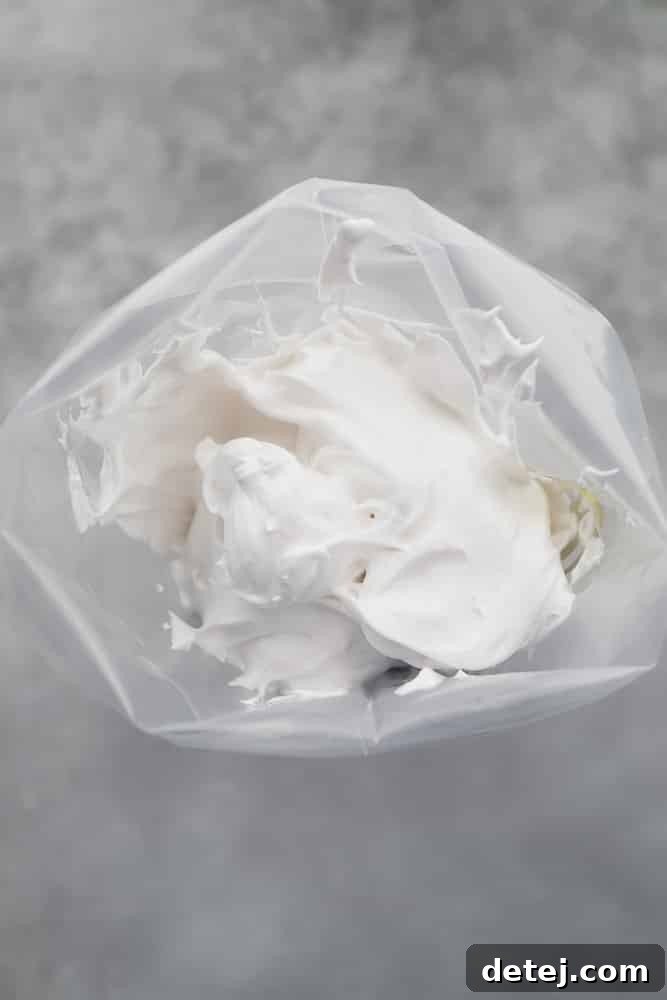
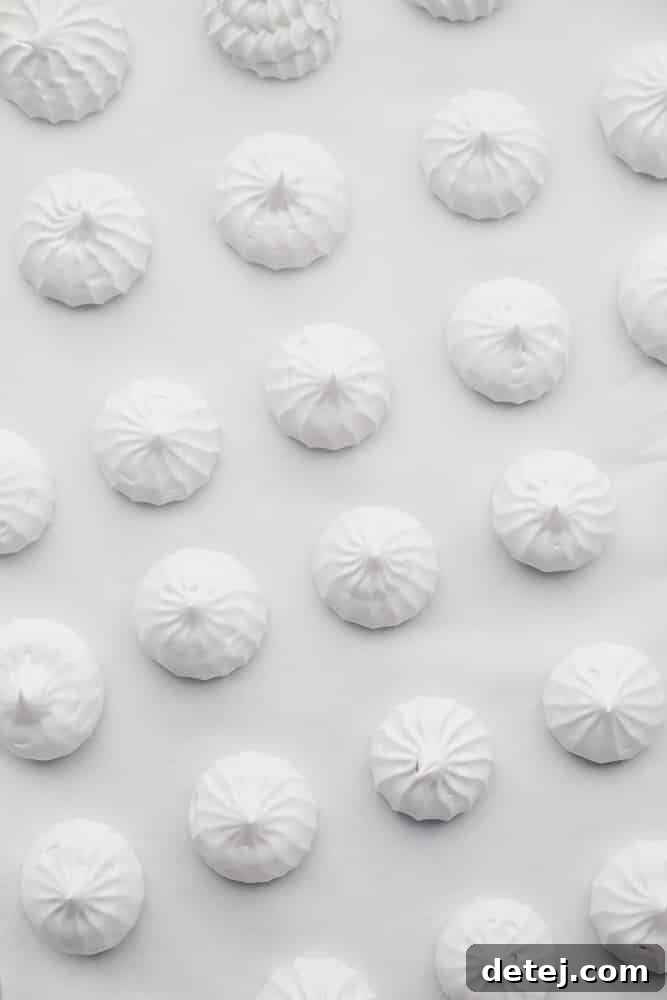
- Pipe Your Meringues: Carefully spoon the fluffy meringue mixture into a large piping bag fitted with your desired tip (a star tip works beautifully for classic meringue kisses). If you don’t have a piping bag, a sturdy Ziploc bag with a corner snipped off will work just as well, or you can simply use two spoons to dollop small mounds onto the parchment-lined baking sheet. Pipe small circles or kisses, ensuring to leave at least an inch of space between each meringue as they will expand slightly.
- Slow Bake to Perfection: Gently place the baking sheets into the preheated oven. Bake for approximately 1 ½ to 2 hours. The goal is to dehydrate them slowly.
- Check for Doneness: To test if your meringues are done, carefully remove one from the oven and let it cool for a minute. Gently crack it open. The interior should be completely dry and crisp, not gooey or sticky. If it’s still gooey, return the batch to the oven for additional baking time until fully crisp throughout.
- Cool and Store: Once thoroughly baked and crisp, remove the meringues from the oven and allow them to cool completely on the baking sheet before transferring them. Store in an airtight container at room temperature to maintain their crispness. They are best enjoyed the day they are made but will remain delicious for several days.
Essential Tips and Expert Tricks for Vegan Meringue Success
Achieving perfect vegan meringues is all about a few key techniques. Keep these tips in mind to ensure a flawless batch every time:
- Aquafaba Quality Matters: While both salted and unsalted canned chickpeas work, I often opt for low-sodium chickpeas. The most crucial aspect is the consistency of the aquafaba itself. It should be thick, almost gelatinous. If your aquafaba appears too watery, gently simmer it on the stovetop until it reduces by about a third, then cool completely before using.
- Absolutely No Grease Allowed: This cannot be stressed enough. Any trace of fat or oil on your mixing bowl, whisk attachment, or even your hands can prevent the aquafaba from whipping properly. Use a clean glass or metal bowl (plastic can retain grease) and ensure all equipment is spotless. You can even wipe them down with a little lemon juice or vinegar to be extra sure.
- The Role of Cream of Tartar: Cream of tartar is indispensable in this recipe. As an acidic ingredient, it helps to stabilize the whipped aquafaba, strengthening the protein structure and preventing the meringue from collapsing. Do not omit it. There are no direct substitutes that yield the same results.
- Proper Sugar Incorporation: Adding the granulated sugar slowly and gradually is paramount. This allows the sugar crystals to fully dissolve into the aquafaba foam, contributing to both the stability and the signature glossy texture of the meringue. Dumping all the sugar at once can deflate the mixture.
- Piping Bag Alternatives: No piping bag? No problem! A sturdy gallon-sized Ziploc bag with a small corner snipped off makes an excellent makeshift piping bag. Alternatively, for a more rustic look, you can simply use two spoons to carefully scoop and shape small dollops of meringue onto your baking sheet.
- Securing Parchment Paper: To prevent your parchment paper from shifting during piping or baking, apply a small dot of meringue mixture to each corner of the baking sheet before placing the paper on top. The meringue acts as a natural “glue.”
- Avoid Sugar-Free Substitutions: I strongly advise against replacing granulated sugar with sugar substitutes in this recipe. Granulated sugar plays a vital role beyond just sweetness; it provides essential structure and stabilization to the meringue. Sugar substitutes typically lack these structural properties and will likely result in a failed meringue.
- Bake Low and Slow: Meringues require a low oven temperature and a long baking time to dry out properly without browning. Resist the urge to open the oven door too frequently, as this can cause temperature fluctuations and lead to cracking or collapse.
- Cooling is Key: Allow the meringues to cool completely inside the oven after turning it off, with the door slightly ajar. This gradual cooling process helps prevent cracking and ensures they remain crisp.
Delicious Variations to Elevate Your Vegan Meringues
While classic vanilla vegan meringues are undeniably delightful, they also serve as a perfect canvas for creative flavor explorations. Here are some fantastic ways to customize your batch:
- Enchanting Peppermint Meringues: For a festive twist, especially around the holidays, add about ½ teaspoon of pure peppermint extract to the meringue mixture along with the vanilla. These refreshing, minty meringues are perfect for Christmas gatherings.
- Decadent Chocolate Chip Meringues: Fold in approximately ¾ cup of mini vegan chocolate chips at the very end of the whipping process, just before piping. For an even richer chocolate experience, consider adding 2 tablespoons of unsweetened cocoa powder to the aquafaba mixture before whipping, ensuring it’s thoroughly combined.
- Vibrant Rainbow Meringues: Brighten up your dessert platter by adding a few drops of vegan-friendly food coloring to your meringue. Gel food colorings work best as they are highly concentrated and won’t thin out the mixture. You can divide the meringue into separate bowls and color each one differently, or create a stunning swirl effect by painting stripes of gel color inside your piping bag before filling it with white meringue.
- Zesty Citrus Meringues: Add 1 teaspoon of lemon, orange, or lime extract (or even the zest of one citrus fruit) along with the vanilla for a bright and tangy meringue.
- Coffee-Kissed Meringues: For coffee lovers, dissolve 1-2 teaspoons of instant espresso powder in the vanilla extract before adding it to the meringue mixture. This will impart a subtle yet sophisticated coffee flavor.
Frequently Asked Questions About Vegan Meringues
- What do vegan meringues taste like?
Traditional meringue cookies are renowned for their light, airy texture and delicate sweetness, often compared to a crisp marshmallow. Vegan meringues, made with aquafaba, miraculously replicate this experience almost perfectly! The subtle bean flavor from the aquafaba completely cooks out during baking, leaving behind a delightful cookie that is wonderfully sweet, satisfyingly crisp on the outside, and incredibly fluffy on the inside. Most people find it nearly impossible to distinguish them from conventional meringues.
- What if my meringue collapses or turns soupy?
A collapsed or liquified meringue mixture usually indicates that your aquafaba wasn’t whipped to a stable enough consistency, or that the aquafaba itself was too thin to begin with. Ensure your aquafaba is thick and gelatinous before you start; if it’s watery, reduce it by simmering. Also, double-check that your mixing bowl and whisk are absolutely free of any grease, as fat is the arch-nemesis of meringue. Unfortunately, once the meringue has collapsed into a liquid, it’s very difficult to revive, so it’s generally best to start over with a fresh batch.
- How long do vegan meringues last and how should I store them?
For optimal crispness and flavor, vegan meringue cookies are best enjoyed the day they are made. However, they will retain their quality for up to 4 to 5 days when stored properly. The key is to keep them in an airtight container at room temperature. Avoid refrigerating them, as the moisture can cause them to become chewy or sticky. If you live in a particularly humid environment, you might find their shelf life is slightly shorter, as humidity is not a meringue’s friend.
- Are these meringues gluten-free?
Yes, typically aquafaba meringues are naturally gluten-free, as they are made from aquafaba, sugar, cream of tartar, and vanilla, none of which contain gluten. Always double-check ingredient labels for any hidden gluten if you have severe sensitivities or allergies.
- Can I make these in advance for a party?
Yes, you can absolutely make them a day or two in advance! Just ensure they are stored in a truly airtight container at room temperature. They hold up well and make a fantastic prep-ahead dessert.
More Irresistible Vegan Cookie Recipes
If you’ve loved the simplicity and deliciousness of these vegan meringues, you’ll be thrilled to explore more of our delightful plant-based cookie recipes. Expand your baking repertoire with these fantastic options:
- Bright and Zesty Lemon Shortbread Cookies
- Melt-in-Your-Mouth Vegan Snowball Cookies
- Rich and Fudgy Chocolate Crinkle Cookies
- Warm and Spicy Vegan Ginger Cookies
Vegan Meringues Recipe
Light and airy Vegan Meringues are easy to make using just 4 ingredients! They are perfectly sweet, crisp and so pretty. No one will believe they’re egg free!
Prep Time: 20 mins | Cook Time: 2 hrs | Total Time: 2 hrs 20 mins | Servings: 40 cookies
Ingredients
- 1/2 cup aquafaba*
- 1/4 teaspoon cream of tartar
- 3/4 cup granulated sugar
- 1 teaspoon pure vanilla extract
Instructions
- Preheat the oven to 200 degrees F (95°C) and line a large baking sheet or two with parchment paper.
- Add the aquafaba and cream of tartar to a large, impeccably clean bowl.
- Using a hand mixer or stand mixer with the whisk attachment, beat on high for 5 minutes, until soft peaks form.
- Slowly add in the sugar, a few tablespoons at a time, and continue to beat until all the sugar is added and fully dissolved. Add the vanilla extract and continue beating until very stiff, glossy peaks are formed, about 5 more minutes. The mixture should be thick and hold its shape firmly.
- Spoon the meringue mixture into a large piping bag (or a sturdy Ziploc bag with a corner snipped off) and cut off the end. Pipe small circles or kisses of meringue onto the parchment-lined baking sheets, leaving an inch of space in between each cookie.
- Place the baking sheets in the preheated oven and bake for approximately 1 ½ – 2 hours. The key is a low and slow bake to dry them out completely.
- To check for doneness, carefully remove one cookie from the oven, allow it to cool for a minute, then gently open it to see if it’s no longer gooey or sticky in the middle. If the center is still soft or gooey, continue baking the remaining meringues until they are fully crisp throughout.
- Once thoroughly baked and crisp, remove the meringues from the oven and let them cool completely on the baking sheet before transferring. Store in an airtight container for about 4-5 days. While they are best consumed the day they are made, they maintain a great taste and texture for several days. Enjoy!
Notes
- Aquafaba Explained: Aquafaba is simply the liquid drained from a can of chickpeas. I typically use low-sodium canned chickpeas, but both salted and unsalted varieties work perfectly fine. After draining, you can use the chickpeas in another delicious recipe, such as this Chickpea Curry.
- Minty Meringues: For a festive twist around Christmas time, incorporate ½ teaspoon of peppermint extract into the meringue mixture.
- Chocolatey Delight: To make chocolate chip meringues, gently fold in about ¾ cup of mini vegan chocolate chips just before piping.
- Color Fun: Feel free to add a tiny bit of vegan-friendly food coloring to create different colored meringues. Mix in a few drops when you are whipping the meringue to your desired hue.
- Aquafaba Consistency: If your aquafaba seems too watery, gently simmer it on the stovetop over low heat until it reduces by about a third. Allow it to cool completely before using for best results.
Nutrition
Serving: 1 cookie (of 40 servings) | Calories: 15kcal | Carbohydrates: 4g | Sodium: 1mg | Potassium: 3mg | Sugar: 4g | Calcium: 1mg | Iron: 1mg
Course: Dessert | Cuisine: French | Author: Nora Taylor
Did you make this recipe?
Mention @nora_cooks_vegan_ or tag #noracooks!