
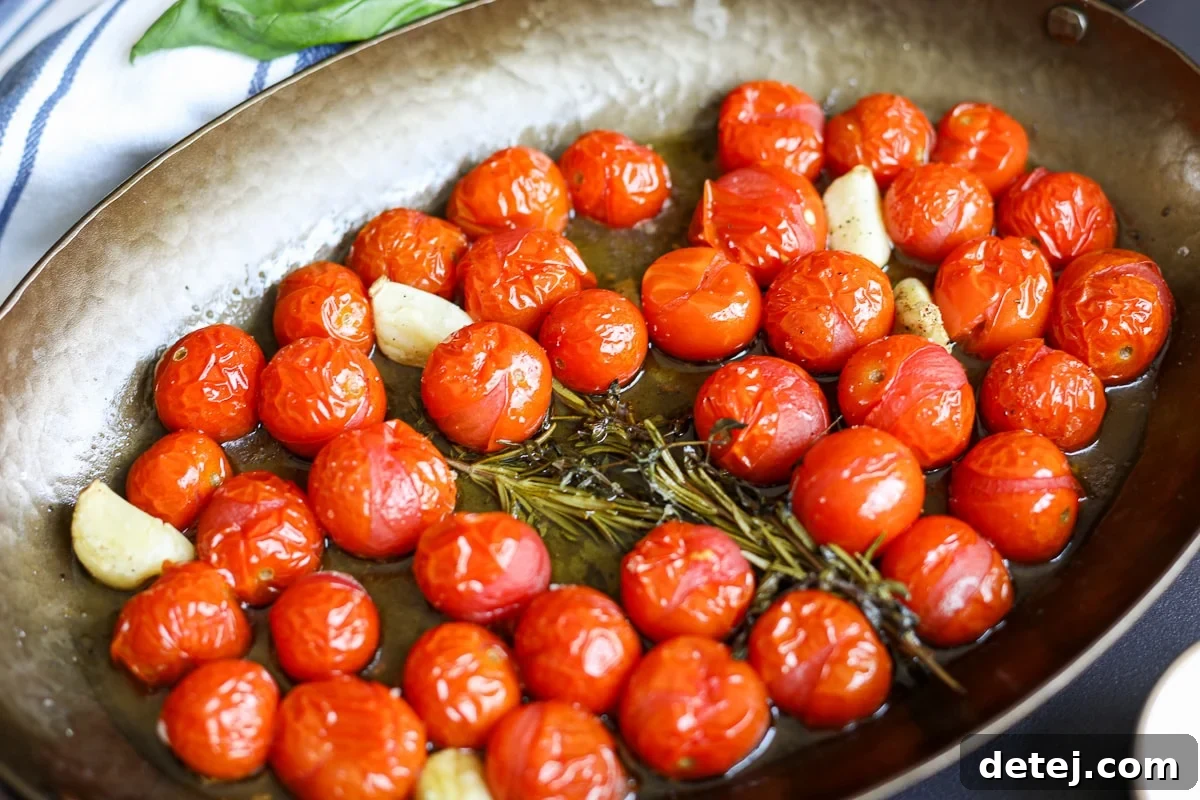
This Tomato Confit recipe is an easy and impressive appetizer perfect for any occasion. Combine a few fresh ingredients and let everything simmer in the oven low and slow. You’ll end up with perfectly juicy, tender tomatoes that are infused with flavor and easy to spread over your favorite bread.
Consider trying my Marinated Olives and Mozzarella over Whipped Pesto Ricotta for another delicious appetizer.
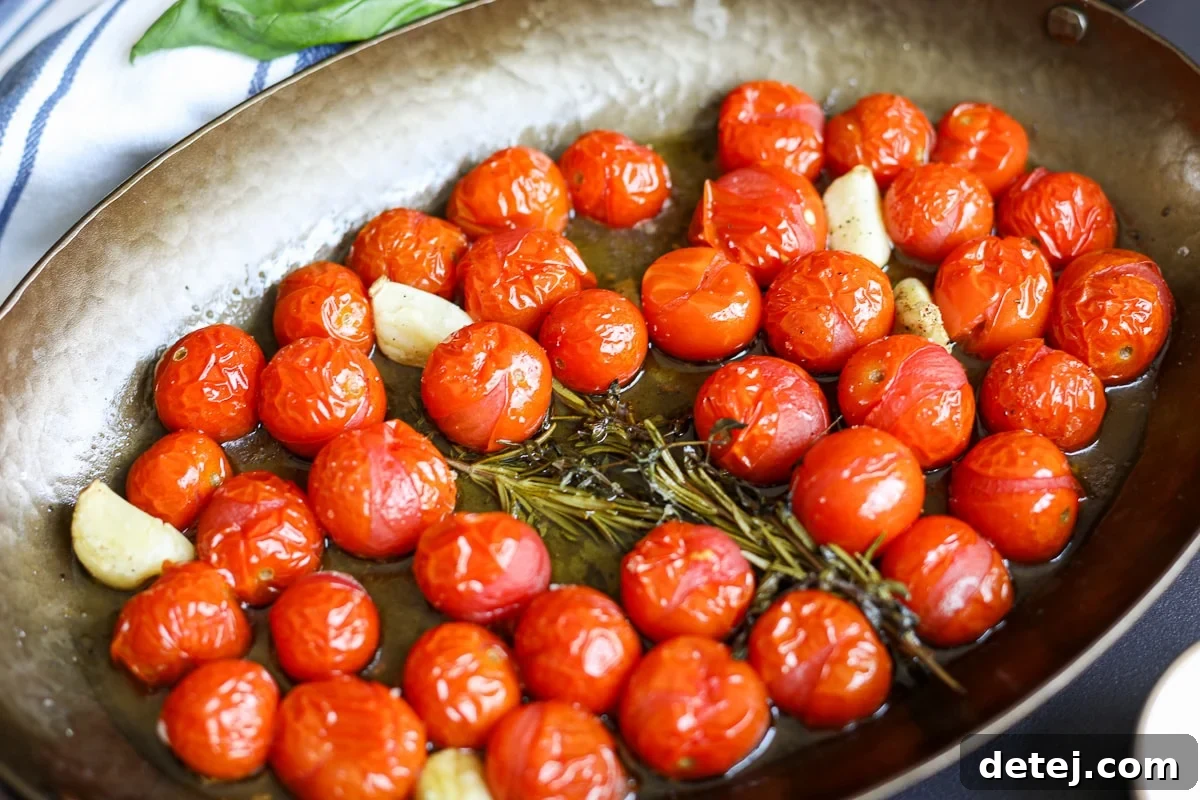
Table of Contents
Why You’ll Love This Recipe
Easy yet elevated. This simple recipe comes together quickly and looks impressive to friends and family. It’s the perfect blend of rustic charm and sophisticated flavor, making it suitable for casual gatherings or more formal dinners.
Fun to make. You only need a few high-quality ingredients that you most likely already have on hand to make this delicious tomato confit. The preparation is incredibly straightforward and largely hands-off, allowing your oven to do most of the work while filling your kitchen with an enticing, aromatic scent. It’s a delightful process that yields even more delightful results!
Versatile Culinary Delight. Beyond just being an appetizer, tomato confit is a true chameleon in the kitchen. It can instantly transform a simple bowl of pasta into a gourmet meal, elevate grilled proteins, or become a stellar component of a vibrant bruschetta. Its adaptability means you’ll discover endless ways to incorporate this intensely flavored creation into your everyday meals and special occasions.
Health Benefits. Crafted primarily with ripe, fresh tomatoes and heart-healthy extra virgin olive oil, this confit is packed with beneficial antioxidants and good monounsaturated fats. Tomatoes are notably rich in lycopene, a powerful antioxidant, and studies suggest that cooking them slowly in oil significantly enhances the body’s ability to absorb it. The addition of fresh herbs further contributes a wealth of beneficial compounds and a burst of natural flavor, making this dish not just a treat for your taste buds but also a smart choice for your well-being.
Make-Ahead Friendly. One of the most appealing aspects of tomato confit is that its flavors often deepen and meld even more beautifully after a day or two. This makes it an ideal dish for entertaining, as you can prepare it in advance, freeing up valuable time on the day of your event. Simply store it in the refrigerator and gently reheat before serving, making it a stress-free option for any gathering.
The Art of Confit: A Culinary Legacy
To truly appreciate the magic of tomato confit, it helps to understand its origins. The word “confit” itself is French, meaning “preserved,” and the technique dates back centuries as a method of food preservation. Historically, it was most famously applied to meats like duck and goose, where the meat was slow-cooked and stored submerged in its own fat. This traditional approach ensured food could be kept for extended periods before refrigeration was common.
However, the culinary world is ever-evolving, and the confit technique has found new life beyond just meats. It has been beautifully adapted to vegetables, and in particular, to vibrant, ripe tomatoes. When applied to tomatoes, the principle remains the same: slow-cooking in a generous amount of fat (in this case, olive oil) at a low temperature. This gentle thermal process is key to achieving a profound transformation.
As the tomatoes slowly simmer in aromatic olive oil, they gradually release their natural moisture and sugars. This isn’t just about cooking; it’s about intensifying and concentrating their inherent sweetness and savory umami notes. The result is a collection of succulent, melt-in-your-mouth morsels that are bursting with flavor. The olive oil itself becomes a prized component, infused with the complex essences of the tomatoes, garlic, and herbs, turning into a liquid gold that can be used to elevate countless other dishes. This method stands in stark contrast to high-heat roasting, which might caramelize quickly but risks drying out the delicate fruit. Confit ensures the tomatoes retain their juiciness while developing an unparalleled depth of flavor and a wonderfully tender, almost jam-like texture. It’s a testament to how simple ingredients, treated with patience and care, can yield profoundly delicious and versatile results, bringing a touch of gourmet elegance to your table with minimal effort.
Essential Ingredients for Perfect Tomato Confit
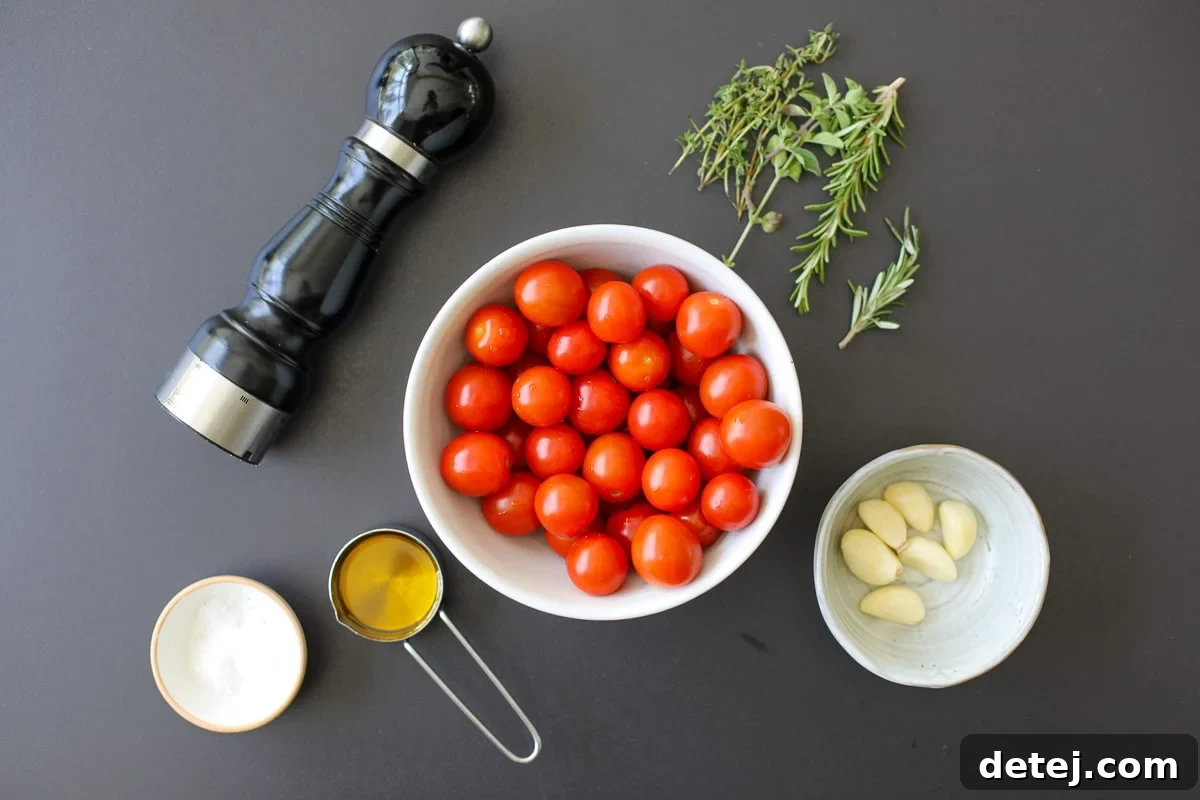
Creating spectacular tomato confit doesn’t demand a long list of exotic ingredients. In fact, its inherent beauty and irresistible taste lie in the simplicity and uncompromised quality of a few key components. Each element plays a crucial role in achieving that rich flavor and luxurious texture that makes this confit so special. Here’s a closer look at what you’ll need and why each choice matters:
- Tomatoes: You’ll need approximately 20 ounces (about 560 grams) of fresh cherry tomatoes or grape tomatoes for this recipe. These small varieties are undeniably the best choice for confit due to several reasons. Their thin skins allow for optimal flavor absorption and prevent them from becoming tough or chewy during the long cooking process. Their small size also ensures even cooking, allowing them to soften beautifully without disintegrating completely, retaining a delightful pop of juicy sweetness. Always opt for ripe, firm tomatoes; they contain the most natural sugars and possess the ideal texture for confit. Before cooking, remember to thoroughly wash and gently dry them to avoid introducing any excess water that could dilute the precious olive oil and hinder the concentration of flavors.
- Extra Virgin Olive Oil: This recipe calls for a generous ¼ cup of high-quality extra virgin olive oil – truly, the “good stuff” is essential here! The olive oil is far more than just a cooking medium; it’s a critical flavor infuser, a rich sauce, and a natural preservative. As the tomatoes slowly simmer, their natural juices and aromatic compounds mingle extensively with the olive oil, creating a rich, fragrant, and incredibly delicious infused oil that is as prized as the tomatoes themselves. A robust extra virgin olive oil will impart fruity, peppery, and slightly bitter notes that perfectly complement the inherent sweetness and acidity of the tomatoes. Choose an olive oil with a flavor profile you genuinely enjoy, as its character will form the foundational taste of your finished confit.
- Garlic: Four to five cloves of garlic, lightly crushed, are an absolutely essential aromatic for this dish. The term “lightly crushed” is important here; the goal is to gently press down on the whole cloves with the flat side of a chef’s knife until they crack open slightly. This technique effectively releases their pungent, aromatic oils and distinct flavor without mincing them into tiny pieces. Keeping the cloves largely intact prevents them from burning during the extended roasting time, ensures they soften beautifully into buttery morsels, and makes them easier to remove later if you prefer a cleaner confit. However, many find the softened, sweet roasted garlic cloves delightful to mash and spread along with the tomatoes.
- Fresh Herbs: A generous selection of fresh herbs is paramount for building complex and vibrant layers of flavor. This recipe suggests a fragrant blend of fresh thyme, oregano, and rosemary, with fresh basil reserved for a final, brightening flourish.
- Thyme: Offers a delicate, earthy, and slightly floral aroma that is a classic and indispensable pairing for tomatoes.
- Oregano: Contributes a robust, peppery, and intensely aromatic quality, lending a distinct Mediterranean warmth and depth to the confit.
- Rosemary: Provides a strong, piney, and woody note that adds a sophisticated depth and pairs wonderfully with the richness of olive oil and the sweetness of roasted tomatoes.
- Basil: While the woody herbs are typically added during the roasting process, fresh basil is best added at the very end or used as a garnish. Its sweet, peppery, and slightly anise-like flavor provides a beautiful, vibrant fresh contrast that brightens the overall profile of the cooked confit. A chiffonade (thinly sliced) of fresh basil not only enhances the taste but also adds a stunning visual appeal.
The use of fresh herbs is truly non-negotiable for this recipe; their vibrant essences infuse the oil and tomatoes in a way that dried herbs simply cannot replicate.
- Seasoning: Simple yet vital – kosher salt and freshly cracked black pepper. Kosher salt provides a clean, briny flavor and plays a crucial role in drawing out moisture from the tomatoes, thereby concentrating their natural sweetness and enhancing their savory notes. Freshly cracked black pepper adds a pungent warmth and subtle spice that complements the other flavors. For those who appreciate a hint of heat, a pinch or two of red pepper flakes can be a wonderful addition, infusing a gentle warmth throughout the confit. Always remember to taste and adjust the seasoning after the confit has cooked, as the flavors will naturally concentrate and deepen significantly during the roasting process.
Flavorful Variations to Explore
While the classic tomato confit recipe is a divine experience on its own, its inherent simplicity and robust flavor profile make it incredibly adaptable to various tastes and culinary explorations. Don’t hesitate to experiment with these exciting variations to customize it to your liking, or to suit different occasions and dietary preferences.
- Make it Spicy: For those who love a bit of heat, infusing your confit with a touch of spice is wonderfully easy and adds an exciting dimension. Simply add a teaspoon or two of crushed red pepper flakes to the baking dish along with the other seasonings and herbs before roasting. The slow cooking process allows the spice to gently permeate the olive oil and tomatoes, offering a warm, lingering heat that complements the sweetness of the tomatoes without overpowering their delicate flavor. You can easily adjust the quantity of red pepper flakes to achieve your desired level of spiciness.
- Serve with Cheese for Added Richness: The creamy, tangy flavor of cheese provides an exquisite counterpoint to the sweet and savory tomatoes, instantly elevating the confit into a truly decadent appetizer or side dish.
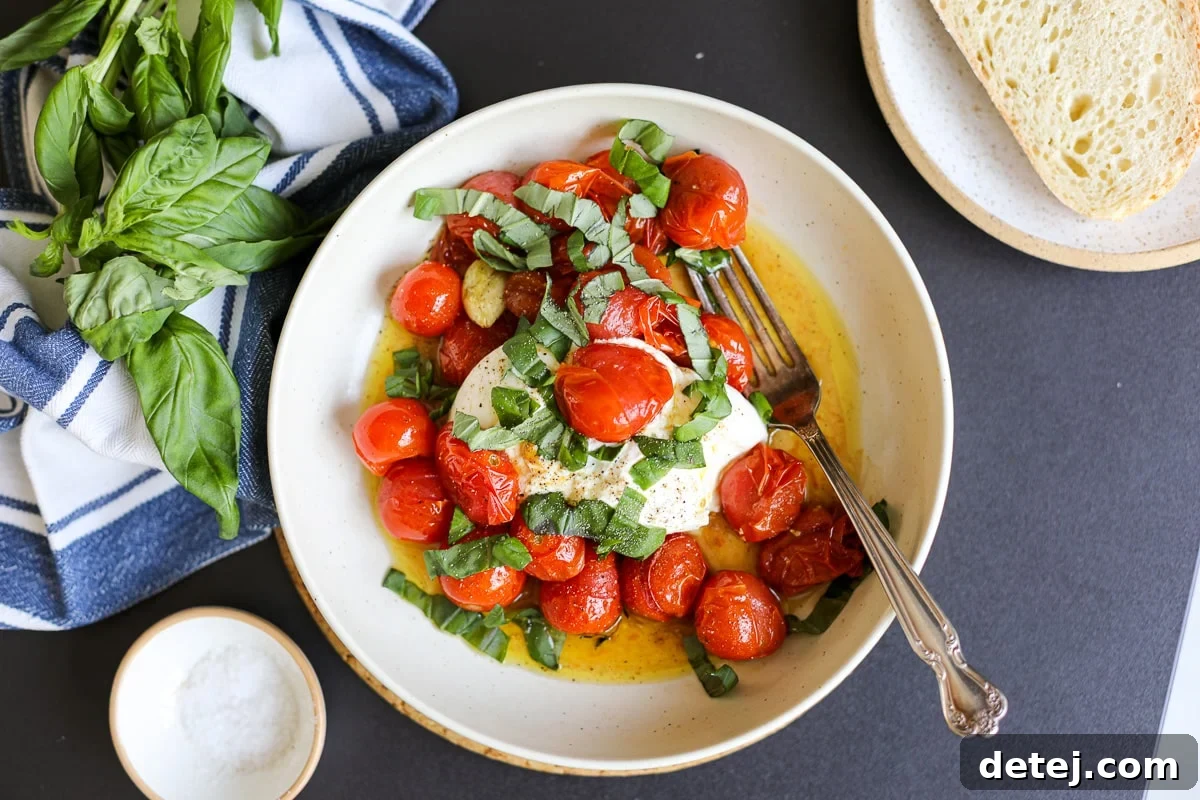
- Burrata: This is a particularly luxurious and popular choice. Once your confit is warm and ready to serve, gently tear open a ball of fresh burrata cheese and artfully nestle it among the tomatoes in the serving dish. The creamy, soft interior of the burrata will begin to melt slightly from the residual heat, creating an incredibly rich, indulgent, and mouth-watering experience when scooped up with the warm confit and a piece of crusty bread.
- Ricotta: For a lighter, yet equally satisfying option, consider serving the confit over a generous dollop or a smooth bed of whipped ricotta cheese. The fresh, milky taste and airy texture of ricotta provide a beautiful, mild canvas that allows the intense flavors of the tomatoes, garlic, and herbs to truly shine through.
- Feta or Goat Cheese: Crumbled feta cheese or creamy chèvre (goat cheese) can also add a delightful tanginess and a touch of salty brine, further enhancing the Mediterranean profile of the dish. These cheeses offer a slightly firmer texture that contrasts nicely with the tender, soft confit tomatoes.
- Enjoy Over Pasta for a Simple Meal: Transform your delightful appetizer into a light, yet profoundly flavorful, main course by simply tossing the warm tomato confit with your favorite freshly cooked al dente pasta. The fragrant, infused olive oil from the confit naturally acts as a ready-made, rich, and aromatic sauce that coats each strand of pasta beautifully. A generous sprinkle of fresh Parmesan cheese or a grating of Pecorino Romano, along along with a scattering of extra fresh basil leaves, would be a perfect finishing touch for this quick, gourmet-level meal.
- Pair with Grilled Meats or Fish: The vibrant and concentrated flavors of tomato confit make it an exceptional accompaniment to a variety of grilled, baked, or pan-seared proteins. Spoon it generously over grilled chicken breasts, flaky white fish such as cod, halibut, or sea bass, succulent shrimp, or even a perfectly cooked steak for an instant flavor boost. The bright acidity and herbal notes of the confit beautifully cut through the richness of the meat or fish, adding moisture, a burst of flavor, and an undeniable sophisticated touch that elevates a simple main dish into a culinary masterpiece. It also works wonderfully with grilled or roasted vegetables like zucchini, eggplant, or asparagus.
- Add Other Complementary Vegetables: Don’t feel limited to just tomatoes. Feel free to toss in other small, slow-roasting vegetables during the cooking process to add more complexity and texture. Thinly sliced shallots or small pearl onions can contribute a sweet and savory depth, while a handful of Kalamata or Castelvetrano olives added during the last 20-30 minutes of cooking will introduce a briny, complex flavor and a lovely textural contrast to the soft tomatoes.
- A Touch of Balsamic Glaze: For an extra layer of sweetness and a pleasant tangy counterpoint, consider drizzling a high-quality balsamic glaze over the finished confit just before serving. This adds a beautiful sheen and another sophisticated flavor dimension that complements the tomatoes beautifully.
Expert Tips for Success
Achieving perfectly tender, profoundly flavorful tomato confit is surprisingly simple, but incorporating a few expert tips can elevate your results from merely good to truly exceptional. Paying close attention to these small details will ensure your confit is a showstopper every single time you make it.
- The Golden Rule: Low and Slow Roasting: This is arguably the most crucial tip for confit, regardless of the ingredient. Resist the urge to crank up the oven temperature. A consistent temperature of 300°F (150°C) is ideal, as it allows the tomatoes to gently cook down, slowly releasing their moisture and concentrating their natural sugars without browning, searing, or burning. This patient, slow process results in tomatoes that are beautifully wrinkled, intensely flavored, and incredibly tender – almost melting in your mouth. High heat, on the other hand, would simply cause them to burst quickly and dry out, losing the desired soft, succulent confit texture.
- Ensure Single-Layer Placement: When arranging your tomatoes in the baking dish, it is paramount to spread them in a single, even layer. Overcrowding the pan is a common mistake that can lead to steaming instead of roasting. When tomatoes are piled on top of each other, the moisture they release creates steam, which prevents them from properly caramelizing and intensifying their flavors. For this reason, if you’re making a larger batch, it’s always better to use two separate baking dishes to give the tomatoes ample space to breathe and roast evenly.
- Gentle Crushing for Garlic: The instruction to “lightly crush” garlic is key to optimal flavor infusion without burning. This means gently pressing down on the whole cloves with the flat side of a chef’s knife until they crack open slightly, releasing their pungent, aromatic oils and distinct flavor without mincing them into tiny pieces. Keeping the cloves mostly intact prevents them from burning during the extended roasting time, ensures they soften beautifully into buttery morsels, and makes them easier to remove later if you prefer a cleaner confit. However, many gourmands enjoy mashing the softened, sweet roasted garlic cloves directly into the confit.
- Invest in Quality Olive Oil: As emphasized in the ingredients section, the extra virgin olive oil is a foundational component of this dish, not merely a cooking fat. A high-quality extra virgin olive oil will impart a superior, nuanced flavor to your confit. This is one area where you absolutely shouldn’t skimp, as the oil becomes an integral and delicious part of the finished dish – a rich, infused dressing for your tomatoes and whatever you choose to serve them with.
- Fresh Herbs are Non-Negotiable: While dried herbs can be convenient for many recipes, fresh herbs are truly essential for achieving the vibrant depth of flavor characteristic of a stellar confit. Their delicate aromas and potent essences infuse the oil and tomatoes in a way that dried herbs simply cannot replicate. Woody herbs like thyme and rosemary can be added from the very beginning of the roast, as they can withstand the heat. However, more delicate herbs like basil are best added at the very end of cooking, or even as a fresh garnish, to preserve their bright, peppery, and fresh notes.
- Season Thoughtfully and Taste-Test: Season your tomatoes with kosher salt and freshly cracked black pepper at the beginning of the process. However, be mindful that the flavors will concentrate significantly during the long roasting period. It’s always a good practice to initially under-season slightly and then taste the confit once it’s cooked, adjusting with more salt and pepper if needed to achieve a perfect, balanced flavor profile.
- Look for the Wrinkles: The most reliable visual cue for perfectly cooked confit is when the tomatoes are noticeably wrinkled, slightly collapsed, and appear very tender. This indicates they have released a significant amount of their moisture, and their flavors have become wonderfully concentrated. They should still hold their general shape but yield easily to gentle pressure.
- Don’t Waste the Infused Oil: After enjoying your tomato confit, absolutely do not discard the leftover oil! It’s a treasure trove of flavor, infused with the concentrated essence of tomatoes, sweet roasted garlic, and aromatic herbs. Strain it through a fine-mesh sieve to remove any small bits of garlic or herbs, and then store it in a clean, airtight container in the refrigerator. This infused oil is fantastic as a gourmet dressing for salads, for dipping crusty bread, drizzled over roasted vegetables, as a flavorful base for quick pasta sauces, or even as a cooking oil to impart a wonderful depth of flavor to other savory dishes. It’s a culinary bonus that should not be overlooked!
How to Make Tomato Confit
Creating this delightful tomato confit is an incredibly straightforward process, demanding minimal effort for maximum flavor. The beauty lies in its simplicity, allowing the high-quality ingredients to shine through with just a gentle nudge from your oven. Here’s a simple, step-by-step guide to achieving perfect, irresistible results:
- Preheat Your Oven: Begin by preheating your oven to a precise 300°F (150°C). This specific low temperature is absolutely crucial for the slow-roasting process. It allows the tomatoes to gently cook down, tenderize, and develop deep, concentrated flavors without scorching or drying out, which would happen at a higher temperature. Patience at this stage is rewarded with superior taste and texture.
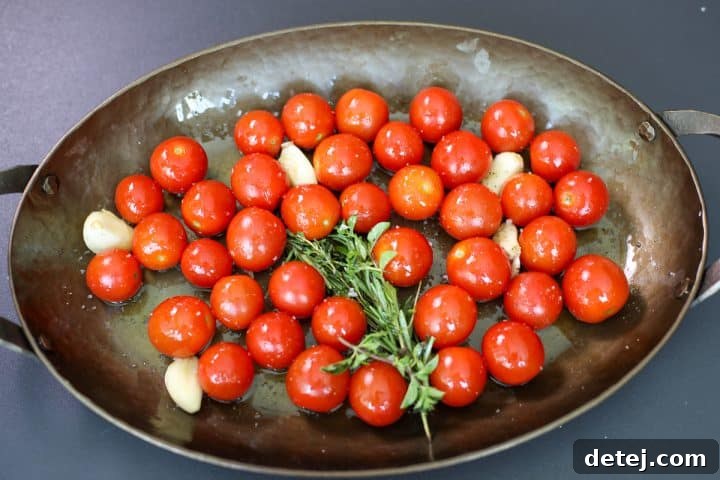
- Prepare and Combine Ingredients: Take your 20 ounces of fresh cherry or grape tomatoes. Ensure they are thoroughly washed and gently dried to prevent any excess water from diluting the rich olive oil, which could hinder flavor concentration. Arrange the prepared tomatoes in a single, even layer in a suitable baking dish. Next, add the 4-5 lightly crushed garlic cloves, pour over the ¼ cup of high-quality extra virgin olive oil, and tuck in the fresh herb sprigs (such as thyme, oregano, and rosemary) over and around the tomatoes. Finish by seasoning generously with a good pinch of kosher salt and several turns of freshly cracked black pepper. Gently toss all the ingredients together directly in the baking dish. This ensures that the tomatoes are evenly coated with the fragrant olive oil, herbs, and seasonings, allowing for optimal flavor infusion during roasting.
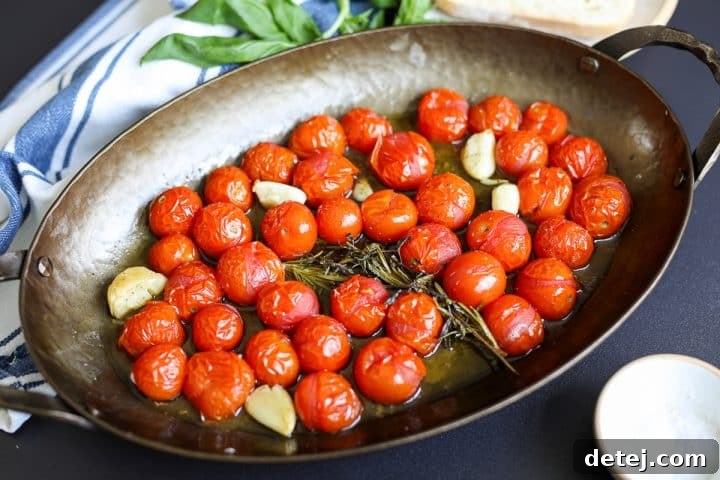
- Slow Roast to Perfection: Carefully place the baking dish into your preheated oven. Roast for approximately 55-60 minutes. The exact cooking time may vary slightly depending on the size of your specific tomatoes and the calibration of your oven, so it’s wise to keep an eye on them during the final minutes. You’re looking for the tomatoes to become beautifully wrinkled, softened, and incredibly tender. Their skins should be slightly collapsed, and their juices should have visibly mingled with the olive oil, creating a fragrant, rich, and deeply infused base.
- Finish and Serve: Once roasted to perfection, carefully remove the baking dish from the oven. At this point, you have a couple of options: you can discard the spent garlic cloves and herb sprigs if you prefer a cleaner confit, or, as many connoisseurs do, you can mash the softened garlic cloves and leave the herbs in for added rustic charm and flavor intensity. For an optional but highly recommended enhancement, gently tear open 4 ounces of fresh burrata cheese and artfully nestle it among the warm, roasted tomatoes in the serving dish. The residual heat from the confit will lightly soften the burrata, making it wonderfully creamy and luscious. Finally, garnish with a fresh basil chiffonade – thinly sliced basil leaves – for a burst of vibrant fresh flavor and stunning visual appeal. Season with a final pinch more of kosher salt and a few turns of freshly cracked black pepper to taste, adjusting to your preference before serving immediately.
Serving Suggestions for Tomato Confit
Tomato confit is an incredibly versatile culinary creation that can effortlessly elevate a wide array of dishes, transforming simple meals into gourmet experiences. Its rich, concentrated flavor and luxurious texture make it a fantastic addition to both casual gatherings and elegant dinner parties. Here are some of the best and most delicious ways to enjoy your freshly made confit:
- Classic Bruschetta or Crostini: This is arguably the most traditional and satisfying way to savor tomato confit. Spoon the warm, juicy tomatoes along with their fragrant, infused olive oil generously over slices of toasted sourdough bread, a crusty baguette, or crispy crostini. The bread acts as the perfect vehicle, soaking up all the delicious flavors and creating an explosion of taste in every bite. It’s an ideal appetizer or a delightful light snack, perfect for sharing.
- Elevate Your Pasta Dishes: For a quick yet profoundly gourmet meal, simply toss the warm tomato confit with your favorite freshly cooked al dente pasta. The fragrant, infused olive oil naturally creates a light, yet deeply flavorful, sauce that coats each strand of pasta beautifully. Finish with a generous sprinkle of grated Parmesan or Pecorino Romano cheese and a scattering of fresh basil leaves for an extra layer of freshness and savoriness, turning a weeknight dinner into a culinary treat.
- A Star on Cheese Boards and Charcuterie Platters: Tomato confit makes a sophisticated and vibrant addition to any cheese board or charcuterie platter. Its sweet and savory profile beautifully complements a variety of cheeses. Pair it with soft, creamy cheeses like fresh mozzarella, burrata, or chèvre (goat cheese), or even aged, firm cheeses such as Parmesan or aged cheddar. The contrast in textures and flavors is simply delightful and sure to impress your guests.
- Gourmet Topping for Proteins: Instantly upgrade your main courses by spooning the rich confit over grilled, baked, or pan-seared proteins. It pairs exceptionally well with chicken breasts, flaky white fish such as salmon or cod, succulent shrimp, or even a perfectly cooked steak for an instant flavor boost. The bright acidity and herbal notes of the confit beautifully cut through the richness of the meat or fish, adding moisture, a burst of flavor, and an undeniable sophisticated touch that elevates a simple main dish into a culinary masterpiece. It also works wonderfully with grilled or roasted vegetables like zucchini, eggplant, or asparagus.
- Breakfast and Brunch Brilliance: A dollop of tomato confit can transform your morning meals from ordinary to extraordinary. Serve it alongside scrambled eggs, as a flavorful topping for an omelet, or spread it generously on toast with a perfectly fried or poached egg for a Mediterranean-inspired breakfast that’s both hearty and bright. It adds an unexpected depth of flavor to your breakfast routine.
- Flavorful Sandwich and Wrap Filling: Use the confit as a vibrant, flavor-packed spread or filling for your sandwiches and wraps. It pairs wonderfully with fresh mozzarella, creamy avocado, crispy prosciutto, or grilled vegetables, adding a burst of sweet, savory, and herbaceous goodness to your lunchbox or picnic.
- Pizza or Flatbread Upgrade: Spread a thin layer of the tomato confit as a unique and flavorful base for homemade pizzas or flatbreads. Its concentrated flavor makes for an incredibly rich sauce. Alternatively, scatter it over a plain cheese pizza after baking for an instant upgrade that adds depth and freshness.
- Enhance Soups and Salads: A spoonful of tomato confit can add incredible depth and richness to clear broths or creamy vegetable soups, bringing a gourmet touch to everyday comfort food. It also makes a fantastic, flavorful topping for green salads, especially those featuring ingredients like fresh mozzarella, goat cheese, or crunchy croutons, adding a burst of sweet and savory flavor to every bite.
Storage and Reheating
While tomato confit is undeniably at its best when enjoyed fresh and warm, its robust flavors mean it can be prepared in advance or saved as delicious leftovers. Proper storage and gentle reheating are crucial to maintaining its exquisite flavor and tender texture.
- Proper Storage:
- Cool Completely: Always allow your tomato confit to cool down completely to room temperature before transferring it to storage. This prevents condensation from forming inside the container, which could introduce moisture and affect its quality.
- Airtight Container: Carefully transfer the confit, including all the infused olive oil, into a clean, airtight container. The most important step here is to ensure that the tomatoes are fully submerged in the olive oil. This acts as a natural barrier against air and helps preserve their freshness and flavor, much like traditional confit methods.
- Refrigerate: Store the sealed container in the refrigerator for up to 3-4 days. It’s completely normal for the olive oil to solidify and become cloudy when chilled; this is a natural reaction of good quality olive oil to cold temperatures. Rest assured, it will return to its liquid state and clear up once warmed gently.
- Longer Storage (Freezing):
For extended preservation, tomato confit freezes beautifully. To do so, transfer the cooled confit (both the tomatoes and the infused oil) into freezer-safe containers or heavy-duty freezer bags, ensuring there’s minimal air space to prevent freezer burn. It can be stored in the freezer for up to 2-3 months without significant loss of quality. To use, simply thaw the frozen confit overnight in the refrigerator before proceeding with any of the reheating instructions below.
- Gentle Reheating Methods:
Reheating confit should always be done gently to preserve the tomatoes’ delicate texture and prevent them from becoming mushy or losing their vibrant, concentrated flavor. Avoid high heat during reheating.
- Microwave: For a quick reheat of a small portion, spoon the desired amount of confit (making sure to include some of the solidified oil) into a microwave-safe dish. Heat on medium power in short bursts (e.g., 30-second intervals), stirring gently in between, until warmed through. Be careful not to overheat, as excessive microwave heat can quickly alter the delicate texture of the tomatoes.
- Stovetop: This is often the preferred method for a more even and controlled reheat, especially for larger quantities. Transfer the desired amount of confit to a small saucepan. Heat gently over very low heat, stirring occasionally, until the olive oil has fully liquefied and the tomatoes are warmed through. This method allows for better control over the temperature and prevents uneven heating.
- Oven: If you’re reheating a larger batch, or if you prefer a slight re-crisping of the tomato skins, spread the confit in a single layer in an oven-safe dish. Warm in a preheated oven at 275°F (135°C) for 10-15 minutes, or until thoroughly heated through and fragrant. This method can help revive some of the texture.
Always ensure the confit is heated thoroughly before serving, and as a general food safety and quality rule, it’s best not to reheat more than once to maintain optimal taste and texture.
Frequently Asked Questions
What can I serve this Tomato Confit with?
Tomato confit is incredibly versatile and pairs beautifully with a wide range of dishes! Enjoy it simply with crusty sourdough bread or crispy crostini for a delightful appetizer. It’s excellent when tossed with al dente pasta for a quick and flavorful meal, or spooned generously over grilled fish, chicken, or vegetables to elevate your main course. It also makes a fantastic topping for pizzas, flatbreads, or as a vibrant component on a gourmet cheese board. Don’t forget it can even elevate your breakfast eggs or sandwiches for a touch of Mediterranean flair!
How long does this Tomato Confit last?
For the freshest and most vibrant taste, tomato confit is best enjoyed immediately after preparation, while still warm. However, leftovers can be stored safely and still taste wonderful. Transfer the cooled confit into an airtight container, ensuring that the tomatoes are fully submerged in their infused olive oil. It will keep well in the refrigerator for up to 3-4 days. When ready to enjoy again, gently reheat on the stovetop over low heat or in the microwave until warmed through.
Can I use different types of tomatoes for confit?
While cherry or grape tomatoes are highly recommended for this recipe due to their ideal small size, concentrated sweetness, and ability to hold their shape beautifully during slow roasting, you can certainly experiment with other small, ripe tomato varieties. If you choose larger tomatoes, make sure to cut them into smaller, uniform pieces (e.g., quarters or halves) to ensure even cooking. Keep in mind that larger tomatoes might require slight adjustments to the roasting time. The key is always to select firm, very ripe tomatoes for the best flavor and texture results, regardless of variety.
What can I do with the flavorful infused olive oil after the confit is gone?
Absolutely do not discard the leftover olive oil from your tomato confit! It is truly liquid gold, rich with the concentrated essence of tomatoes, sweet roasted garlic, and aromatic herbs. This infused oil is a valuable culinary asset. Strain it through a fine-mesh sieve to remove any small bits of garlic or herbs, and then store it in a clean, airtight container in the refrigerator. Use it as a gourmet dressing for salads, for dipping crusty bread, drizzled over roasted vegetables, as a flavorful base for quick pasta sauces, or even as a cooking oil to impart a wonderful depth of flavor to other savory dishes. It’s a fantastic bonus from making confit!
Can I make this recipe ahead for meal prep or entertaining?
Yes, absolutely! Tomato confit is an excellent dish for meal prepping or preparing in advance for entertaining. As mentioned in the storage section, it can be made up to 3-4 days ahead of time and stored in an airtight container in the refrigerator, with the tomatoes submerged in the oil. In fact, many people find that the flavors deepen and meld even more beautifully after a day or two, making it even more delicious. This makes it a perfect stress-free option for dinner parties or when you simply want to have a flavorful component ready for your meals throughout the week. Simply reheat gently when you are ready to serve.
Other Appetizer Recipes to Consider Trying
- Tomato Pie Dip
- Roasted Artichokes and Beans over Whipped Ricotta Pesto
- Marry Me Butter Bean and Sausage Dip
- Three Ingredient Boursin Cheese Salami Cups
- Cheesy Zucchini Involtini
- Unstuffed Banana Peppers

Recipe: Tomato Confit
This Tomato Confit recipe is an easy and impressive appetizer perfect for any occasion. Combine a few fresh ingredients and let everything simmer in the oven low and slow. You’ll end up with perfectly juicy, tender tomatoes that are infused with flavor and easy to spread over your favorite bread, pasta, fish or chicken.
Author: Sarah Thomas-Drawbaugh
Yield: 6 servings
Prep Time: 10 minutes
Cook Time: 1 hour
Total Time: 1 hour 10 minutes
Pin Recipe
Equipment
- 1 baking dish (suitable for roasting)
Ingredients
Tomato Confit
- 20 ounces (approx. 560g) cherry tomatoes or grape tomatoes, washed and thoroughly dried
- ¼ cup extra virgin olive oil (high-quality recommended)
- 4-5 cloves garlic, lightly crushed (not minced)
- 2 sprigs fresh thyme
- 1 sprig fresh oregano
- 1 sprig fresh rosemary
- Kosher salt, to season (to taste)
- Freshly cracked black pepper, to season (to taste)
Optional Additions
- 4 ounces (approx. 115g) burrata cheese, torn into pieces
- 4 leaves fresh basil, chiffonade (thinly sliced), for garnish
- Pinch of red pepper flakes, for a hint of spice
Instructions
- Preheat Oven: Preheat your oven to 300°F (150°C). This low and slow temperature is crucial for the perfect confit texture.
- Combine Ingredients: Arrange the washed and dried cherry or grape tomatoes in a single layer in your baking dish. Add the lightly crushed garlic cloves, pour the extra virgin olive oil over the tomatoes, and tuck in the fresh sprigs of thyme, oregano, and rosemary. Season generously with kosher salt and freshly cracked black pepper. Gently toss all the ingredients together in the dish to ensure even coating.
- Roast: Place the baking dish in the preheated oven and roast for 55-60 minutes, or until the tomatoes are beautifully wrinkled, softened, and tender. Their juices will have mingled with the olive oil to create a fragrant, infused sauce.
- Serve: Carefully remove the baking dish from the oven. Discard the spent garlic cloves and herb sprigs if preferred, or leave them for added flavor and rustic appeal. For an optional touch, gently tear the burrata cheese and nestle it among the warm tomatoes. Garnish with fresh basil chiffonade. Season with an additional pinch of kosher salt and a few turns of cracked black pepper, if desired, before serving warm.
Notes
Leftover tomato confit, including the flavorful oil, can be stored in an airtight container in the refrigerator for 3-4 days. Ensure the tomatoes are submerged in the oil. Reheat gently on the stovetop or in the microwave until warmed through. The infused olive oil is excellent for dressings, dipping bread, or cooking.
Nutrition Information
(Per 1 serving, approximately 1/6th of the confit, without optional burrata or basil)
- Calories: 101 kcal
- Carbohydrates: 5g
- Protein: 1g
- Fat: 9g
- Saturated Fat: 1g
- Polyunsaturated Fat: 1g
- Monounsaturated Fat: 7g
- Sodium: 11mg
- Potassium: 221mg
- Fiber: 1g
- Sugar: 2g
- Vitamin A: 484 IU
- Vitamin C: 23mg
- Calcium: 21mg
- Iron: 1mg
Course: Appetizer
Cuisine: American