
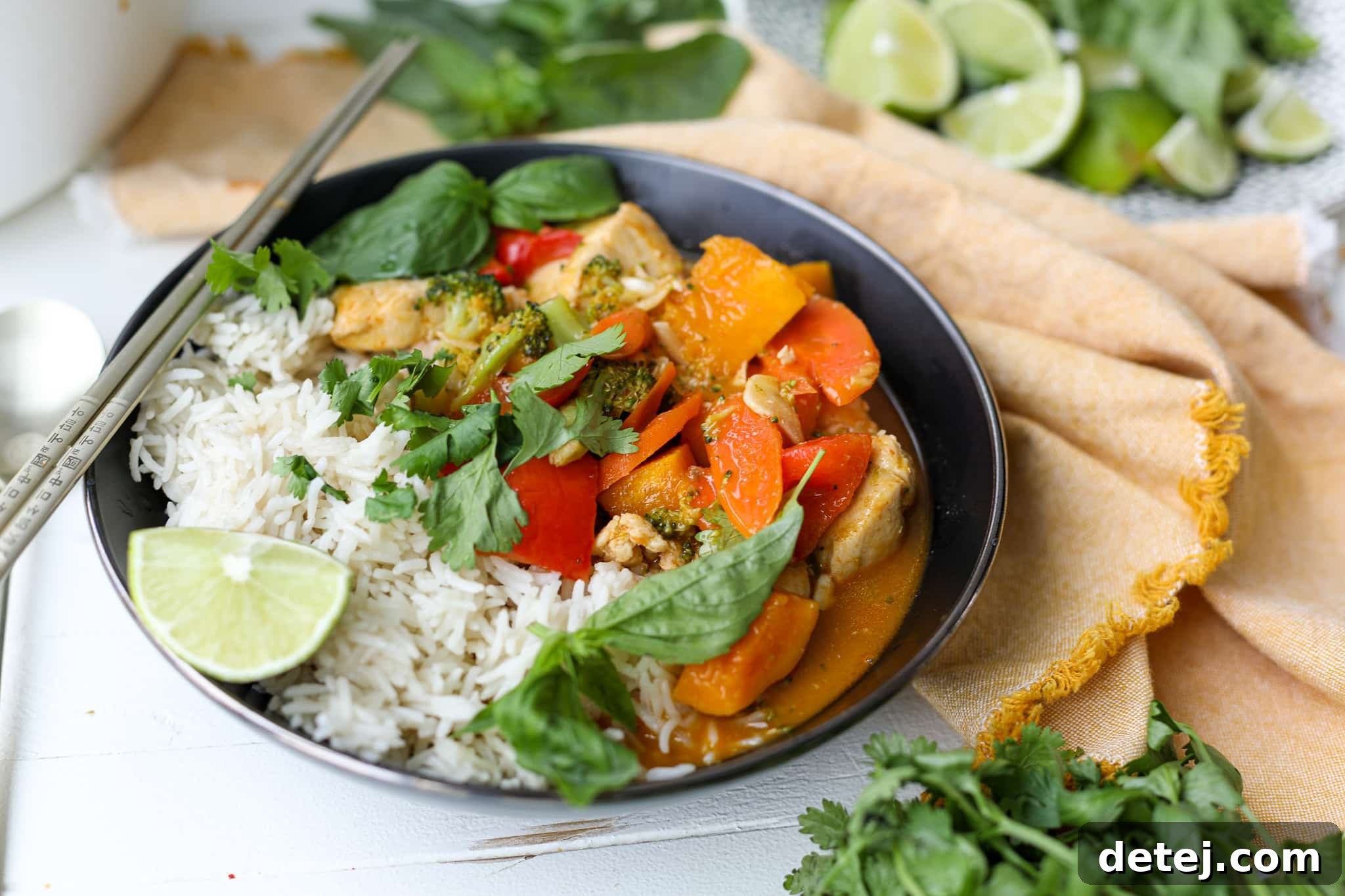
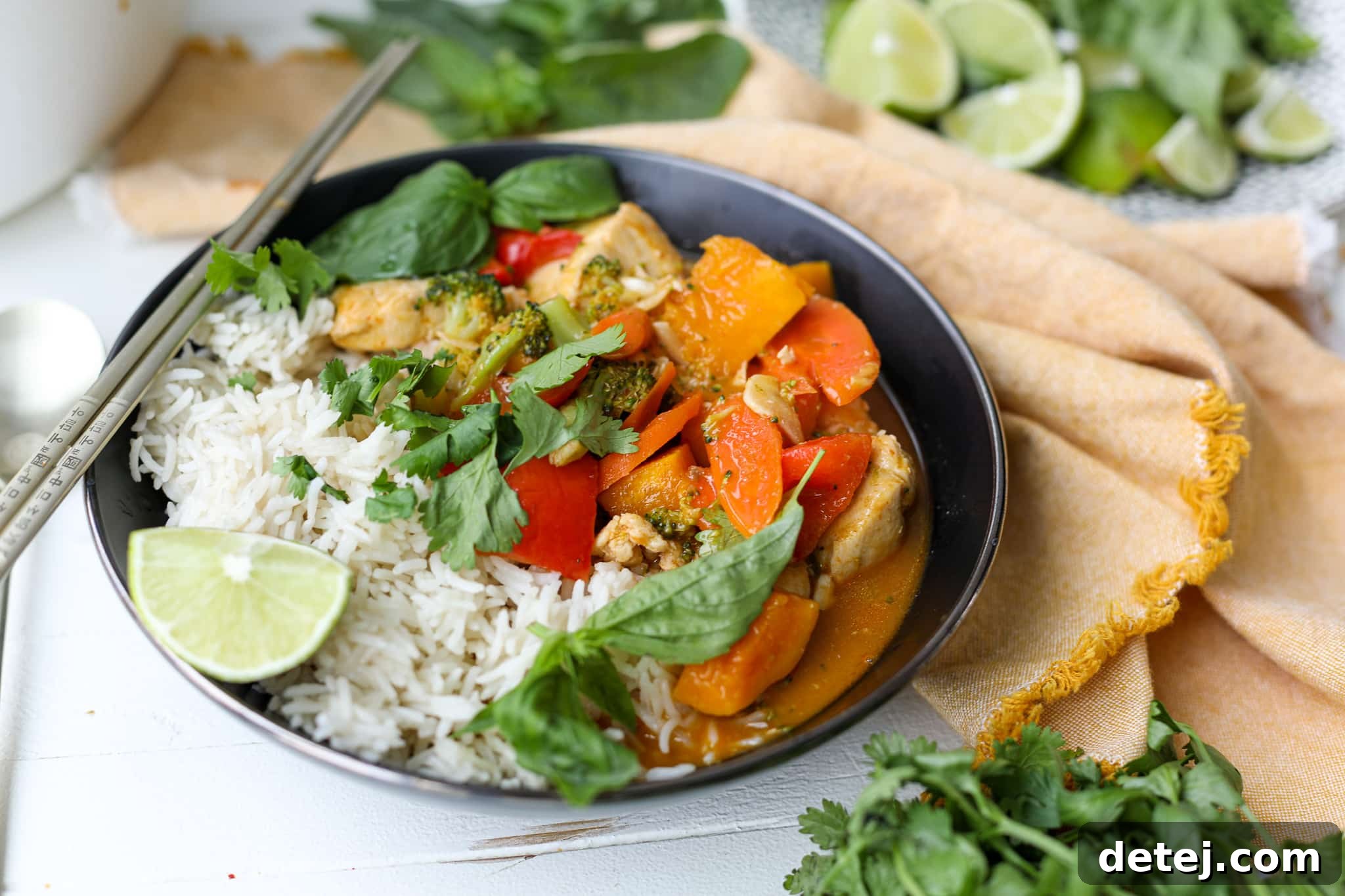
Welcome to a culinary journey that promises warmth, flavor, and nourishment: **Thai Red Curry Chicken and Vegetables**. This vibrant and aromatic dish is more than just a meal; it’s a comforting embrace on a chilly evening, a celebration of rich Thai spices, and a perfect blend of juicy, tender chicken with an abundance of wholesome, healthy vegetables, all bathed in the most exquisitely balanced red curry broth. Prepare to transform your kitchen into a fragrant Thai haven and impress your entire family with this easy-to-make, incredibly satisfying weeknight delight.
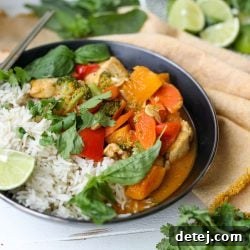
Imagine spooning a generous helping of this delicious curry over a bed of fluffy, steamed rice. The experience is elevated further with fresh garnishes – a sprinkle of bright, freshly chopped cilantro and basil, and a squeeze of tangy lime wedges to awaken every taste bud. This recipe isn’t just about feeding your body; it’s about creating a cozy, memorable dining experience that you’ll want to revisit again and again.
Why You’ll Love This Recipe
There are countless reasons why this Thai Red Curry Chicken and Vegetables recipe deserves a permanent spot in your weekly meal rotation. It’s not just a dish; it’s an experience designed to delight your senses and nourish your body. Here’s why you’ll fall in love with it:
Bursting with Flavor and Nutrition: This chicken curry is a powerhouse of taste and health. Every spoonful delivers a complex symphony of spicy, sweet, savory, and tangy notes, characteristic of authentic Thai cuisine. Beyond its incredible flavor, it’s packed with protein from the tender chicken and a rich array of vitamins and minerals from a diverse selection of vegetables. It’s the ideal dinner when you crave a warm, satisfying meal that leaves you feeling energized and revitalized, not heavy or sluggish.
Effortlessly Customizable: One of the greatest joys of this recipe is its incredible flexibility. Whether you have specific dietary preferences or just want to experiment with different textures and tastes, this curry adapts beautifully. Feel free to swap or omit any of the vegetables to suit your liking – perhaps add mushrooms, snow peas, or bamboo shoots. For those looking for a different protein, succulent shrimp or firm tofu make excellent substitutes for chicken, each adding its unique dimension to the dish. This adaptability ensures that every time you make it, it can be a new culinary adventure tailored precisely to your preferences.
Mastering the Ingredients
Creating an outstanding Thai Red Curry starts with understanding and appreciating each ingredient. Here’s a detailed look at the core components that bring this dish to life:
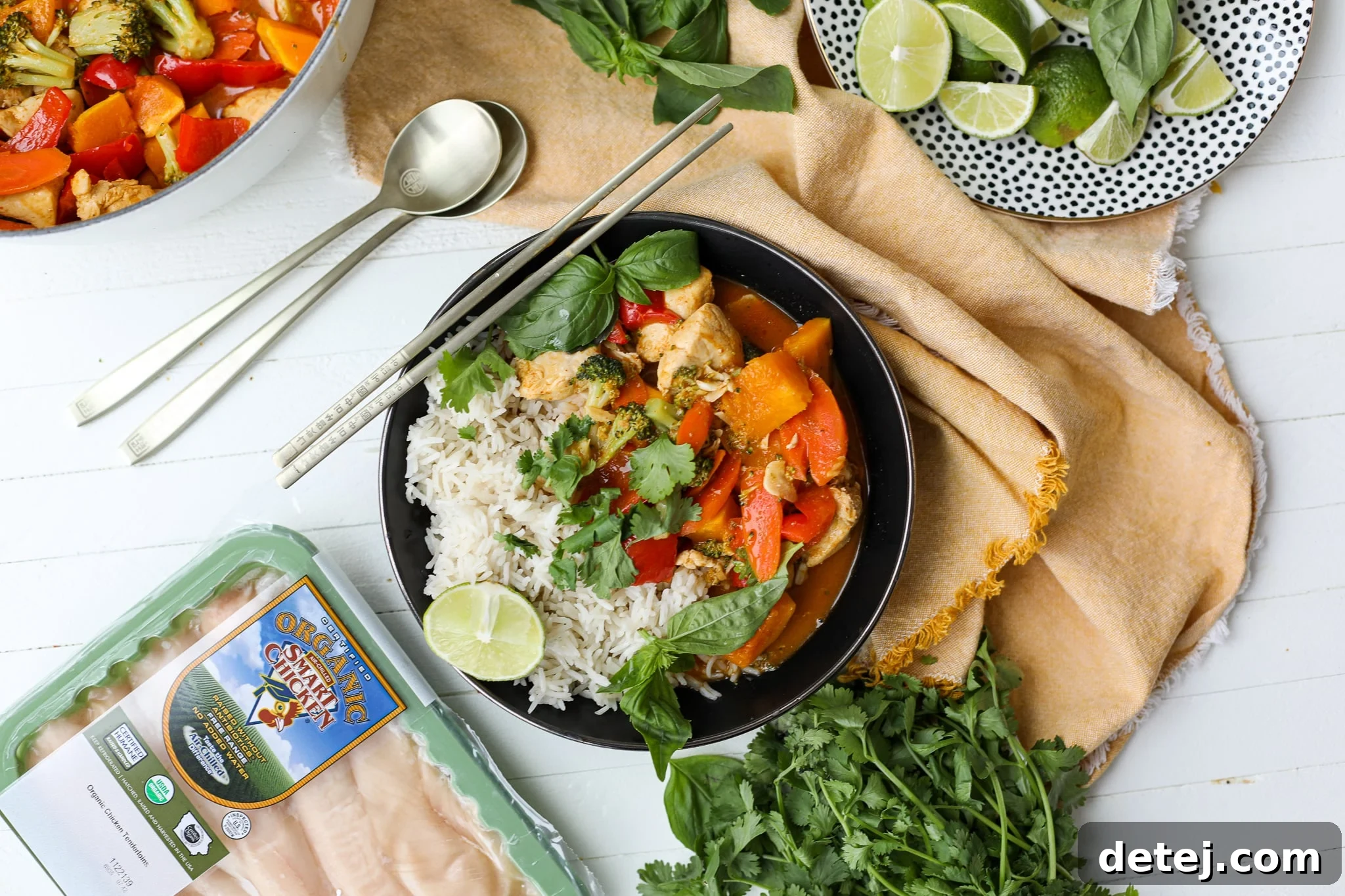
Premium Chicken: The star protein of our curry is chicken. For the best texture and flavor, we recommend using high-quality chicken tenderloin, such as Smart Chicken’s tenderloins. Its inherent tenderness ensures a delightful melt-in-your-mouth experience. Be sure to cube the chicken into bite-sized pieces so it cooks evenly and integrates perfectly into the curry, making every mouthful balanced and enjoyable.
Neutral Cooking Oil: To sauté your chicken and aromatics, a neutral oil is paramount. Avocado oil or vegetable oil are excellent choices. Their mild flavor ensures that the rich, authentic Thai spices are the stars of the dish, without any competing notes from the oil itself. Unlike olive oil, which can impart its distinct flavor, a neutral oil allows the delicate balance of the curry to shine through.
Simple Seasoning: A touch of kosher salt and freshly cracked black pepper is all you need to enhance the natural flavors of the chicken and vegetables. Seasoning to taste is key, allowing you to adjust the base savory notes before the complex curry paste takes over.
Aromatic Duo – Garlic and Ginger: These two pillars of Asian cuisine form the aromatic foundation of our curry. Fresh ginger should be peeled and finely minced to release its warm, pungent, and slightly sweet notes. Similarly, garlic cloves should be peeled and either very thinly sliced or minced to infuse the dish with their deep, earthy aroma. The fragrance of these aromatics gently sautéing in oil is the first hint of the deliciousness to come.
Essential Components Continued
Building upon our foundational ingredients, let’s explore the key elements that give this Thai Red Curry its distinctive character and depth:
Authentic Red Curry Paste: This is the heart and soul of the dish. For a robust and authentic flavor, you’ll need 2-3 tablespoons of a quality red curry paste. The amount can be adjusted based on your personal preference for spice and curry intensity – start with two tablespoons and add more if you desire a bolder flavor. A good red curry paste is a harmonious blend of red chilies, galangal, lemongrass, kaffir lime zest, and other spices, providing the iconic taste of Thai red curry.
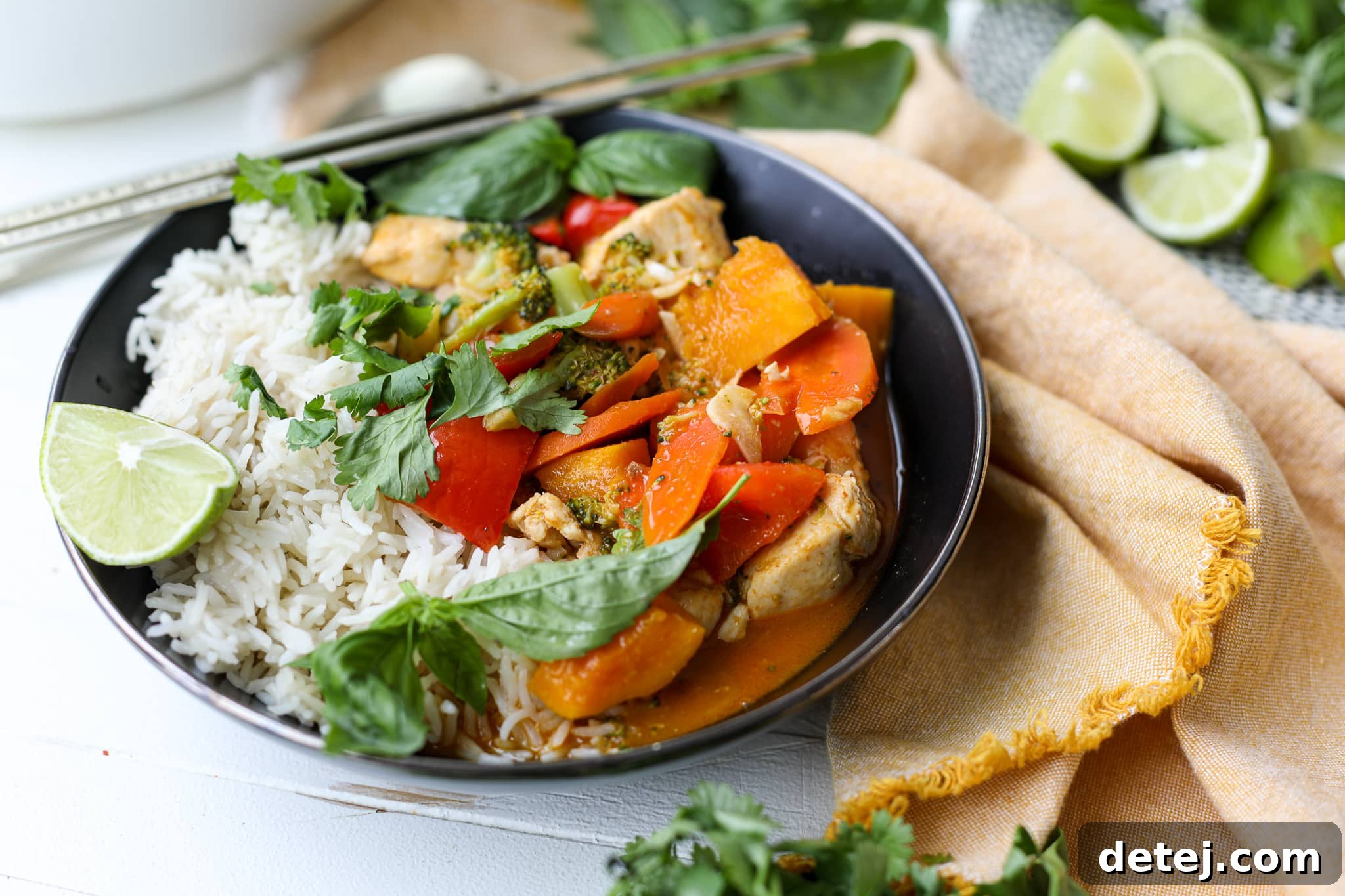
Colorful and Healthy Vegetables: This recipe is a fantastic way to incorporate a variety of vibrant vegetables. We recommend diced red bell pepper for a touch of sweetness and color, carrots sliced diagonally for an appealing presentation and subtle sweetness, softened and cubed butternut squash for creamy texture and earthy notes, and softened broccoli florets for a healthy green crunch. The trick is to cut all vegetables to roughly the same bite-sized dimensions as the chicken. This ensures even cooking and a beautifully balanced dish where every ingredient feels integrated and harmonious.
Rich Broth Base: To deglaze the pan and build a flavorful broth, we use chicken bone broth. While regular chicken stock or broth will also work, chicken bone broth adds an undeniable depth of flavor and a rich mouthfeel that truly elevates the curry. Its savory complexity forms the perfect canvas for the curry paste and coconut milk.
Creamy Coconut Milk: The luscious, creamy texture of Thai red curry comes from full-fat coconut milk. Its natural sweetness and richness perfectly balance the spiciness of the curry paste, creating a velvety smooth broth. If you prefer a lighter broth, a lite coconut milk can be used, though it will result in a less decadent consistency.
A Hint of Sweetness: A touch of light brown sugar is added to balance the savory and spicy notes. This subtle sweetness is crucial for authentic Thai flavor, rounding out the complex profile of the curry without making it overtly sugary.
Bright Lime Juice: Freshly squeezed lime juice is a must! Its zesty acidity cuts through the richness of the coconut milk and curry paste, adding a refreshing tang that brightens the entire dish and enhances all the other flavors.
Umami-Packed Fish Sauce: For an additional layer of complex umami and depth, a teaspoon of fish sauce is highly recommended. While optional, it provides a distinctive savory note that is characteristic of Thai cuisine. Remember, a little goes a long way, so one teaspoon is usually sufficient to impart its magic without overpowering the dish.
Soy Sauce Alternative: If fish sauce isn’t to your liking or you need a vegetarian alternative, two teaspoons of low sodium soy sauce can be used as a replacement. It will still provide a savory depth, though with a slightly different flavor profile.
Fresh Garnishes: To complete this culinary masterpiece, serve it alongside perfectly cooked rice and adorn with freshly chopped cilantro, fragrant basil leaves, and vibrant lime wedges. These garnishes not only add visual appeal but also contribute fresh, aromatic elements that elevate the overall tasting experience. Enjoy!
Expert Tips for a Perfect Thai Red Curry
Achieving restaurant-quality Thai Red Curry at home is easier than you think with these expert tips and tricks:
- Understanding Coconut Milk and Fish Sauce: The creamy texture of your curry largely depends on the type of coconut milk used. Full-fat canned coconut milk provides a rich, thick sauce, while lite coconut milk will result in a thinner consistency. Choose according to your preference. Regarding fish sauce, it is a powerful ingredient. Brands like Red Boat are highly regarded for their quality and depth of flavor. However, its strong umami taste means a small amount goes a long way – typically just one teaspoon is enough to impart its magic. If fish sauce isn’t to your taste, or for a vegetarian adaptation, simply omit it and substitute with two teaspoons of low sodium soy sauce to maintain a savory depth.
- Selecting the Right Cooking Oil: When searing chicken or sautéing aromatics, the choice of oil is crucial. Always opt for a neutral-flavored oil such as avocado oil or vegetable oil. These oils have a high smoke point and will not impart any unwanted flavors to your curry, allowing the authentic spices to truly shine. Olive oil, while healthy, has a distinct flavor that can clash with the delicate balance of Thai cuisine, so it’s best to avoid it for this recipe.
- Pre-softening Butternut Squash: Butternut squash adds a wonderful sweetness and creamy texture to the curry. To ensure it cooks evenly and integrates beautifully without becoming mushy, it’s best to soften it in advance. You can roast it in the oven until tender-crisp, or for a quicker method, microwave it. If microwaving, pierce the skin several times with a knife to prevent it from exploding due to steam build-up. Cover it with a damp paper towel and microwave for 3-5 minutes, or until the skin begins to soften. Once cool enough to handle, peel the skin, remove the seeds, and cube it into bite-sized pieces. Remember, you want it softened but still slightly firm, as it will continue to cook and tenderize within the simmering curry.
- Preparing Broccoli Perfectly: Similar to butternut squash, broccoli should be pre-softened before being added to the curry. This prevents it from being undercooked or overcooked and soggy. Blanching in hot water for a few minutes is an excellent method, or you can steam or microwave it according to package directions. Aim for a bright green, tender-crisp texture. Just like the squash, the broccoli will continue to cook as it simmers in the curry, so ensure it retains some firmness initially to avoid a mushy result.
- Balancing Flavors: Thai cuisine is all about balancing the five fundamental tastes: spicy, sour, sweet, salty, and umami. Don’t be afraid to taste your curry as it simmers and adjust the seasoning. Add more lime juice for tang, a pinch more sugar for sweetness, a dash more fish sauce (or soy sauce) for saltiness and umami, or an extra spoonful of curry paste for more heat. This iterative tasting process is key to personalizing your curry to perfection.
Step-by-Step: How to Make Thai Red Curry with Chicken and Vegetables
Follow these clear, concise steps to create a sumptuous Thai Red Curry that will become a staple in your kitchen:
- Sear the Chicken: Begin by heating one tablespoon of avocado oil in a large Dutch oven or a heavy-bottomed pot over medium-high heat. Once the oil shimmers, add the cubed chicken tenderloin. Season it generously with a pinch of kosher salt and freshly cracked black pepper. Sauté the chicken, stirring occasionally, until it’s cooked through and beautifully golden brown on all sides. This searing locks in the juices and develops a deeper flavor. Once cooked, remove the chicken from the pot and set it aside, reserving any accumulated juices.
- Sauté Aromatics and Curry Paste: Add the remaining avocado oil to the same pot. Reduce the heat slightly to medium. Immediately add the minced ginger and thinly sliced garlic. Sauté for a brief 20-30 seconds, stirring constantly, until their fragrant aroma fills your kitchen. Be careful not to burn the garlic. Next, stir in the red curry paste, ensuring it blends completely with the aromatics and oil. Cook for another minute, stirring, allowing the paste to release its complex flavors.
- Introduce Vegetables and Deglaze: Add the diced red bell peppers and diagonally sliced carrots to the pot. Stir them well with the curry paste mixture, ensuring they are evenly coated. Sauté for about 4-5 minutes, allowing the vegetables to soften slightly and absorb the curry flavors. Then, pour in the chicken bone broth to deglaze the pan, scraping up any delicious browned bits from the bottom of the pot. Bring the mixture to a gentle simmer.
- Combine and Build the Broth: Return the cooked chicken and any reserved juices to the pot, nestling it into the simmering vegetables and broth. Stir in the full-fat coconut milk, fresh lime juice, light brown sugar, and the optional (but highly recommended) fish sauce. If you are omitting fish sauce, now is the time to add 2 teaspoons of low sodium soy sauce instead. Stir everything thoroughly until all ingredients are well combined and the broth is smooth.
- Simmer to Perfection: Bring the curry to a soft boil, then add the pre-softened butternut squash cubes and softened broccoli florets. Season with an additional pinch of kosher salt and pepper to taste, if needed. Reduce the heat to low, cover the pot partially, and let the curry gently simmer for 10-15 minutes, or until all the vegetables are tender but not mushy, and the flavors have melded beautifully.
- Serve and Garnish: Ladle the steaming hot Thai Red Curry into individual bowls. Serve it immediately alongside fluffy, cooked rice. Crown each serving with a generous sprinkle of freshly chopped cilantro and basil leaves, and a vibrant lime wedge for an extra burst of freshness and zing. Enjoy the rich, aromatic flavors of your homemade Thai masterpiece!
Storage
This Thai Red Curry is just as delicious the next day! Store any cooled leftovers in an airtight container in the refrigerator for up to three to four days. For longer storage, you can freeze individual portions in freezer-safe containers for up to two months. To reheat, gently warm the curry in a microwave or on the stovetop over medium-low heat, stirring occasionally, until thoroughly heated through. A splash of extra chicken broth or coconut milk can help restore its original consistency if it has thickened too much in the fridge. Note that the nutritional information provided does not include the cooked rice or fresh garnishes like basil, cilantro, and lime wedges.
Frequently Asked Questions About Thai Red Curry
Absolutely! This recipe is incredibly versatile. While chicken tenderloin is fantastic, you can easily substitute it with chicken thighs for a richer flavor, or even shrimp for a lighter, quicker-cooking option. For a vegetarian or vegan version, firm tofu or tempeh would work wonderfully – just press and cube them before adding to the curry.
Yes, this curry is excellent for meal prep! The flavors often deepen and meld even more beautifully after a day in the refrigerator. Simply prepare the recipe as directed, allow it to cool completely, then store it in an airtight container. When ready to serve, gently reheat on the stovetop or in the microwave until warmed through. Serve it over freshly cooked rice or tender rice noodles for a quick and satisfying meal.
The spice level of this Thai Red Curry can be easily adjusted to your preference. The recipe calls for 2-3 tablespoons of red curry paste. If you prefer a milder curry, start with 1.5 to 2 tablespoons. For a bolder, spicier kick, you can use the full 3 tablespoons or even add a pinch of red pepper flakes during the simmering stage. Always taste and adjust as you go!
Jasmine rice is the quintessential accompaniment to Thai curries. Its fragrant aroma and soft, slightly sticky texture perfectly complement the rich and creamy broth. Basmati rice or even brown rice can also be used if preferred, offering different textures and nutritional benefits.
Definitely! This recipe is a fantastic canvas for a wide array of vegetables. Feel free to incorporate green beans, snap peas, bamboo shoots, water chestnuts, mushrooms, or baby corn. Just be mindful of their cooking times; firmer vegetables like potatoes might need to be added earlier with the carrots, while quick-cooking ones can go in with the broccoli.
Explore More Delicious Recipes
If you loved the flavors of this Thai Red Curry, you’re in for a treat! Here are a couple of other fantastic recipes from our collection that might capture your culinary interest and expand your cooking repertoire:
- Family Style Chicken Fajitas – A vibrant and sizzling meal perfect for sharing, bursting with Tex-Mex flavors.
- Chicken Satay with Spicy Peanut Sauce – Skewered chicken marinated to perfection, served with a delectable and spicy peanut dipping sauce, another taste of Southeast Asia.
Thai Red Curry Chicken and Vegetables
Pin Recipe
Leave a Review »
Equipment
- 1 large Dutch oven
Ingredients
Main Ingredients
- 1 lb. chicken tenderloin, cubed into bite-sized pieces
- 2 tablespoons avocado oil, divided
- kosher salt, to taste
- cracked black pepper, to taste
- 2 teaspoons ginger, peel off skin, mince
- 2 teaspoons garlic, 2-3 cloves, mince
- 2-3 tablespoons red curry paste, I used 2 tablespoons
- 1 medium red bell pepper, diced or sliced
- 2 small-medium carrots, peeled and sliced diagonally, ¼ inch thick
- ¾ cup chicken bone broth, or chicken broth
- 13.66 ounces coconut milk, option to use lite instead
- 1 tablespoon light brown sugar
- 1 tablespoon lime juice, fresh squeezed
- 1 teaspoon fish sauce, optional
- 2 teaspoons low sodium soy sauce, use this if you skip the fish sauce
- ½ cup butternut squash, softened in advance and diced
- ½ cup broccoli, softened in advance
Sides and Garnishes
- 1 cup rice, cook according to the package, makes about 2 cups cooked
- 2 tablespoons basil, freshly chopped
- 2 tablespoons cilantro, freshly chopped
- 1 lime, cut into wedges
Instructions
-
Heat one tablespoon avocado oil in your Dutch oven pot over medium high heat. Once hot, add the cubed chicken and season it with a pinch kosher salt and black pepper. Once cooked through, remove the chicken from the pot. Set aside.
-
Add the remaining avocado oil. Then, add the minced ginger and garlic. Saute for 20-30 seconds or until fragrant then add the red curry paste. Stir well.
-
Next, add the diced red bell peppers and thinly sliced carrots. Stir well. Sauté for 4-5 minutes and deglaze the pan with the chicken stock.
-
Next, add the chicken and its juices back into the pot. Add the coconut milk, lime juice, fish sauce and brown sugar. Stir well. If you omit the fish sauce, add 2-3 teaspoons low sodium soy sauce instead.
-
Bring to a soft boil and add the softened butternut squash, and softened broccoli. Season with kosher salt and pepper to taste. Reduce the heat and simmer until everything is heated through and tender.
-
Serve in a bowl alongside cooked rice. Top with freshly chopped cilantro, basil leaves, and lime wedges.