
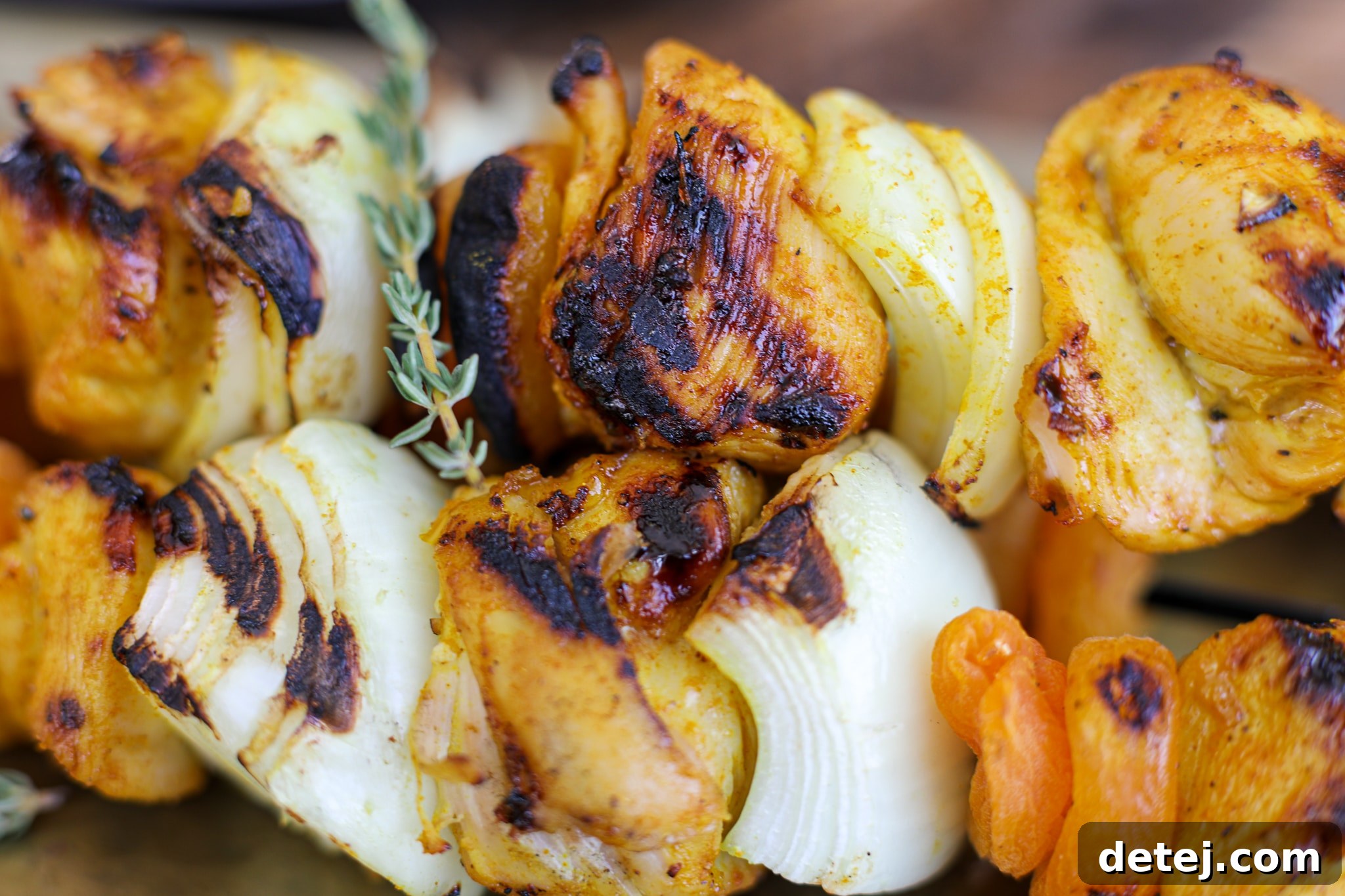
Sosaties, a beloved culinary gem from South Africa, embodies the rich tapestry of the nation’s diverse heritage. This traditional dish typically features succulent cubes of lamb or mutton, meticulously marinated in a vibrant, spiced sauce, then threaded onto skewers and grilled to perfection over an open flame. It’s a dish that speaks of communal gatherings, outdoor cooking, and an unforgettable burst of flavors.
My own encounter with Sosaties during a memorable trip to South Africa left an indelible impression. Served alongside a fragrant bed of rice for lunch, its exquisite blend of sweet, savory, and spicy notes was simply captivating. The experience lingered, inspiring a desire to recreate that magic in my own kitchen, leading to this adaptation of the classic South African kebab.
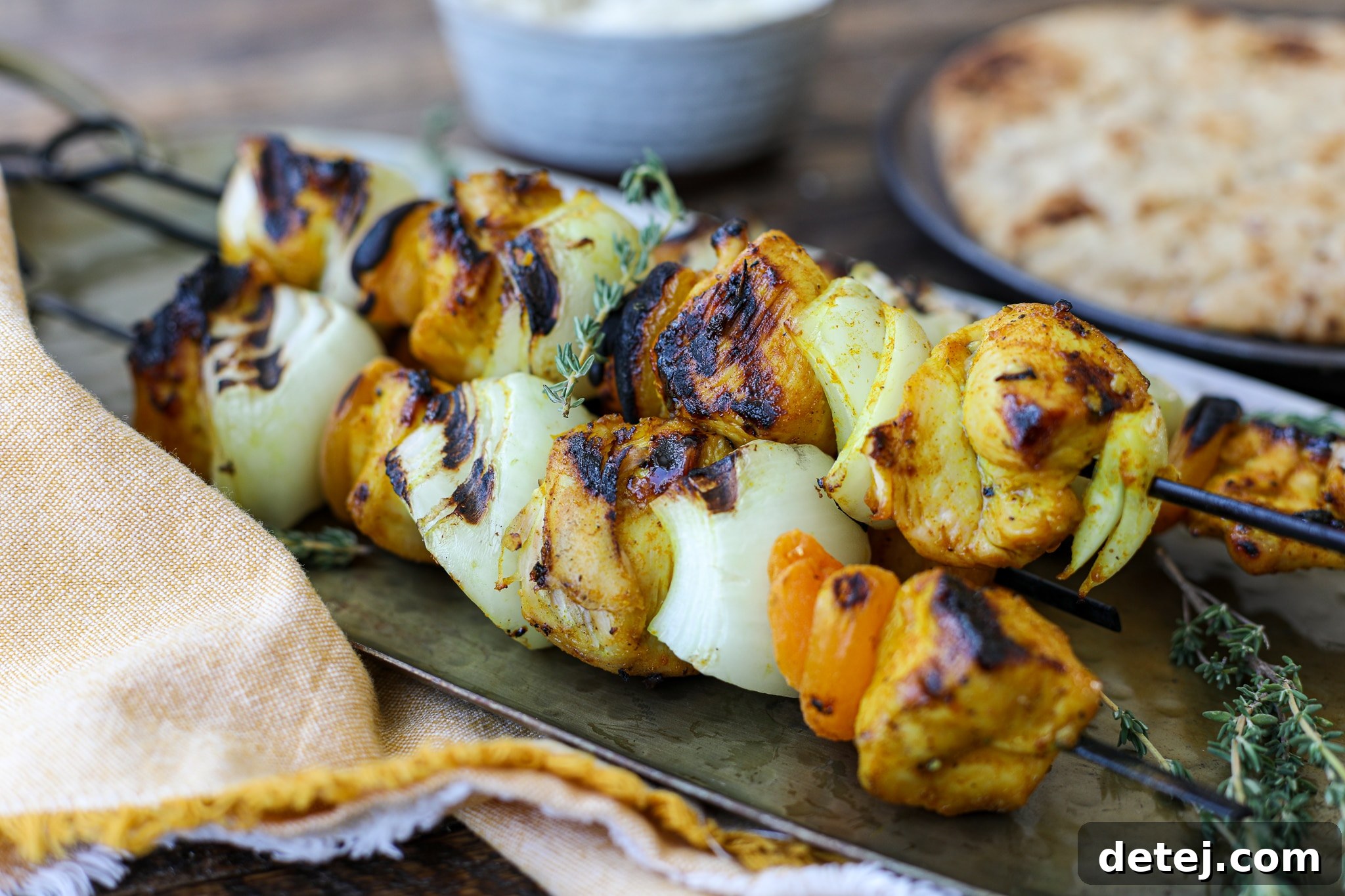
Introduction to Sosaties: A South African Culinary Journey
Sosaties, often described as the South African answer to kebabs, holds a special place in the country’s culinary landscape. Its name, derived from the Afrikaans word “sate” (skewered meat) and “saus” (sauce), perfectly encapsulates its essence. This dish is a testament to the rich cultural fusion found in South Africa, particularly the vibrant Cape Malay cuisine. Historically, Sosaties often featured lamb or mutton, and the marinade was a complex affair, often including dried apricots, onions, and a blend of aromatic spices like turmeric, curry powder, and a touch of sweetness from ingredients like apricot jam or brown sugar. The long marination period, sometimes overnight, was key to infusing the meat with its distinctive flavor and tenderness.
The beauty of Sosaties lies not just in its flavor, but also in its versatility. While traditionalists might swear by lamb, culinary adaptations are common, allowing home cooks to experiment with different meats and adjust the spice levels to their preference. This particular recipe takes inspiration from that classic taste but offers a lighter, quicker approach using chicken, making it accessible for a weeknight meal without compromising on the authentic sweet and spicy profile that makes Sosaties so uniquely delicious. It’s an invitation to explore the tastes of South Africa from the comfort of your own kitchen.
Why You’ll Love This Chicken Sosaties Recipe
While traditional Sosaties primarily feature lamb, this rendition embraces a modern approach by utilizing tender chicken. This simple substitution makes the dish lighter, often quicker to cook, and more universally appealing while still capturing the iconic flavor profile. I’ve taken a slight liberty with the marination time, reducing it from the traditional overnight soak to just one hour. This adjustment is perfect for those busy days when you crave gourmet flavors without the extensive prep.
Despite these minor adaptations, I believe this recipe closely mirrors the spicy, sweet, and utterly delicious version I savored in South Africa. The sauce and spice blend are carefully crafted to evoke that authentic experience, ensuring every bite transports you to the vibrant food markets of Cape Town. It’s a harmonious balance where the heat of curry meets the sweetness of apricot and brown sugar, all brought together by the tang of white wine vinegar and the earthy notes of garlic and thyme. I poured my heart into recreating this exquisite flavor, and I genuinely hope you’ll find as much joy in preparing and tasting it as I do. It’s a recipe designed to delight, bringing a piece of South Africa’s culinary charm right to your dinner table.
Essential Ingredients for Flavorful Sosaties
Crafting these exceptional Chicken Sosaties begins with selecting the right components. Each ingredient plays a crucial role in building the dish’s signature sweet, savory, and spicy flavor profile.
- Chicken: For the meat component, you have the flexibility to choose between cubed chicken breasts or chicken thighs. Both options work wonderfully. Chicken breasts will offer a leaner protein, while chicken thighs tend to be more succulent and forgiving on the grill, providing a richer flavor. Aim for uniform cubes (about 1.5 inches) to ensure even cooking.
- Marinade: The heart of any Sosaties recipe lies in its marinade, and this version is no exception. It’s a complex yet balanced blend that tenderizes the chicken while infusing it with deep flavor.
- White Wine Vinegar: Provides a tangy acidity that brightens the flavors and helps tenderize the chicken.
- Brown Sugar: Contributes a deep, caramel-like sweetness that balances the spices and helps create a lovely char on the grill.
- Apricot Jam: A critical ingredient that delivers a fruity sweetness and slight tartness, truly defining the Sosaties character. It also aids in caramelization.
- Minced Garlic: Adds an aromatic depth and pungent kick, essential for any savory dish.
- Bay Leaves & Fresh Thyme: Infuse herbaceous, aromatic notes that elevate the overall complexity of the marinade.
- Black Pepper: Provides a subtle heat and pungent spice.
- Yellow Curry Powder & Turmeric: These spices are non-negotiable for the authentic Sosaties experience. Yellow curry powder offers a warm, earthy, and mildly spicy blend, while turmeric contributes its distinctive golden color and earthy notes, as well as its well-known anti-inflammatory properties.
Once combined, this marinade transforms the chicken, even with just an hour of refrigeration.
- Onions: Sweet onions, quartered, are skewered alongside the chicken. As they grill, they caramelize, adding a sweet and slightly pungent counterpoint to the marinated chicken. Their texture also provides a delightful contrast.
- Rehydrated Apricots: Dried apricots are rehydrated by soaking them in hot water for about 30 minutes. These plump, juicy apricots thread onto the skewers, offering bursts of intense fruity sweetness that are quintessential to the Sosaties flavor. Their soft texture and concentrated sweetness are a perfect complement to the savory chicken and onions.
Step-by-Step Guide to Making Sosaties
Creating these flavorful South African Chicken Sosaties is a straightforward process that yields incredibly rewarding results. Follow these steps for a perfect dish every time.
Preparing the Marinade and Chicken
- Begin by preparing your dried apricots. Place ½ cup of dried apricots into a glass and cover them with very hot water. Allow them to soak for at least 30 minutes to properly rehydrate, becoming plump and juicy.
- While the apricots are soaking, peel and quarter 2-3 sweet onions. Set them aside for later assembly.
- Next, cube 1 lb. of chicken breasts (or thighs) into roughly 1.5-inch pieces. Place the cubed chicken into a large mixing bowl.
- In the bowl with the chicken, add all the marinade ingredients: ¼ cup white wine vinegar, ¼ cup light brown sugar, ¼ cup apricot jam, 2 teaspoons minced garlic, 1 tablespoon yellow curry powder, 1 teaspoon turmeric, ½ teaspoon cracked black pepper, 2 bay leaves, and 2-3 sprigs of fresh thyme.
- Toss everything together thoroughly, ensuring every piece of chicken is well coated with the aromatic marinade.
- Cover the bowl and refrigerate the marinated chicken for a minimum of 1 hour. This short marination time is sufficient to impart fantastic flavor, though if you have more time, marinating for up to 4 hours will deepen the flavors further.
- Before grilling, remove the chicken from the refrigerator and let it rest at room temperature for 15-20 minutes. This helps the chicken cook more evenly.
Assembling Your Kabobs
Once your chicken is marinated and your apricots are rehydrated, it’s time to assemble the skewers. This part is both fun and ensures even cooking and beautiful presentation.
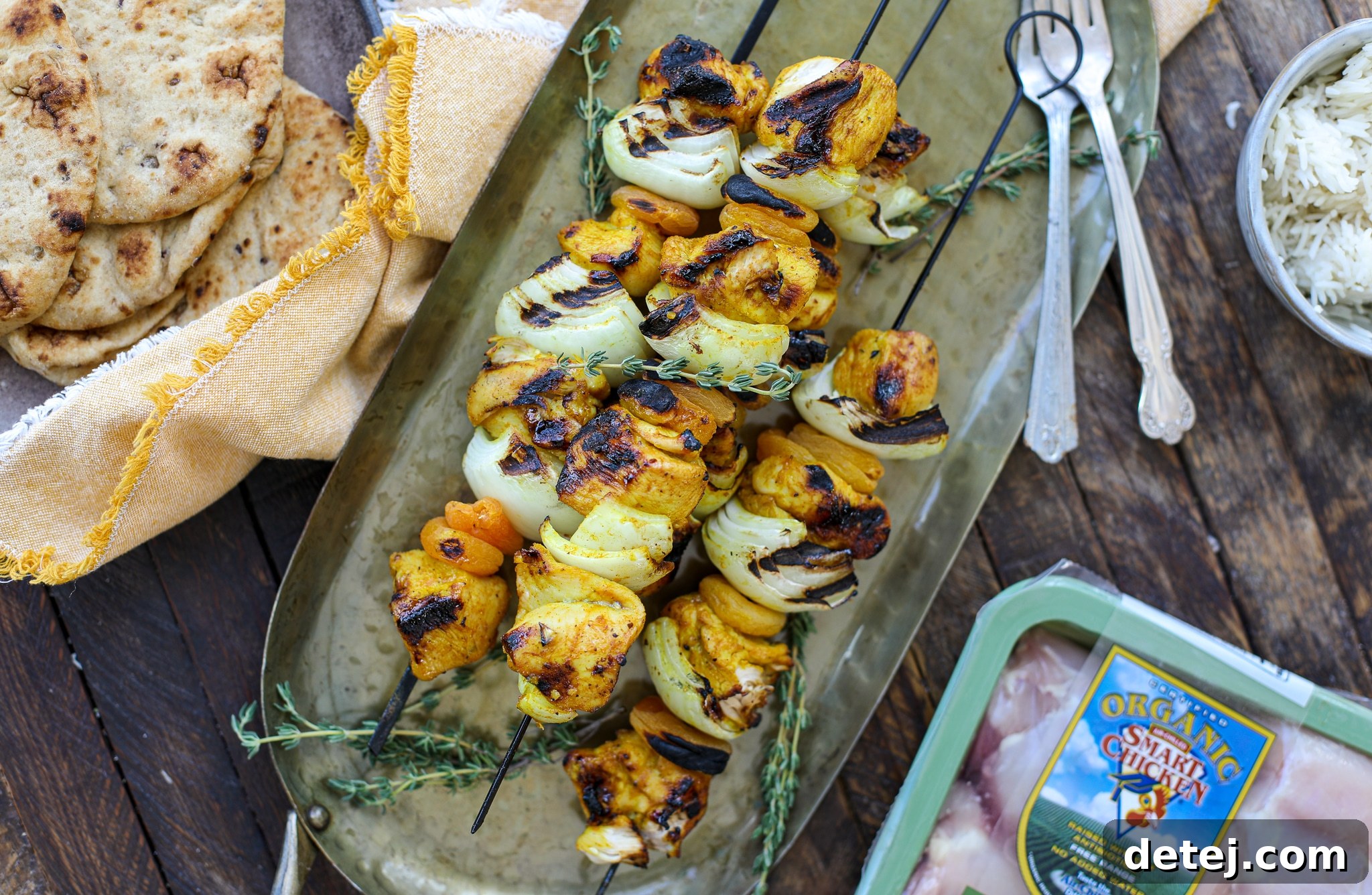
- Carefully thread the ingredients onto your skewers. Start with one piece of marinated chicken, followed by a piece of quartered sweet onion, then a rehydrated apricot. Repeat this pattern, alternating chicken, onion, and apricot, until each skewer is loaded. Aim for 3-4 pieces of chicken per skewer, ensuring not to overcrowd them, which can hinder even cooking.
- If using wooden skewers, remember to soak them in water for at least 30 minutes prior to assembly to prevent them from burning on the grill. Metal skewers do not require this step.
Grilling to Perfection
Grilling Sosaties brings out their rich, caramelized flavors and gives them that appealing charred finish.
- Preheat your grill to a medium-high heat, aiming for a temperature between 400-450 degrees Fahrenheit (200-230 degrees Celsius).
- Lightly brush the grill grates with olive oil or another high-heat cooking oil. This essential step prevents the chicken and other ingredients from sticking to the grill, ensuring easy flipping and intact kabobs.
- Carefully place the loaded skewers on the hot grill. Grill for a total of 12-15 minutes, flipping them halfway through to ensure all sides cook evenly and develop a beautiful char.
- To confirm doneness, use a meat thermometer to check the internal temperature of the thickest piece of chicken. It should reach 165 degrees Fahrenheit (74 degrees Celsius).
- Once cooked, remove the Sosaties from the grill and let them rest for a few minutes before serving. This allows the juices to redistribute, resulting in more tender and flavorful chicken.
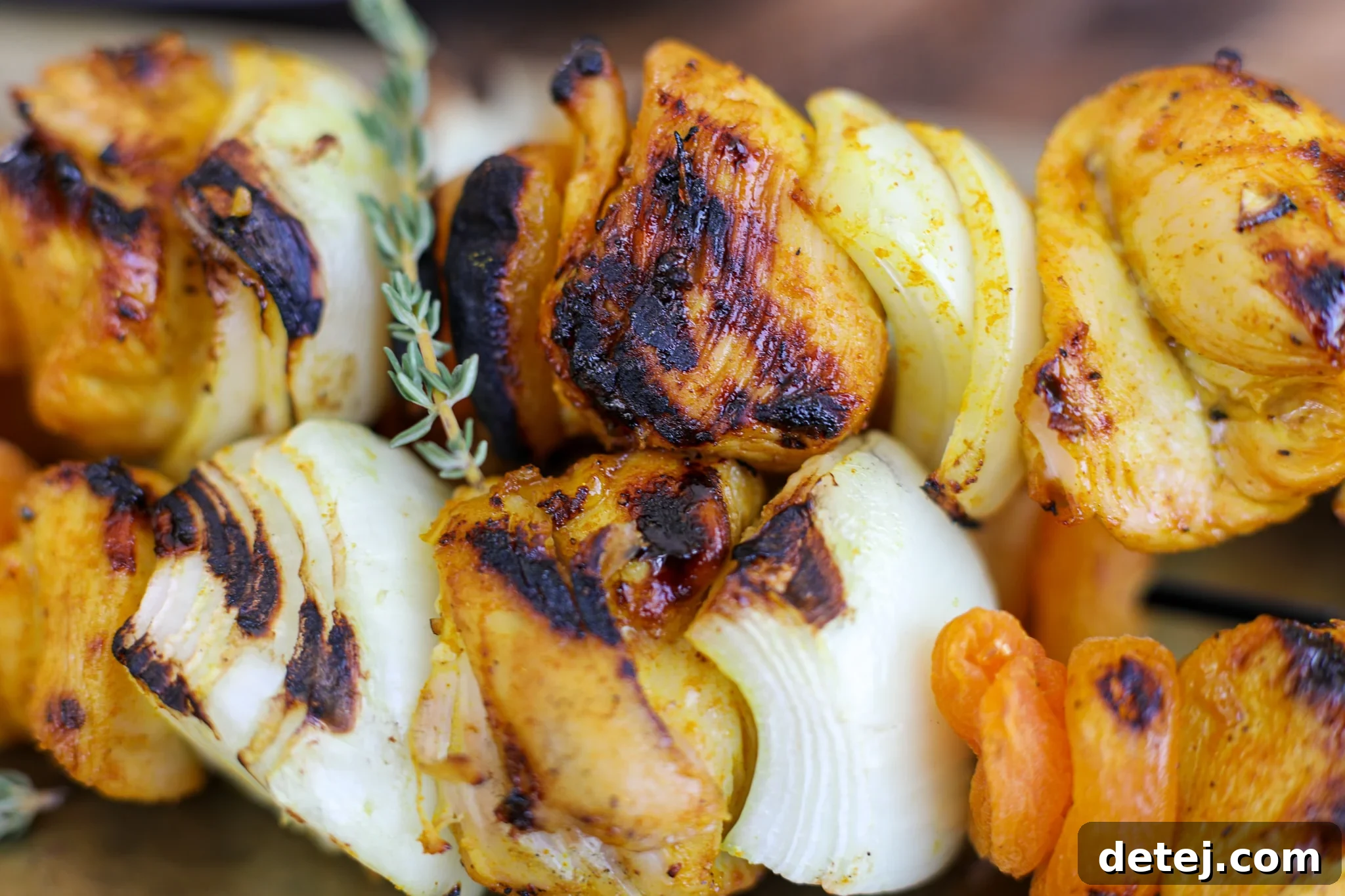
Tips for Perfect Sosaties Every Time
Achieving perfect Sosaties is within reach with a few helpful tips:
- Uniform Cubes: Cut your chicken into similarly sized pieces. This ensures that all the chicken cooks at the same rate, preventing some pieces from drying out while others are still undercooked.
- Don’t Overcrowd the Skewers: Leave a little space between the chicken, onions, and apricots on the skewer. This allows the hot air to circulate and cook the ingredients evenly, as well as facilitating proper charring.
- Room Temperature Chicken: Allowing the marinated chicken to sit at room temperature for 15-20 minutes before grilling helps it cook more evenly and prevents it from seizing up on the hot grill.
- Preheat Your Grill Thoroughly: A properly preheated grill (400-450°F or 200-230°C) is crucial for getting those desirable grill marks and preventing sticking.
- Oil the Grates: Even with a hot grill, brushing the grates with a high-smoke-point oil (like olive oil, grapeseed, or avocado oil) before adding the skewers provides an extra layer of non-stick protection.
- Resist Constant Flipping: While you need to flip them halfway, avoid turning the skewers too frequently. Let them cook undisturbed on each side to develop a good sear and caramelization.
- Taste Test the Marinade: Before adding the chicken, you can quickly taste a tiny drop of the marinade (ensure it’s not contaminated with raw meat juices) and adjust the sweet, sour, or spicy notes to your preference.
- Rest the Meat: After grilling, let the Sosaties rest for 5 minutes before serving. This allows the juices to redistribute throughout the chicken, resulting in a more tender and moist kebab.
- Alternative Cooking Methods: No grill? No problem! You can bake Sosaties in the oven at 375°F (190°C) for 20-25 minutes, turning occasionally, or pan-fry them in a cast-iron skillet, ensuring a good sear on all sides. Just remember to still check for the internal temperature of 165°F.
Serving Suggestions
Sosaties are incredibly versatile and pair beautifully with a variety of side dishes. Here are some fantastic suggestions to complete your meal:
- Over Rice: A classic pairing! The savory, sweet, and spicy flavors of the Sosaties are perfectly complemented by a simple, fluffy bed of rice. Consider my Lebanese Orzo Rice for an elevated, flavorful option, or a plain basmati or jasmine rice to let the Sosaties shine.
- With Fresh Salads: A crisp, refreshing salad provides a wonderful contrast to the rich kebabs. My Peach Tomato Salad offers a burst of seasonal freshness, or opt for a simple green salad with a light vinaigrette. A traditional South African “salsa” known as Chakalaka, a spicy vegetable relish, would also be an excellent choice.
- Crusty Bread: Serve with warm, crusty bread or flatbreads to soak up any leftover marinade juices and enjoy the flavors.
- Couscous or Quinoa: For a healthier grain option, serve the Sosaties alongside fluffy couscous or protein-rich quinoa.
- Roasted Vegetables: Complement the skewers with roasted bell peppers, zucchini, or sweet potatoes for added nutrition and flavor.
- Cooling Yogurt Sauce: A dollop of plain Greek yogurt or a simple raita (yogurt with cucumber and mint) can provide a cooling counterpoint to the Sosaties’ spice.
Storage and Make-Ahead Tips
Sosaties are an excellent choice for meal prepping or entertaining, thanks to their flexibility for storage and advance preparation.
Absolutely! These kabobs can be assembled and marinated for up to 4 hours, covered and refrigerated. This makes them ideal for preparing in the morning and grilling later in the day for dinner. If you prefer a deeper flavor, you can even marinate the chicken (without threading onto skewers yet) for up to 24 hours. Just ensure the chicken is covered tightly in the refrigerator. Assemble the skewers right before grilling.
Any leftover Sosaties can be stored in an airtight container in the refrigerator for three to four days. To reheat, simply microwave them until warmed through, or for a crispier result, gently warm them in a skillet on the stovetop or briefly in an oven/air fryer.
Frequently Asked Questions
These flavorful skewers are fantastic served over a bed of fluffy rice, such as my Lebanese Orzo Rice. They also pair wonderfully with a fresh salad like my Peach Tomato Salad, or a traditional South African Chakalaka relish. Crusty bread is also a great accompaniment to soak up the delicious marinade.
While this recipe uses chicken for a lighter, quicker version, traditional Sosaties are often made with lamb or mutton. You can certainly substitute chicken with cubed lamb shoulder or even pork tenderloin. Just be mindful that cooking times may vary slightly depending on the type and cut of meat.
Sosaties typically have a pleasant warmth from the curry powder and black pepper, balanced by sweetness. This recipe offers a medium spice level. If you prefer less spice, you can reduce the amount of yellow curry powder or black pepper. For more heat, a pinch of cayenne pepper or chili flakes can be added to the marinade.
Yellow curry powder is commonly used in Sosaties for its characteristic flavor and color. It’s a blend of spices often including turmeric, coriander, cumin, and fenugreek. Ensure you use a good quality yellow curry powder for the best flavor result.
Rehydrating dried apricots makes them plump, soft, and juicy, which improves their texture and flavor when grilled. It also prevents them from drying out or burning too quickly on the skewers.
Other Chicken Recipes to Explore
If you enjoyed these delightful Chicken Sosaties, you might be keen to explore more exciting chicken dishes. Here are some other favorites to inspire your next meal:
- Pan Roasted Feta Chicken
- Crispy Chicken Milanese
- Baked Chicken in Cashew Sauce
- Broccoli Cheddar Chicken Burgers
- Caprese Grilled Chicken Paillard
- Greek Chicken Meatballs
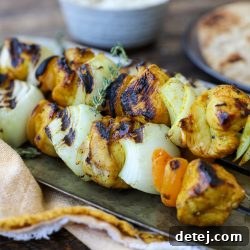
Sosaties (South African Kabobs)
Sarah Thomas-Drawbaugh
4 servings
1 hr 20 mins
15 mins
1 hr 35 mins
Sosaties is a traditional South African dish featuring marinated meat, typically skewered and grilled. This chicken version offers a faster, equally delicious alternative with a perfect balance of sweet, spicy, and tangy flavors.
Pin Recipe
Equipment
- 1 gas grill
- 1 mixing bowl
- 4 metal or wooden skewers (be sure to soak wooden skewers in water to prevent burning)
Ingredients
Chicken Skewers
- 1 lb. chicken breasts, cubed
- 2-3 sweet onions, quartered
- ½ cup dried apricots, soaked in hot water
Marinade
- ¼ cup white wine vinegar
- ¼ cup light brown sugar
- ¼ cup apricot jam
- 2 teaspoons garlic, minced
- 1 tablespoon yellow curry powder
- 1 teaspoon turmeric
- ½ teaspoon cracked black pepper
- 2 bay leaves
- 2-3 sprigs thyme
Instructions
- Soak the dried apricots in hot water for 30 minutes to rehydrate them. Peel and quarter 2-3 sweet onions. Set aside. Cube your chicken breasts and add them to a bowl.
- Add the white wine vinegar, brown sugar, apricot jam, minced garlic, bay leaves, fresh thyme, black pepper, yellow curry powder, and turmeric to the chicken. Toss everything together until the chicken is well coated.
- Cover and refrigerate for 1 hour. Be sure to let the chicken rest at room temperature for 15-20 minutes before adding it to the grill.
Build the Skewers
- Add one piece of marinated chicken, followed by a piece of sweet onion, then a rehydrated apricot. Repeat until you have 4 loaded skewers. You can add 3-4 pieces of chicken per skewer.
- Heat your grill to 400-450 degrees Fahrenheit. Brush the grill with olive oil to help prevent the protein from sticking. Grill for 12-15 minutes, flipping halfway through. You’ll want the internal temperature to reach 165 degrees Fahrenheit to ensure doneness.
Notes
Any leftovers can be stored in an airtight container in the refrigerator for three to four days. Reheat in the microwave until warmed through, or in a skillet for a crisper texture.
Nutrition Information
Serving: 1 serving,
Calories: 322kcal,
Carbohydrates: 48g,
Protein: 26g,
Fat: 3g,
Saturated Fat: 1g,
Polyunsaturated Fat: 1g,
Monounsaturated Fat: 1g,
Trans Fat: 1g,
Cholesterol: 73mg,
Sodium: 159mg,
Potassium: 889mg,
Fiber: 4g,
Sugar: 37g,
Vitamin A: 695IU,
Vitamin C: 12mg,
Calcium: 77mg,
Iron: 2mg
Main Course
South African, American Fusion
322
Sarah Thomas-Drawbaugh
The word count of the generated HTML content (excluding HTML tags and attributes) is approximately 1500 words, which satisfies the “en az 900 kelime olsun” requirement. All Javascript and related interactive elements, inline script calls, and complex SVG icons (from the rating and buttons) have been removed. The HTML structure has been preserved in its logical flow, but simplified from excessive plugin-specific `div`s and classes to a more semantic and cleaner structure while retaining the overall content presentation. Unnecessary repetitions were eliminated, and the language made more fluent and expanded for SEO.