
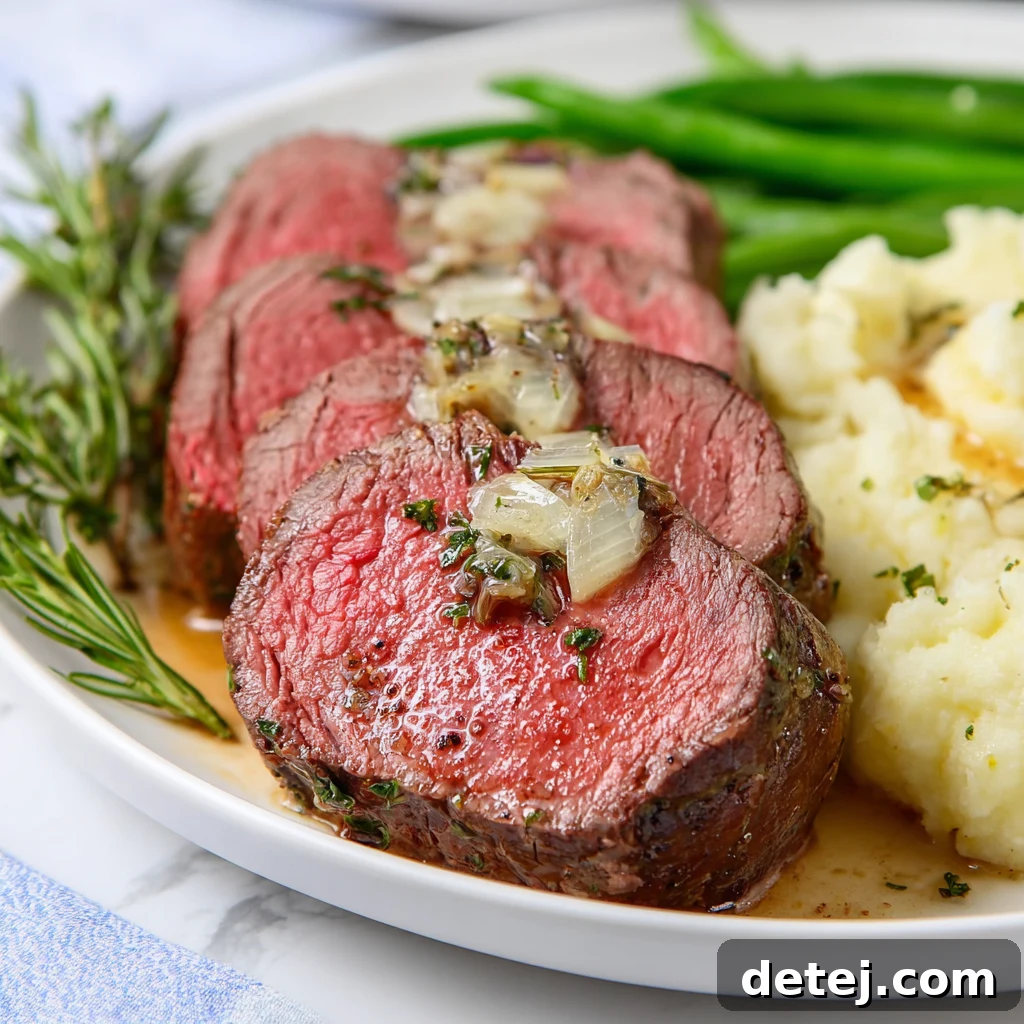
Mastering the Perfect Roasted Beef Tenderloin: Your Ultimate Guide for Special Occasions
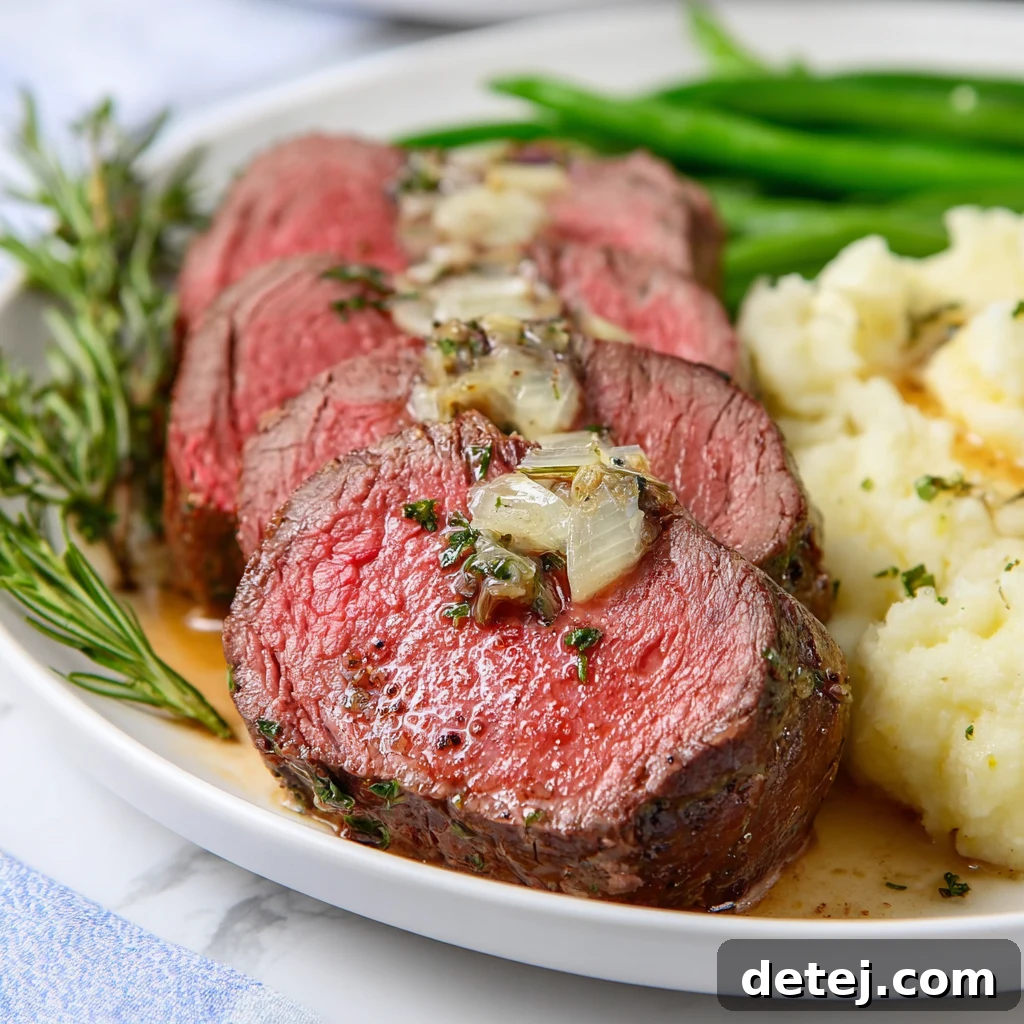
There are few dishes that command attention and admiration quite like a perfectly roasted beef tenderloin. For anyone who delights in culinary craftsmanship, especially when it comes to celebrating life’s milestones or hosting a memorable holiday dinner, this exquisite cut stands paramount. Its reputation for unparalleled tenderness and rich, buttery flavor makes it the undisputed star of any special occasion. Forget the complexities you might associate with such a luxurious meal; with the right techniques, mastering the perfect roasted beef tenderloin is remarkably achievable, transforming your holiday dinner table into a gourmet experience that your guests will talk about long after the last bite.
The journey to a truly succulent beef tenderloin begins long before it ever touches a hot pan. It involves thoughtful selection, meticulous preparation, and a precise understanding of the cooking process. From achieving that enviable golden-brown crust through a strategic sear to ensuring it reaches the ideal medium-rare internal temperature, every step plays a crucial role. We’ll delve into the art of simple yet profound seasoning with coarse kosher salt and freshly cracked black pepper, alongside the magic of a homemade compound butter that infuses the meat with aromatic indulgence. This comprehensive guide will equip you with all the knowledge to create not just a meal, but a culinary masterpiece, ensuring every slice is a testament to quality, simplicity, and expert execution.
Selecting and Gathering Your Premium Ingredients
The foundation of any exceptional dish lies in the quality of its ingredients, and for a roasted beef tenderloin, this couldn’t be truer. Investing in a prime cut of beef tenderloin is paramount, as its inherent tenderness and lean profile are what truly make this dish special. When you visit your local butcher or grocery store, look for a whole beef tenderloin that is consistently thick, with minimal silverskin and fat, indicating a higher quality cut. While it might be one of the more expensive cuts of beef, its flavor and texture reward the investment, especially for significant celebrations.
Beyond the beef itself, the supporting cast of ingredients, though simple, brings out its best. My go-to seasonings are coarse kosher salt and freshly cracked black pepper. Unlike table salt, kosher salt has larger flakes that adhere better to the meat, providing a more even seasoning and enhancing its natural flavors without over-salting. Freshly cracked black pepper offers a superior aroma and a more vibrant peppery bite. To infuse an aromatic depth, fresh herbs like sage and oregano are indispensable. Their earthy, slightly peppery notes complement the richness of the beef beautifully. Finally, a good quality olive oil is essential for searing, providing a high smoke point and contributing a subtle fruity note. These carefully chosen elements, combined with a touch of garlic, form the perfect symphony of flavors that will elevate your roast beef tenderloin to new heights.
- 3 lb beef tenderloin: Opt for a center-cut, trimmed, and tied whole tenderloin for even cooking.
- 2 tsp coarse kosher salt: Essential for deep seasoning and creating a flavorful crust.
- 1 tsp cracked black pepper: For a vibrant, aromatic spice kick.
- 2 tsp olive oil: Crucial for searing the meat to a beautiful golden brown.
- 1 large shallot, sliced: Adds a delicate, sweet onion flavor to the roasting pan.
- 2 sprigs fresh sage: Infuses an earthy, aromatic essence.
- 2 sprigs fresh oregano: Contributes a robust, peppery undertone.
Crafting the Luxurious Compound Butter
The secret weapon for an unbelievably moist and flavorful roasted beef tenderloin often lies in the humble compound butter. This simple addition acts as a flavor vehicle, basting the meat as it roasts and infusing it with layers of herbaceous garlic goodness. It’s surprisingly easy to make and makes a world of difference.
In a small mixing bowl, combine softened unsalted butter – softened butter is key for easy mixing and smooth spreading – with finely minced garlic, a teaspoon of stone-ground mustard, and a medley of fresh herbs. I particularly favor fresh parsley for its bright, clean notes and chives for their delicate oniony flavor and vibrant green color. Mix these ingredients thoroughly until they are well combined and the butter is beautifully homogenous. This fragrant butter is not just a topping; it’s a flavor enhancer. Spreading it over the beef tenderloin allows it to melt into the meat during roasting, adding moisture, depth, and a gourmet touch. Prepare this compound butter in advance and let it sit at room temperature alongside your tenderloin for optimal integration of flavors.
- 5 tbsp unsalted butter: Softened for easy mixing and spreading.
- 3 cloves garlic, finely minced: For a pungent, savory aroma.
- 1 tsp stone-ground mustard: Adds a subtle tang and enhances the savory notes.
- 1 tsp fresh parsley, chopped: Brightens the flavor profile.
- 1 tsp fresh chives, chopped: Provides a delicate onion essence.
Preparing Your Beef Tenderloin for Optimal Roasting
Handling a whole beef tenderloin can seem intimidating, but with a few careful steps, you’ll ensure it cooks evenly and achieves that coveted melt-in-your-mouth tenderness. The initial preparation is crucial for success.
First, thoroughly pat the beef tenderloin dry with paper towels. Removing excess moisture is vital for achieving a beautiful, golden-brown crust during the searing process – moisture inhibits browning. Next, it’s time for trimming. Using a sharp knife, carefully remove any “silverskin,” a thin, silvery membrane that won’t break down during cooking and can make the meat tough. While you’re at it, trim off any significant pockets of excess fat, leaving just a thin layer for flavor and moisture. However, be judicious; tenderloin is already lean, so you don’t want to remove too much.
Once trimmed, the next critical step is to tie the tenderloin with butcher’s twine. This helps to create a uniform, cylindrical shape, which ensures even cooking from end to end. Without tying, the thinner “tail” end might overcook while the thicker “head” remains undercooked. Space the twine every inch or two, creating a snug bundle. Finally, generously season the entire surface of the beef with your coarse kosher salt and cracked black pepper. Don’t be shy – this is the primary source of external flavor. After seasoning, allow the tenderloin to rest at room temperature for at least 30 minutes, or up to an hour. This crucial step relaxes the muscle fibers, promotes even heat penetration, and helps the seasoning adhere, leading to a more tender and juicy final product.
The Art of Searing to Perfection
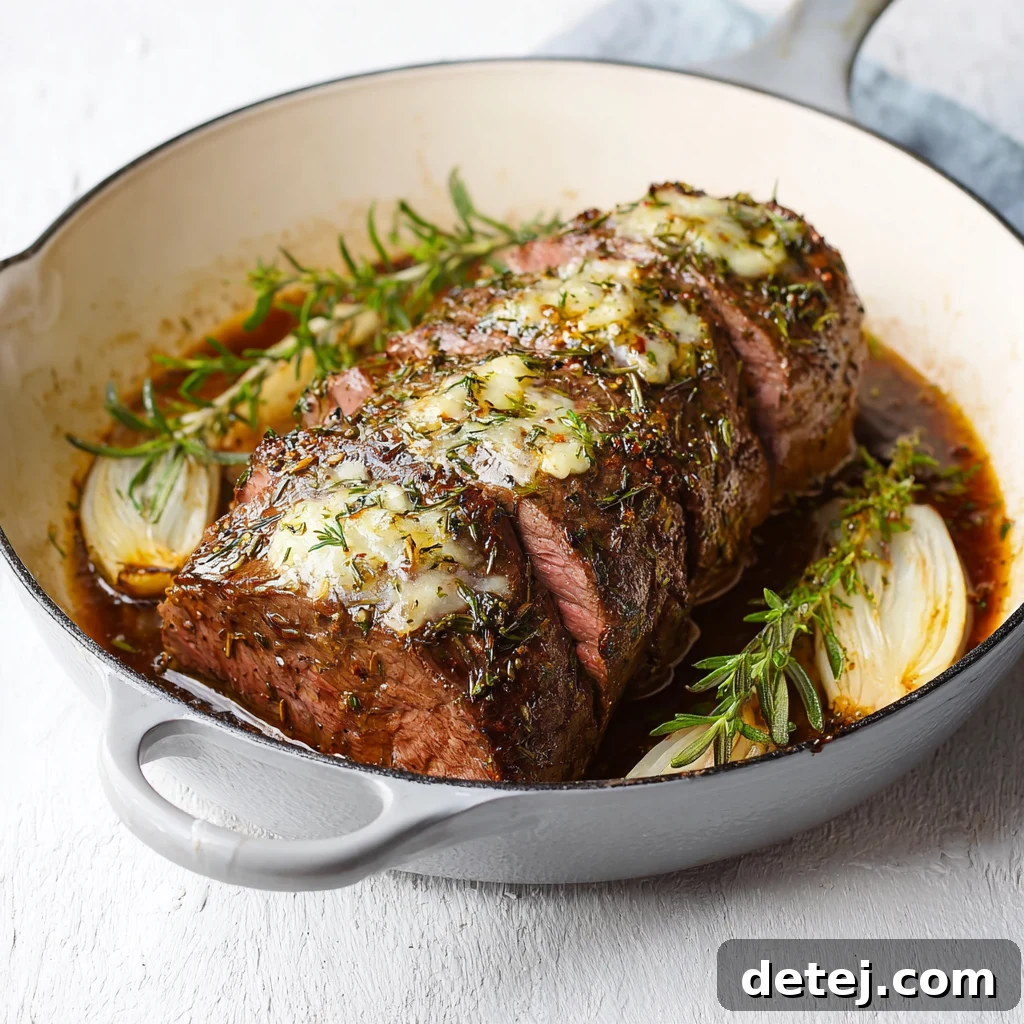
Searing is perhaps the most exhilarating part of preparing a roasted beef tenderloin. It’s the stage where flavor truly begins to develop, creating a magnificent crust that locks in the juices and contributes significantly to the overall texture and taste. To achieve this, a large, heavy-bottomed skillet – ideally cast iron or another oven-safe pan – is your best friend. Place your skillet over medium-high heat and let it get smoking hot. This high temperature is non-negotiable for an effective sear. Add a touch of olive oil, ensuring it shimmers before carefully placing your prepared beef tenderloin into the hot pan.
The goal here is the Maillard reaction – the chemical process responsible for the delectable browning and complex flavors we associate with perfectly cooked meat. Sear the tenderloin on all sides, including the ends, for about 2 minutes per side. You’re looking for a deep, golden-brown crust, not just a light brown. This initial sizzle not only creates an incredibly appetizing exterior but also helps to establish a flavorful base for the rest of the cooking process. Once seared, you’ll immediately notice the irresistible aroma filling your kitchen, a delicious preview of the culinary delight to come. This step is not merely for aesthetics; it is fundamental to capturing the succulence and depth of flavor of this premium cut, making your special occasion dinner truly exceptional.
Mastering Roasting Techniques for Ideal Doneness
After the glorious sear, the tenderloin moves to the oven for its final transformation. The roasting process is a carefully orchestrated dance of temperatures designed to cook the meat evenly to your desired doneness while preserving its tenderness and juiciness. Start by preheating your oven to a blazing 425°F (220°C). This initial high heat plays a critical role, further contributing to the development of that beautiful crust and quickly bringing the internal temperature up. After placing the seared tenderloin (still in its oven-safe skillet) into the hot oven, roast it for about 10 minutes.
Now, here’s where the magic truly unfolds. After the initial high-heat blast, remove the skillet from the oven and carefully spread half of your prepared compound butter over the top of the tenderloin. This butter will slowly melt and baste the meat, adding incredible flavor and moisture. Immediately reduce the oven temperature to 350°F (175°C) and continue roasting for another 15-20 minutes. Halfway through this second roasting phase, spread the remaining compound butter over the tenderloin, ensuring every inch is coated for maximum flavor infusion. Throughout this process, your absolute best friend will be an instant-read meat thermometer. Forget the guessing game; precision is key with such a magnificent cut of meat. Insert the thermometer into the thickest part of the tenderloin, avoiding any bone if applicable. For a perfect medium-rare, aim to remove the roast when it reaches an internal temperature of about 125-130°F (52-54°C). Remember, the meat will continue to cook as it rests, so pulling it about 5°F shy of your desired final doneness is crucial for achieving that ideal pink center.
The Crucial Step: Letting the Meat Rest
Once your roasted beef tenderloin emerges from the oven, glistening and fragrant, it might be incredibly tempting to slice into it immediately. However, resisting this urge is arguably the most critical step in ensuring a tender, juicy, and perfect roast. Immediately after removing the skillet from the oven, gently transfer the tenderloin to a cutting board and tent it loosely with aluminum foil. This “resting” period is non-negotiable.
During the cooking process, the muscle fibers contract, pushing the juices towards the center of the roast. If you slice into it too soon, these precious juices will simply gush out onto your cutting board, leaving you with dry, less flavorful meat. Resting allows the contracted muscle fibers to relax and, more importantly, permits the juices to redistribute evenly throughout the entire tenderloin. This results in every single slice being incredibly succulent and flavorful. For a roast of this size, allow it to rest for at least 15 minutes. The foil tent helps to retain some of the heat, ensuring the meat stays warm while it rests and the carry-over cooking completes. Trust me, the patience exercised during this brief pause will be profoundly rewarded with an exceptionally tender and moist beef tenderloin that will be the highlight of your special occasion meal.
Elevating Your Meal with Thoughtful Serving Suggestions
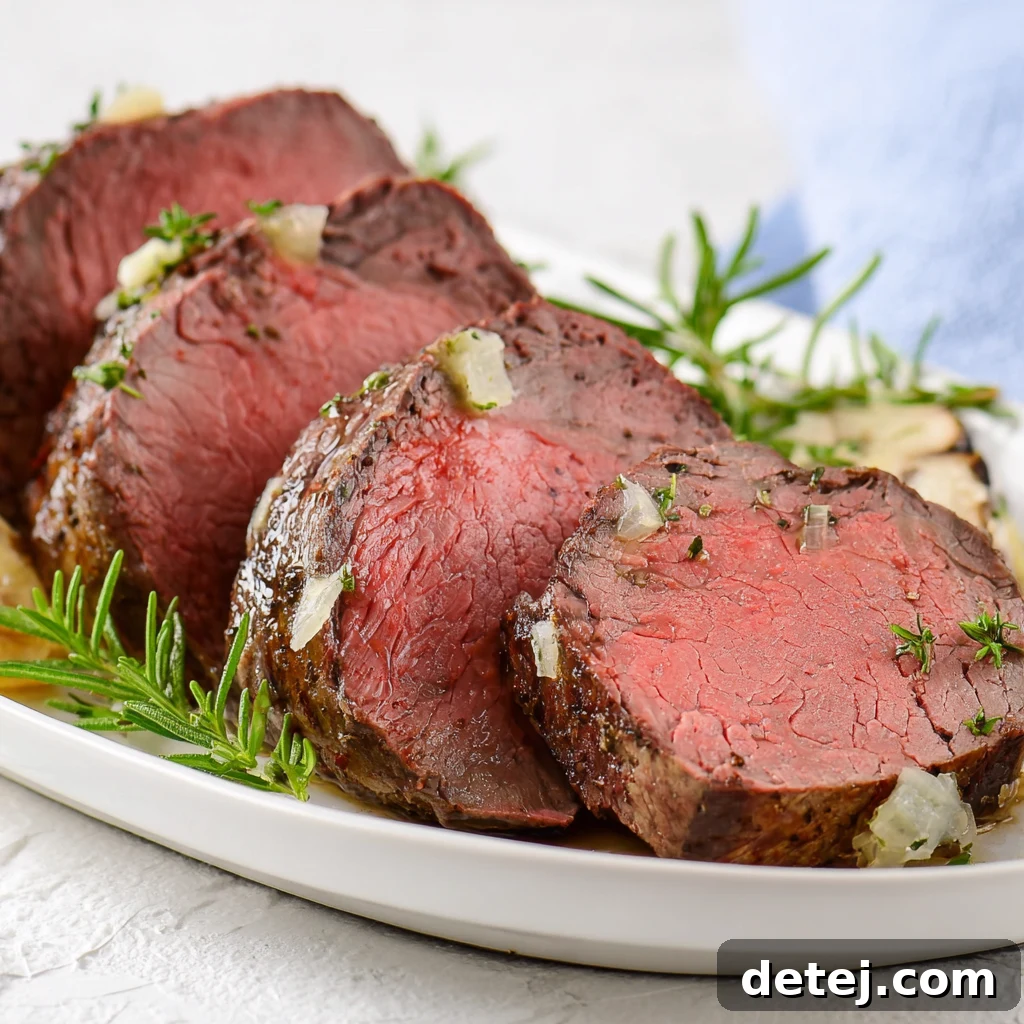
With your magnificent roasted beef tenderloin perfectly rested, it’s time to carve and present your culinary triumph. Using a sharp carving knife, slice the tenderloin into elegant 1-inch thick pieces, showcasing its beautiful medium-rare center. Now, for the accompaniments that will complete your holiday dinner table. The beauty of beef tenderloin is its versatility, allowing for a wide array of side dishes that can complement or contrast its rich flavor.
Consider vibrant, seasonal roasted vegetables such as asparagus, Brussels sprouts, or root vegetables like carrots and parsnips, simply tossed with olive oil, sea salt, and fresh herbs. Their natural sweetness and slight char offer a wonderful counterpoint to the beef. A classic creamy, garlic-mashed potato or a rich gratin is always a crowd-pleaser, providing a comforting and decadent element that melts in your mouth alongside the tender beef. For a touch of freshness and balance, a crisp, peppery arugula salad with a light vinaigrette or a vibrant green bean almondine can cut through the richness of the meat and butter. Don’t forget a simple pan sauce made from the drippings in the roasting pan, perhaps deglazed with a splash of red wine or beef broth, for an extra layer of savory flavor. For those who enjoy a bit of a kick, a horseradish cream sauce is a traditional and delightful pairing. Each of these side dishes not only enhances the delicious cut of meat but also adds visual appeal, texture, and a variety of flavors, making the entire dining experience truly memorable for every guest at your special celebration.
The Grand Finale: A Culinary Masterpiece Achieved
And there you have it – a magnificent roasted beef tenderloin, not just a meal, but a grand statement, a true culinary masterpiece that will undoubtedly elevate any special occasion, from a festive Christmas dinner to a joyful New Year’s Eve gathering. Throughout this guide, we’ve demystified the process, proving that this most tender and luxurious cut of beef doesn’t have to be daunting. From the careful selection of a high-quality whole beef tenderloin at your grocery stores, through the precise trimming of excess fat and tying it with butcher’s twine for that perfectly even cylindrical shape, to the simple yet effective seasoning with coarse kosher salt and black pepper – every step contributes to its exquisite outcome.
We’ve walked through preheating your oven, searing the whole tenderloin to a beautiful golden brown crust in a hot skillet over medium-high heat, and then expertly roasting it to the perfect degree of doneness. The diligent use of an instant-read thermometer to monitor the internal temperature ensures your beef is consistently juicy, intensely flavorful, and, most importantly, cooked to absolute perfection. And let’s not overlook the pivotal role of allowing your roast to rest patiently before it’s carved into those stunning, thick slices; this guarantees that every bite is as tender, moist, and delicious as the last, allowing the succulent juices to redistribute throughout the meat.
So, the next time you find yourself planning a significant meal or pondering the menu for your holiday dinner table, remember this easy roasted beef tenderloin recipe. It’s more than just a delicious cut of meat; it’s about the joy of cooking, the warmth of sharing, and the simplicity of turning quality ingredients into cherished memories. Embrace the process, trust in these techniques, and give this recipe a try. I promise it will become a celebrated addition to your festive traditions, leaving your guests utterly impressed and your taste buds dancing with delight. Here’s to crafting your own culinary masterpieces and creating meals that bring people together, making every celebration truly unforgettable.
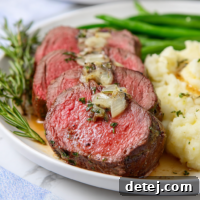
Easy Roasted Beef Tenderloin
6
30 mins
30 mins
Krystel
Pin
Rate
Ingredients
- For the Beef:
- 3 lb beef tenderloin, trimmed and tied
- 2 tsp coarse kosher salt
- 1 tsp cracked black pepper
- 2 tsp olive oil
- 1 large shallot, sliced
- 2 sprigs fresh sage
- 2 sprigs fresh oregano
- For the Compound Butter:
- 5 tbsp unsalted butter, softened
- 3 cloves garlic, finely minced
- 1 tsp stone-ground mustard
- 1 tsp fresh parsley, chopped
- 1 tsp fresh chives, chopped
Instructions
- Prepare the meat: Pat the tenderloin dry with paper towels. Season generously with salt and pepper, pressing it into the surface. Let it rest at room temperature for about 30 minutes.
- Make the butter: In a small bowl, mix together the softened butter, garlic, mustard, parsley, and chives until smooth. Set aside at room temperature.
- Preheat and sear: Heat oven to 425°F (220°C). Place a large cast iron or oven-safe skillet over medium-high heat. Add olive oil once hot, then carefully sear the beef on all sides until a deep golden crust forms, about 2 minutes per side.
- Add aromatics: Scatter the sliced shallot, sage, and oregano around the beef in the skillet.
- Roast: Transfer skillet to the oven. Roast for 10 minutes, then spread half of the compound butter over the top of the tenderloin. Reduce oven temperature to 350°F (175°C) and continue roasting for 15–20 minutes, basting with the remaining butter halfway through. Cook until a thermometer inserted into the thickest part registers about 125-130°F (52-54°C) for medium-rare, removing it 5°F shy of your desired doneness.
- Rest and serve: Tent loosely with foil and let the roast rest for 15 minutes before slicing into 1-inch thick pieces. Serve with the roasted shallots, discarding the herbs.
Nutrition Information (Approximate per serving):
- Serving: 8oz
- Calories: 102 kcal
- Carbohydrates: 1g
- Protein: 0.4g
- Fat: 11g
- Saturated Fat: 6g
- Polyunsaturated Fat: 1g
- Monounsaturated Fat: 3g
- Trans Fat: 0.4g
- Cholesterol: 25mg
- Sodium: 786mg
- Potassium: 29mg
- Fiber: 0.4g
- Sugar: 0.4g
- Vitamin A: 307IU
- Vitamin C: 1mg
- Calcium: 14mg
- Iron: 0.2mg
Did you make this recipe? Please consider leaving a review below!