
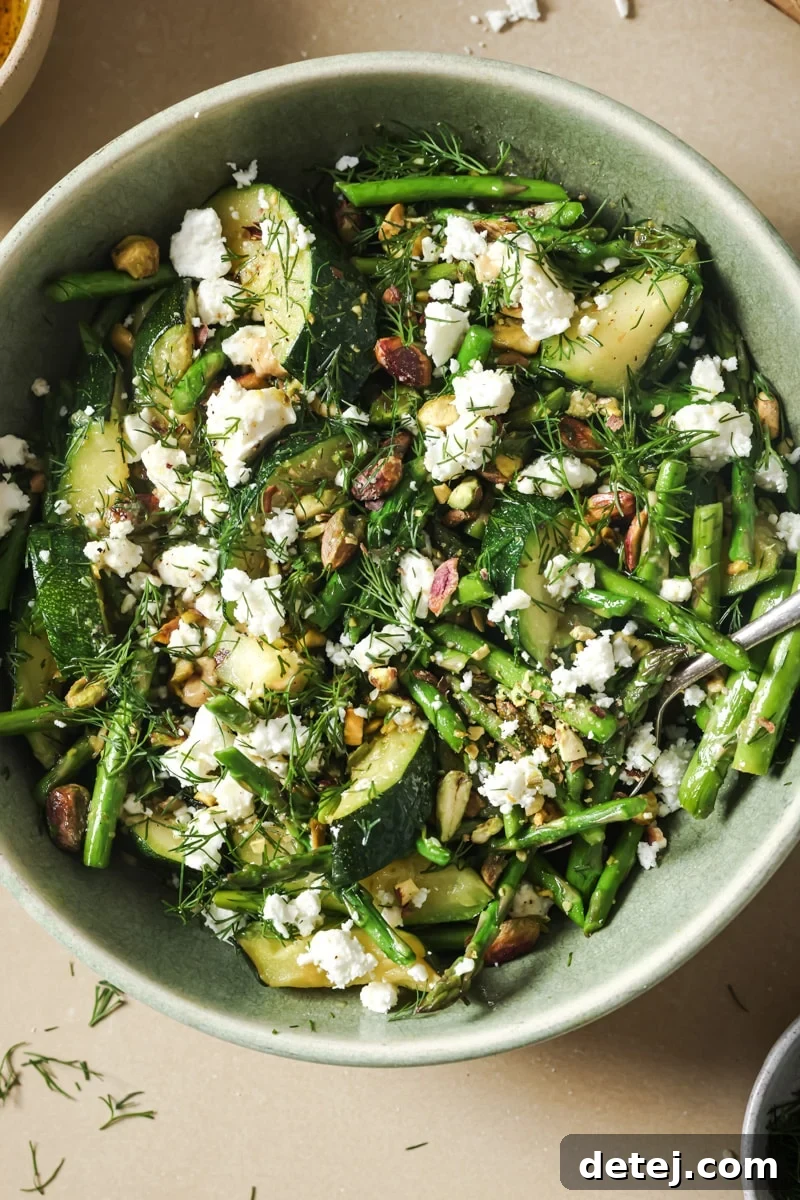
Fresh & Flavorful: Sautéed Spring Vegetable Salad with Lemon Dijon Vinaigrette
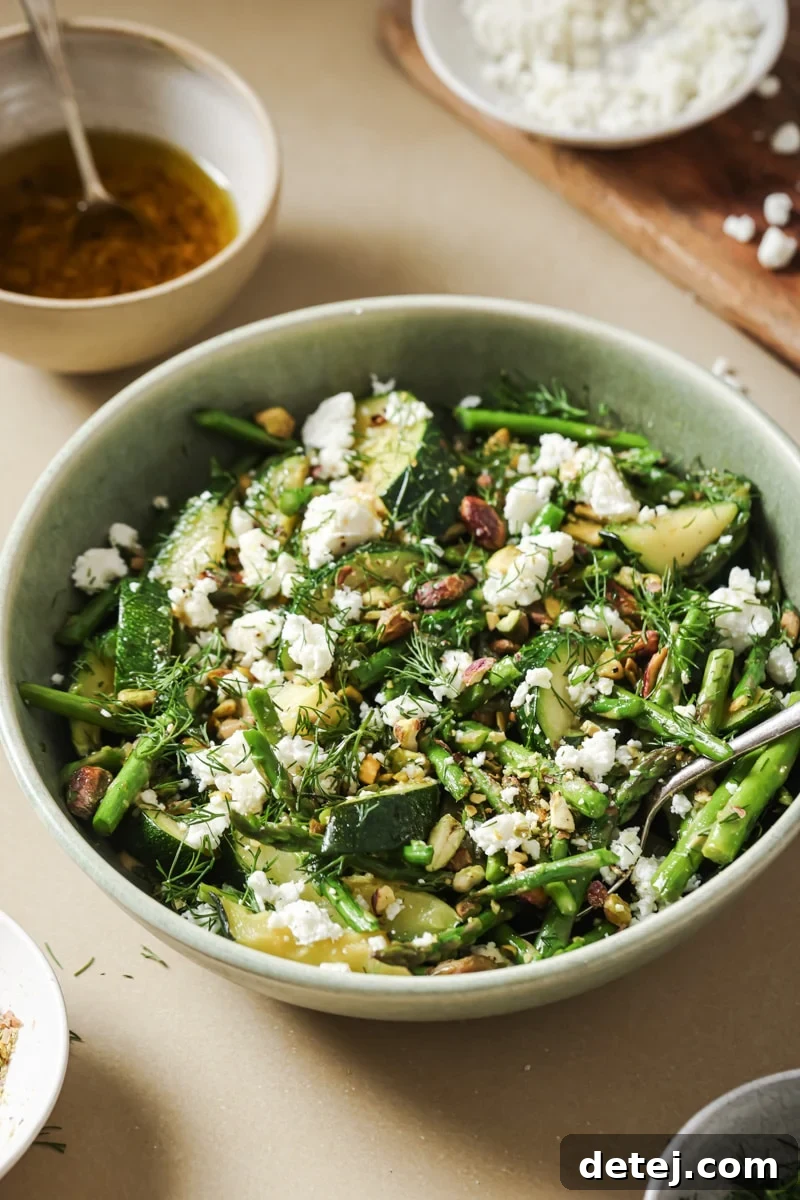
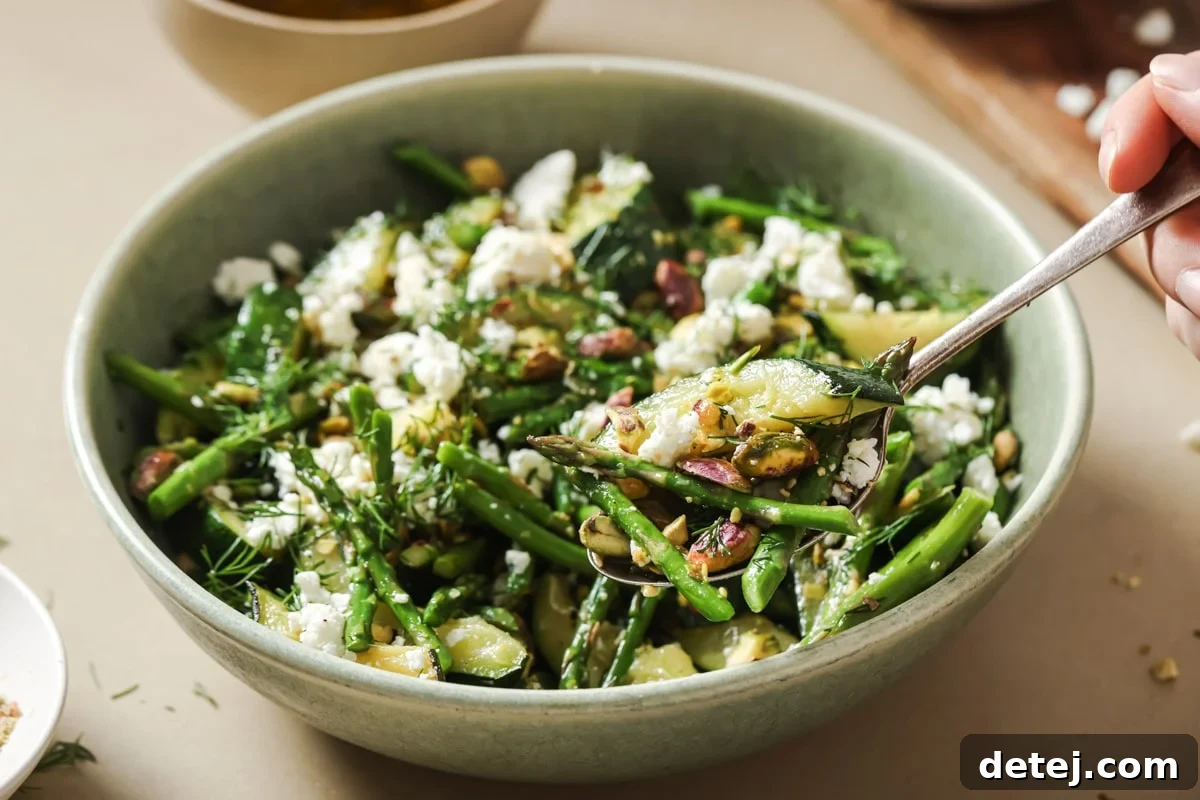
Welcome the vibrant flavors of the season with this exquisite Sautéed Spring Vegetable Salad. This warm and inviting dish is designed to be the perfect companion for your spring and summer meals, whether it’s a casual weeknight dinner or a festive outdoor gathering. It celebrates the best of seasonal produce, featuring tender zucchini and crisp asparagus lightly sautéed to perfection. Each bite is elevated by a delightful crunch from crushed pistachios, the creamy tang of crumbled feta, and the fresh aroma of hand-chopped herbs. All these wonderful elements are brought together with an irresistible lemon Dijon vinaigrette that adds a zesty, sweet, and tangy finish. Prepare to be enchanted by this simple yet sophisticated warm salad that promises to be a new favorite for health-conscious food lovers and gourmet enthusiasts alike.
This seasonal recipe offers a fun, fresh, and exceptionally flavorful twist inspired by my very popular Pan Fried Zucchini with Hot Honey and Crumbled Feta. If you enjoy bright, fresh flavors and simple cooking, this warm vegetable salad is a must-try. I’d love to hear your thoughts once you’ve given it a whirl!
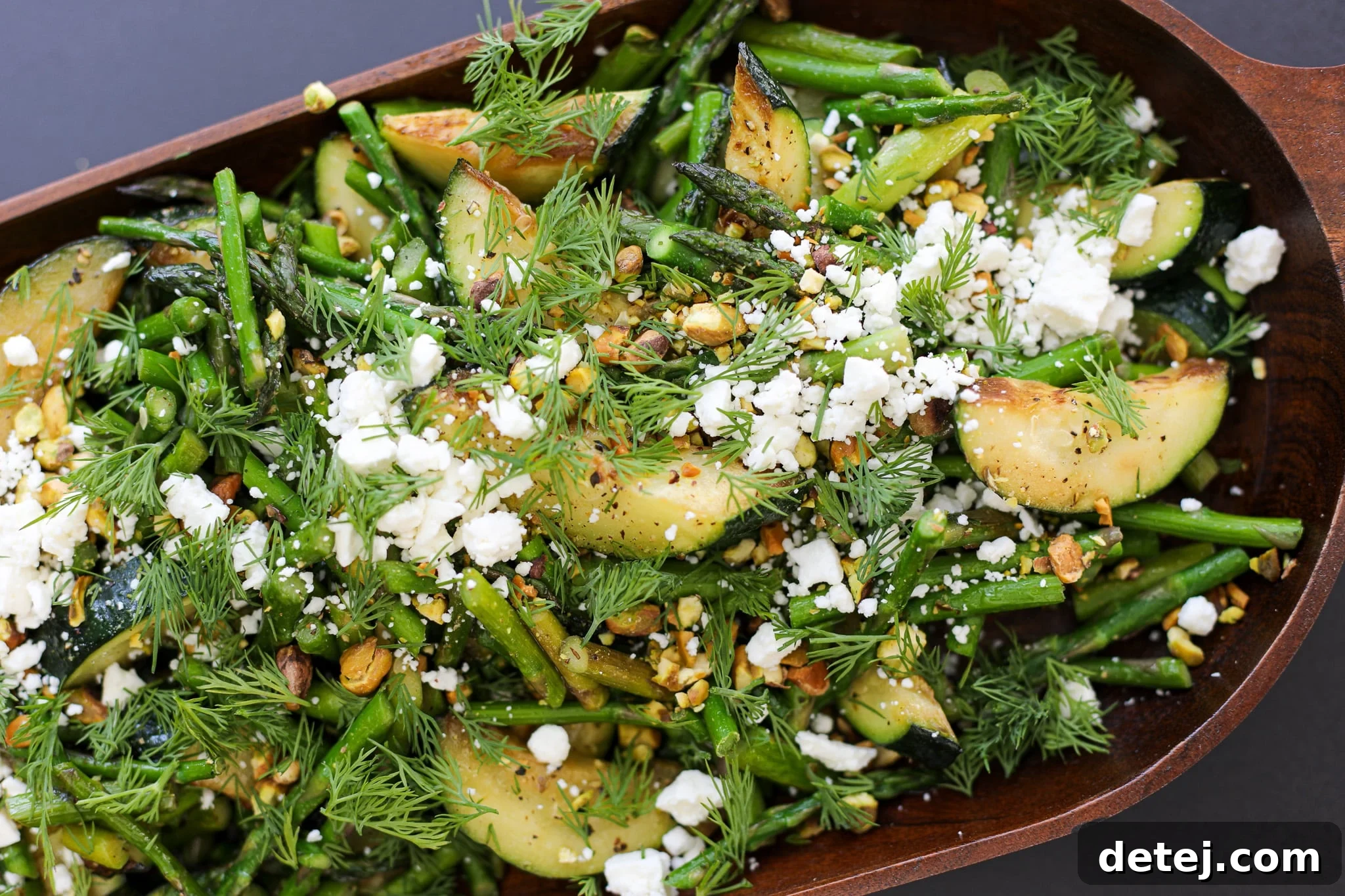
Why You’ll Love This Sautéed Spring Vegetable Salad
This Sautéed Spring Vegetable Salad isn’t just a dish; it’s an experience that brings the garden to your table. Here’s why it’s destined to become a staple in your culinary repertoire:
- Unbeatable Freshness and Flavor: At its heart, this salad celebrates the peak of spring’s bounty. By lightly sautéing the vegetables, we enhance their natural sweetness and crisp-tender texture, allowing their inherent flavors to shine. The combination of vibrant zucchini, earthy asparagus, salty feta, crunchy pistachios, and aromatic dill creates a symphony of tastes that is both bright and comforting. The lemon Dijon vinaigrette ties everything together with a zesty, tangy, and subtly sweet kick, making every mouthful utterly delicious.
- Effortlessly Easy to Make: Don’t let its gourmet presentation fool you; this recipe is incredibly straightforward. With just a handful of fresh, readily available ingredients and a few simple cooking steps, you can whip up this impressive side dish in under 30 minutes. It’s perfect for busy weeknights when you crave something wholesome and flavorful without spending hours in the kitchen, proving that exceptional taste doesn’t require complex techniques.
- Visually Stunning and Impressive: Food should be a feast for the eyes as well as the palate, and this salad delivers on both counts. The beautiful, vibrant green hues of the zucchini and asparagus, contrasted with the creamy white feta, verdant pistachios, and fresh dill, make for an incredibly attractive presentation. Serving this dish will undoubtedly impress your guests and family, showcasing your culinary flair with minimal effort. It’s the kind of dish that garners compliments and requests for the recipe!
- Healthy and Nutritious: Packed with fresh, seasonal vegetables, this salad is a powerhouse of vitamins, minerals, and fiber. It’s a fantastic way to boost your daily vegetable intake in a delicious and satisfying manner. The healthy fats from avocado oil, olive oil, and pistachios contribute to a well-balanced meal, making it a guilt-free indulgence you can enjoy regularly as part of a balanced diet.
- Remarkably Versatile: While perfect on its own as a light meal, this salad also excels as a versatile side dish. It pairs beautifully with a range of main courses, from grilled chicken and baked fish to simple steak or hearty grain bowls. Its adaptability means you can easily customize it to suit your preferences or what seasonal produce you have on hand, ensuring it never gets boring and always feels fresh.
- Seasonal Delight: This recipe truly shines when spring vegetables are at their prime, offering the freshest flavors and textures. It’s a wonderful way to embrace seasonal eating and enjoy produce when it’s most flavorful and abundant.
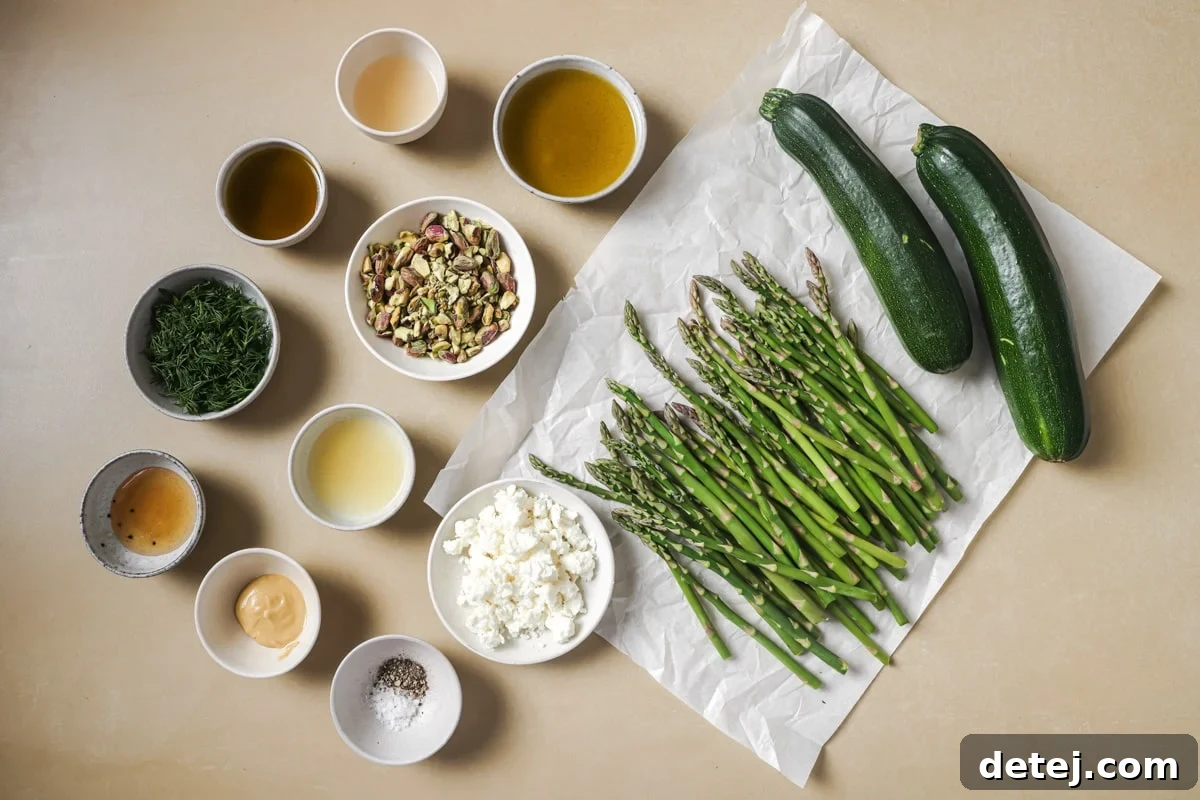
The Essential Ingredients for Your Spring Salad
Crafting this delightful Sautéed Spring Vegetable Salad requires a careful selection of fresh, high-quality ingredients. Each component plays a crucial role in building the salad’s vibrant flavor profile and satisfying texture. Here’s a detailed look at what you’ll need to create this irresistible dish, focusing on freshness and quality to ensure the best possible outcome:
Salad Ingredients
- Zucchini: Opt for firm, medium-sized zucchini with smooth, unblemished skin. These will yield the best texture when sautéed, offering a slight crispness without becoming watery. You’ll need to trim the ends before slicing them in half lengthwise, then into substantial ¾ to 1-inch thick pieces. This thickness is crucial as it ensures they hold their shape and achieve a lovely al dente bite and beautiful golden-brown sear.
- Asparagus: Look for bright green, firm asparagus spears with tightly closed tips. Fresh asparagus is key to a flavorful salad. Snap off the woody bottom ends (they will naturally break at the tender point) and then slice the remaining tender stalks into uniform 2-inch long pieces. This consistent size allows them to cook evenly alongside the zucchini, achieving perfect tenderness.
- Oil for Sautéing (Avocado Oil): Avocado oil is highly recommended for sautéing due to its exceptionally high smoke point and neutral flavor. It allows the natural, fresh taste of the vegetables to shine through while providing a beautiful sear without burning. If avocado oil is unavailable, other high-heat cooking oils like grapeseed or refined sunflower oil can be used, though they may impart a slightly different flavor.
- Seasoning (Kosher Salt & Cracked Black Pepper): These fundamental seasonings are essential for enhancing the vegetables’ flavor during sautéing. A pinch of kosher salt brings out their natural sweetness and vibrant taste, while freshly cracked black pepper adds a subtle warmth and aromatic depth. Remember to season lightly at first, as other salty components (feta, pistachios) will be added later, and you can always adjust to taste at the end.
- Cheese (Crumbled Feta): Feta cheese introduces a wonderful salty, tangy, and creamy element that beautifully complements the fresh vegetables. Its crumbly texture disperses throughout the salad, providing bursts of briny flavor in nearly every bite. Choose a good quality feta, preferably made from sheep’s or goat’s milk, for the best, most authentic taste and texture.
- Fresh Herbs (Freshly Chopped Dill): Fresh dill is the star herb in this recipe, offering a distinctive bright, slightly anise-like, and herbaceous note that perfectly complements the spring vegetables and the lemon dressing. Ensure your dill is fresh and vibrant; roughly chopping it just before serving releases its aromatic oils and maximizes flavor. If dill isn’t your favorite, consider fresh parsley or mint as excellent alternatives.
- Nuts (Lightly Crushed Salted Pistachios): Pistachios provide an essential textural contrast, adding a satisfying crunch and a rich, nutty flavor that elevates the entire dish. Using salted pistachios also subtly contributes to the overall seasoning of the salad. Lightly crushing them (not pulverizing) releases their full flavor and creates smaller pieces that are easier to enjoy in each forkful.
Dressing Components
The homemade Lemon Dijon Vinaigrette is what truly brings this warm salad to life, marrying all the flavors with its bright, tangy, and slightly sweet profile. It’s incredibly easy to whisk together and makes all the difference.
- Oil (Extra Virgin Olive Oil): A good quality extra virgin olive oil forms the base of this vibrant vinaigrette, providing a rich, fruity flavor and silky texture. Choose one that you enjoy for its taste and aroma, as it will be a prominent flavor in the dressing.
- Lemon (Freshly Squeezed Lemon Juice): Fresh lemon juice is non-negotiable for this dressing. Its bright, tart acidity cuts through the richness of the oil and cheese, adding a refreshing zest that epitomizes spring. Always use freshly squeezed for the most vibrant and authentic flavor; bottled juice simply doesn’t compare.
- Vinegar (White Wine Vinegar): White wine vinegar adds another layer of mild, delicate acidity and a subtle fruity note, complementing the lemon juice without overpowering it. It contributes to the dressing’s classic vinaigrette profile.
- Mustard (Dijon Mustard): Dijon mustard acts as a crucial emulsifier, helping to bind the oil and vinegar together into a smooth, creamy, and cohesive dressing. Its pungent, slightly spicy flavor also adds a welcome depth and complexity to the vinaigrette, making it more dynamic.
- Honey: A touch of honey balances the acidity of the lemon and vinegar, adding a delicate sweetness that rounds out the dressing’s flavor profile. It prevents the dressing from being too sharp. For a vegan option, pure maple syrup can be used as a delicious substitute.
- Seasoning (Kosher Salt & Cracked Black Pepper): A pinch of kosher salt and a few turns of freshly cracked black pepper are essential for seasoning the dressing to perfection. They ensure the vinaigrette enhances, rather than detracts from, the salad’s overall taste, creating a harmonious balance.
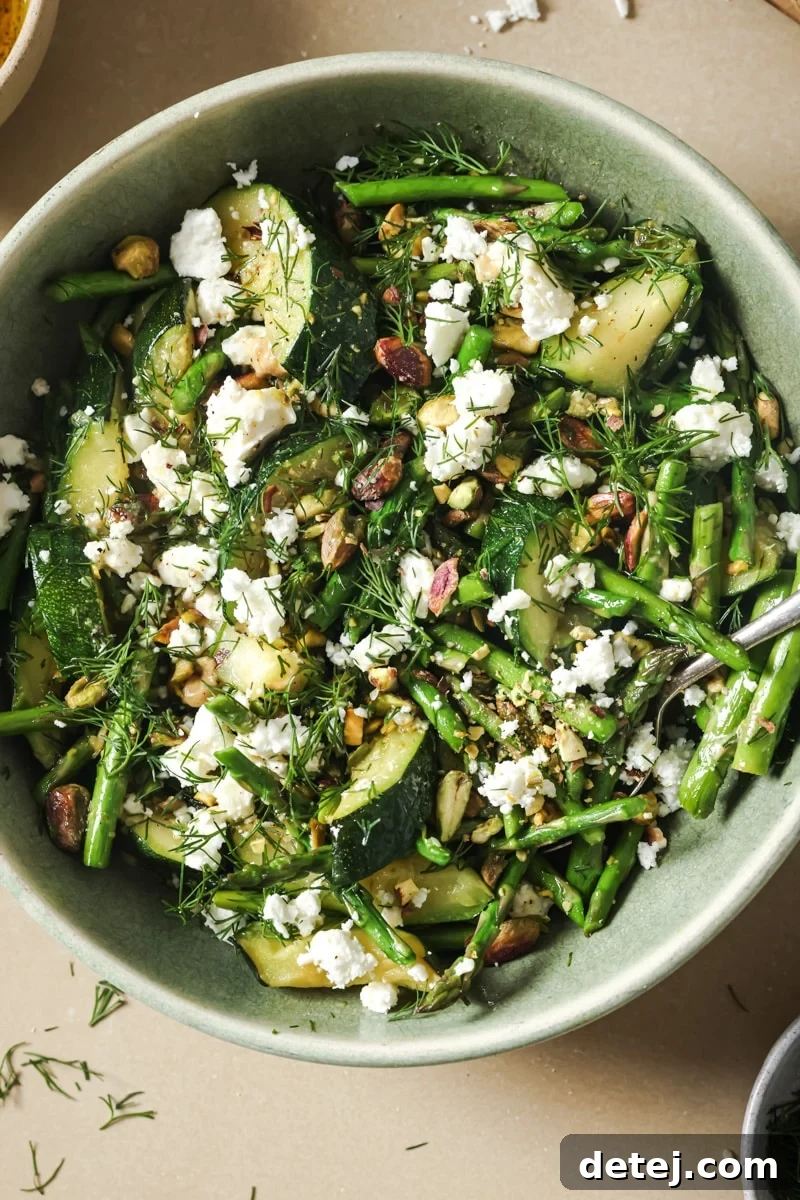
Delicious Variations to Try
One of the best aspects of this Sautéed Spring Vegetable Salad is its incredible versatility. Feel free to get creative and customize it to suit your taste preferences, dietary needs, or what you have available in your pantry. This flexibility ensures you can enjoy this recipe time and time again without it ever feeling repetitive. Here are some fantastic ideas to inspire your culinary adventures:
- Nut Swaps for Different Textures & Flavors: While pistachios offer a wonderful crunch and subtle sweetness that perfectly complements the spring vegetables, you can easily experiment with other nuts to introduce varied textures and flavor profiles.
- Toasted Pine Nuts: These small, buttery nuts add a delicate flavor and a soft, pleasing crunch when lightly toasted.
- Toasted Walnut Pieces: For a more robust, earthy flavor and a heartier crunch, roughly chop and lightly toast walnuts until fragrant.
- Toasted Almond Slivers: Almonds bring a classic nutty aroma and a crisp texture that pairs well with the fresh ingredients.
- Toasted Pecans: Offer a rich, buttery flavor with a satisfying crunch.
- Herb Alternatives for a Fresh Twist: If fresh dill isn’t your favorite, or you’re simply looking to change up the flavor profile for your warm vegetable salad, other fresh herbs work beautifully and can impart a distinct character.
- Fresh Mint: Adds a bright, cooling, and slightly sweet note, making the salad incredibly refreshing, especially appealing during warmer months.
- Fresh Parsley: A classic and universally loved herb, flat-leaf parsley offers a clean, peppery, and slightly bitter flavor that complements almost any vegetable.
- Chives: For a milder oniony flavor, finely chopped chives would be a delicate and elegant addition.
- Boost the Protein for a Heartier Meal: Easily transform this flavorful side dish into a complete and satisfying main meal by incorporating your favorite protein source.
- Grilled or Pan-Seared Chicken: Thinly sliced grilled chicken breast or thighs make for a lean, protein-packed, and flavorful addition.
- Flaky Salmon or Other Fish: Add some oven-baked, pan-seared, or even air-fried salmon for a dose of healthy omega-3s and a luxurious texture. My air fryer salmon would be a particularly delicious pairing!
- Chickpeas or White Beans: For a vegetarian or vegan option, roasted chickpeas or canned cannellini beans add plant-based protein, fiber, and a satisfying texture.
- Hard-Boiled Eggs: Sliced or chopped hard-boiled eggs can also add a simple protein boost.
- Add More Seasonal Vegetables: Don’t limit yourself to just zucchini and asparagus. In spring and early summer, many other vegetables would be fantastic additions, adding more color, texture, and nutrients.
- Cherry Tomatoes: Halved cherry tomatoes can be added raw at the very end for a burst of juicy sweetness, acidity, and vibrant red color.
- Sugar Snap Peas or Snow Peas: Lightly sautéed, these add a sweet crunch and a beautiful bright green hue.
- Radishes: Thinly sliced radishes can be tossed in raw for a peppery bite and extra crispness, offering a pleasant contrast to the cooked vegetables.
- Green Beans: Trimmed green beans can be sautéed along with the asparagus for added texture and flavor.
- Bell Peppers: Thinly sliced bell peppers (any color) can be lightly sautéed for added sweetness and crunch.
- Cheese Alternatives: If feta isn’t quite what you’re craving, or you’re looking for a different creamy or salty element, consider these substitutes.
- Goat Cheese: Offers a tangier, creamier texture than feta, which would melt slightly into the warm vegetables for a luxurious mouthfeel.
- Shaved Parmesan: Adds a nutty, umami depth and a different kind of saltiness, enhancing the savory notes of the dish.
- Crumbled Queso Fresco: A milder, softer cheese option that adds a fresh, milky flavor.
- Spice It Up: For those who enjoy a little heat, a tiny pinch of red pepper flakes added to the sautéing vegetables or whisked into the dressing can provide a subtle, welcome warmth.
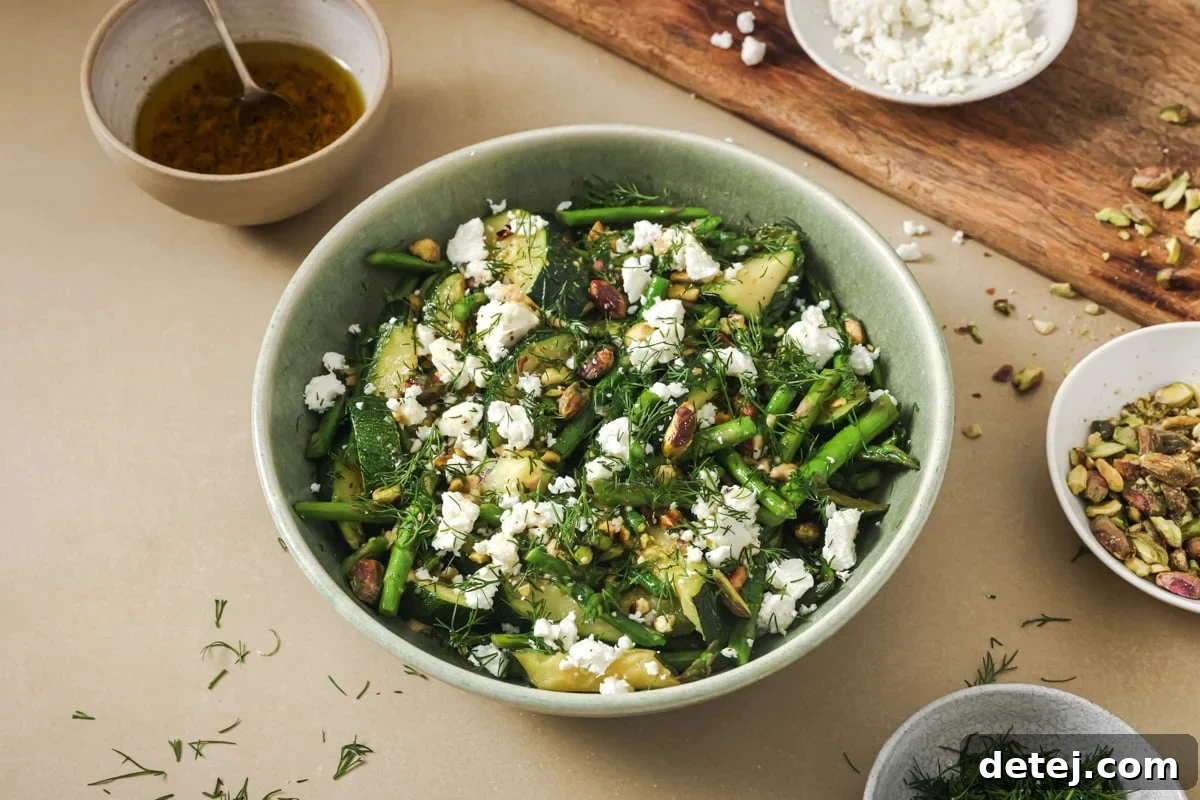
How to Master the Sautéed Spring Vegetable Salad
Creating this Sautéed Spring Vegetable Salad is a straightforward process, broken down into a few simple steps. Follow these instructions carefully to achieve a perfectly cooked, flavorful warm salad every time. Precision in preparation and attention to cooking times are key to bringing out the best in these fresh spring ingredients.
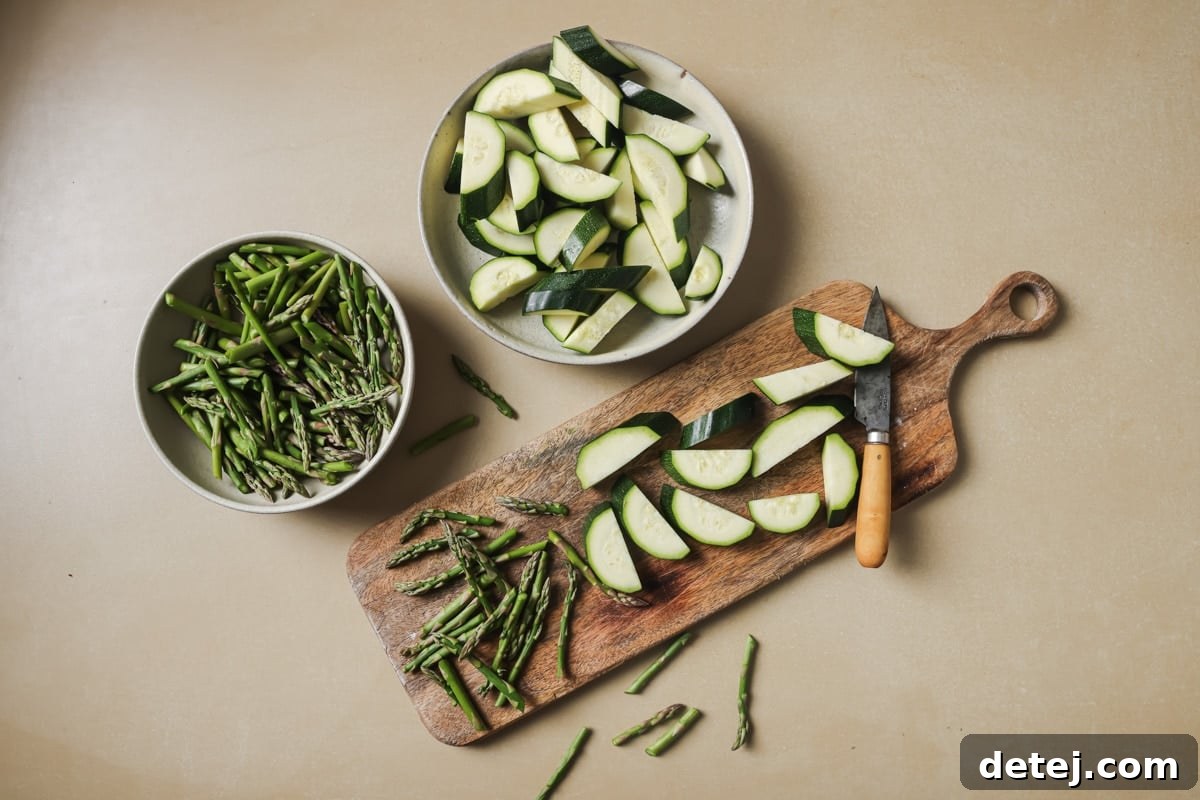
Step 1: Prepare Your Produce
- Begin by thoroughly washing and drying all your fresh produce. Proper drying is crucial, especially for the vegetables you’ll be sautéing, to ensure they sear beautifully rather than steam and become soggy.
- For the zucchini, trim off both ends. Then, slice each zucchini in half lengthwise. Proceed to cut these halves into substantial ¾ to 1-inch thick, half-moon shaped slices. Consistency in thickness is key here for even cooking and achieving that desired al dente texture.
- Next, prepare the asparagus. Snap off the tough, woody bottom ends of each spear; they will naturally break at the tender point. Then, cut the remaining tender parts of the asparagus into approximately 2-inch long pieces. Keep them uniform for even cooking.
- Take your salted pistachios and place them into a sturdy Ziplock bag or between two sheets of parchment paper. Using a rolling pin or the bottom of a heavy pan, gently pound them to lightly crush them into smaller, irregular pieces. The goal is a rustic crush, not a fine powder, to retain texture.
- Finally, wash, dry, and roughly chop your fresh dill. The aroma of freshly chopped dill is a significant component of this salad’s appeal. Set all prepared ingredients aside in separate bowls, ready for assembly.
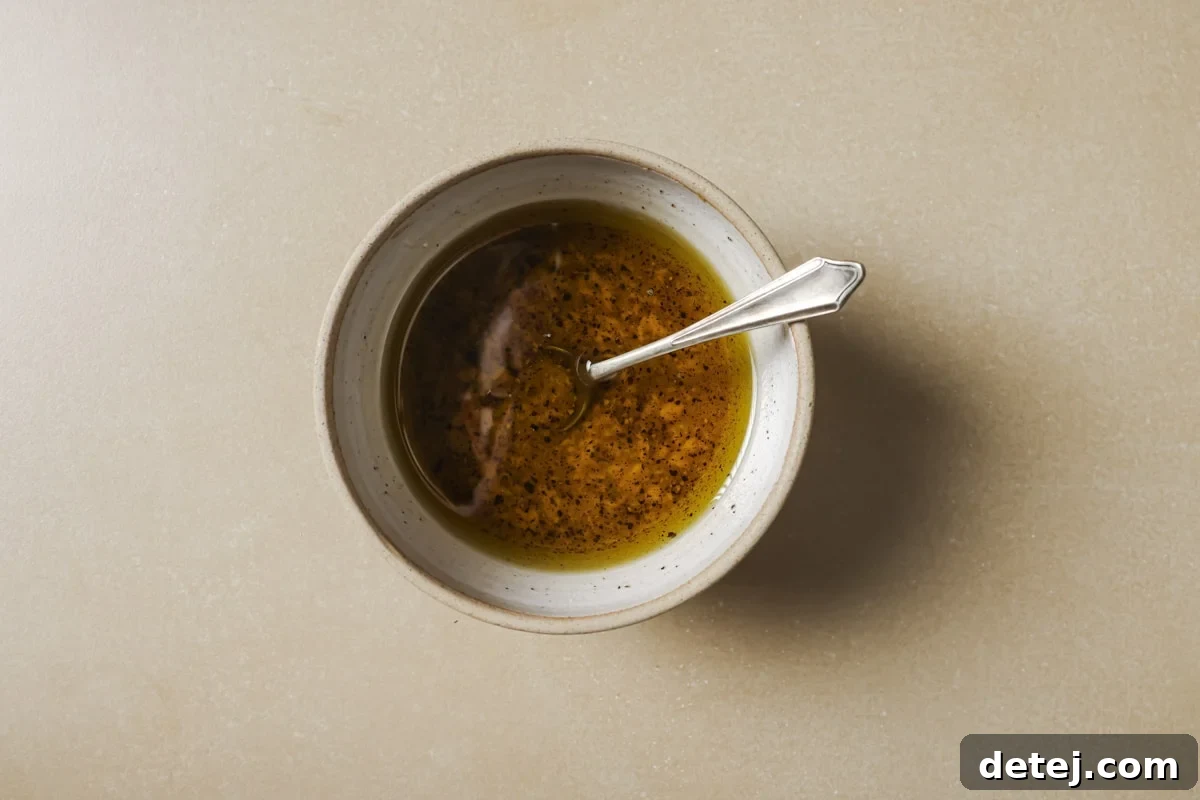
Step 2: Craft the Lemon Dijon Dressing
- In a small mixing bowl, combine ¼ cup of high-quality extra virgin olive oil, 1 tablespoon of freshly squeezed lemon juice (ensure it’s fresh for the best flavor), 1 tablespoon of white wine vinegar, 1 tablespoon of honey, and 1 teaspoon of Dijon mustard.
- Season the dressing with a modest pinch of kosher salt and a few turns of freshly cracked black pepper. Remember, you can always adjust seasoning later.
- Whisk all the ingredients vigorously until they are well combined and the dressing is beautifully emulsified into a smooth, slightly creamy consistency. This ensures all flavors are integrated. Set the dressing aside; you’ll add it just before assembling the salad to maintain freshness.
Step 3: Sauté the Vegetables to Perfection
- Heat a large sauté pan (or a wide, heavy-bottomed skillet) over medium-high heat. Once the pan is sufficiently hot, add 2 tablespoons of avocado oil. The oil should shimmer, indicating it’s hot enough, but not smoke.
- Carefully add the sliced zucchini to the hot pan, placing them cut-side down to ensure they get a beautiful brown sear and caramelization. Sauté for 3-4 minutes without moving them; resist the urge to stir. This initial searing creates a flavorful crust and helps prevent them from becoming watery.
- Once the zucchini slices are lightly browned and tender-crisp on one side, flip them over. Now, add the prepared asparagus pieces to the pan alongside the zucchini.
- Season the vegetables with a small pinch of kosher salt and a few turns of freshly cracked black pepper. Be mindful with the salt at this stage, remembering that the feta and pistachios will contribute significant saltiness later.
- Continue to sauté for another 3-5 minutes, or until the asparagus begins to soften to your desired tenderness. I prefer my asparagus al dente, which means it retains a slight crispness, offering a delightful bite. However, you can cook it to your liking. Keep a close eye on both vegetables to ensure neither overcooks and becomes mushy.
- Pro Tip for Thick Asparagus: If your asparagus spears are particularly thick, consider quickly blanching them in boiling water for 2-3 minutes before adding them to the sauté pan. This pre-softens them and helps prevent the zucchini from overcooking while waiting for the asparagus to become tender. After blanching, ensure they are thoroughly drained and patted completely dry before sautéing to ensure a good sear.
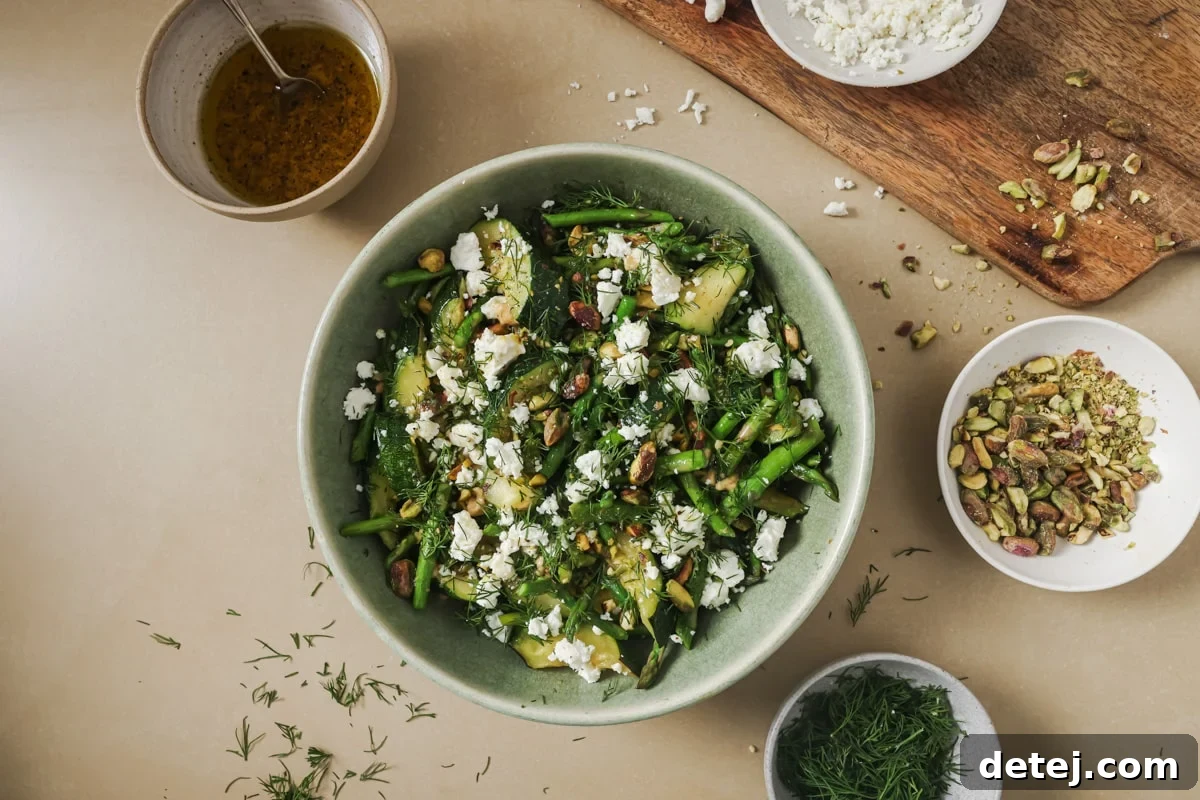
Step 4: Assemble and Serve Your Warm Salad
- Once the vegetables are cooked to your preference, transfer the sautéed zucchini and asparagus to a beautiful serving dish. Allow them to cool for just a touch – serving warm, rather than piping hot, allows the flavors to meld beautifully and prevents the feta from melting too quickly into oblivion.
- Generously top the warm vegetables with the lightly crushed pistachios, evenly crumbled feta cheese, and a fresh scattering of chopped dill. These toppings add crucial layers of flavor, texture, and visual appeal.
- Now, drizzle the prepared lemon Dijon dressing over the salad. You have full control here: add as much or as little dressing as you desire, tasting as you go to find your perfect balance of zesty, tangy, and sweet.
- Give the salad a gentle toss to distribute the toppings and dressing evenly. Taste for final seasoning adjustments; you might find it needs a little more salt or a fresh crack of pepper.
- Serve immediately and enjoy this irresistible warm spring vegetable salad. It is truly at its peak when enjoyed while still warm, allowing the gentle heat to slightly soften the feta and release the aromatic perfumes of the dill.
Storage
- Any leftover dressing can be stored in an airtight container in the refrigerator for up to 4-5 days. Give it a good shake or whisk before using again.
- Cooked leftover vegetables should be stored separately from the dressing and toppings in an airtight container in the refrigerator for two to three days. Note that the texture of sautéed zucchini can become softer upon refrigeration, but the flavors will still be delicious.
Expert Tips for a Perfect Warm Vegetable Salad
Achieving a truly exceptional Sautéed Spring Vegetable Salad is all about technique and a few insider tips. Keep these in mind to ensure your dish is always perfectly cooked, bursting with flavor, and wonderfully textured:
- Mastering Asparagus Tenderness:
- For Thick Asparagus: If your asparagus spears are particularly thick, they will naturally take longer to cook than the zucchini. To prevent overcooking the zucchini and turning it mushy while waiting for the asparagus to soften, it’s highly recommended to quickly blanch the thick asparagus in boiling, salted water for 2-3 minutes first. Immediately transfer it to an ice bath to stop the cooking, then drain thoroughly and pat completely dry before adding it to the sauté pan. This ensures both vegetables reach optimal crisp-tender doneness simultaneously.
- For Super Thin Asparagus: Conversely, very thin asparagus cooks incredibly quickly. You might find it only needs a few minutes of sautéing alongside the zucchini, or even less time, to become tender-crisp. Keep a close eye on it and taste test periodically to prevent it from becoming limp or stringy. Adjust cooking times based on the thickness of your produce.
- Don’t Overcrowd the Pan: When sautéing vegetables, it’s crucial to give them enough space. Overcrowding the pan lowers the temperature dramatically and causes vegetables to steam rather than sear and caramelize. This results in a less desirable, softer texture and less flavor development. Cook the zucchini and asparagus in two batches if your pan isn’t large enough to accommodate them in a single layer with some room to spare.
- High Heat for a Good Sear: Start with a hot pan and hot oil (avocado oil is ideal for this) before adding the vegetables. This ensures that the zucchini develops a beautiful, flavorful caramelized crust quickly, sealing in its moisture and adding a desirable depth of flavor and texture.
- Seasoning Strategy is Key: Remember that both the crumbled feta cheese and salted pistachios are significant sources of salt in this dish. Therefore, season your vegetables lightly with kosher salt during cooking, and then adjust the final seasoning of the assembled salad after tasting. It’s always easier to add more salt than it is to rectify an overly salty dish.
- Fresh Herbs Make All the Difference: Always use fresh dill (or your chosen fresh herb) for this recipe. Dried herbs will not provide the same bright, vibrant, and aromatic impact that is crucial for the overall fresh flavor profile of this spring salad.
- Serve Warm, Not Piping Hot: While this is a “warm” salad, letting it cool slightly for a few minutes after sautéing allows the intense heat to dissipate. This prevents the feta from melting too much and ensures the delicate lemon Dijon dressing clings beautifully to the vegetables without becoming greasy or separating.
- Uniform Slicing: Slicing your zucchini and asparagus into uniform sizes ensures they cook evenly. Uneven pieces will lead to some being overcooked while others remain undercooked.
Frequently Asked Questions About This Recipe
Here are some common questions and helpful answers to ensure your Sautéed Spring Vegetable Salad turns out perfectly every time and to address any concerns you might have.
-
Can I blanch the asparagus if it is very thick?
-
Yes, absolutely! If your asparagus spears are particularly thick, it’s an excellent idea to quickly blanch them in hot, salted water for 2-3 minutes before sautéing. This helps to pre-soften them, ensuring they cook through without requiring extra time in the pan that might cause the zucchini to overcook and become mushy. After blanching, plunge them immediately into an ice bath to stop the cooking process, then drain them thoroughly and pat completely dry before adding to the sauté pan. This technique ensures optimal texture for both vegetables.
-
Can I use olive oil instead of avocado oil for sautéing?
-
While avocado oil is specifically recommended for its very high smoke point and neutral flavor, which allows the natural taste of the vegetables to shine, you can certainly swap regular olive oil for avocado oil when sautéing the vegetables. However, please be aware that extra virgin olive oil has a lower smoke point. If using it, you might need to keep the heat slightly lower (medium instead of medium-high) to prevent it from burning or developing a bitter taste. For the dressing, high-quality extra virgin olive oil is ideal and highly recommended.
-
What other nuts can I use instead of pistachios?
-
There are several delicious alternatives to pistachios that will still add a wonderful crunch and nutty flavor! Toasted pine nuts are a fantastic choice, offering a delicate, buttery flavor and a softer crunch. You could also use crushed and lightly toasted walnuts for a richer, more earthy taste, or even toasted almond slivers for a classic nutty flavor and crisp texture. Just make sure whatever nut you choose is lightly toasted to bring out its best flavor and aroma.
-
I don’t like fresh dill; what other herbs can I use?
-
No problem at all! Fresh dill offers a unique flavor, but if it’s not to your liking, fresh chopped parsley (preferably flat-leaf) is a wonderful and versatile substitute, providing a clean, slightly peppery, and fresh note. Fresh mint is another excellent option, especially for a more refreshing and cooling salad profile, which pairs beautifully with spring vegetables. Feel free to experiment with what you enjoy most or what you have on hand.
-
Can I prepare this salad ahead of time?
-
For the absolute best taste and texture, this Sautéed Spring Vegetable Salad is best enjoyed immediately after it’s assembled and still warm. However, you can certainly prep components ahead to save time: the dressing can be made and stored in an airtight container in the refrigerator for up to 4-5 days, and the fresh dill can be chopped a few hours in advance. The vegetables can be sautéed a few hours ahead and gently reheated, or served at room temperature if preferred. Just don’t combine everything with the dressing until right before serving to prevent the vegetables from becoming soggy and to maintain the vibrant freshness of the herbs and toppings.
-
What can I serve this warm vegetable salad with?
-
This versatile and flavorful salad pairs wonderfully with a variety of main courses, making it an excellent side dish for almost any meal! It’s fantastic alongside grilled chicken breasts, pan-seared salmon or baked cod, or even a perfectly cooked steak. For a vegetarian meal, consider serving it with quinoa, couscous, or a hearty lentil soup. It also makes a fantastic, light, and satisfying lunch on its own, especially if you add a protein boost like roasted chickpeas.
-
Is this recipe suitable for dietary restrictions?
-
This salad is naturally vegetarian and gluten-free. For a vegan version, simply omit the feta cheese (or use a vegan feta alternative) and swap the honey in the dressing for maple syrup. It’s a very adaptable recipe!
Other Delightful Side Dish Recipes to Explore
If you enjoyed this vibrant Sautéed Spring Vegetable Salad and are looking for more fresh, healthy, and flavorful additions to your meal rotation, you’ll surely love exploring our other carefully curated side dish recipes. Each one is designed to be easy to make, packed with taste, and a wonderful complement to any main course. Here are a few to consider trying next:
- Pan Fried Zucchini with Hot Honey and Feta – The beloved recipe that directly inspired this warm salad, offering a delightful blend of sweet, spicy, and savory flavors with tender zucchini.
- Carrot Cake Roasted Carrots – A surprisingly delicious and unique way to enjoy roasted carrots, infused with warm, aromatic spices reminiscent of your favorite dessert.
- Air Fryer Green Beans Almondine – Achieve perfectly crisp-tender green beans with toasted almonds, made incredibly easy and quick in the air fryer.
- Peach and Tomato Salad – A refreshing and vibrant summer salad bursting with the sweet juiciness of peaches and the tangy freshness of ripe tomatoes.
- Fruit Salsa – A wonderfully light, sweet, and colorful salsa made with an assortment of fresh fruits, perfect for dipping or as a topping for grilled meats.
- Spring Vegetable Hash – Another fantastic way to utilize a medley of seasonal spring vegetables in a hearty, flavorful hash that makes a great breakfast, brunch, or side dish.
Sautéed Spring Vegetable Salad
Sarah Thomas-Drawbaugh
6
servings
15
15
30
Pin Recipe
Leave a Review »
Equipment
- 1 large sauteuse pan (or heavy-bottomed skillet)
- Small mixing bowl
- Whisk
- Ziplock bag or parchment paper (for crushing pistachios)
- Rolling pin or heavy pan (for crushing pistachios)
Ingredients
Sautéed Spring Vegetable Salad
- 2 tablespoons avocado oil
- 2 medium zucchini, ends removed and sliced ¾-1 inch thick pieces
- 2 bundles asparagus, ends trimmed and sliced into 2-inch long pieces
- pinch kosher salt, lightly season the vegetables
- few turns cracked black pepper, to taste
- ⅓ cup crumbled feta
- ⅓ cup salted pistachios, lightly crushed
- 2-4 tablespoons dill, fresh, roughly chopped
Lemon Dijon Dressing
- ¼ cup extra virgin olive oil
- 1 tablespoon lemon juice, fresh squeezed
- 1 tablespoon white wine vinegar
- 1 tablespoon honey
- 1 teaspoon Dijon mustard
- pinch kosher salt, to taste
- few turns cracked black pepper, to taste
Instructions
How to Make Sautéed Spring Vegetable Salad
-
Prepare the Ingredients: Wash, dry, and remove the ends from the zucchini, then slice into ¾-1 inch thick pieces. Trim asparagus ends and slice into 2-inch long pieces. Lightly crush salted pistachios in a Ziplock bag. Wash, dry, and roughly chop fresh dill. Set all prepared ingredients aside.
-
Make the Dressing: In a small mixing bowl, combine extra virgin olive oil, white wine vinegar, fresh squeezed lemon juice, honey, Dijon mustard, kosher salt, and cracked black pepper. Whisk until well combined and emulsified. Set aside.
-
Sauté the Vegetables: Heat a large sauteuse pan over medium-high heat. Add 2 tablespoons avocado oil. Once hot, add zucchini cut-side down and sauté for 3-4 minutes without moving to get a nice brown sear. Flip zucchini, add asparagus, and season lightly with a pinch of kosher salt and a few turns of cracked black pepper (remember feta and pistachios are salty). Sauté for another 3-5 minutes, or until asparagus begins to soften to your liking. (Tip for thick asparagus: Blanch quickly for 2-3 mins before sautéing to prevent zucchini from overcooking.)
-
Assemble and Serve: Once vegetables are cooked, transfer to a serving dish and let cool slightly. Top with crushed pistachios, crumbled feta, and fresh chopped dill. Drizzle with the lemon Dijon dressing (adjusting amount to your preference). Taste for seasoning, give a gentle toss, and enjoy immediately while still warm.
Video
Notes
Quickly blanch thick asparagus in hot water for 2-3 minutes to help soften it. By softening thick asparagus first, you will prevent the zucchini from overcooking and getting mushy in the pan. Just be sure to drain and dry it well before adding it to the pan.
Super thin asparagus might only need to sauté for a few minutes to be ready. So, keep an eye on everything and taste test periodically to prevent overcooking.
Leftover dressing can be stored in an airtight container in the refrigerator for 4-5 days. Leftover sautéed vegetables can be stored separately from the dressing and toppings in an airtight container in the refrigerator for two to three days.
Nutrition
Salad, Side Dish
American
205
Sarah Thomas-Drawbaugh