
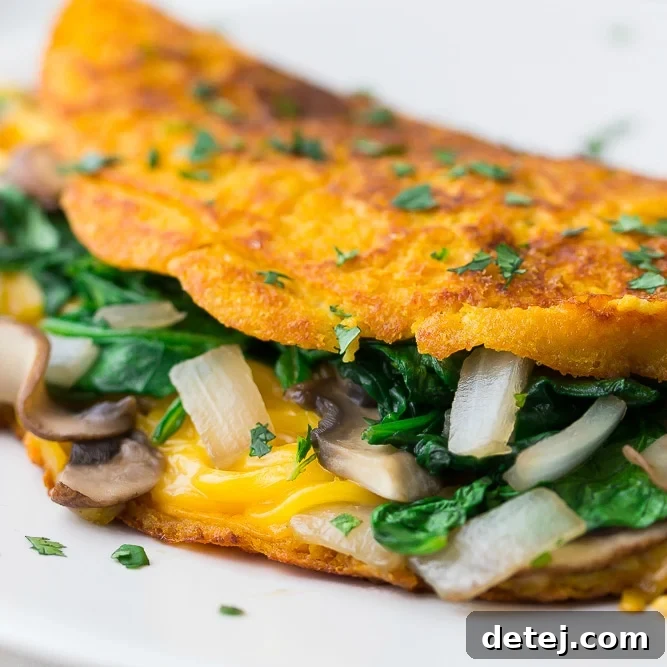
The Ultimate Fluffy Vegan Omelette: A High-Protein, Egg-Free Breakfast Revolution
Are you craving a satisfying, fluffy omelette but living a plant-based lifestyle? Look no further! This incredible vegan omelette recipe delivers all the classic eggy flavor and satisfying texture you desire, without a single egg, chickpea flour, or any expensive, hard-to-find egg replacers. Get ready to transform your breakfast routine with a high-protein, mouthwatering meal that’s surprisingly easy to make and ready in just minutes.
If you’re eager for more innovative vegan “egg” creations, be sure to explore my Fried Vegan Eggs, a delightful JUST Egg Quiche, the hearty Vegan Breakfast Casserole, and a flavorful Potato Leek Vegan Frittata. Each offers a unique spin on plant-based breakfast indulgence.
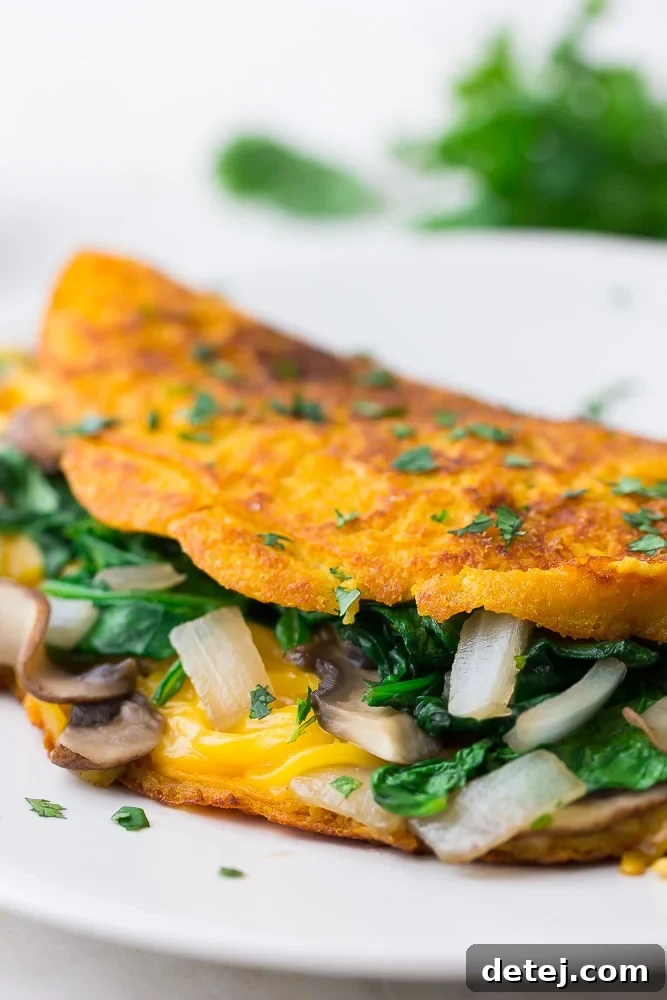
Who says you need eggs to create an omelette that truly satisfies? Certainly not us! This groundbreaking eggless Vegan Omelette Recipe masterfully replaces traditional eggs and pricey commercial egg substitutes with a simple yet brilliant blend of silken tofu and brown rice flour. The result is a batter that, once seasoned perfectly, achieves an authentic eggy taste and cooks up into a remarkably fluffy, creamy, and wonderfully satisfying omelette.
In just about 10 minutes of active cooking time, you can have a delicious, high-protein breakfast on your plate. The real magic happens when you realize how much this plant-based marvel tastes like a classic egg omelette, making it the perfect canvas for all your favorite fillings, from sautéed vegetables to melty vegan cheese.
Why This Eggless Tofu Omelette is a Game-Changer
Prepare to fall in love with your new favorite breakfast. This vegan omelette isn’t just a substitute; it’s a culinary triumph in its own right, offering numerous advantages that make it stand out:
- No Expensive Egg Replacers Needed: Say goodbye to chickpea flour experiments and save your store-bought JUST Egg for other recipes. This innovative vegan omelette uses a uniquely seasoned tofu-based batter that cooks up beautifully, mirroring the thick and fluffy texture of a traditional egg omelette without the need for specialized or costly ingredients. It’s a testament to simple, wholesome ingredients delivering exceptional results.
- A Powerhouse High-Protein Vegan Breakfast: Thanks to the inclusion of silken tofu, each serving of this vegan omelette is packed with approximately 16 grams of protein. This makes it an ideal choice for a breakfast that not only tastes great but also keeps you feeling full, energized, and ready to tackle your day with sustained vitality.
- Infinitely Customizable to Your Cravings: The true beauty of this vegan egg omelette lies in its versatility. It provides a neutral, delicious base just waiting to be filled with whatever your heart desires. Load it up with your favorite sautéed vegetables, savory vegan meats, a generous sprinkle of dairy-free cheeses, or any other creative additions you can imagine. Every omelette can be a unique culinary adventure tailored precisely to your taste.
- Effortlessly Simple to Prepare: Despite its impressive taste and texture, this omelette is incredibly easy to make. With minimal prep and quick cooking times, it’s perfect for busy mornings when you want a nutritious and delicious meal without a lot of fuss.
- Allergy-Friendly Options: Naturally gluten-free (when using brown rice flour and appropriate milk), and of course, dairy-free and egg-free, this recipe is perfect for those with various dietary restrictions or allergies, ensuring everyone can enjoy a fantastic breakfast.
Crafting Your Perfect Vegan Tofu Omelette: A Step-by-Step Guide
Achieving a perfectly fluffy and flavorful vegan omelette is simpler than you might think. Follow these detailed steps to create a breakfast that will impress even the most discerning palates. You’ll find the complete printable recipe with precise measurements below in the recipe card.
Step 1: Prepare the Silky Smooth Batter
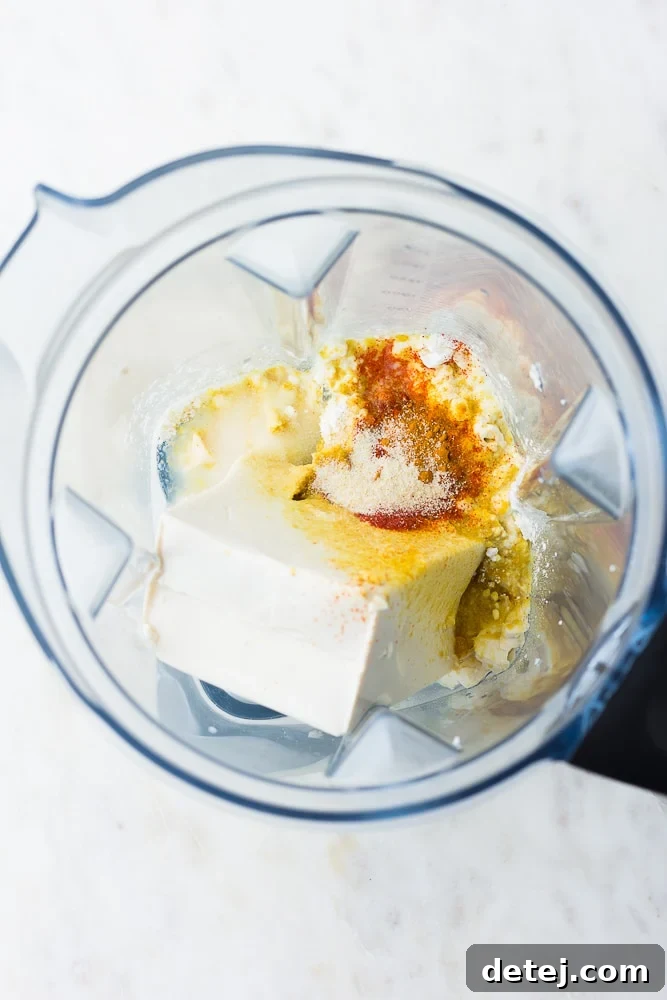
The secret to our omelette’s incredible texture and eggy flavor begins in the blender. Carefully drain any excess liquid from your silken tofu package. Then, add the tofu, nutritional yeast (which provides a cheesy, umami depth), cornstarch (for binding and structure), brown rice flour (essential for its light consistency and binding power), unsweetened non-dairy milk (like almond milk, to achieve the right pourable consistency), paprika (for color and subtle warmth), onion powder (for savory notes), a pinch of turmeric (for that classic yellow hue), and the star ingredient: black salt (kala namak), or regular salt if you prefer. Black salt is key for imparting an authentic sulfurous, eggy aroma and taste.
Blend this mixture until it is completely smooth and uniform. Take your time with this step; a well-blended batter is crucial for a perfectly textured omelette. The final consistency should resemble that of a thick pancake batter, easily pourable but not watery. Scrape down the sides of the blender as needed to ensure all ingredients are fully incorporated. Once smooth, set the batter aside.

Step 2: Prepare Your Fillings
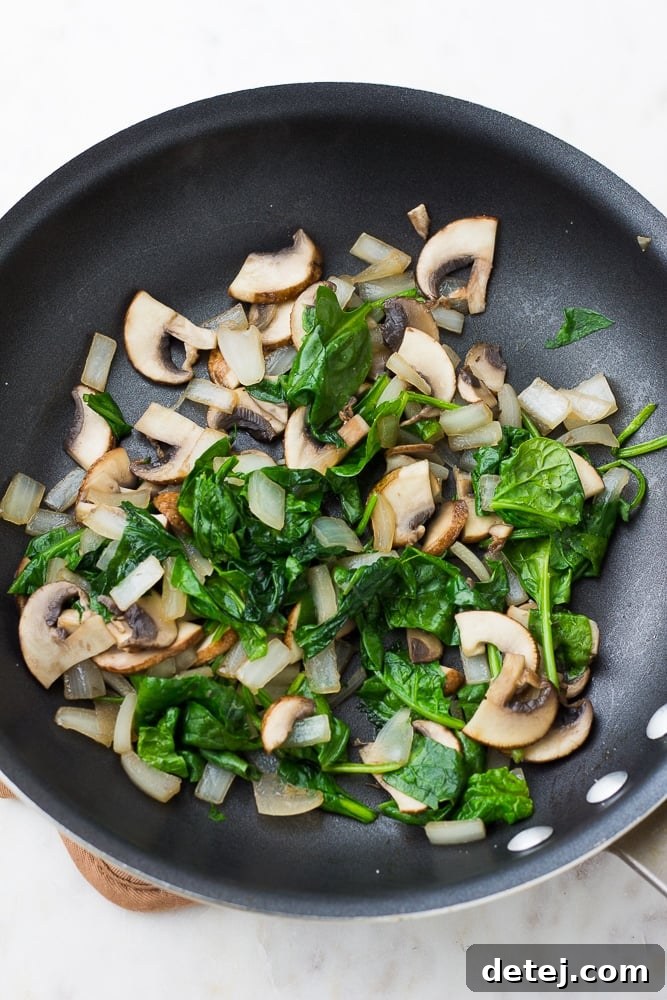
If you’re planning to stuff your omelette with delicious sautéed vegetables, now is the time to prepare them. Heat a small amount of olive oil in a pan (you can even use the same non-stick skillet you’ll use for the omelette, just remember to clean it lightly afterward if needed). Cook your chosen vegetables, such as onions, mushrooms, spinach, bell peppers, or zucchini, until they are tender and slightly caramelized. Once cooked, transfer them to a plate and set them aside. This ensures they are ready to be added to your omelette at the perfect moment. Also, have any vegan cheese shreds or other fillings conveniently ready near your cooking station.
Step 3: Cook the Omelette Base
Heat a good quality non-stick skillet over medium-high heat. Add 2 to 3 tablespoons of olive oil to the pan. It’s crucial that the pan and oil are hot before you pour in the batter; look for the oil to be shimmering. This heat ensures a quick, even cook and prevents sticking.
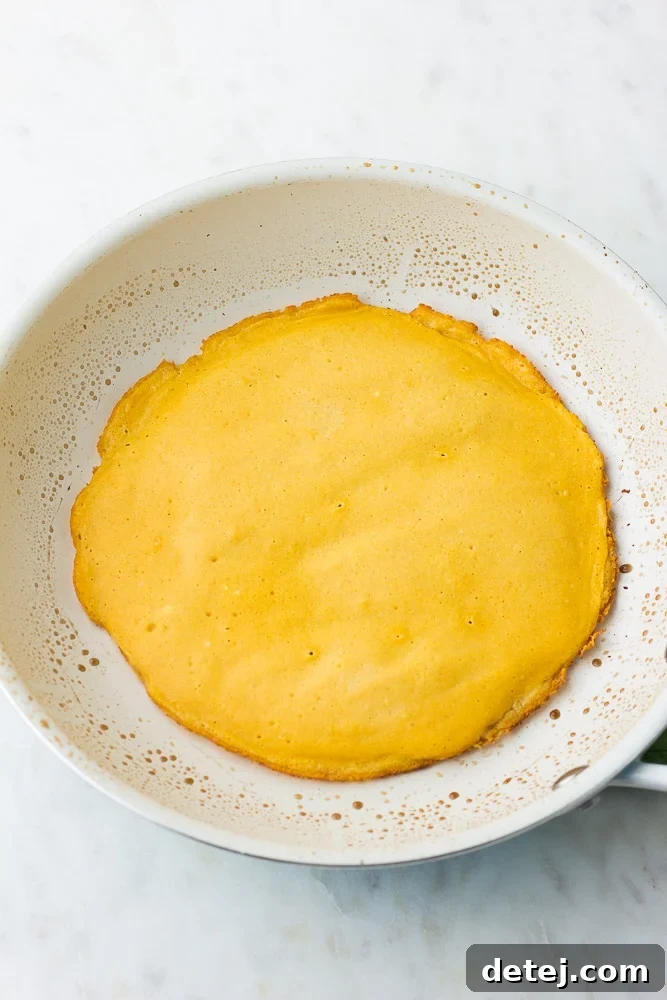
Once the oil is hot, pour half of the omelette batter into the center of the pan. Gently swirl the pan immediately to encourage the batter to spread into an even, circular layer. If the batter is too thick to spread easily on its own, use a spatula to gently spread it out, much like you would with pancake batter. Aim for a thickness of about 1/4 to 1/2 inch for the best results – this allows for a fluffy interior and cooked exterior.
Cover the pan with a lid. Covering is key as it traps steam, helping the omelette cook through evenly and become wonderfully fluffy. Cook for approximately 3-4 minutes, or until the edges appear set and the top surface no longer looks wet or liquidy. This indicates it’s mostly cooked through.
Pro Tip: If, after 3-4 minutes, your omelette appears thicker than desired or still has a liquidy center, carefully use a wide spatula to flip it over. Cook the other side for an additional 1 to 2 minutes to ensure it’s thoroughly cooked and firm.
Step 4: Fill and Fold
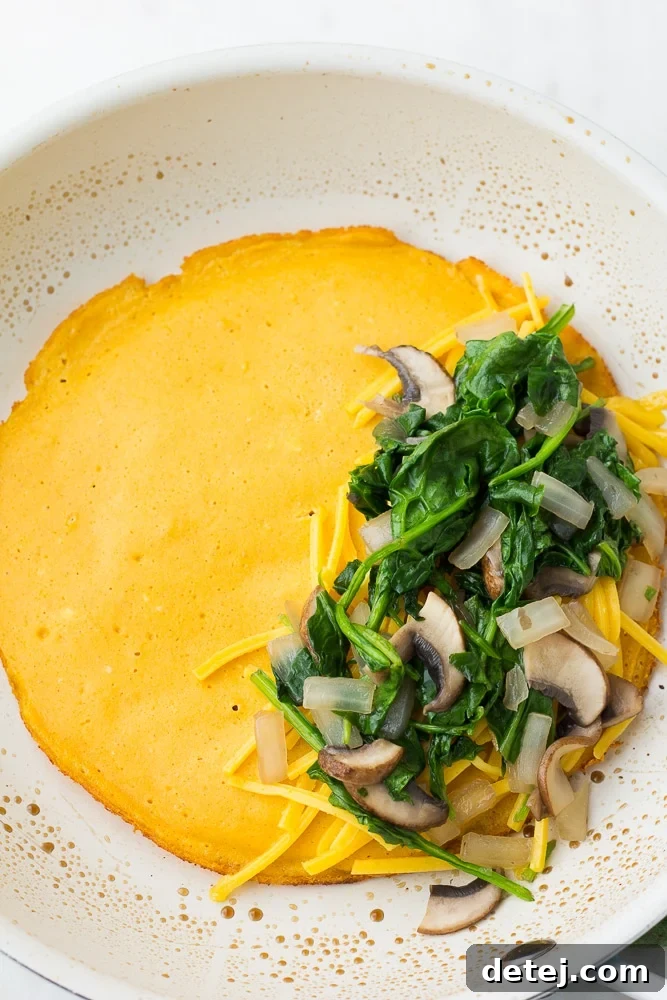
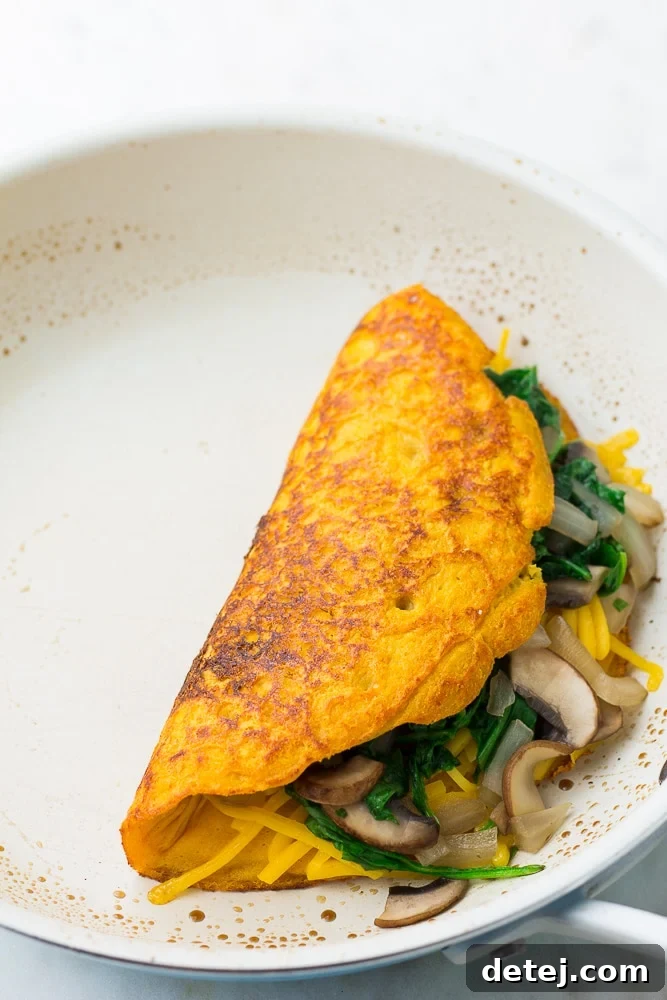
Once the omelette base is cooked, it’s time for the delicious fillings. Spoon your pre-cooked sautéed vegetables and vegan cheese onto one half of the omelette. Then, using your spatula, carefully fold the other side of the omelette over the fillings to create a classic half-moon shape. Cover the pan again and continue to cook for another 1-2 minutes. This brief period under the lid allows the vegan cheese to melt into a gooey, irresistible layer and for the fillings to warm through completely.
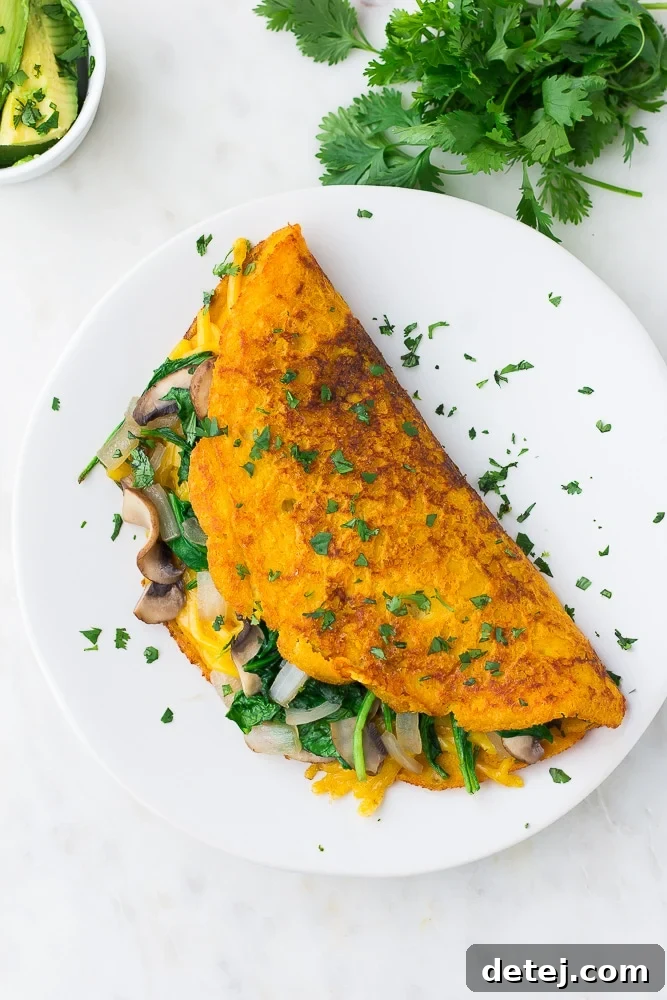
Finally, with a gentle hand and your widest spatula, carefully transfer the perfectly cooked and filled omelette to a plate. Serve immediately with your favorite toppings and side dishes to complete this delightful breakfast experience. Repeat the process with the remaining batter for a second omelette. Enjoy the rich flavors and satisfying texture!
Frequently Asked Questions About Vegan Omelettes
The possibilities are truly endless when it comes to filling your vegan omelette! I often opt for a classic combination of sautéed onions, tender mushrooms, fresh spinach, and shredded dairy-free cheddar cheese for a familiar and comforting flavor. However, don’t hesitate to get creative! Consider adding thinly sliced shallots, crispy tofu bacon, vibrant bell peppers, savory vegan ham, creamy avocado slices, spicy jalapeños, nutrient-rich kale, smoky tempeh bacon, vegan breakfast sausage, protein-packed black beans, gooey vegan mozzarella shreds, or fragrant fresh chives. Anything you enjoy in a traditional omelette can be wonderfully adapted here!
A perfectly cooked, fluffy eggless omelette, especially when topped with fresh ingredients, is an incredible breakfast on its own. For an extra touch of indulgence, consider topping your omelette with creamy avocado chunks, juicy tomato slices, finely chopped cilantro or parsley, a dash of your favorite hot sauce, a spoonful of vibrant salsa, a drizzle of rich Nut Free Cheese Sauce, or even a generous dollop of Vegan Queso.
To create an unforgettable breakfast or brunch spread, pair your omelette with sides like crunchy Avocado Toast, sweet and tender Vegan French Toast, and crispy Tofu Bacon. These combinations offer a delightful array of textures and flavors that will satisfy any craving.
Brown rice flour (or white rice flour) plays a crucial role in this recipe due to its unique light consistency and neutral flavor. Unlike chickpea flour or all-purpose flour, rice flour blends seamlessly into the batter, providing essential thickening and binding properties without imparting a strong taste or making the omelette heavy. Its delicate texture is key to the omelette’s desired fluffiness.
While there isn’t a perfect direct substitute, if rice flour is absolutely unavailable, you could try making your own by finely grinding grains of rice in a powerful spice grinder or blender until it reaches a flour-like consistency. If that’s not an option, you *might* experiment with all-purpose flour or chickpea flour, but please be aware that I have only extensively tested this recipe with rice flour. Using other flours may result in a different texture, density, or flavor, and I cannot guarantee the same successful outcome.
Yes, you can absolutely use extra-firm tofu if silken tofu isn’t available. However, because extra-firm tofu contains significantly less moisture, you’ll need to adjust the liquid content of the batter. To achieve the correct pourable, pancake-like consistency, add an additional 1/4 to 1/2 cup of water to the blender along with the rest of the omelette ingredients. Blend thoroughly, checking the consistency, and add more water gradually if needed until it’s smooth and easily pourable.
If your omelette batter turns out thinner than a typical pancake batter, it’s likely that too much excess liquid was introduced. This often occurs when using certain types of tofu that are packed in water, which can contribute additional moisture to your blend. For the most consistent and best results, I highly recommend using silken firm tofu that comes in vacuum-sealed packages, such as the Mori-Nu brand. These types of tofu have a more stable moisture content, ensuring your batter is just right.
Preventing your omelette from sticking is crucial for a smooth and easy flip. Here are a few key tips: First, always use a high-quality non-stick pan. Second, ensure you add a generous amount of oil – about 2 to 3 tablespoons of olive oil should suffice. Third, and most importantly, wait until the oil is visibly shimmering and hot before you pour in the batter. This initial high heat creates a quick seal. Fourth, let the omelette cook sufficiently until the top looks almost completely set and dry before attempting to flip or fold. Lastly, invest in a wide, thin spatula; this tool will allow you to get underneath the entire omelette without tearing it, ensuring a perfect release from the pan.

Vegan Omelette
Learn how to make the best Vegan Omelette without chickpea flour or expensive egg replacers! Thick and fluffy with mouthwatering eggy flavors, it’s a winning high-protein breakfast recipe.
Prep Time: 10 mins
Cook Time: 10 mins
Total Time: 20 mins
Servings: 2 omelettes
Pin Recipe
Leave a Comment
Ingredients
- 12.3 ounces silken firm tofu*
- 3 tablespoons nutritional yeast
- 1 tablespoon cornstarch
- 4 tablespoons brown rice flour
- 2 tablespoons unsweetened non-dairy milk (I used almond milk)
- 1/2 teaspoon paprika
- 1/4 teaspoon onion powder
- 1/4 teaspoon turmeric
- 1/2 teaspoon black salt (kala namak) OR regular salt*
- 2-3 tablespoons olive oil
Optional fillings
- Non-dairy cheese shreds (I used Daiya cheddar)
- Stretchy Vegan Mozzarella
- Sautéed vegetables, such as mushrooms, spinach, kale, broccoli, onions, tomatoes or zucchini
Optional toppings
- Avocado slices, tomato slices, hot sauce, salsa, fresh herbs like cilantro/parsley
- Vegan Nacho Cheese Sauce
- Nut Free Vegan Cheese Sauce
Instructions
- Drain any liquid from the tofu package. Add the tofu, nutritional yeast, cornstarch, brown rice flour, unsweetened non-dairy milk, paprika, onion powder, turmeric, and black salt (or regular salt) to a blender. Blend until smooth, scraping down the sides as needed. Set aside.
- If you plan to use sautéed vegetables as your filling, cook them now in a small pan with a little olive oil until soft, then set aside. You can even use the same pan you will make your omelette in; just place the cooked vegetables on a plate and keep them close by. Have any vegan cheese you will use nearby as well.
- Make the Omelette: Add a few tablespoons of olive oil to a medium non-stick pan (or spray with oil) and turn to medium-high heat. Once hot, pour half of the omelette batter into the center of the pan, trying to make a circle. You can use a spatula to gently encourage it to spread, similar to a pancake. You don’t want it to be too thick, about 1/4-1/2 of an inch thick is perfect.
- Cover and cook for 3-4 minutes, or until the top looks somewhat dry and set, no longer liquidy. At this point, if for some reason it was thicker than you thought or it’s not cooked all the way through, you can carefully flip the omelette over and cook the other side for 1-2 minutes.
- Add any fillings you want (I used cooked onions, mushrooms, spinach, and Daiya cheddar shreds) to one half of the omelette, then fold one side over to cover the fillings. Cover and cook for another 1-2 minutes, until the cheese has melted.
- With a spatula, carefully transfer the omelette to a plate and serve with any additional toppings desired. Repeat with the rest of the batter and toppings. This recipe makes 2 omelettes. Enjoy!
Notes
- Silken firm tofu, such as the Mori-Nu brand in vacuum-sealed packages, is the best option here. I did try it with regular firm tofu that comes packed in water, and it worked okay but required adding more liquid because the mixture was too thick. If you have to use firm tofu, add 1/4-1/2 cup of water until the batter is pourable and not too thick.
- Black salt, also known as Kala Namak, is crucial for giving foods an “eggy” flavor. You can simply use regular salt instead if you prefer, but the eggy taste will be less pronounced.
- Nutrition facts provided do not include any optional fillings or toppings, only the omelette itself.
- This recipe can be easily doubled or even tripled to prepare more omelettes for a larger group.
- Leftover vegan omelettes will keep well in the refrigerator for 1-2 days in an airtight container. I do not recommend freezing them as the texture may suffer.
Nutrition
Serving: 1 serving | Calories: 281kcal | Carbohydrates: 29g | Protein: 16g | Fat: 6g | Saturated Fat: 1g | Sodium: 612mg | Potassium: 597mg | Fiber: 4g | Sugar: 3g | Vitamin A: 246IU | Calcium: 72mg | Iron: 3mg
Course: Breakfast
Cuisine: American, French
Author: Nora Taylor
Did you make this recipe?
Mention @nora_cooks_vegan_ or tag #noracooks!