
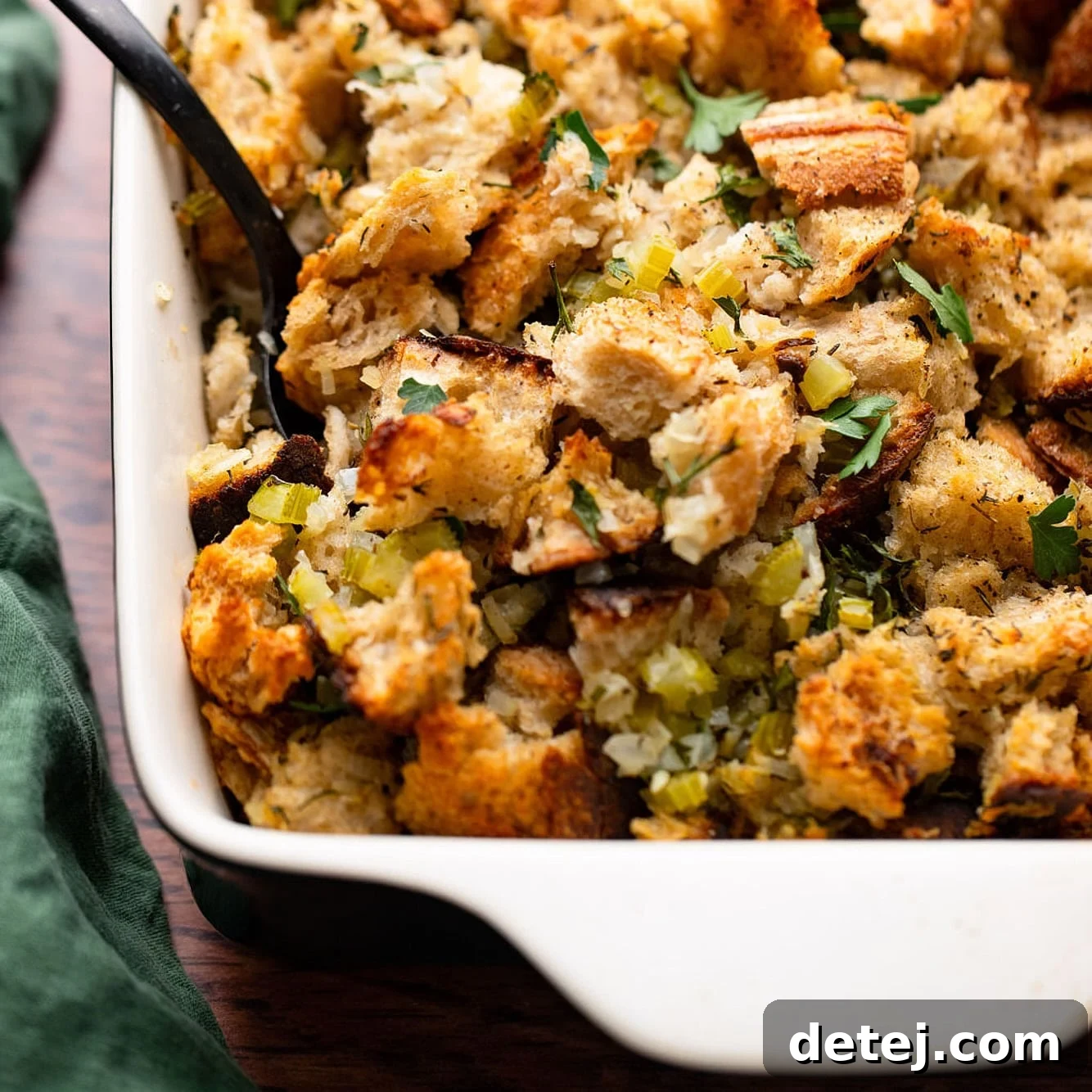
Welcome to the ultimate guide for a truly unforgettable holiday side dish! Thanksgiving, Christmas, or any festive gathering feels incomplete without a comforting, savory stuffing. And for those embracing a plant-based lifestyle, this **Vegan Stuffing** recipe delivers all the classic flavors and textures you adore, completely free from animal products. It’s incredibly delicious, boasts a perfectly balanced savory profile, and is crafted with simple, wholesome ingredients you can easily find. Best of all, this remarkably easy dish can be prepared ahead of time, freeing up valuable kitchen space and time on your busy holiday schedule, whether you choose to bake it in the oven or let it simmer to perfection in a slow cooker.
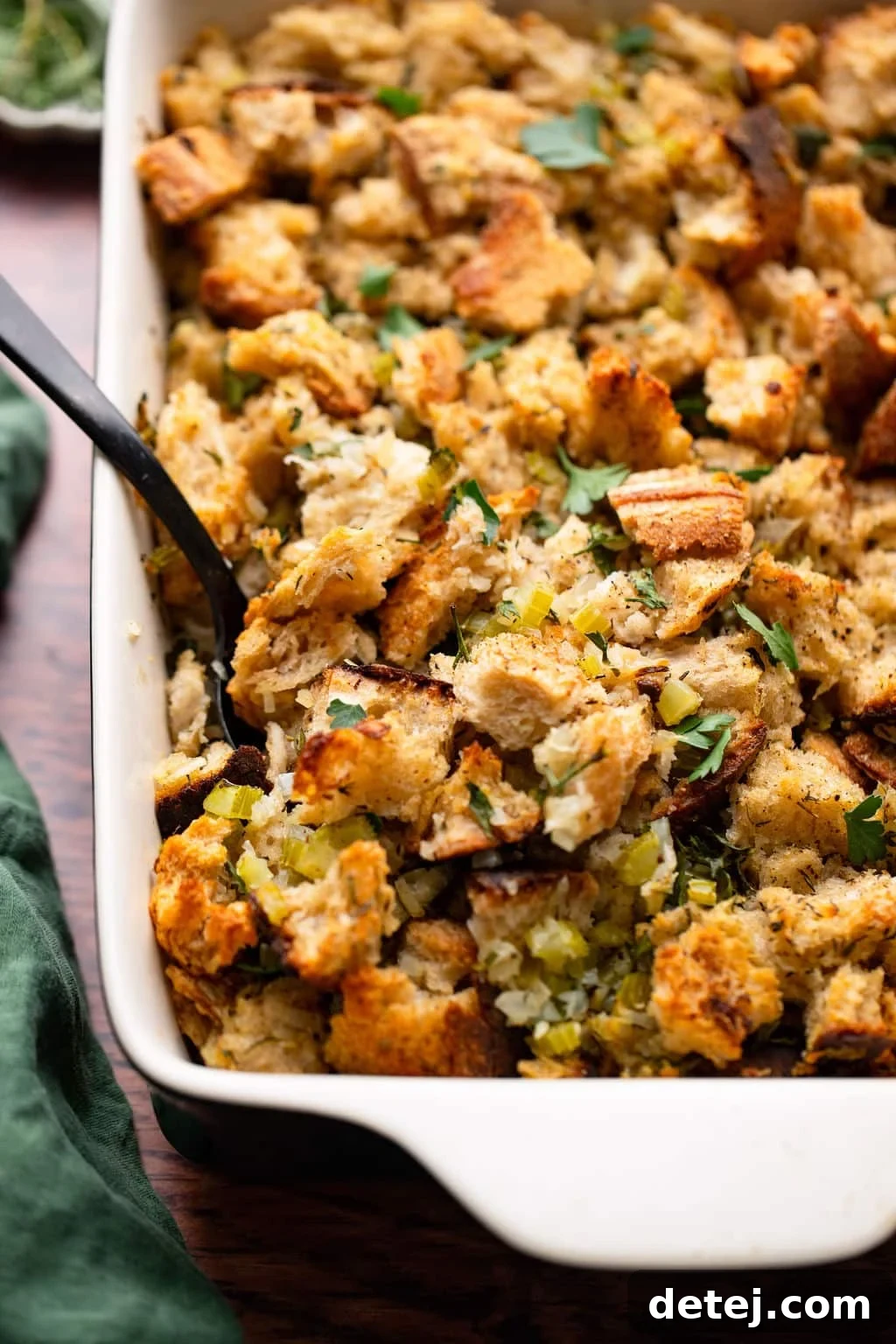
Are you expanding your repertoire of delectable plant-based recipes for the festive season? You’re in luck! This delightful stuffing is just one of many incredible options. Discover a whole collection of festive and flavorful ideas in our comprehensive list of Vegan Thanksgiving Recipes.
Imagine this: hearty chunks of crusty artisan bread, lovingly drenched in rich vegan butter and savory vegetable broth, then infused with a harmonious blend of fragrant herbs and warming spices. Is there truly anything more comforting and reminiscent of the holidays than a perfectly executed Vegan Stuffing? This traditional side dish doesn’t just complement your holiday meal; it defines it. For many, it’s the very essence of festive dining. Fortunately, this particular vegan stuffing recipe isn’t just a delicious alternative; it’s a culinary triumph that’s remarkably simple to prepare, requires only a handful of accessible ingredients, and offers the ultimate convenience of being made days in advance.
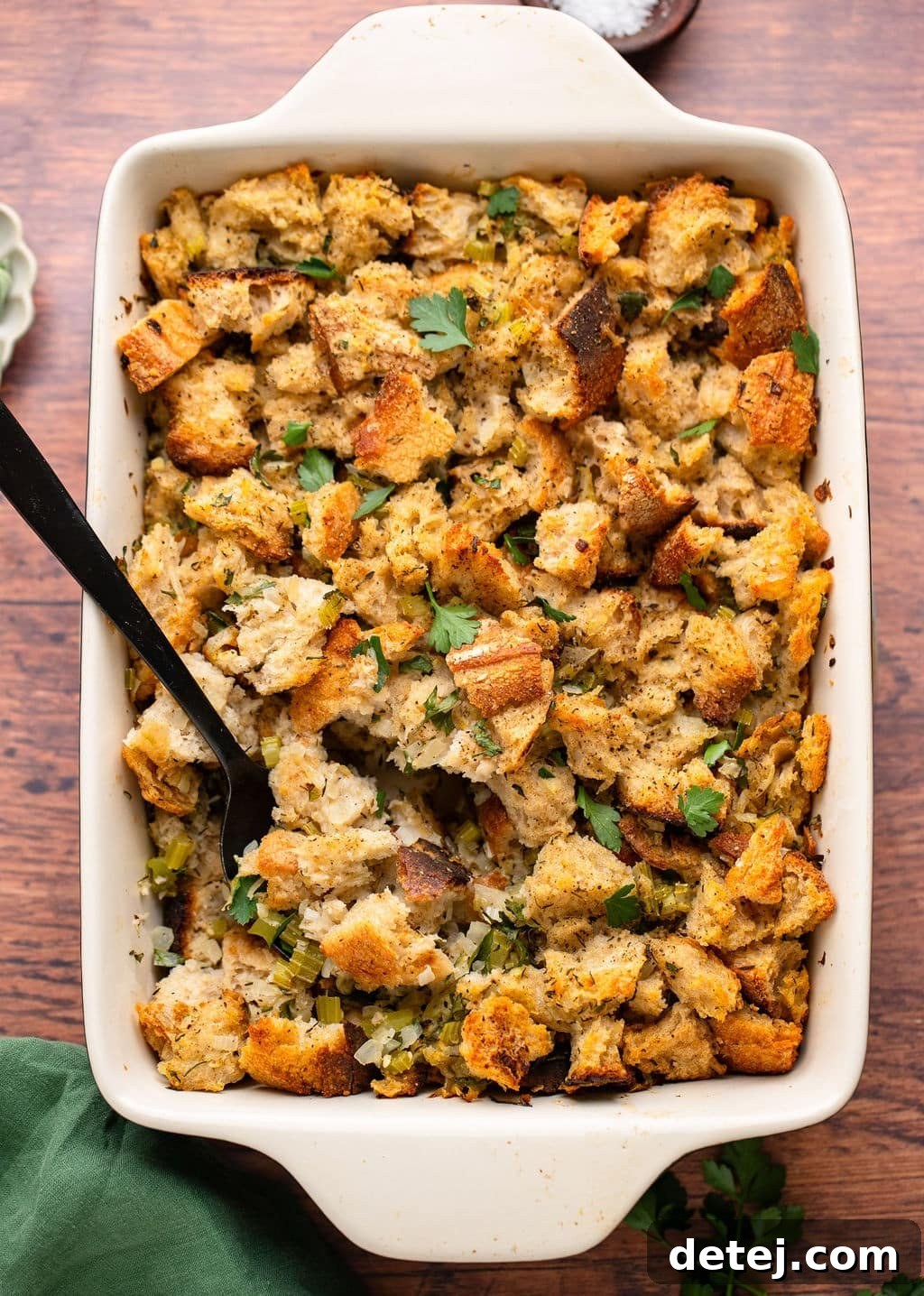
Why This is the Ultimate Vegan Stuffing Recipe for Your Holiday Table
When it comes to holiday cooking, you want a recipe that’s not only delicious but also practical and stress-free. This vegan stuffing stands out for several compelling reasons, making it an absolute must-have for your festive feast.
- Effortless Preparation with Wholesome Ingredients: Forget complex techniques or obscure components. This recipe champions simplicity without compromising on taste. You’ll find a familiar lineup of foundational stuffing ingredients here: robust bread, flavorful vegetable broth, rich vegan butter, fresh vegetables, and an aromatic medley of herbs and spices. Each ingredient plays a crucial role, yet none require special sourcing, making this dish incredibly approachable for home cooks of all skill levels. It’s truly a testament to how uncomplicated vegan cooking can be, proving that extraordinary flavor doesn’t need an elaborate ingredient list.
- Capturing the Authentic Savory Essence: Traditional stuffing, often baked within or alongside a turkey, is celebrated for its deep, savory, and often poultry-infused flavors. Replicating this robust taste in a vegan version can be a challenge, but not with this recipe. We achieve that coveted umami depth without any meat, thanks to a thoughtfully selected combination of ingredients, most notably a “no-chicken” style vegetable base. This specific element, combined with a precise blend of warming herbs, magically recreates the comforting, layered savory notes that are utterly synonymous with classic holiday stuffing. Your guests, vegan or not, will be amazed by its authentic taste profile.
- Mastering Holiday Convenience with Make-Ahead Options: The holiday season is synonymous with bustling kitchens and packed ovens. This recipe is a lifesaver for busy hosts. The ability to prepare and assemble this entire dish days in advance means less last-minute stress and more time to enjoy with your loved ones. Once prepped, simply cover and refrigerate until baking time, or even freeze it for longer storage. This invaluable feature ensures that a warm, golden-brown stuffing can grace your table without monopolizing precious oven real estate or adding to the eleventh-hour cooking frenzy. It’s perfect for ensuring a smooth and enjoyable holiday meal preparation experience.
Essential Ingredients for Your Vegan Stuffing (with Smart Substitutions)
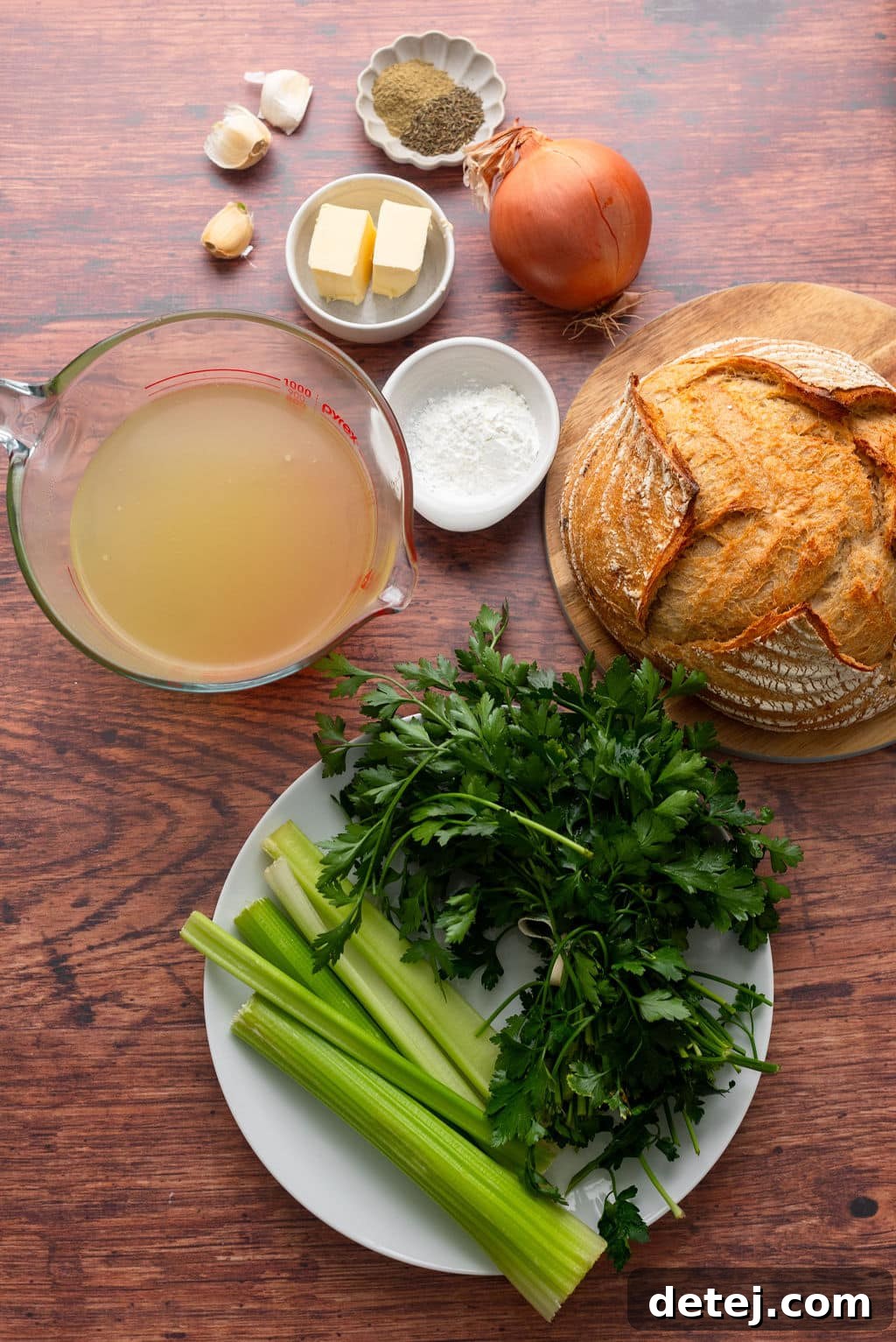
Crafting the perfect vegan stuffing begins with understanding each ingredient’s role and how to choose the best options, or make smart substitutions if needed. Here’s a detailed breakdown:
- Bread: The foundation of any great stuffing is the bread. Opt for a dense, neutral-flavored white bread that can hold its structure after soaking up the broth. Classic choices like crusty French bread or chewy ciabatta are ideal, providing that satisfying texture. Sourdough bread also works beautifully, lending a subtle tangy note that can add an extra layer of complexity to your stuffing. Avoid soft sandwich bread, which can become mushy. The key is to use day-old or thoroughly dried bread cubes to prevent sogginess.
- Vegetable Broth: This is where much of our savory base flavor comes from. To truly mimic the richness of traditional stuffing, I highly recommend using a “Better Than Bouillon No-Chicken Base.” This product delivers an incredible depth of savory, umami flavor that is remarkably similar to poultry broth, making your vegan stuffing taste authentically rich. If “no-chicken” base isn’t available, a high-quality regular vegetable broth will also yield excellent results.
- Cornstarch: In the absence of eggs, which traditionally bind and thicken stuffing, cornstarch is our secret weapon. It acts as a thickening agent, ensuring your stuffing holds together beautifully and achieves that desirable moist-but-not-soggy texture. Arrowroot powder is a fantastic alternative if you prefer or have it on hand, offering similar thickening properties.
- Salt: Seasoning is crucial for flavor balance. The amount of salt needed will depend heavily on the sodium content of your chosen vegetable broth. If using a high-sodium broth, start with less salt and adjust to taste. Conversely, a low-sodium broth might require a bit more. Always taste and adjust before baking.
- Black Pepper: A foundational spice, freshly ground black pepper adds a subtle warmth and a touch of piquant flavor that complements the other savory elements.
- Vegan Butter: Essential for sautéing our aromatics and adding a rich, buttery depth to the overall dish. High-quality vegan butter brands melt beautifully and contribute significantly to the stuffing’s luxurious mouthfeel. As a healthy alternative, good olive oil can also be used, though it will impart a slightly different flavor profile.
- Onion and Garlic: These aromatic powerhouses are the undeniable backbone of any truly exceptional stuffing. Sautéing diced onion until translucent and fragrant, followed by minced garlic, creates a deeply flavorful base that infuses every single crumb of bread with irresistible savory notes. Do not skip these; they are non-negotiable for maximum flavor!
- Celery: Providing a subtle crunch and fresh, earthy flavor, celery is a classic addition to stuffing. It adds textural contrast and helps lighten the richness. For added nutritional value and variety, consider incorporating other vegetables like finely chopped kale, mushrooms, or even bell peppers. More suggestions are detailed in the “Variations” section.
- Fresh Parsley: While dried herbs are essential for warmth, fresh parsley brings a vibrant, herbaceous freshness and a beautiful pop of green color. Chopping it finely and adding it at the end of the mixing process ensures its bright flavor shines through. Dried parsley can be used in a pinch, but fresh truly elevates the dish.
- Dried Herbs (Sage, Thyme, Marjoram): This trio is the heart and soul of Thanksgiving flavors. Sage provides an earthy, slightly peppery aroma; thyme contributes a savory, woody note; and marjoram offers a delicate, floral, slightly sweet essence. Together, they create the iconic comforting scent and taste profile associated with holiday stuffing, filling your home with an inviting autumn fragrance. For an extra touch of gourmet elegance, garnish your finished stuffing with crispy fried sage leaves or fresh thyme sprigs.
Crafting the Perfect Vegan Stuffing: A Step-by-Step Guide
Creating this irresistible vegan stuffing is a straightforward process, but a few key steps ensure a perfectly textured, incredibly flavorful result. The full, printable recipe with precise measurements can be found below in the recipe card.
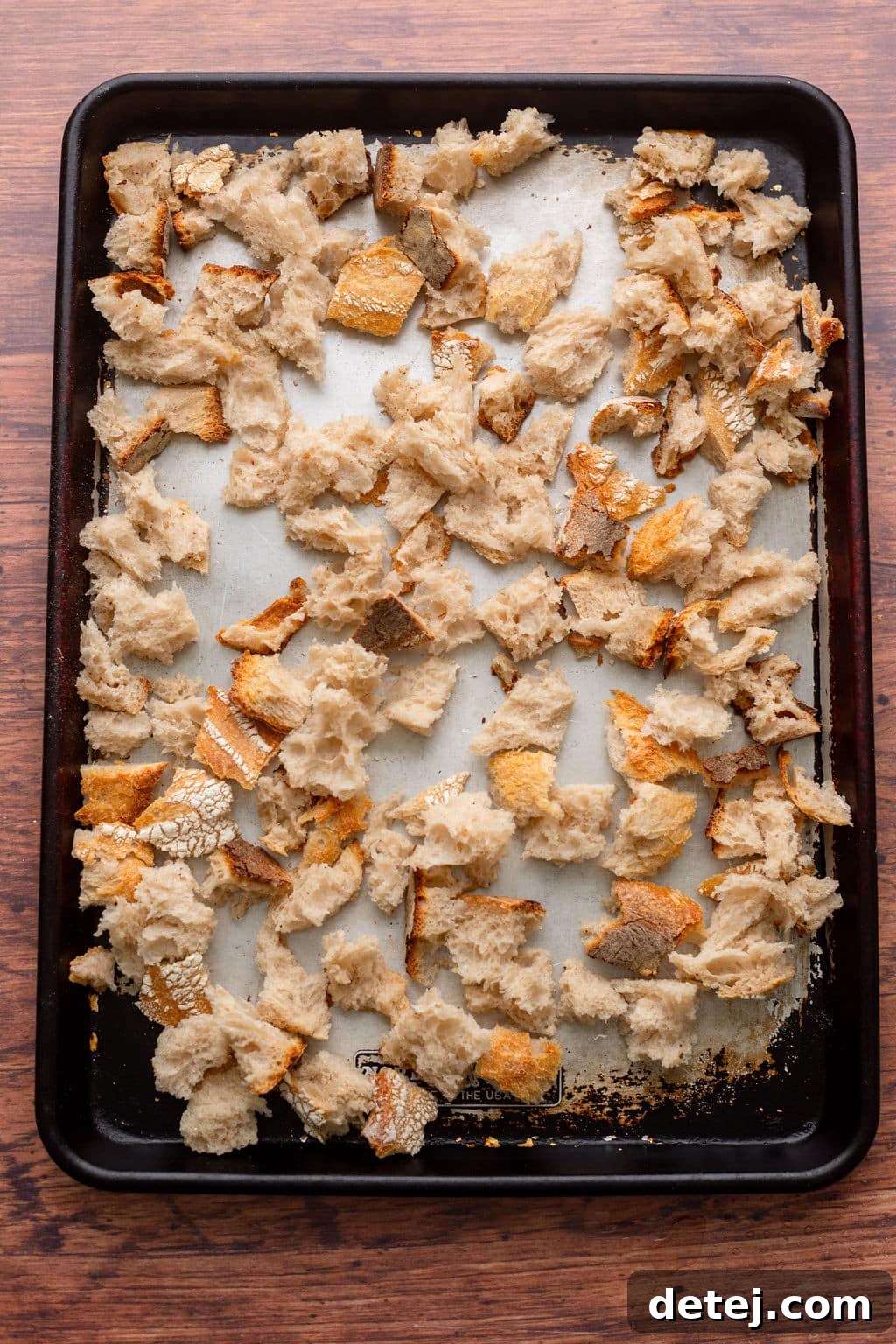
A common pitfall in stuffing preparation is using fresh bread, which inevitably leads to a mushy consistency. The secret to a stuffing that’s soft on the inside and delightfully crisp on the outside lies in properly drying your bread cubes first. Toasting them in the oven for approximately an hour is the quickest and most effective method to achieve this essential dryness, developing a slightly crisp exterior while maintaining a soft interior once baked.
- Prepare and Dry the Bread: Begin by preheating your oven to a low temperature, around 250°F (120°C). Tear or cut your chosen bread into roughly 3/4-inch cubes. Spread these bread cubes evenly across two large, rimmed baking sheets, ensuring they are in a single layer for optimal drying. Bake for about 50-60 minutes, rotating the pans every 20 minutes to ensure even drying. The goal is for the bread cubes to be completely dry and slightly crisp, but not browned or toasted. Once dry, remove from the oven and set aside to cool completely. This step is crucial for preventing a soggy stuffing. After the bread is dried, increase your oven temperature to 375°F (190°C) and adjust one of your oven racks to the center position.
- Prepare the Broth Mixture: In a large bowl or a glass measuring cup, whisk together 3 cups of the vegetable broth with the cornstarch, salt, and black pepper. Whisk thoroughly until the cornstarch is completely dissolved and there are no lumps. Set this mixture aside; it will be added to the bread later.
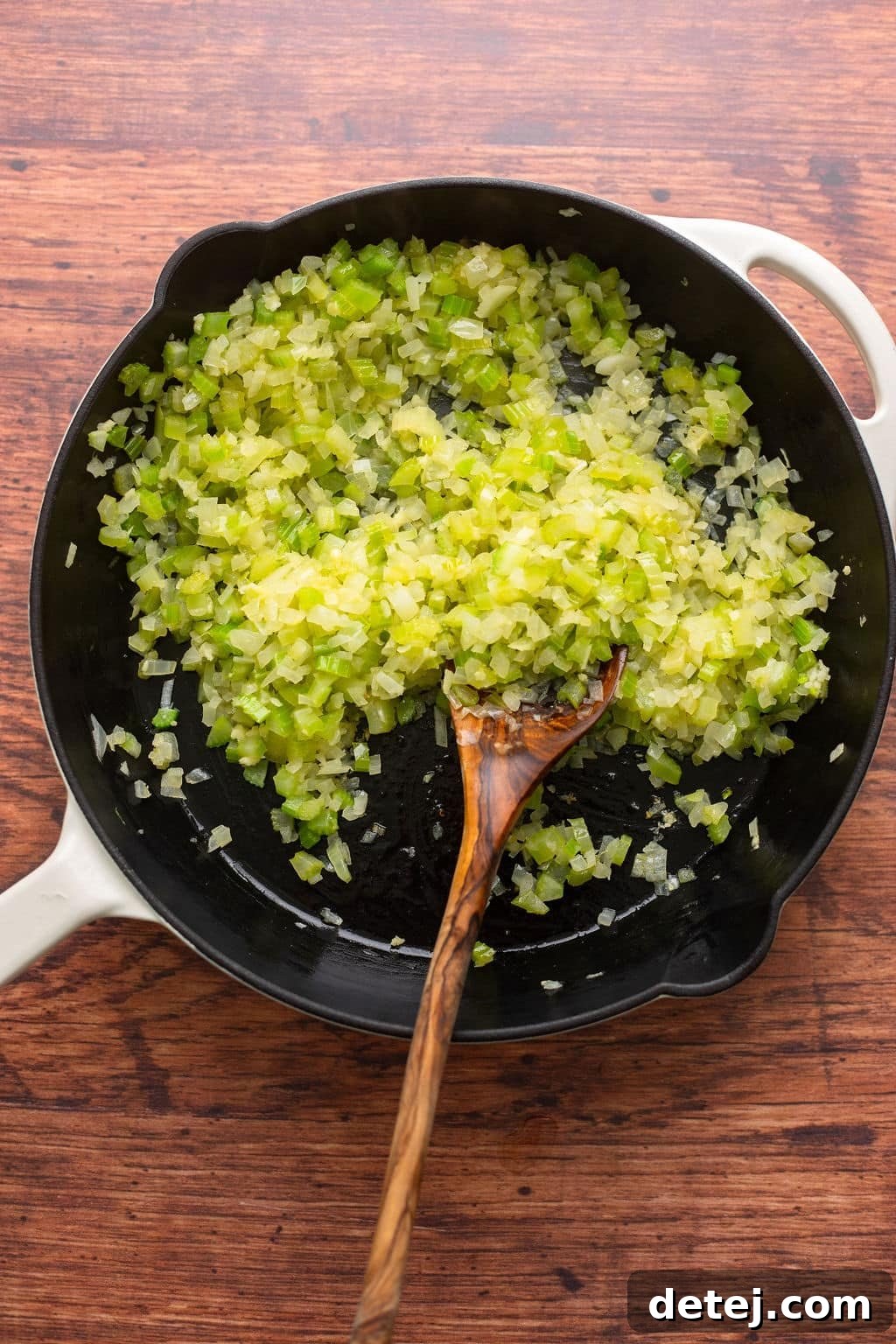
- Sauté the Aromatics: In a large skillet, melt the vegan butter (or heat olive oil) over medium heat. Add the diced onion and chopped celery. Sauté these vegetables for about 5-6 minutes, stirring occasionally, until they become translucent and tender. Then, add the minced garlic to the skillet and cook for just 1 more minute until fragrant. Be careful not to burn the garlic. Remove the skillet from the heat.
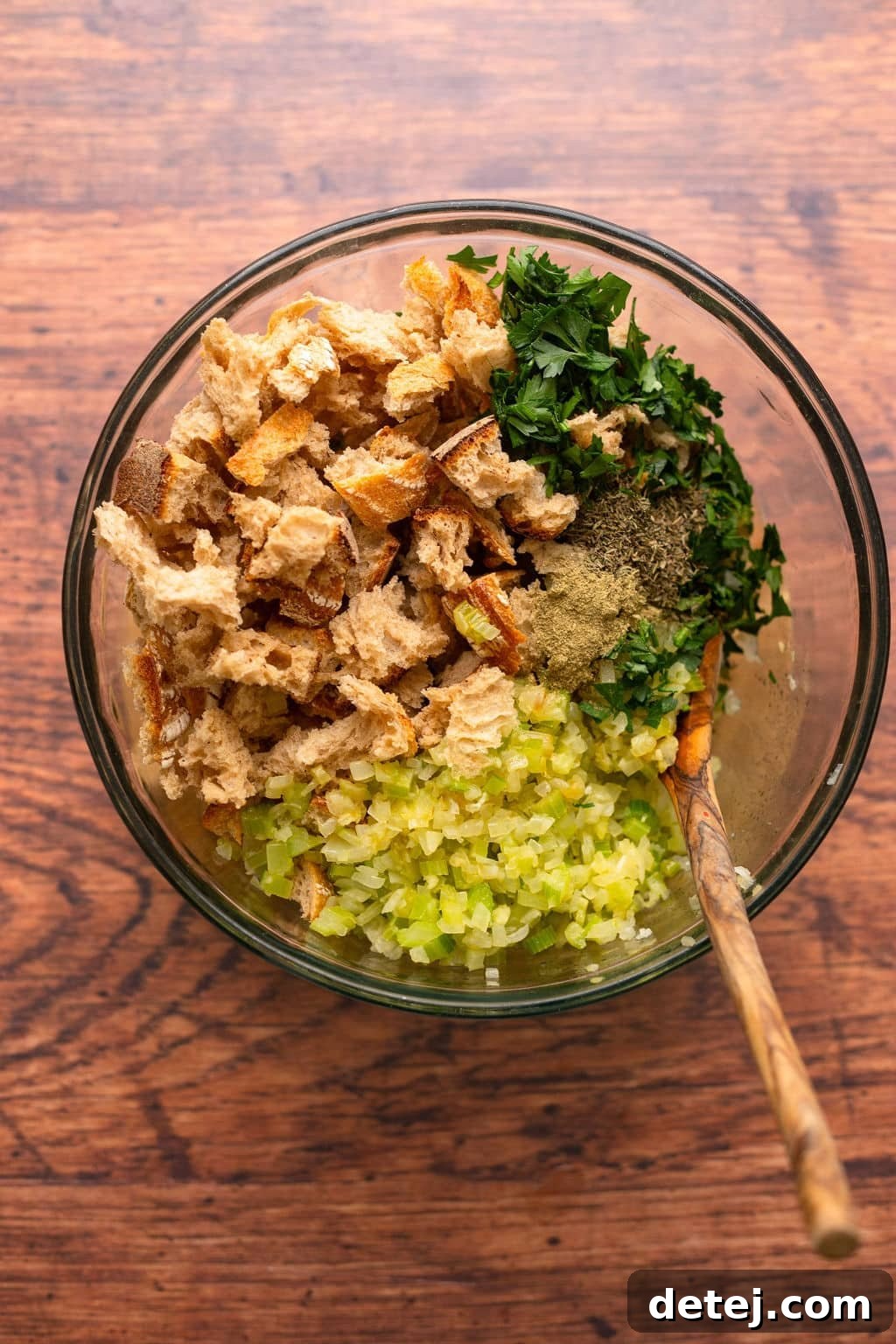
- Combine Ingredients: In a very large mixing bowl, combine the dried bread cubes, fresh parsley, dried sage, dried thyme, and dried marjoram. Add the sautéed onion, celery, and garlic mixture to the bowl with the bread and herbs.
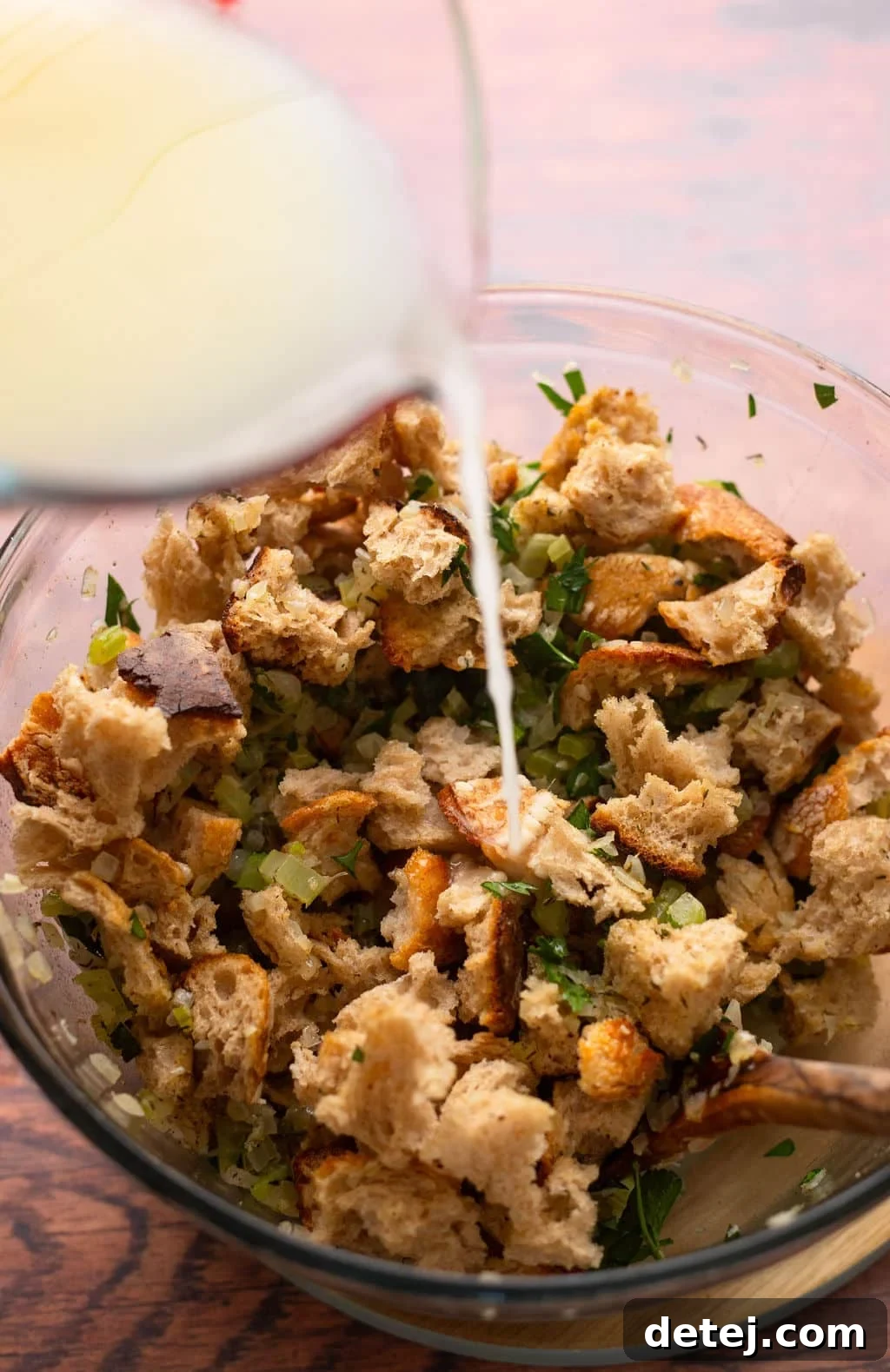
- Moisten the Stuffing: Give your prepared broth mixture one final whisk. Slowly begin drizzling the broth over the bread and vegetable mixture, tossing gently and immediately with a large spoon or your hands. Continue adding broth gradually while tossing, until the bread cubes are just barely soaked through. The aim is for moist bread that retains some structure, not soggy bread. The exact amount of broth needed will vary depending on the type and dryness of your bread (I typically use around 4 cups). Taste a small piece and adjust salt and pepper if necessary.
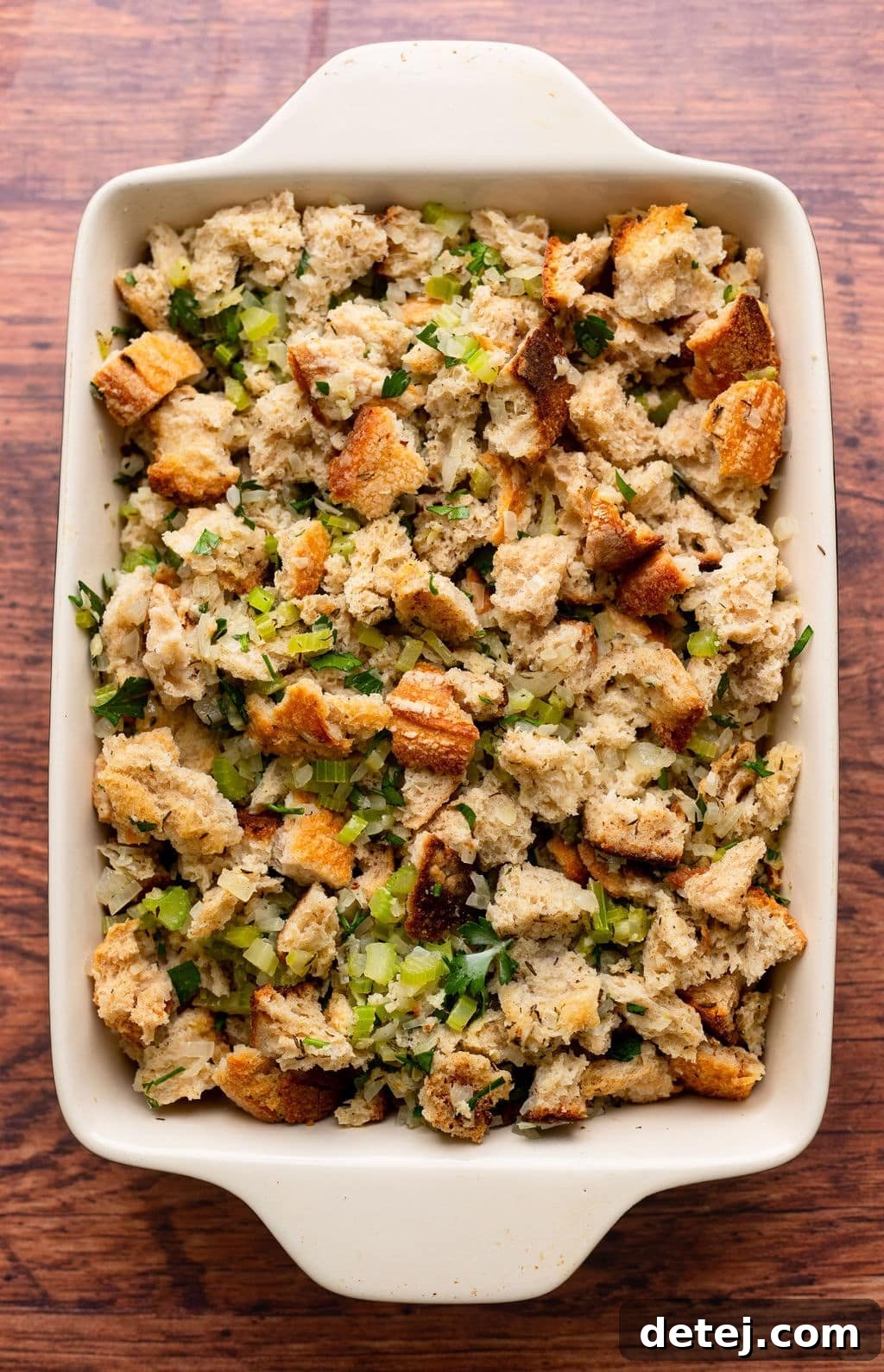
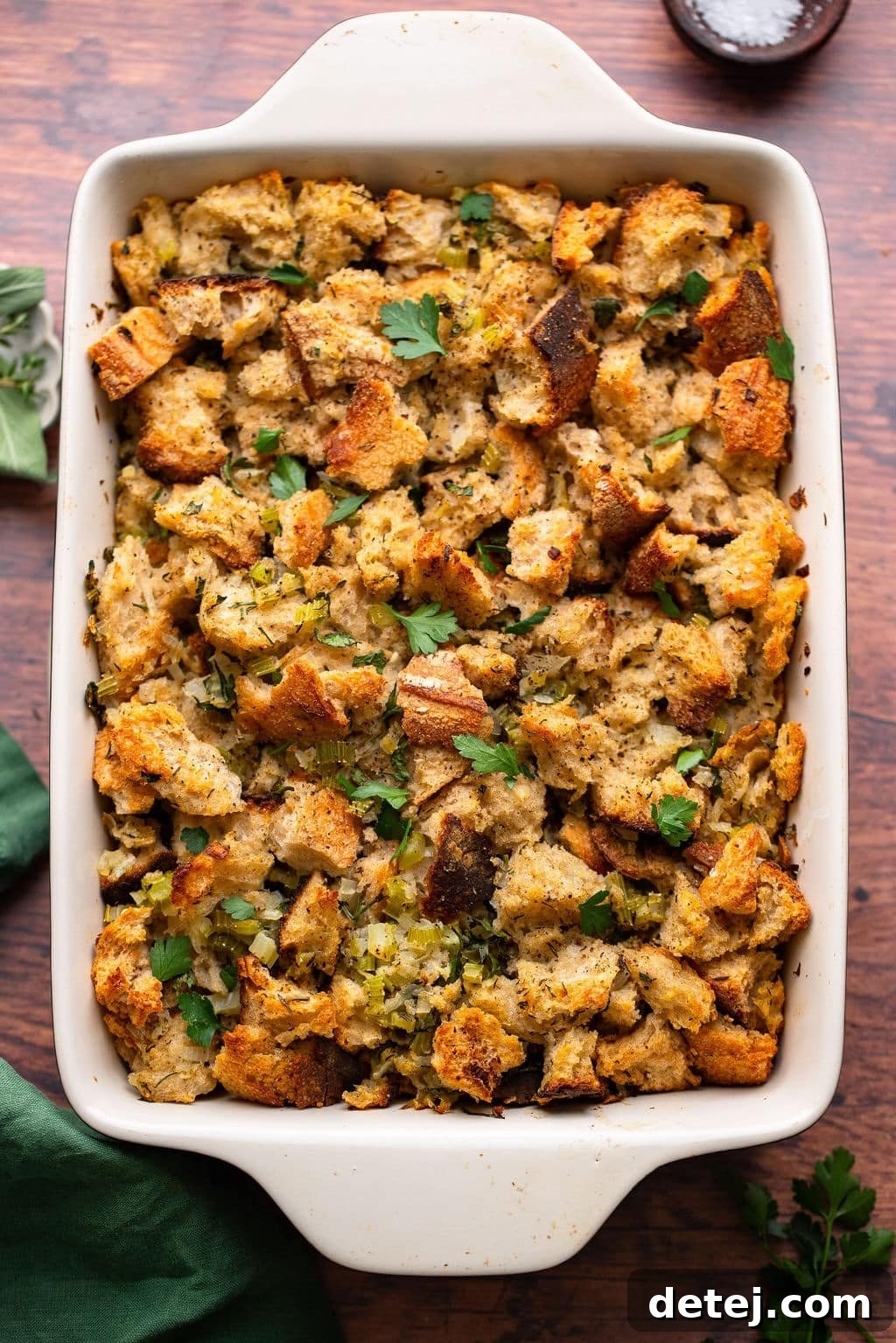
- Bake to Golden Perfection: Transfer the moistened stuffing mixture to a greased 9×13-inch baking dish, spreading it into an even layer. Cover the baking dish tightly with aluminum foil and bake in the preheated 375°F (190°C) oven for 30 minutes. After 30 minutes, remove the foil and continue baking uncovered for another 20-25 minutes, or until the top is golden brown and crispy. If you desire a deeper golden crust, you can carefully broil it for a few minutes at the very end, but watch it extremely closely to prevent burning.
Once your vegan stuffing emerges from the oven, glistening and golden-brown, resist the urge to immediately serve it. Allowing it to rest in the baking dish for at least 15 minutes is crucial. This resting period allows the flavors to meld further and helps the stuffing set, ensuring it holds together beautifully when served. Present it generously alongside a rich, homemade vegan gravy and prepare for rave reviews!
Slow Cooker Instructions: Free Up Your Oven!
One of the smartest strategies for navigating the bustling holiday cooking marathon is to utilize your slow cooker, especially for dishes like stuffing. This not only saves valuable oven space for other roasted delights but also allows the flavors to meld beautifully over a longer period. To adapt this vegan stuffing recipe for the slow cooker, follow all the preparation steps as outlined above: dry your bread cubes, sauté the aromatics, and mix all the ingredients with the broth and herbs in a large bowl. Once combined, transfer the entire stuffing mixture into a greased crockpot. Cook on the HIGH setting for 30 minutes, then reduce the heat to LOW and continue cooking for approximately 4 hours, or until the stuffing is thoroughly heated through and tender. For a slightly crispy top, you can transfer it to a baking dish and broil for a few minutes at the end, if desired.
Exciting Variations and Customizations for Your Vegan Stuffing
While the classic vegan stuffing recipe is perfect as is, it’s also wonderfully adaptable! Feel free to get creative and customize it to suit your tastes or dietary needs. Here are some fantastic variations to explore:
- Gluten-Free Vegan Stuffing: Making this stuffing gluten-free is incredibly simple. Just substitute the regular artisan bread with your favorite brand of crusty, dense gluten-free bread. Ensure it’s a type that holds up well when dried and moistened, as some softer gluten-free breads can become too crumbly. Follow the same drying and preparation steps for excellent results.
- Vegan Cornbread Stuffing: If you’re a fan of the sweet and savory notes of cornbread stuffing, we highly recommend trying our dedicated vegan cornbread stuffing recipe. It’s specifically designed to capture that unique texture and flavor, making it an absolute must-try for the fall and holiday seasons.
- Boost with More Vegetables: Elevate the nutritional content, color, and texture of your stuffing by incorporating additional sautéed vegetables. Great additions include finely diced carrots, sliced mushrooms (cremini or shiitake add umami), thinly sliced leeks, quartered Brussels sprouts, chopped kale (add it with the other greens), or colorful bell peppers. Sauté these along with the onions and celery until tender before mixing them into the bread.
- Welcome Protein Additions: For a heartier stuffing that doubles as a more substantial side or even a light main course, adding plant-based protein is a fantastic idea. Consider mixing in crumbled or sliced vegan sausage (Field Roast Italian Sausages are particularly flavorful here), cooked green or brown lentils for an earthy protein boost, or shredded leftover seitan chicken. These additions introduce extra texture and a satisfying richness.
- Enhance with Unique Add-Ins: Introduce complex textural elements and bursts of flavor by stirring in a variety of complementary ingredients. Dried cranberries or cherries offer a lovely tart sweetness, while toasted walnuts or pecans provide a delightful crunch and nutty depth. Golden raisins can also add a touch of sweetness and chewiness. Experiment with different combinations to find your favorite!
Frequently Asked Questions About Vegan Stuffing
Here are some common questions about preparing, storing, and enjoying this delicious vegan stuffing:
- Can you make vegan stuffing ahead of time? Absolutely! This recipe is incredibly convenient for advanced preparation, making your holiday cooking much less stressful. Simply follow all the assembly steps, transfer the mixture to your baking dish, then cover it tightly and refrigerate for up to 1 day. For longer storage, you can freeze the assembled, unbaked stuffing (see below). When you’re ready to serve, simply pop it into the oven and bake as directed. If baking from the fridge, you might need to add an extra 5-10 minutes to the baking time. If baking from frozen, expect a significantly longer baking time (potentially 30-60 minutes longer, or until heated through and golden).
- How do you store the leftovers? Storing leftovers is easy! Transfer any cooled leftover vegan stuffing to an airtight container and keep it in the refrigerator. It will stay fresh and delicious for 3 to 4 days. In fact, many find that the flavors deepen and improve overnight, making leftovers even better than the fresh batch!
- Is it freezer-friendly? Yes, this vegan stuffing freezes beautifully, whether baked or unbaked. To freeze unbaked stuffing, assemble it in a freezer-safe baking dish, cover it tightly with foil and then plastic wrap, and freeze for up to 3 months. To bake from frozen, remove the plastic wrap, cover with foil, and bake at 375°F (190°C) for about 60-90 minutes, then uncover and bake for another 20-30 minutes, or until heated through and golden. To freeze baked stuffing, let it cool completely, then wrap individual portions or the entire dish tightly in plastic wrap and then foil. Freeze for up to 3 months. Reheat in the oven from frozen (covered first, then uncovered) until warmed through and crispy.
- How do you reheat leftover stuffing? For the best results and to regain that delightful crispy exterior, reheat leftover stuffing in the oven or an air fryer. If using the oven, preheat to 350°F (175°C), place the stuffing in an oven-safe dish (add a splash of broth if it seems dry), cover with foil, and bake for 15-20 minutes, then uncover for another 5-10 minutes to crisp up. In an air fryer, set it to 350°F (175°C) and reheat for 5-10 minutes, shaking the basket occasionally, until hot and crispy.
Complement Your Holiday Meal: More Thanksgiving Side Dishes
No holiday spread is complete without a variety of delicious side dishes! This vegan stuffing pairs exquisitely with slices of savory vegan turkey roast and any of these other flavor-packed, yet easy-to-make, holiday sides. Create a memorable feast that caters to every palate with these plant-based delights:
- Creamy Mashed Potatoes: Fluffy, rich, and utterly comforting, these mashed potatoes are a staple for any holiday table.
- Vegan Green Bean Casserole: A classic reborn, this creamy and crispy green bean casserole is a crowd-pleaser.
- Sweet Potato Casserole: Indulge in the sweet and savory harmony of a delightful sweet potato casserole, often topped with pecans or marshmallows.
- Butternut Squash Soup: A velvety, warming soup perfect for starting your holiday meal, bursting with autumnal flavors.
- Dinner Rolls: Soft, tender, and irresistible, these homemade vegan dinner rolls are perfect for soaking up all that delicious gravy.
Classic Vegan Stuffing
Pin Recipe
Leave a Comment
Save to FavoritesSaved!
Ingredients
- 2 pounds hearty sourdough or French bread, cut into 3/4 inch cubes (approximately 14 cups cubed)
- 3-4 1/2 cups vegetable broth (such as Better Than Bouillon No-Chicken for best flavor)
- 2 tablespoons cornstarch
- 3/4 teaspoon salt, or more to taste
- 1/2 teaspoon black pepper
- 4 tablespoons vegan butter (or use olive oil instead)
- 2 cups diced yellow onion (about 2 small or 1 large onion)
- 2 cups chopped celery
- 3 cloves garlic, minced
- 1/3 cup fresh parsley, chopped small
- 1 teaspoon dried sage
- 2 teaspoons dried thyme
- 1 teaspoon dried marjoram
Instructions
-
Dry the Bread Cubes: Preheat your oven to a low 250 degrees F (120 degrees C). Spread the bread cubes evenly onto two large rimmed baking sheets. Place in the oven and bake for about 50-60 minutes, rotating the pans every 20 minutes to ensure even drying. The bread should be completely dry and slightly crisp. Remove from the oven and allow to cool completely.
-
Preheat Oven for Baking: Once the bread is dried, increase the oven temperature to 375 degrees F (190 degrees C). Ensure one of your oven racks is positioned in the center.
-
Prepare Broth Mixture: In a large bowl or glass measuring cup, whisk together 3 cups of the vegetable broth with the cornstarch, salt, and black pepper until well combined and the cornstarch is dissolved. Set this mixture aside.
-
Sauté Aromatics: In a large skillet, melt the vegan butter (or olive oil) over medium heat. Add the diced onion and chopped celery and sauté until they are translucent and softened, which usually takes about 5-6 minutes. Add the minced garlic and cook for 1 more minute until fragrant. Remove the skillet from the heat.
-
Combine Ingredients: In a very large mixing bowl, add the dried bread cubes, fresh parsley, dried sage, dried thyme, and dried marjoram. Now, add the sautéed onion, celery, and garlic mixture to the bowl.
-
Moisten the Stuffing: Give the broth mixture one last whisk, then slowly begin drizzling it into the bowl with the bread and toss immediately. Continue to pour in more broth while gently tossing until the bread is just barely soaked through. You want the bread to be moist but not soggy, and not too dry. The exact amount of broth will depend on your bread, but typically around 4 cups are needed.
-
Bake: Transfer the moistened stuffing mixture to a greased 9×13-inch baking dish and spread it into an even layer. Cover the dish tightly with aluminum foil and bake for 30 minutes. Then, remove the foil and continue to cook uncovered for about 20-25 more minutes, or until the top is golden brown and crispy. If you prefer a deeper browning, you can broil it for just a few minutes, but watch carefully to prevent burning. Let rest for 15 minutes before serving. Enjoy!
-
Make Ahead Option: This stuffing is ideal for making ahead of time. Dry out the bread cubes, sauté the vegetables, and then combine all ingredients with the broth and herbs in your casserole dish. Cover it tightly and refrigerate for up to a day, or freeze for longer storage (up to 3 months). When ready to serve, simply bake as directed. If baking from the fridge, add a little extra time (5-10 minutes). If baking from frozen, you will need to add significantly more baking time (potentially 30-60 minutes longer) until thoroughly heated through and golden.
Chef’s Notes for Success
- Choosing Your Bread: While sourdough offers a wonderful tang, any hearty, dense bread will work beautifully. French bread or ciabatta are excellent choices. Try to avoid very soft, sandwich-style bread if possible, as it can lead to a mushy texture, though it will still work in a pinch. For a gluten-free version, simply swap with your favorite crusty gluten-free loaf. Store-bought dried bread cubes can be used for convenience, but the flavor and texture won’t be as robust as freshly dried bread.
- Broth Selection: The quality of your broth profoundly impacts the final flavor. I consistently use Better Than Bouillon Vegetable Flavor, but for an exceptional savory depth that closely mimics traditional stuffing, their No-Chicken base is my top recommendation.
- Thickener Alternative: Arrowroot powder can be used as a direct substitute for cornstarch, offering similar thickening properties without altering the taste.
- Seasoning Adjustments: Always taste the stuffing mixture before baking and adjust the salt and pepper to your preference. The sodium content of your broth will greatly influence how much additional salt is needed.
- Storing & Reheating Leftovers: Keep any leftover stuffing in an airtight container in the refrigerator for 3-4 days. To bring back its crispy edges, reheat in the oven at 350°F (175°C) or in an air fryer.