
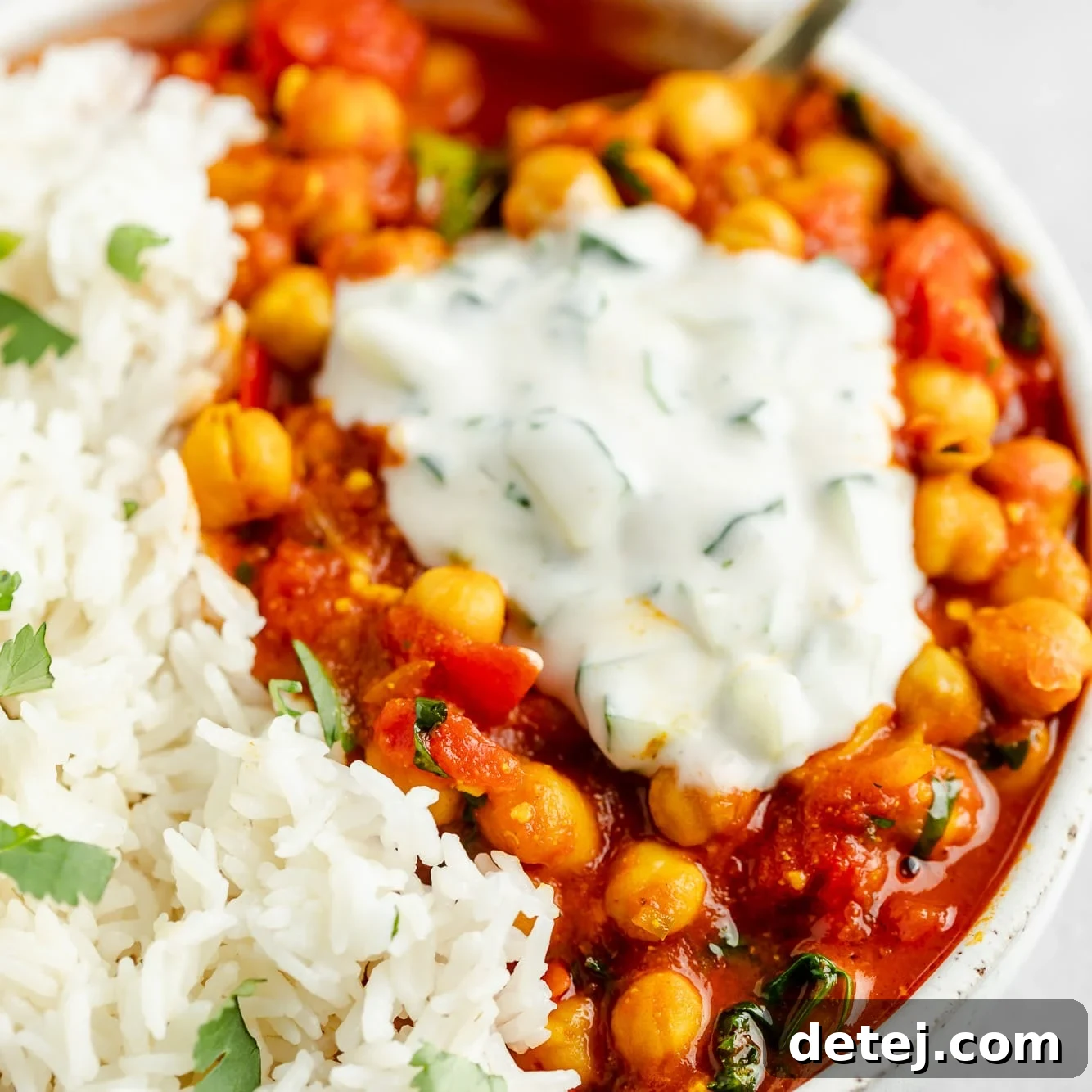
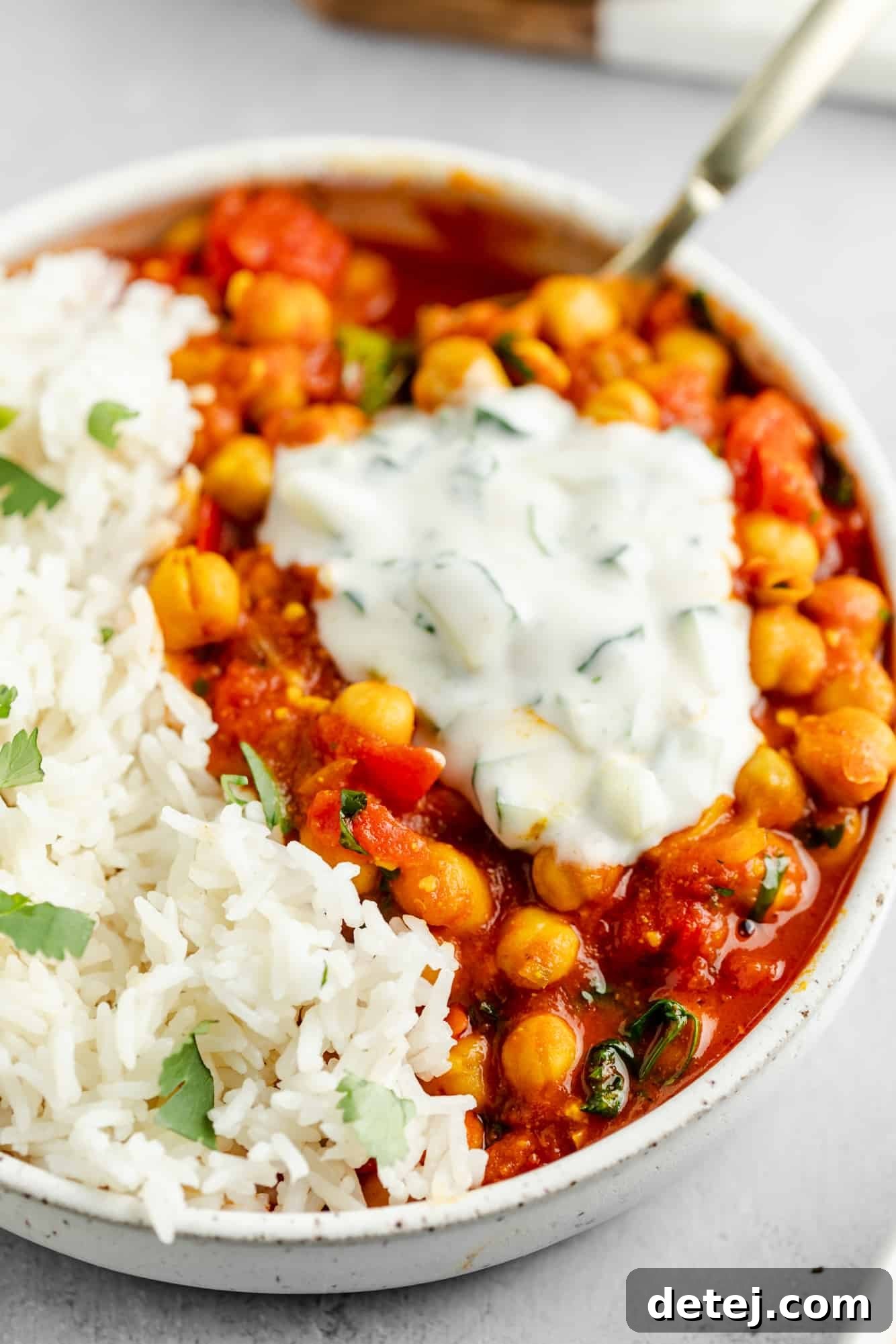
Embark on a culinary journey to the vibrant streets of North India right from your kitchen with this incredibly easy vegan Chana Masala recipe. This comforting and robust chickpea curry, known for its rich tapestry of aromatic spices and hearty texture, is a beloved staple in Indian cuisine. But we’re taking it a step further, pairing it with a dollop of refreshing homemade vegan Raita. The perfect counterpoint to the masala’s warmth, this cooling cucumber and yogurt sauce transforms every bite into an indulgent experience, making this plant-based dish not just a meal, but a delightful adventure for your taste buds.
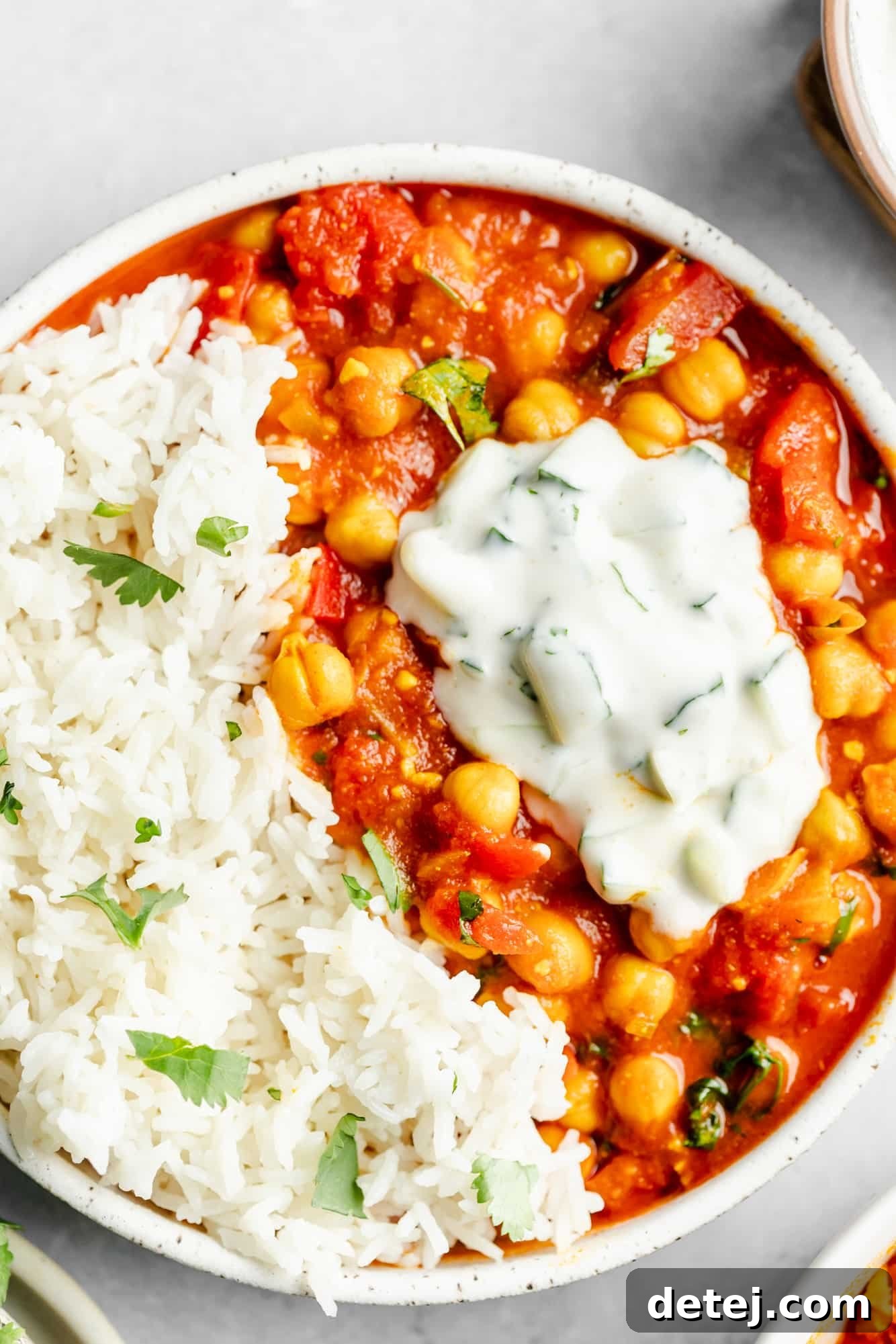
Easy Vegan Chana Masala: A Flavorful Journey with Cooling Raita
Chana Masala, a name that literally translates to “spiced chickpeas” (from “chana” meaning chickpeas and “masala” meaning spice mixture), is a quintessential North Indian curry that boasts a legacy of flavor and nourishment. This cherished dish features plump, protein-rich chickpeas simmered to perfection in a thick, savory gravy crafted from tomatoes, onions, and an intricate blend of traditional Indian spices. It’s a testament to the power of plant-based ingredients to create deeply satisfying and flavor-packed meals.
Often found as a comforting menu item at almost every Indian restaurant, Chana Masala offers a filling and flavorful experience that’s hard to resist. The combination of hearty chickpeas and a warmly spiced tomato-onion sauce makes it a true culinary delight, traditionally served with fluffy rice and soft naan bread. For those eager to recreate this restaurant-quality dish in their own kitchen, this quick and easy vegan Chana Masala recipe is a game-changer. Using a handful of budget-friendly and pantry-staple ingredients, you can achieve the same profound flavors and aromatic layers of spice in approximately 30 minutes, making it perfect for a weeknight meal.
One of the most delightful ways to enhance the experience of this warmly spiced vegan chana masala is by pairing it with a generous dollop of vegan Indian yogurt sauce, or Raita. This refreshing condiment, typically made with yogurt, cucumbers, and a touch of spices, offers a welcome cooling effect that beautifully balances the curry’s heat. Our vegan Raita is incredibly simple to prepare using store-bought plant-based yogurt, creating a harmonious contrast that elevates every single bite of the robust masala.
Unpacking Chana Masala: Origins and Essence
Chana Masala is more than just a dish; it’s a celebration of flavors deeply rooted in North Indian culinary traditions. The simplicity of its core ingredients—chickpeas and a spiced gravy—belies the complexity and depth of taste that can be achieved through a carefully balanced blend of spices. While there are numerous regional variations across India, each offering a unique twist, the fundamental concept remains consistent: tender chickpeas enveloped in a rich, aromatic tomato-onion sauce.
Authentic Chana Masala recipes often involve soaking and cooking dried chickpeas from scratch, as well as preparing a fresh, complex spice blend known as “chole masala.” These traditional methods contribute to an incredibly nuanced flavor profile and texture. Our recipe, however, is designed for accessibility and speed, making it an excellent starting point for home cooks who appreciate the convenience of pantry staples while still craving that authentic Indian-inspired taste. We focus on a simplified approach that delivers exceptional results without compromising on flavor, making it a perfect introduction to Indian cooking or a reliable weeknight go-to. For those interested in exploring a truly authentic, traditional rendition of this classic, we highly recommend this recipe from Tea For Turmeric: Authentic Chana Masala.
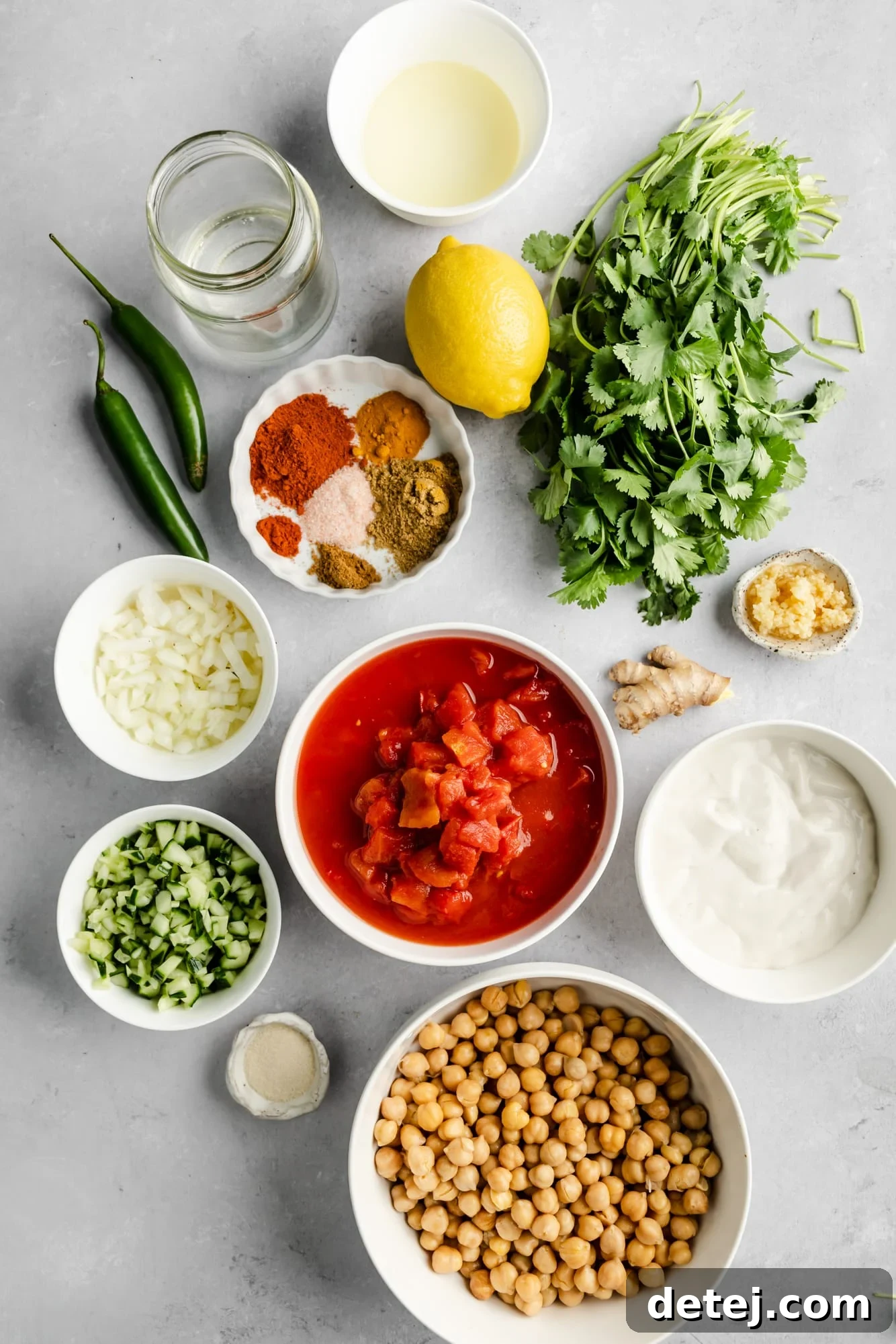
Essential Ingredients for Your Vegan Chana Masala and Raita
Creating this flavorful vegan Chana Masala and its refreshing Raita counterpart relies on a selection of readily available ingredients, many of which are likely already in your pantry. Here’s a detailed look at what you’ll need, along with helpful substitution tips:
- Olive Oil: This forms the foundational fat for sautéing our aromatics and blooming the spices. While olive oil is convenient, you could also opt for a neutral oil like grapeseed or sunflower.
- Yellow Onion: The backbone of our curry sauce, providing natural sweetness and depth. Finely dicing the onion ensures it melts seamlessly into the sauce, creating a smooth, rich base. White onions can be used as a suitable substitute.
- Garlic: Freshly minced garlic is absolutely crucial for infusing the dish with its pungent, unmistakable aroma and contributing significantly to the masala’s overall complexity. While garlic powder can be a last resort (use approximately 1 teaspoon for every 3 cloves), fresh garlic offers an unparalleled vibrancy.
- Ginger: Much like garlic, fresh ginger provides an exquisite zest and a warming, slightly spicy undertone that is fundamental to Indian flavors. Grated ginger releases its aromatic oils beautifully into the sauce. If fresh ginger is unavailable, 2 teaspoons of ground ginger can be used, though the flavor may be less intense.
- Serrano Peppers: These small, fiery chili peppers are optional but highly recommended if you enjoy a delightful kick. They elevate the spice profile of the masala significantly. For a milder heat, jalapeños can be used, or simply omit them entirely if you prefer a non-spicy dish. Always remember to handle chili peppers with care and wash your hands thoroughly after preparation.
- Garam Masala: This proprietary Indian spice blend is often considered the heart and soul of many North Indian dishes. It typically includes a warm, aromatic mix of cumin, coriander, cinnamon, cardamom, black pepper, and other spices. Its complex, fragrant notes are indispensable for achieving an authentic Chana Masala flavor profile. Do not skip this crucial ingredient!
- Cayenne Pepper: A common ingredient used for adding heat. While widely available, for a more traditional Indian warmth and a richer red hue, consider seeking out Indian chili powder (lal mirch) if you can find it. According to SpiceandLife.com, Indian chili powder provides an intense heat that isn’t as sharp as cayenne, and it also contributes to a more vibrant red color in the masala. Adjust the amount to your desired spice level.
- Turmeric: This golden spice provides the characteristic yellow color of Indian curries and imparts an earthy, slightly bitter undertone. It’s also celebrated for its anti-inflammatory properties and numerous health benefits.
- Coriander (Ground): Ground coriander offers a distinctive citrusy, earthy, and slightly sweet flavor that is fundamental to the aromatic complexity of Indian curries.
- Cumin (Ground): Ground cumin adds a warm, earthy, and slightly smoky note, which expertly balances the other spices in the blend.
- Salt: Essential for seasoning, salt brings out and enhances all the individual flavors within the dish. Always taste and adjust the salt levels as you cook.
- Diced Tomatoes (Canned): Canned diced tomatoes, along with their juices, form the luscious, tangy, and bright base of our gravy. The juices are vital for contributing moisture and depth of flavor. Canned crushed tomatoes or whole canned tomatoes (which you can easily crush by hand) are excellent alternatives if diced tomatoes are not available.
- Chickpeas: The star ingredient of Chana Masala! Canned chickpeas are incredibly convenient for this recipe—simply drain and rinse them thoroughly. For those who prefer to cook from scratch, dried chickpeas, soaked overnight and cooked until tender, will offer a slightly firmer texture and can also be used.
- Water: Water is used to thin the sauce to the perfect consistency and aids in the melding of flavors during the simmering process. Vegetable broth can also be used for an added layer of savory depth.
- Sugar: A small amount of sugar is added to help balance the natural acidity of the tomatoes and round out the overall spice profile. It won’t make the dish sweet, but rather ensures a harmonious blend of flavors.
- Cilantro: Fresh chopped cilantro is added at the end for a burst of fresh, herbaceous flavor, and serves as a vibrant garnish. While a strong flavor, it’s a staple in Indian cooking. If you’re not a fan, you can omit it, but it does add a key fresh note.
- Lemon Juice: A squeeze of fresh lemon juice at the very end brightens the entire dish, providing a crucial acidic finish that beautifully ties all the robust flavors together, giving it a fresh lift.
- Vegan Yogurt: This is the creamy foundation for our cooling vegan Raita. It’s important to use a plain, unsweetened variety. Cashew and coconut yogurts tend to work exceptionally well, offering a creamy texture and mild flavor that complements the spices. Feel free to use your preferred plant-based yogurt.
- Cucumber: Similar to how it’s used in Greek tzatziki sauce, finely diced cucumber stirred into the spiced yogurt sauce provides a refreshing crunch and a delightful cooling element. This makes it one of the best toppings for the warmly spiced chana masala, offering a textural and temperature contrast.
Crafting Your Vegan Chana Masala with Homemade Raita
Creating this delicious and comforting meal is a straightforward process, designed for efficiency without sacrificing flavor. Follow these step-by-step instructions to bring this Indian-inspired delight to your table.
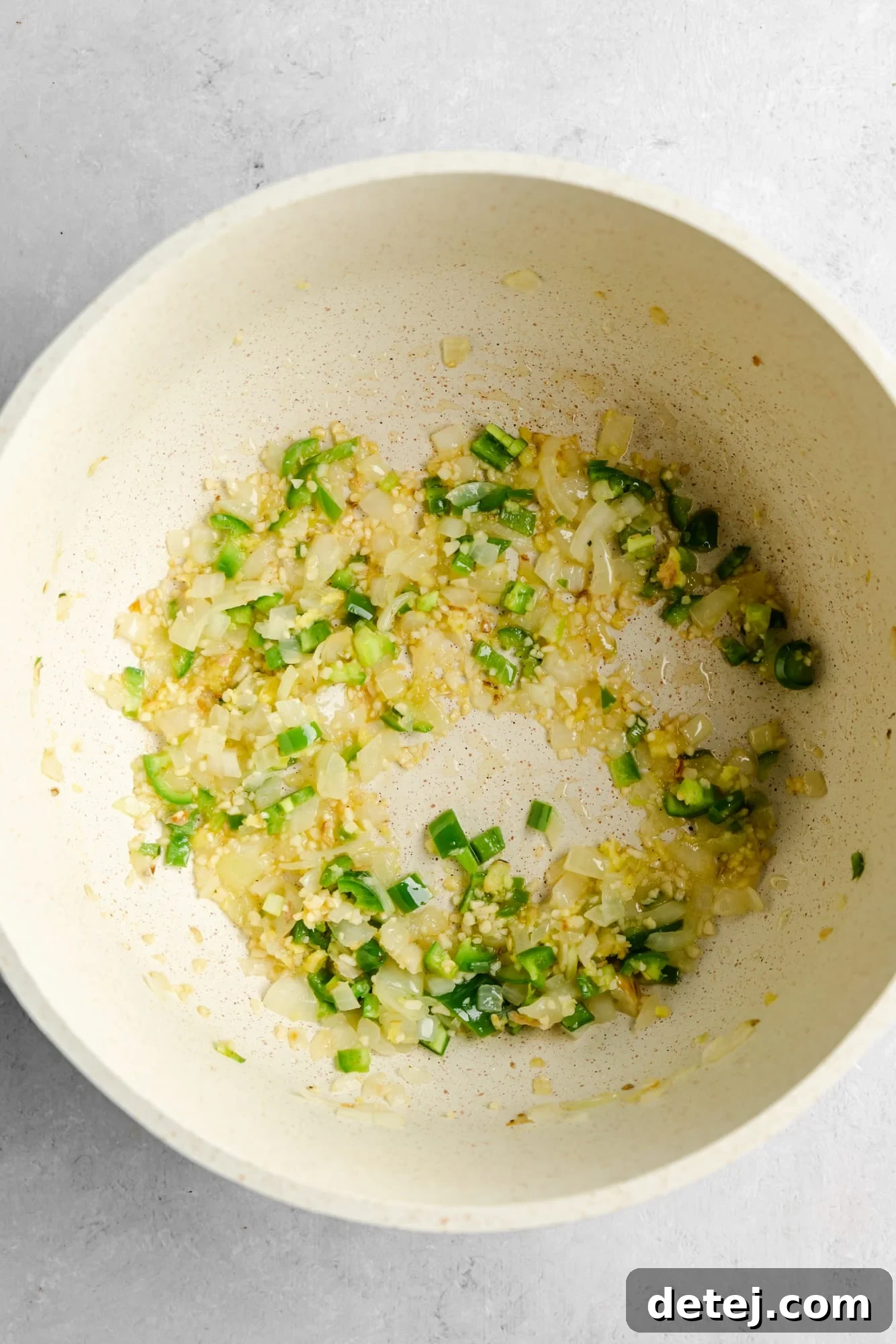
First, begin by preparing your aromatic base for the Chana Masala. Heat the olive oil in a large, heavy-bottomed pot or Dutch oven over medium heat. Once the oil shimmers, add the finely diced yellow onion. Sauté the onion gently for about 3 to 4 minutes, stirring occasionally, until it becomes soft and translucent. This step is crucial for building a sweet and savory foundation for your curry. Next, introduce the minced garlic, freshly grated ginger, and the diced serrano peppers (if you’re using them for a spicy kick). Continue to sauté for another 1 to 2 minutes, stirring constantly, until the aromatics become incredibly fragrant and slightly softened. Be careful not to let the garlic burn, as this can impart a bitter taste.
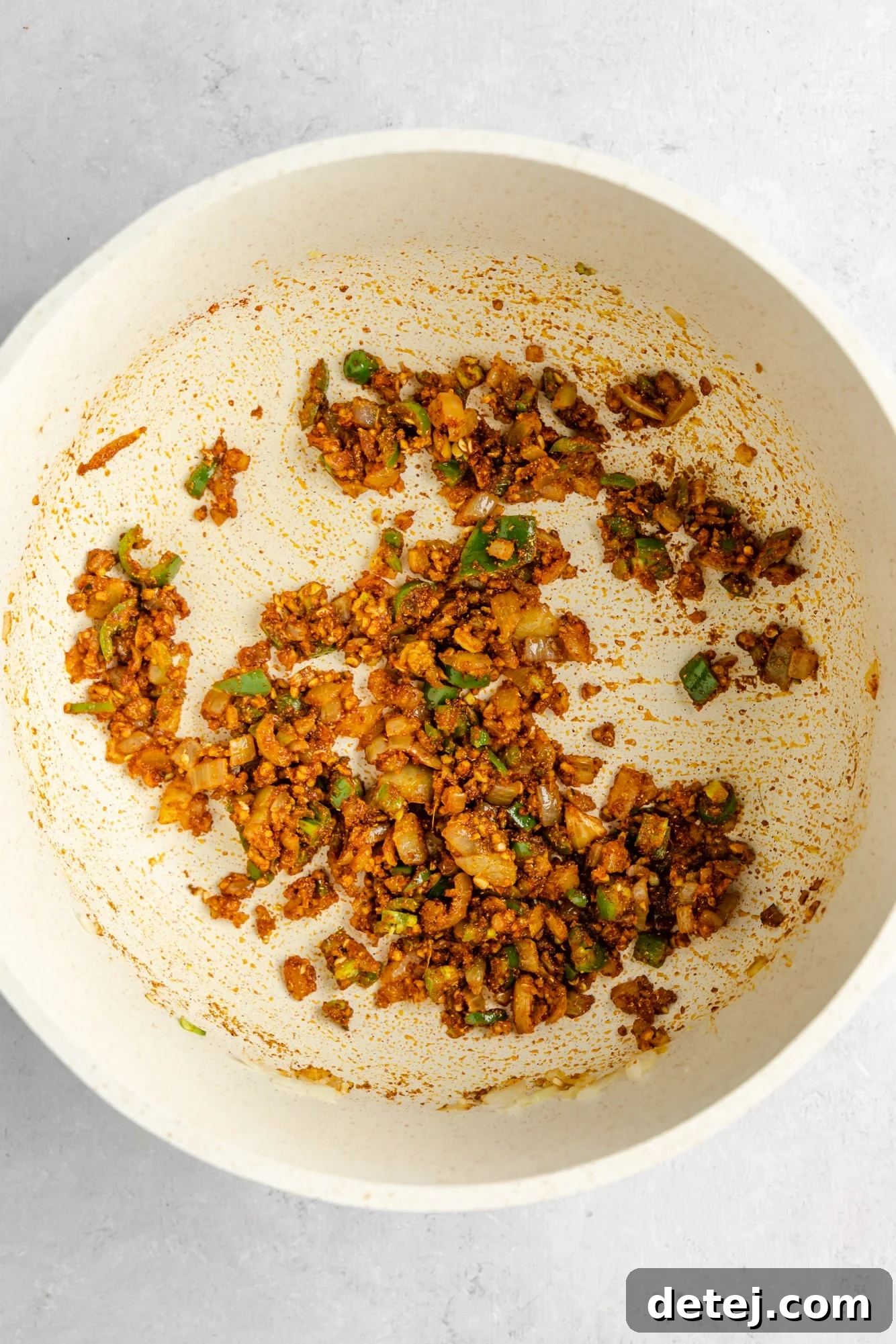
Now, it’s time to introduce the magic of the spices. Stir in the garam masala, cayenne pepper (or Indian chili powder), ground turmeric, ground coriander, ground cumin, and salt into the cooked onion and garlic mixture. Continue to cook everything for approximately 1 minute, stirring continuously. This brief cooking period, often referred to as “blooming the spices,” is essential as it gently toasts them in the hot oil, releasing their full, incredible aromatic potential and deepening their flavors. If the mixture appears too dry, feel free to add a tiny splash more of olive oil to prevent burning.
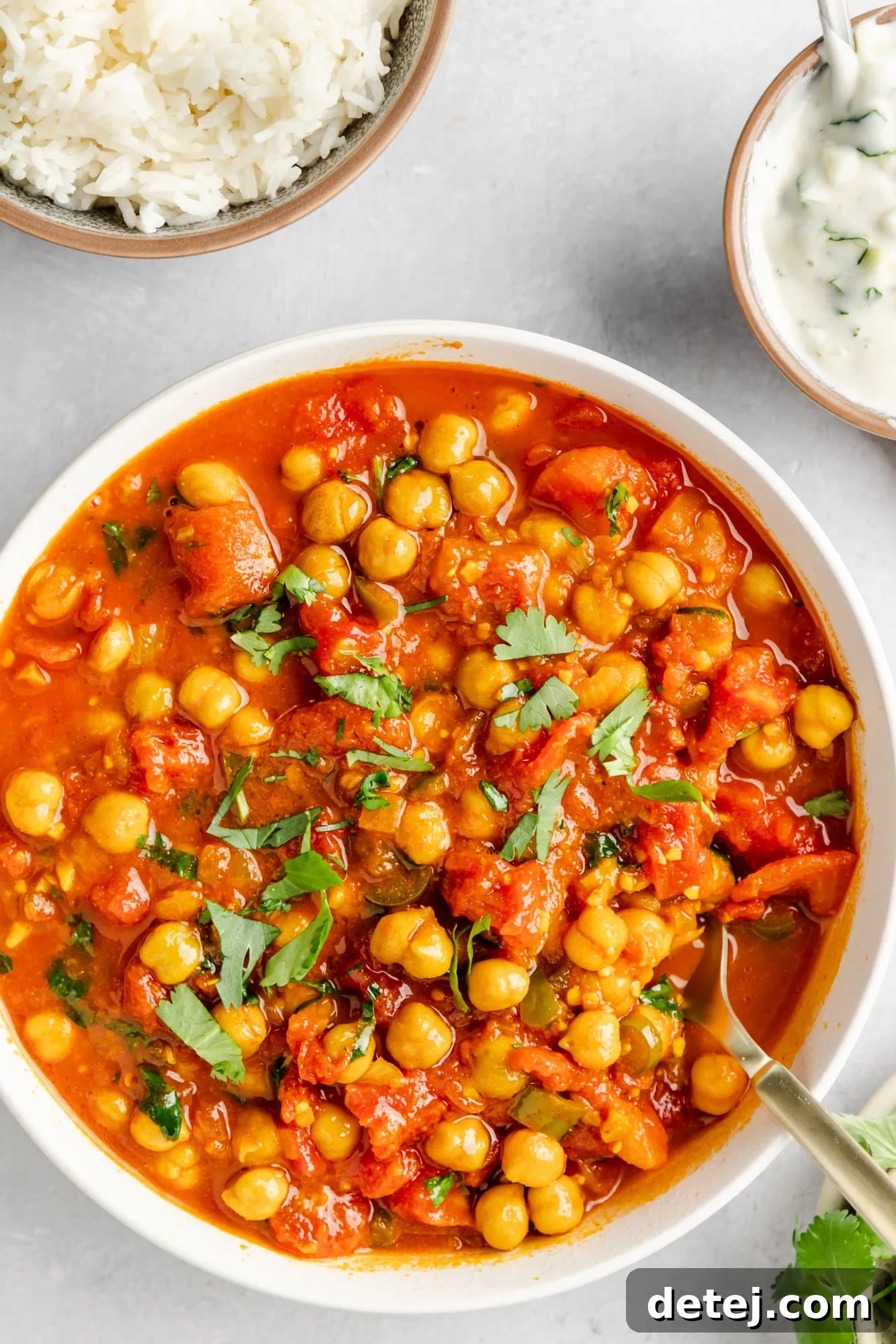
Once the spices are fragrant, pour in the canned diced tomatoes (with their juices!), the drained and rinsed chickpeas, and the water. Give the mixture a thorough stir to combine all the ingredients evenly. Bring the contents of the pot to a gentle boil, then immediately reduce the heat to a low simmer. Allow the Chana Masala to simmer, uncovered, for about 20 minutes. During this time, the flavors will meld beautifully, and the sauce will gradually thicken to a rich, stew-like consistency. Remember to stir occasionally to prevent any ingredients from sticking to the bottom of the pan.
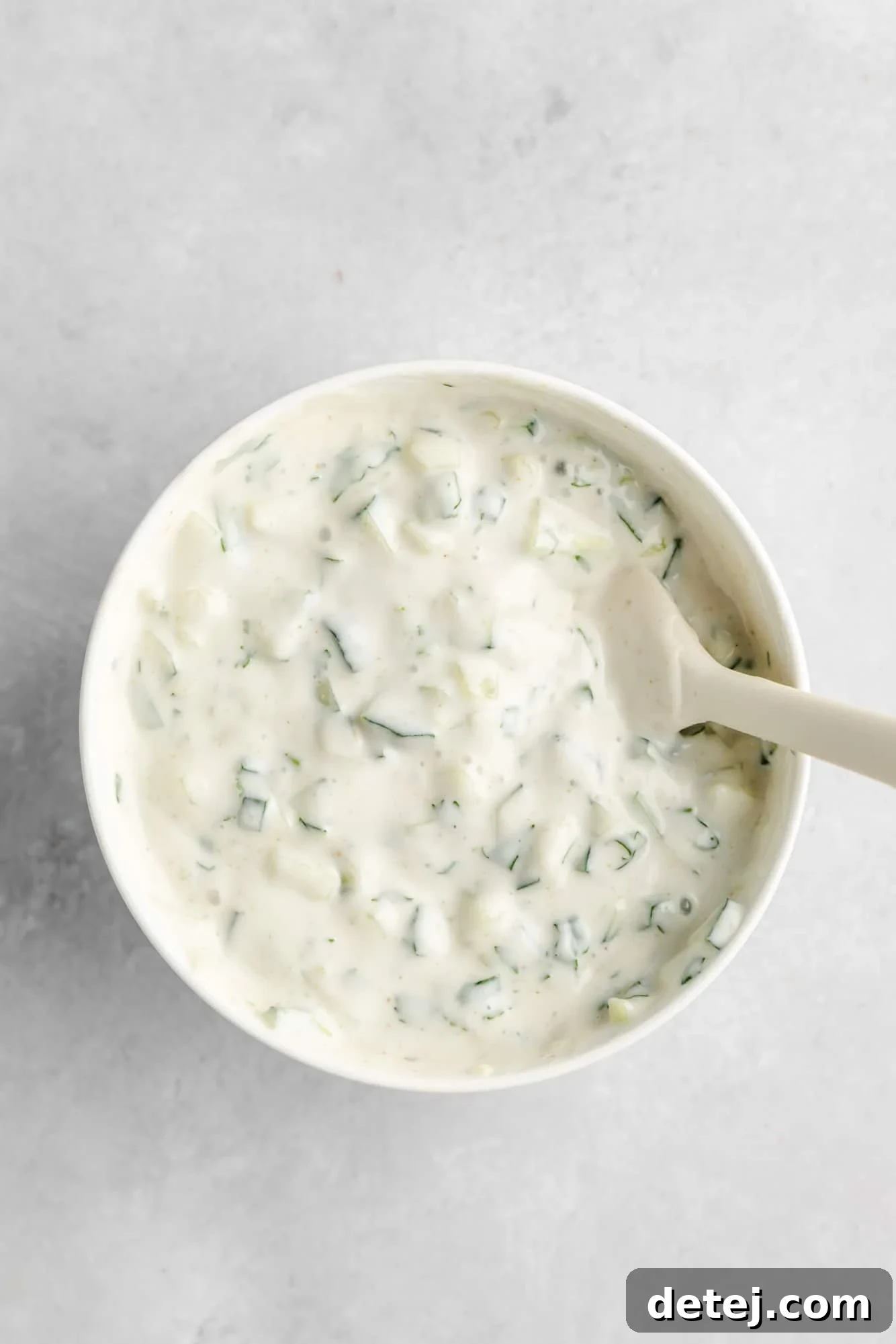
While your Chana Masala is simmering away and developing its deep flavors, you can swiftly prepare the refreshing vegan Raita. In a medium-sized bowl, combine the plain vegan yogurt, finely diced English cucumber, a portion of the chopped cilantro, a pinch of ground cumin, and half a teaspoon of salt. Stir all these ingredients together until well combined. The Raita can then be set aside until it’s time to serve; its cooling properties will be the perfect counterpoint to the warm curry.
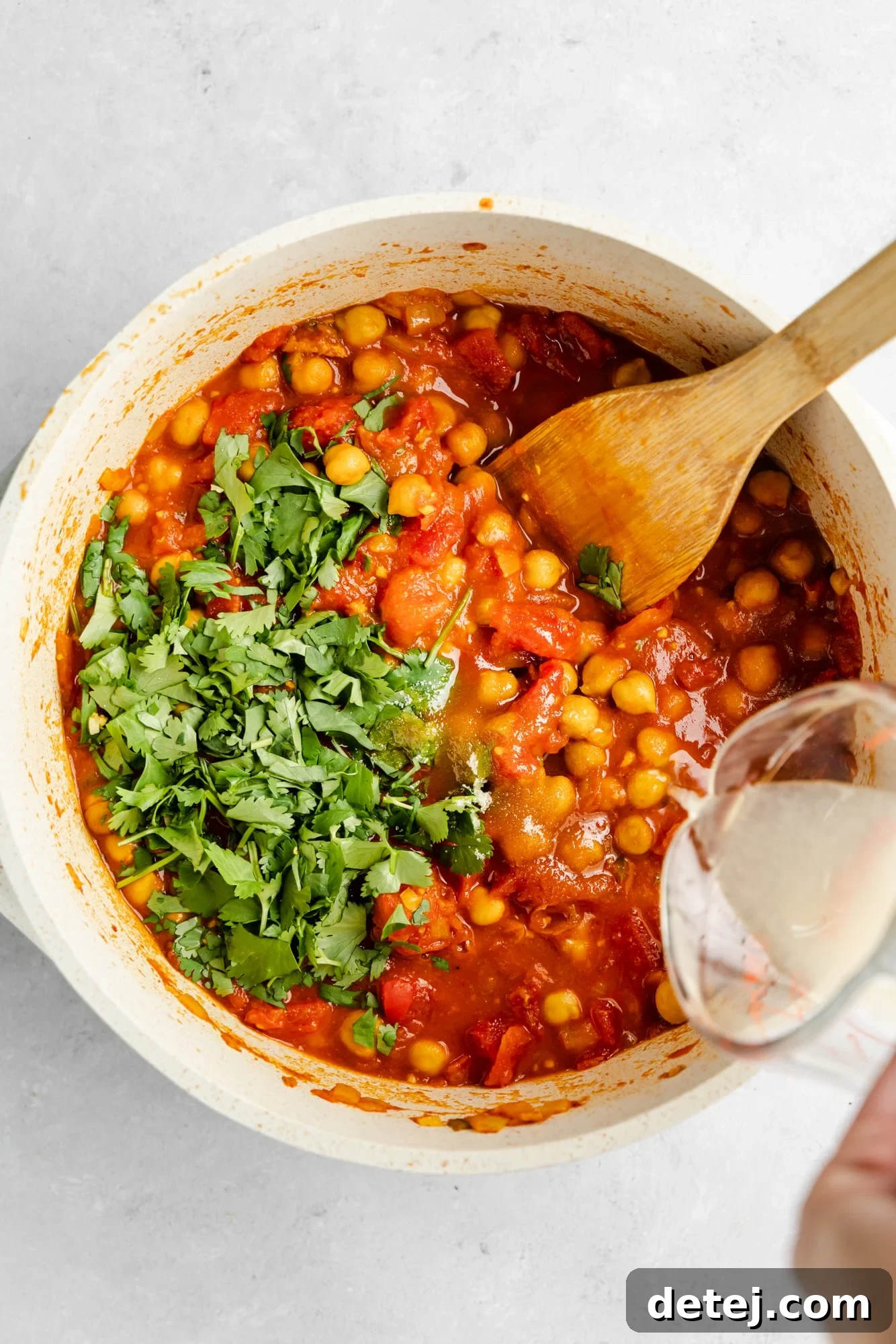
As the Chana Masala nears completion, stir in the sugar, the remaining chopped cilantro (saving some for garnish), and the fresh lemon juice. These additions brighten the dish and help to balance its flavors. Take a moment to taste the curry; this is your opportunity to adjust the seasoning. You might want to add more salt for savory depth, a dash more cayenne pepper if you desire extra heat, or additional spices and seasonings to achieve your perfect flavor balance. The touch of sugar helps to cut through the acidity of the tomatoes and round out the flavor profile, ensuring a harmonious dish.
Finally, to serve this delightful meal, ladle a generous scoop of the warm vegan Chana Masala into individual bowls, typically over a bed of fluffy rice. Top each serving with a dollop of the freshly prepared vegan Raita. Finish by sprinkling the remaining fresh cilantro on top for a burst of color and herbaceous aroma. Serve immediately and savor the rich, complex flavors!
Elevating Your Chana Masala Meal: Serving Suggestions
Chana Masala is a versatile dish that pairs wonderfully with a variety of accompaniments, transforming a simple meal into a satisfying feast. Here are some ideal serving suggestions to complete your culinary experience:
Rice is a must-have: The rich, saucy texture of Chana Masala is perfectly complemented by a bed of fluffy rice. Basmati rice, known for its fragrant aroma and long, slender grains, is a fantastic traditional choice. You could also opt for brown basmati rice for added fiber, or use jasmine rice, quinoa, or even couscous if you prefer. Simply ladle the generous Chana Masala over your chosen grains in a bowl, allowing the sauce to soak in for maximum flavor.
Top it off: Beyond the essential vegan Raita, consider these fresh garnishes. A sprinkle of fresh cilantro adds a burst of freshness and color. For those who crave extra heat, a few thinly sliced fresh chili peppers (such as serrano or jalapeño) can be added on top. A squeeze of fresh lime juice just before serving can also brighten the flavors.
Bread for dipping: No Indian meal is complete without a delicious bread to scoop up every last bit of the flavorful curry. Vegan naan bread, warm and chewy, is an excellent choice for dipping. Alternatively, traditional puri (poori), a light and fluffy fried bread, offers a delightful contrast. You could also serve with simple rotis or parathas. These breads are perfect for soaking up the rich sauce and adding another layer of texture to your meal.
Complete the meal: For a more elaborate spread, consider serving your Chana Masala with a simple side salad, some mango chutney for a sweet and tangy counterpoint, or Indian pickles (achar) for an extra burst of spicy, tangy flavor. A refreshing glass of vegan lassi (a yogurt-based drink) would also make an excellent pairing. Enjoy the vibrant flavors!
Frequently Asked Questions About Chana Masala
No, Chana Masala and Tikka Masala are distinct dishes with unique characteristics, although both are popular Indian curries. Chana Masala, as discussed, is a hearty chickpea curry with a thick, robust tomato and onion-based sauce, emphasizing the texture and flavor of the chickpeas. Vegan Tikka Masala, on the other hand, typically features a creamier, often richer, tomato-based sauce that includes cashew cream or coconut milk, giving it a silkier consistency. The protein in Tikka Masala is usually chickpeas or tofu, marinated and then simmered in the creamy gravy. While both are incredibly fragrant and flavorful, Tikka Masala tends to be milder and richer, with a looser sauce, whereas Chana Masala is often spicier, more rustic, and has a stew-like consistency.
The spice level of Chana Masala can vary greatly depending on the recipe and personal preference. Our version does incorporate some heat, primarily from the serrano peppers and cayenne pepper, designed to give it a pleasant warmth without being overwhelmingly hot for most palates. However, adjusting the spice level to your liking is incredibly easy. If you prefer a milder curry, you can simply omit the serrano peppers entirely. For even less heat, reduce the amount of cayenne pepper or leave it out completely. If you crave more fire, don’t hesitate to add an extra serrano pepper or increase the cayenne to taste. Always remember to taste and adjust seasonings towards the end of cooking.
Both the Chana Masala and the vegan Raita can be stored separately in airtight containers in the refrigerator for optimal freshness. The Chana Masala will maintain its quality and flavor for up to 5 days, often tasting even better the next day as the flavors have more time to meld and deepen. The vegan Raita, due to its fresh ingredients, is best consumed within 3 to 4 days.
Absolutely! Chana Masala freezes exceptionally well, making it an excellent meal prep option. Once cooked, allow the Chana Masala to cool completely to room temperature. Transfer it to freezer-safe airtight containers or heavy-duty freezer bags. It can be stored in the freezer for approximately 3 months. When you’re ready to enjoy it, thaw the Chana Masala overnight in the refrigerator, then reheat gently on the stovetop over medium-low heat, stirring occasionally until it is thoroughly warmed through. You may need to add a splash of water or vegetable broth if the sauce has thickened too much during freezing.
Yes, Chana Masala is generally considered a very healthy dish, especially our vegan version. Chickpeas are a fantastic source of plant-based protein and dietary fiber, which are crucial for digestive health, satiety, and blood sugar management. The dish is also packed with various spices like turmeric, ginger, and garlic, many of which are known for their anti-inflammatory and antioxidant properties. Made with whole ingredients and without heavy creams, it’s a nutritious and fulfilling meal that supports a plant-based diet.
Explore More Indian-Inspired Vegan Delights!
If you’ve enjoyed the rich and comforting flavors of this Easy Vegan Chana Masala, you’ll love exploring these other incredible Indian-inspired recipes. Each one is crafted to bring authentic tastes and simple cooking to your plant-based kitchen:
- Easy Vegan Curry: A versatile and flavorful curry that’s perfect for any night of the week, featuring a medley of vegetables in a creamy, spiced sauce.
- Roasted Eggplant Curry: Indulge in tender roasted eggplant combined with hearty chickpeas in a fragrant curry sauce.
- Red Lentil Dahl: A comforting and wholesome staple, this creamy red lentil dahl is quick to make and bursting with savory spices.
- Easy Vegan Biryani: Experience the aromatic layers of spiced rice and vegetables in this simplified yet delicious vegan biryani.
- Vegan Butter Chicken: A plant-based twist on a classic, featuring tender plant-based protein in a rich, creamy, and mildly spiced tomato sauce.
Easy Chana Masala with Raita
This quick and Easy Chana Masala recipe is loaded with hearty chickpeas and an Indian-spiced tomato onion sauce. A dollop of the refreshing vegan Raita (yogurt sauce) on top cools every bite and makes this Indian-inspired dish extra indulgent.
Ingredients
Chana Masala
- 2 tablespoons olive oil
- 1 large yellow onion, finely diced
- 4 large cloves garlic, minced
- 2 tablespoons fresh grated ginger
- 2 serrano peppers, finely diced (optional)
- 2 teaspoons garam masala
- 1/4 teaspoon cayenne pepper, or to taste
- 1 teaspoon ground turmeric
- 2 teaspoons ground coriander
- 1/2 teaspoon ground cumin
- 3/4 teaspoon salt, plus more to taste
- 28 ounce can diced tomatoes with their juices
- (2) 15-ounce cans chickpeas, drained and rinsed
- 1/2 cup water
- 2 teaspoons sugar
- 1/2 cup chopped cilantro
- 1 medium lemon, juice squeezed
Vegan Raita
- 1 1/2 cups plain vegan yogurt (cashew or coconut recommended)
- 1 cup finely diced English cucumber
- 1/4 cup finely chopped cilantro
- 1/4 teaspoon ground cumin
- 1/2 teaspoon salt
For Serving
- Basmati Rice
- Vegan Naan
Instructions
- In a large pot, warm the oil over medium heat. Add the diced onion and sauté for 3-4 minutes, until translucent.
- Add the minced garlic, grated ginger and diced peppers, if using, and sauté for 1-2 minutes until fragrant.
- Add all the spices and salt and stir them into the onion mixture. Cook for about a minute, stirring constantly. Add a little more oil if it seems dry.
- Pour in the diced tomatoes, chickpeas and the water. Stir well and bring to a boil, then lower heat to a simmer. Simmer, uncovered, for 20 minutes until it thickens somewhat. Stir occasionally to prevent anything sticking to the bottom of the pan.
- Stir in the sugar, some chopped cilantro (save some for serving) and lemon juice. Taste; add more salt, cayenne pepper for heat or any other seasonings as desired.
- For the raita: Combine the yogurt, cucumber, cilantro, cumin and salt in a medium bowl and stir to combine.
- Serve warm with basmati rice, vegan raita and perhaps some Vegan Naan. Sprinkle with a little cilantro, if desired. Enjoy!
Notes
- Chana Masala will keep in the refrigerator for up to 5 days in an airtight container. Raita is best within 3-4 days.
- Chana Masala freezes very well. Let it cool completely before freezing in an airtight container for up to 3 months. Reheat on the stovetop until warm, adding a splash of water if needed.
- If you can, use Indian chili powder (lal mirch) instead of cayenne pepper for a more authentic color and depth of heat.
- You may also substitute crushed tomatoes or whole canned tomatoes for the diced tomatoes in the Chana Masala.
Nutrition
Serving: 1 of 8 servings (no rice) | Calories: 152kcal | Carbohydrates: 21g | Protein: 6g | Fat: 6g | Saturated Fat: 1g | Polyunsaturated Fat: 1g | Monounsaturated Fat: 3g | Sodium: 686mg | Potassium: 360mg | Fiber: 5g | Sugar: 7g | Vitamin A: 208IU | Vitamin C: 18mg | Calcium: 125mg | Iron: 2mg
Did you make this recipe?
Mention @nora_cooks_vegan_ or tag #noracooks! We love to see your creations!