
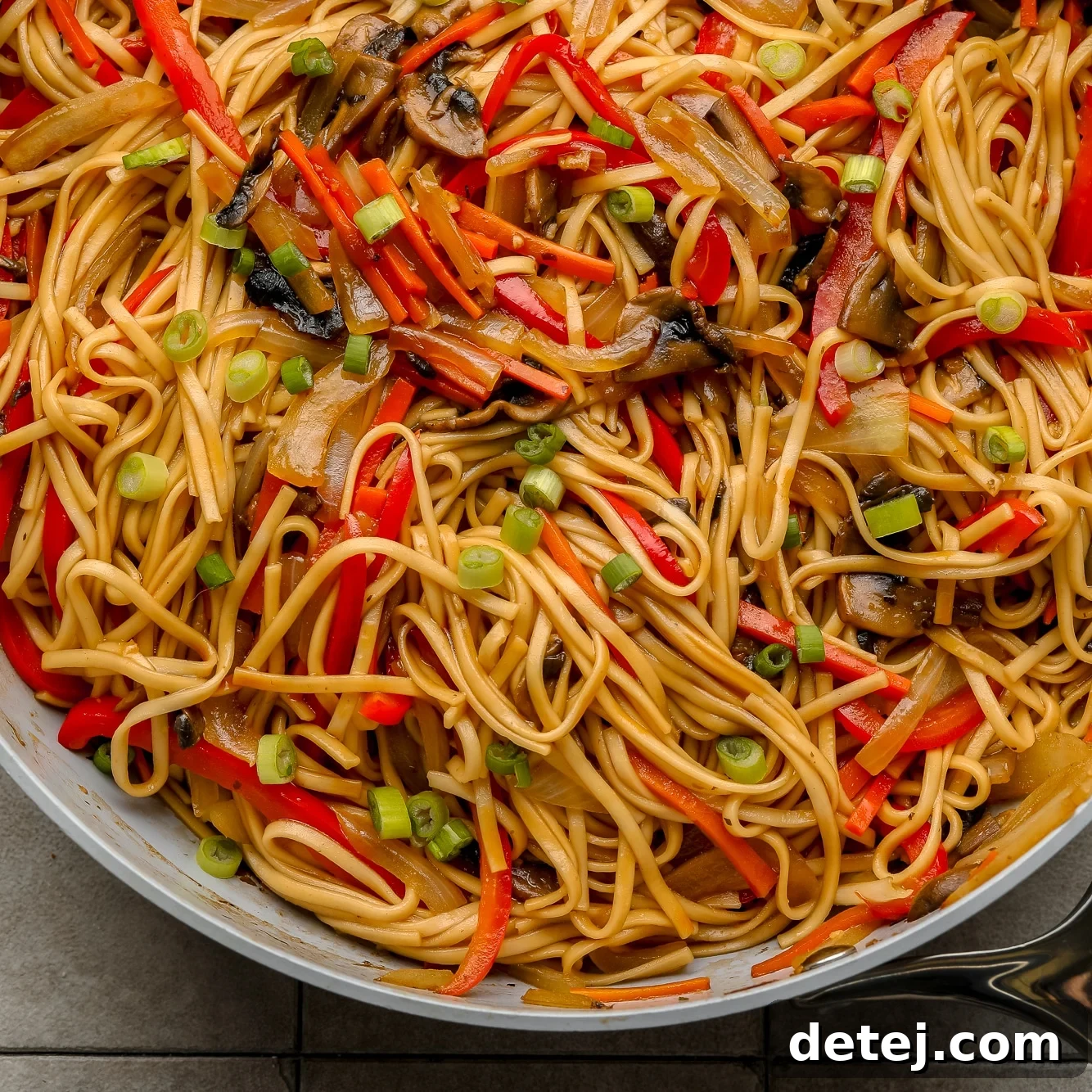
Welcome to your kitchen’s new best friend: Vegan Lo Mein! This incredibly quick, delightfully easy, and endlessly flexible dish transforms humble noodles and fresh vegetables into a vibrant, flavorful meal in just about 20 minutes. Each strand of slippery noodle, perfectly coated in our savory homemade vegan lo mein sauce, promises a slurpalicious experience that’s guaranteed to be a crowd-pleaser for any weeknight dinner or special occasion.
Craving more irresistible vegan noodle creations? Don’t miss out on my mouthwatering Thai Peanut Noodles, the delightfully spicy Easy Drunken Noodles, and the deeply savory Teriyaki Noodles!
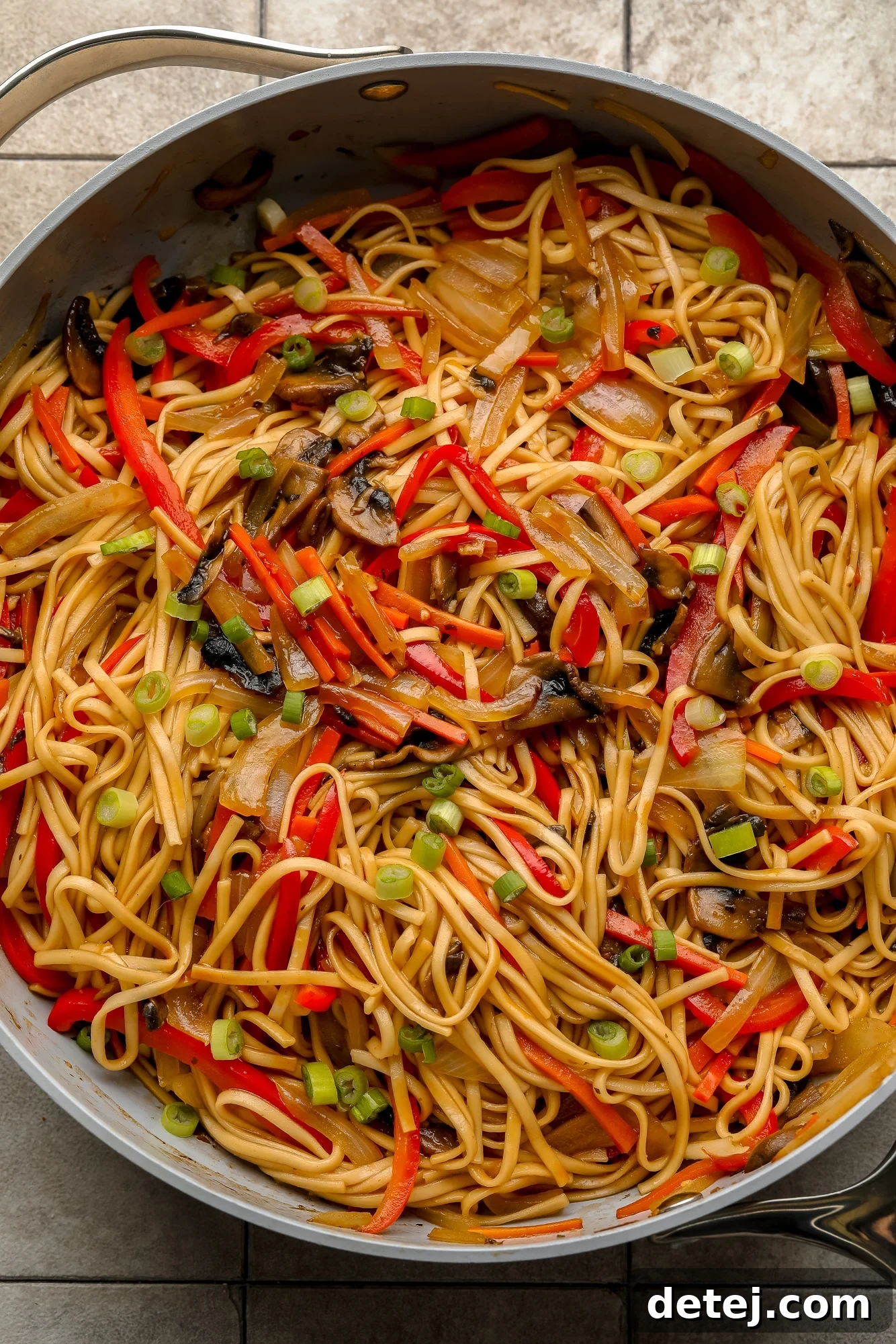
Get ready to elevate your dinner routine with what will quickly become your new favorite easy weeknight meal: Vegan Lo Mein! In a world bustling with busy schedules, the demand for delicious, quick, and wholesome plant-based dinners is ever-growing. This recipe doesn’t just meet that demand; it exceeds it, delivering a satisfying culinary adventure without compromising on speed or flavor.
Imagine this: a delightful medley of soft, perfectly cooked noodles and crisp-tender, stir-fried vegetables, all bathed in a simple yet incredibly flavor-packed lo mein sauce. This isn’t just a meal; it’s an experience, ready to be devoured in under 20 minutes from start to finish. Whether you’re navigating the preferences of picky eaters at home or find yourself needing a delicious and satisfying dinner in a flash, these vegan lo mein noodles are the perfect solution. It’s a versatile dish that caters to various tastes, making it an ideal choice for families, busy professionals, or anyone looking to enjoy the rich flavors of Asian-inspired cuisine at home.
While lo mein is a staple on the menus of many beloved Chinese restaurants, finding a truly authentic and delicious vegan version can sometimes be a challenge. Traditional recipes often include egg noodles and various meat proteins, making them unsuitable for a plant-based diet. But fear not! This homemade rendition allows you to enjoy all the classic flavors and textures of lo mein, completely free from animal products. And honestly, I wouldn’t have it any other way!
The beauty of crafting your own vegan lo mein lies in the complete creative freedom it offers. Not only are the ingredients typically budget-friendly and readily available, but you also gain full control over the quality and quantity of everything that goes into your dish. Want to load up on vibrant veggies? Go for it! Craving extra plant-based protein? Absolutely! My personal favorite addition is crispy air fryer tofu, which adds a wonderful textural contrast and a boost of nutrition. You’re also the master of the flavor profile, able to adjust the sauce to be spicier, sweeter, or more savory to suit your exact palate. This inherent flexibility means the dish can evolve and change every time you prepare it, ensuring it never gets boring and always meets your culinary desires.
What is Lo Mein? Unpacking this Popular Noodle Dish
Lo mein, a cornerstone of Chinese cuisine, translates literally to “tossed noodles.” It’s a beloved dish characterized by its soft, chewy egg noodles, traditionally combined with various meats (such as pork, chicken, or beef) and a colorful assortment of vegetables, all coated in a rich, aromatic, and umami-forward sauce. The essence of lo mein lies in the saucy, slippery texture of its noodles, which are typically boiled and then tossed with the stir-fried ingredients and sauce, rather than fried until crispy.
As mentioned, authentic lo mein is not traditionally vegan-friendly due to the inclusion of egg noodles and meat. However, the beauty and adaptability of this dish make it incredibly easy to transform into a delicious plant-based meal. With a few simple, thoughtful swaps – like using wheat-based or rice noodles instead of egg noodles, and focusing on a bounty of fresh vegetables and plant-based proteins – you can achieve a vegan lo mein that is every bit as satisfying and flavorful as its traditional counterpart. This vegan adaptation captures the soul of lo mein, offering a hearty and flavorful dish for everyone to enjoy.
Crafting Your Own Vegan Lo Mein: A Simple Step-by-Step Guide
Creating this delicious vegan lo mein at home is a straightforward process that yields incredibly rewarding results. Follow these easy steps to bring this vibrant dish to life in your kitchen. For precise measurements and detailed instructions, please refer to the complete recipe card conveniently located at the bottom of this post.
Step 1: Prepare the Irresistible Lo Mein Sauce
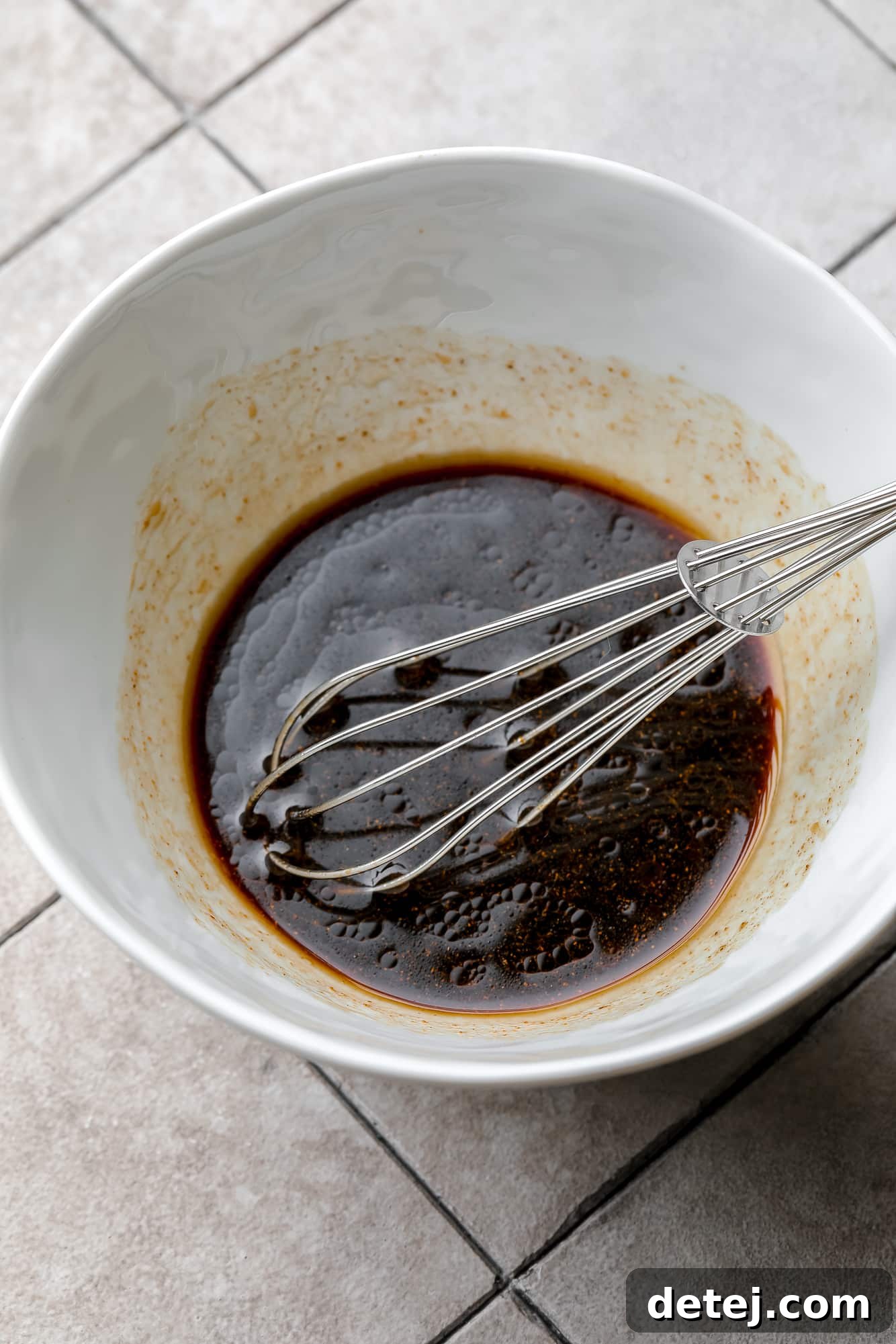
The heart of any great lo mein lies in its sauce, and our vegan version is no exception. In a small mixing bowl, combine all the sauce ingredients. Whisk them together thoroughly until they are perfectly smooth and well-combined. This ensures every flavor note is harmoniously blended. Once prepared, set your sauce aside; it will be ready to work its magic later.
Step 2: Cook the Noodles to Perfection
Next, bring a large pot of water to a rolling boil. Carefully add your chosen noodles (udon wheat noodles are recommended for their delightful chewiness, but other options work too!). Cook them strictly according to the package directions. This is crucial for achieving that ideal slippery, tender texture without them becoming mushy. Once cooked, drain the noodles thoroughly and set them aside. A quick rinse under cold water can sometimes prevent them from sticking, but for lo mein, it’s often best to keep them warm and slightly starchy for better sauce adhesion.
Step 3: Sauté the Flavorful Vegetables
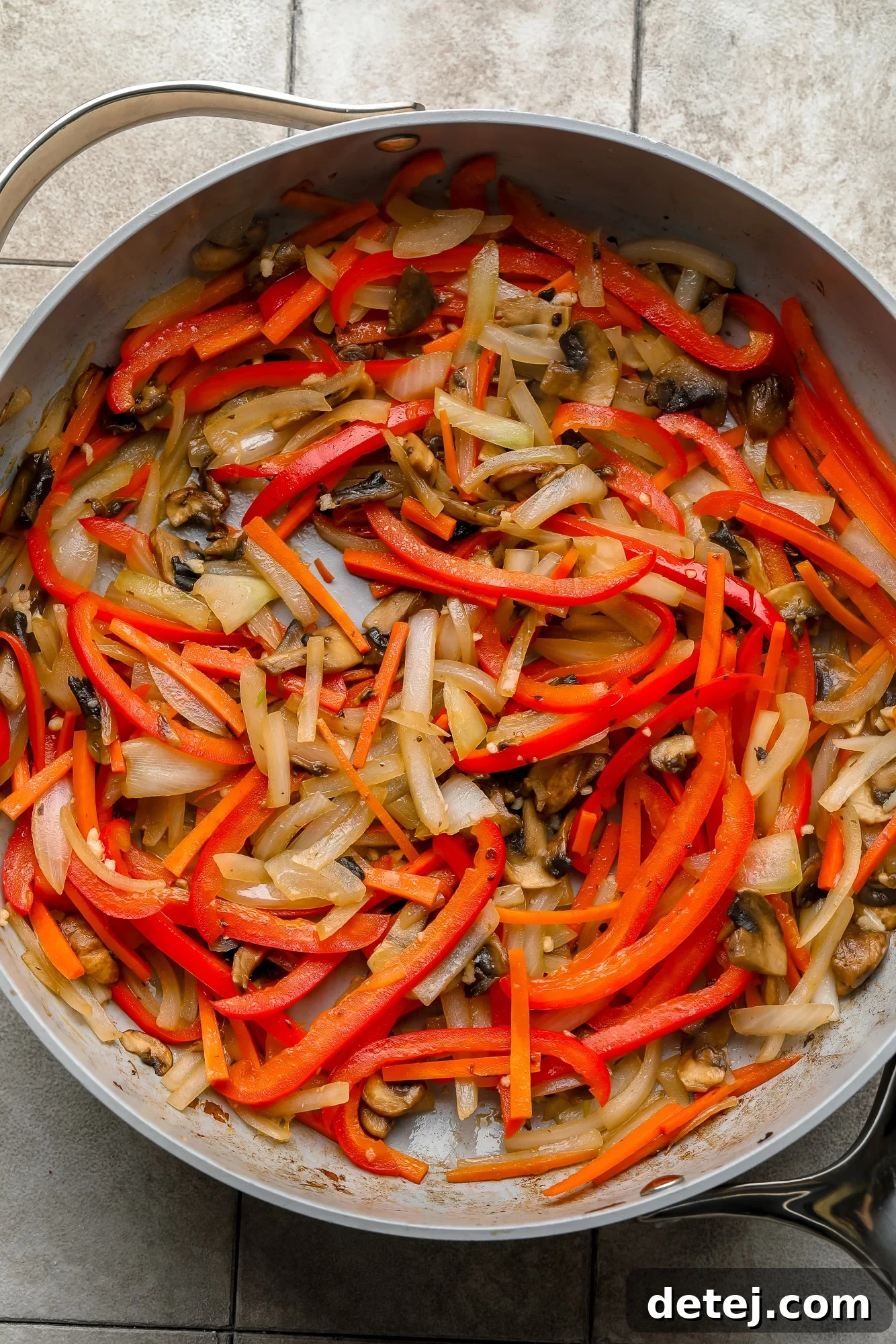
Heat a high-heat safe oil (such as avocado oil) in a large skillet or wok over medium-high heat. Once the oil is shimmering, add the sliced mushrooms, thinly sliced onion, vibrant red bell pepper, and shredded carrot. Stir-fry these vegetables, moving them frequently around the pan, for about 5 minutes, or until they have softened to a tender-crisp consistency. Finish this step by adding the minced garlic, stirring it in for just 1-2 minutes until fragrant. Be careful not to burn the garlic.
Pro tip for speedy stir-frying: To ensure your vegetables cook quickly and evenly, make sure to thinly slice or julienne them. Smaller pieces have more surface area and require less time to become tender, making your lo mein truly a 20-minute meal!
Step 4: Combine and Serve
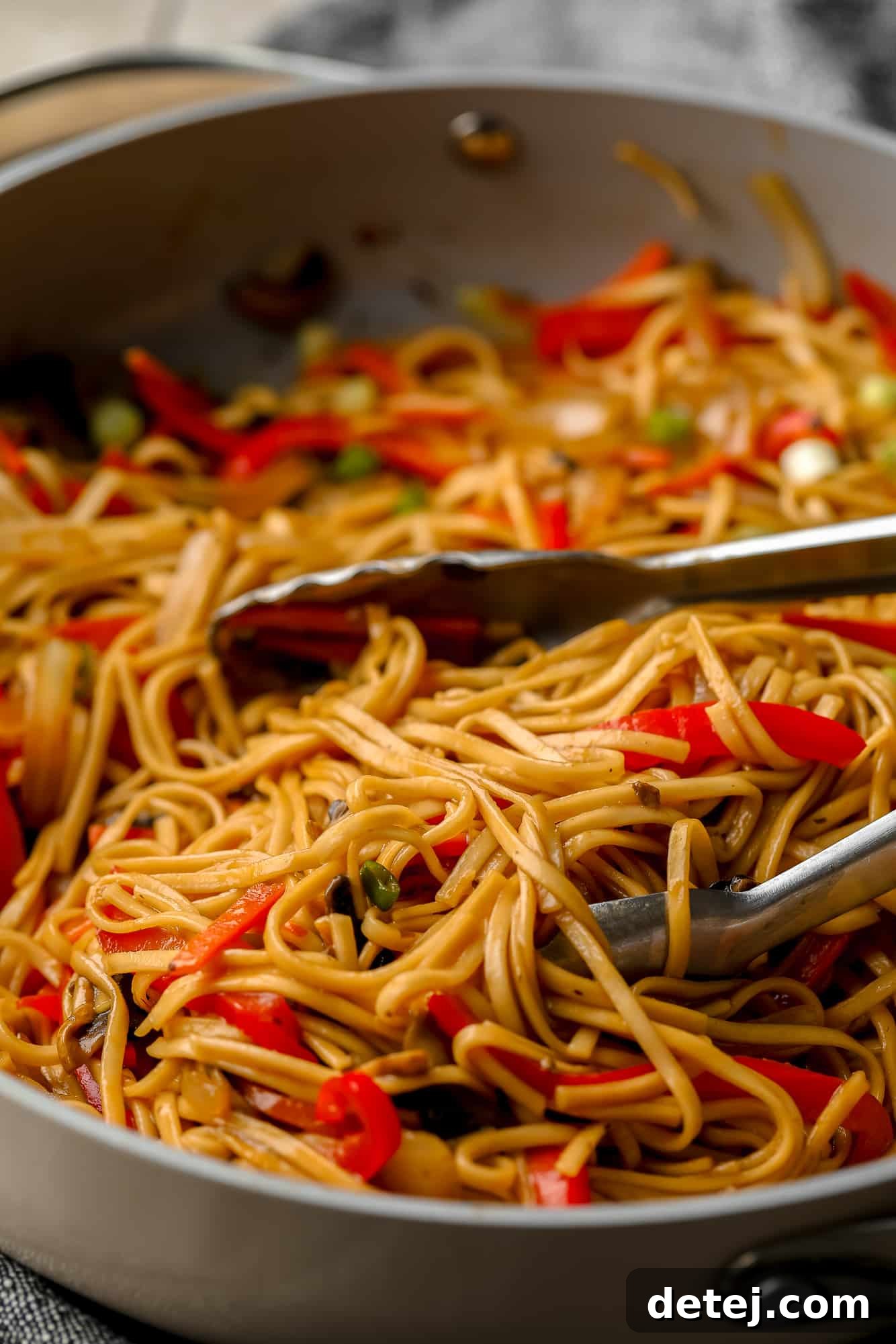
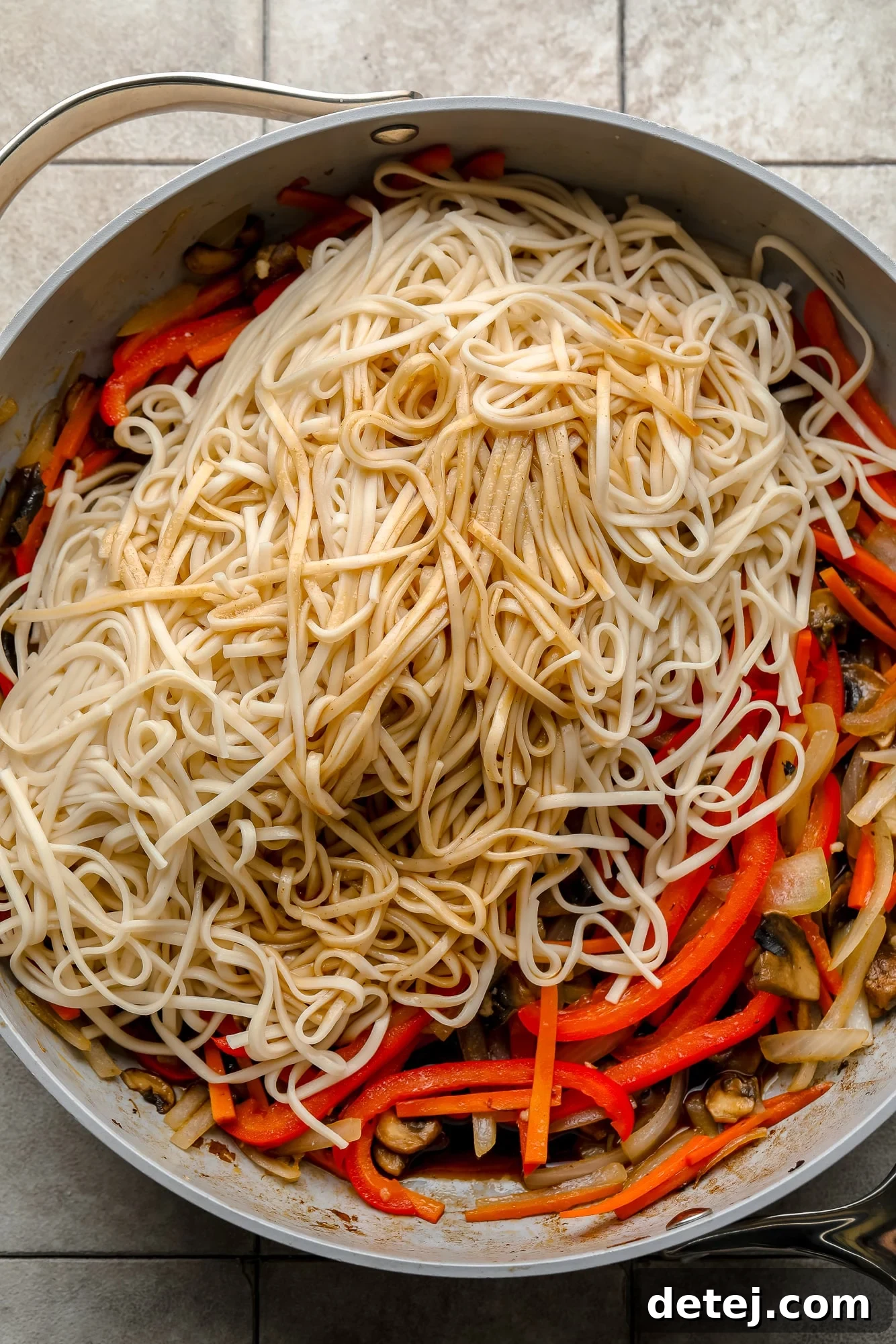
Once your vegetables are perfectly tender and aromatic, it’s time to bring everything together. Add the cooked and drained noodles directly into the pan with the vegetable mixture. Pour your pre-mixed lo mein sauce evenly over the noodles and veggies. Using tongs or two spatulas, gently toss all the ingredients together. Ensure every noodle and vegetable piece is thoroughly coated in that rich, savory sauce. The goal is a uniform distribution of flavor and a beautiful sheen. Serve this incredible vegan lo mein immediately in bowls, perhaps garnished with some fresh green onions, and prepare to enjoy a truly unforgettable meal!
Unlock Endless Possibilities: Creative Variations for Your Vegan Lo Mein
One of the most exciting aspects of this vegan lo mein recipe is its incredible versatility. It serves as a fantastic base, inviting you to experiment and customize it to your heart’s content. Don’t hesitate to get creative with these delicious variations:
- Elevate with Protein – To transform your lo mein into an even more substantial and satisfying meal, consider incorporating a plant-based protein. Add cubes of my perfectly seasoned Marinated Tofu, crispy Pan-Fried Tofu, savory pan-fried soy curls, flavorful Marinated Tempeh, diced Vegan Chicken, tender strips of Seitan Steak, or simply some protein-packed cooked edamame. These additions will add textural interest and make your meal more filling and nutritious.
- Explore a Rainbow of Veggies – The beauty of lo mein is its adaptability to almost any vegetable you have on hand. Feel free to mix and match to create your perfect blend! Wonderful additions include crisp broccoli florets, vibrant snow peas, delicate baby corn, shredded cabbage, tender bok choy, or even a handful of fresh spinach. For a touch of heat, finely sliced spicy chili peppers can add an exciting kick. Don’t forget the aromatic fresh green onion, which adds a lovely mild onion flavor and visual appeal.
- Noodle Adventures Beyond Udon – While udon wheat noodles are a fantastic choice for their robust texture and ability to soak up the sauce, you’re not limited to them. If udon isn’t available or you prefer a different kind of noodle, this dish is incredibly forgiving. Experiment with thin rice noodles for a lighter feel, or even common pantry staples like spaghetti or linguine. Just remember to cook them al dente according to their package directions.
- Garnish for Gusto and Presentation – A simple garnish can dramatically enhance both the flavor and visual appeal of your lo mein. Finish your dinner with a sprinkle of toasted sesame seeds for a nutty crunch, a dash of red pepper flakes for an extra hint of warmth, some chopped peanuts or cashews for added texture, or thinly sliced green onions for a fresh, aromatic finish.
- Effortless Gluten-Free Lo Mein – Making this dish suitable for a gluten-free diet is incredibly easy. Simply ensure you select certified gluten-free rice noodles (or other gluten-free noodle alternatives) and swap out regular soy sauce for gluten-free tamari. These small changes ensure everyone can enjoy a bowl of this delicious lo mein.
Frequently Asked Questions About Vegan Lo Mein
Authentic Chinese and Cantonese lo mein is traditionally not vegan-friendly. The classic preparation involves egg noodles, which are made with eggs, and usually features various types of meat such as chicken, pork, or beef. However, the fantastic news is that lo mein recipes are inherently very flexible. This makes it incredibly simple to adapt the traditional ingredients for delicious plant-based alternatives. You can easily swap egg noodles for wheat-based or rice noodles and incorporate a generous amount of fresh vegetables, flavorful tofu, or other plant-based proteins to create a satisfying vegan version.
While both chow mein and lo mein are popular Chinese noodle dishes, their main distinction lies in the preparation and texture of the noodles. Lo mein utilizes thinner egg noodles (or vegan alternatives), which are boiled until tender and then tossed with the sauce, vegetables, and proteins. The noodles in lo mein remain soft and slippery. Chow mein, on the other hand, typically uses thicker, chewier noodles that are often stir-fried until they achieve a slightly crispy texture. So, think soft, saucy noodles for lo mein and firmer, sometimes crispy noodles for chow mein.
This flavorful veggie lo mein can certainly stand alone as a complete meal, but for those times you want to create an impressive takeout-inspired feast, it pairs beautifully with other Chinese-inspired dishes. Personally, I love serving it with my savory Black Pepper Tofu, the classic sweet and sour notes of General Tso’s Tofu, or the hearty and satisfying Vegan Beef and Broccoli. A side of steamed edamame or a simple cucumber salad also makes for a refreshing addition.
Storing leftovers is simple and efficient. Once your vegan lo mein has cooled down to room temperature, transfer it to an airtight container. It will keep well in the refrigerator for about 2 to 3 days. While it’s absolutely delicious the very next day, retaining much of its original flavor and texture, I generally do not recommend freezing lo mein. The noodles can change in texture after freezing and thawing, becoming a bit mushy. To reheat, simply microwave the noodles until they are warm throughout, or gently warm them on the stovetop. If the noodles seem a little dry, a small splash of soy sauce or tamari can help rehydrate and revive the flavors.
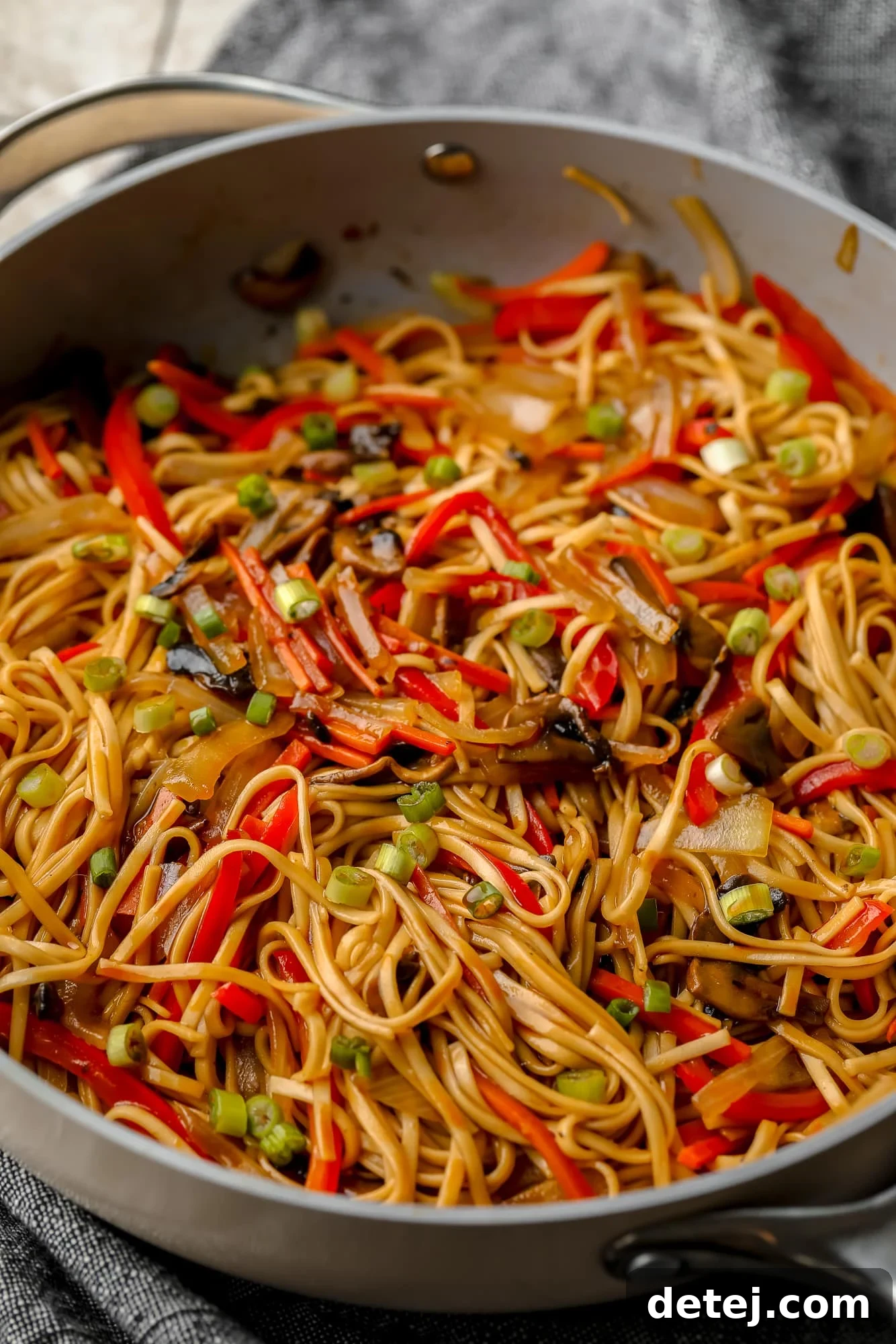
This vegan lo mein isn’t just a meal; it’s a testament to how simple, wholesome ingredients can come together to create something truly extraordinary. It’s fast food, redefined for the modern, health-conscious kitchen, proving that plant-based eating can be both convenient and bursting with flavor. With its vibrant colors, satisfying textures, and irresistible sauce, it’s a dish that will quickly become a cherished part of your culinary repertoire. So gather your ingredients, fire up your skillet, and get ready to enjoy a bowl of homemade vegan lo mein that rivals any takeout!
Vegan Lo Mein
Pin
Comment
SaveSaved
Ingredients
Lo Mein Sauce
- 1/4 cup low sodium soy sauce tamari for gluten free
- 1 tablespoon granulated sugar
- 2 teaspoons toasted sesame oil
- 1/2 teaspoon ground ginger
- 1/2 teaspoon Sriracha hot sauce more to taste
The Rest
- 8 ounces udon wheat noodles or rice noodles for gluten free*
- 2 tablespoons high-heat safe oil I used avocado oil
- 2 cups sliced cremini mushrooms
- 1 small white onion thinly sliced
- 1 red bell pepper seeded and thinly sliced
- 1 medium carrot shredded or julienne
- 4 large cloves garlic minced
- chopped green onions optional
Instructions
-
In a small bowl, whisk together all sauce ingredients until smooth. Set aside.
-
In a large pot of boiling water, cook your chosen noodles according to package instructions until tender. Drain well and set aside.
-
Heat the oil in a large skillet or wok over medium-high heat. Add the mushrooms, onion, red pepper, and carrot. Cook, stirring frequently, for about 5 minutes until the vegetables are tender-crisp. Add the minced garlic and cook for an additional 1-2 minutes until fragrant.
-
Add the cooked, drained noodles and the prepared sauce into the pan with the vegetables. Toss gently and thoroughly to combine all ingredients, ensuring the noodles and veggies are evenly coated. Stir in some chopped green onions at this stage if desired for extra freshness.
-
Serve immediately for the best experience. Leftovers are excellent for lunch the next day, but for optimal freshness, consume within 2-3 days when stored in an airtight container in the refrigerator. Reheat leftovers in the microwave or on the stovetop until warm; a splash of soy sauce or tamari can refresh the flavors if needed. Freezing is not recommended as it can alter the noodle texture.
Notes
-
For an extra boost of protein and deliciousness, consider adding Pan Fried Tofu or Marinated Tofu to your lo mein.
-
If you require a gluten-free dish, ensure you use gluten-free rice noodles (or another GF noodle option) and substitute the regular soy sauce with gluten-free tamari.
-
While udon wheat noodles are my preferred choice for their chewy texture, you can certainly use other pasta alternatives like spaghetti or linguine if udon is unavailable.
-
Feel free to customize the vegetable selection to your liking. I often enjoy adding fresh broccoli florets for extra color and nutrients.