
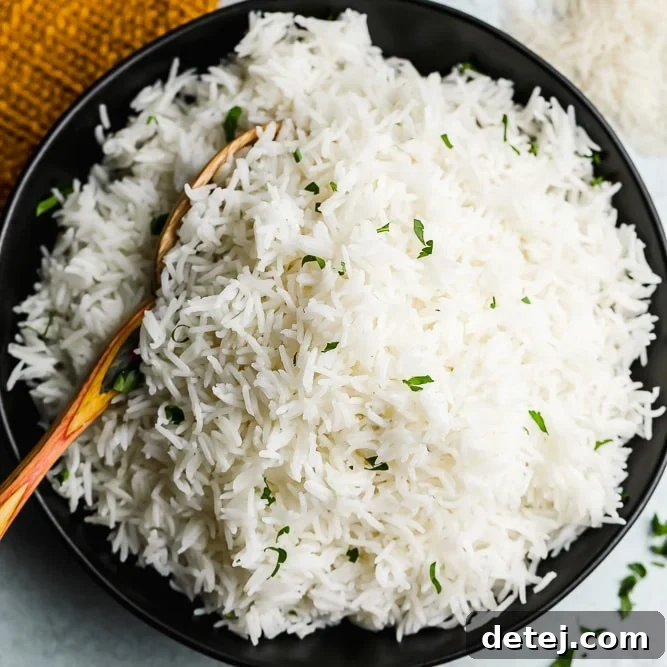
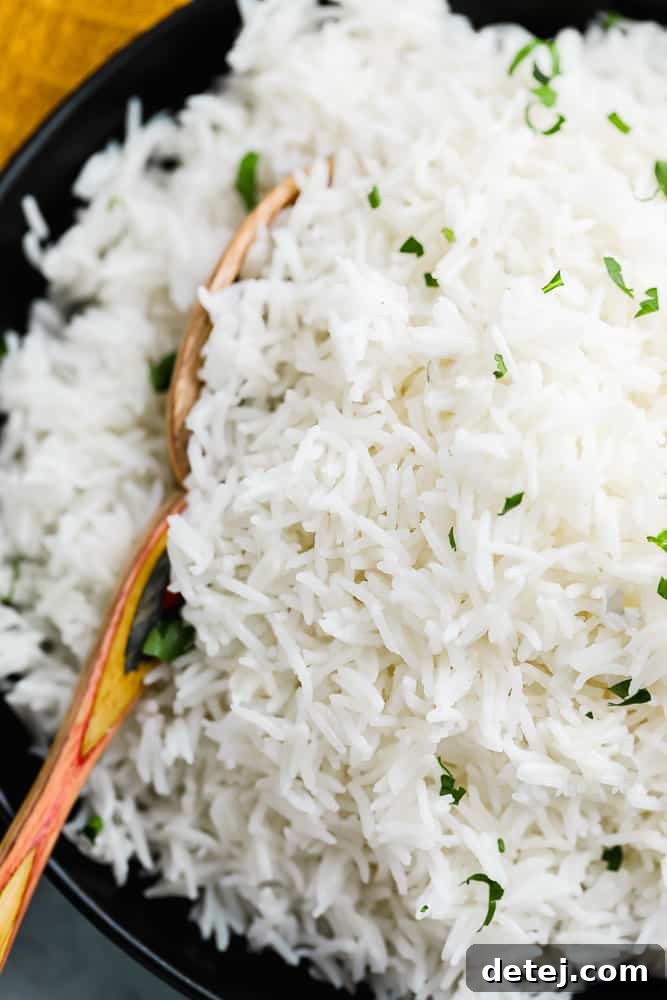
This comprehensive guide reveals the secrets to cooking perfect Basmati rice every single time. Achieve light, fluffy, and incredibly aromatic grains with ease, whether on the stovetop, in a rice cooker, or an Instant Pot.
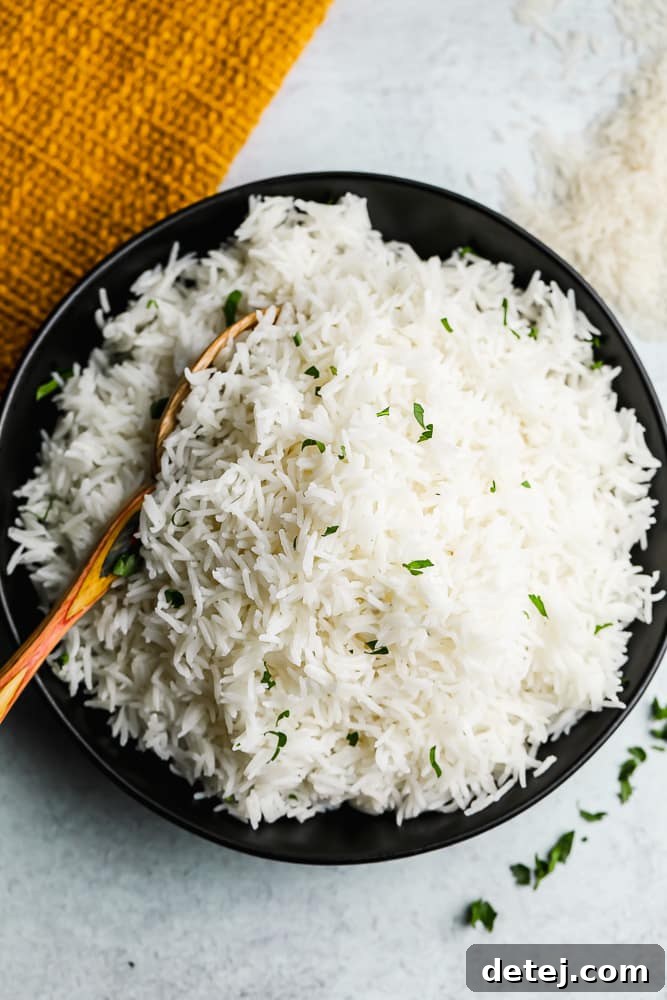
For many, cooking rice seems like a simple task, yet achieving that consistently perfect, fluffy, and aromatic grain can be surprisingly challenging. If you’ve ever struggled with sticky, mushy, or undercooked rice, you’re not alone. I spent years grappling with various rice varieties, only to be met with inconsistent results. That all changed when my incredible mother-in-law, who lived in the Middle East for years, generously shared her tried-and-true techniques. Her method, perfected over time, transformed my rice-cooking game, and now I’m excited to pass her wisdom on to you.
This guide will show you how to cook perfect Basmati rice using three popular methods: stovetop, rice cooker, and Instant Pot. Basmati, a long-grain white rice, is renowned for its delicate aroma and distinctive, nutty flavor. It's an ideal accompaniment for a wide range of dishes, from the rich flavors of Easy Vegan Curry and Buddha Bowls to the savory notes of Sesame Tofu. Its unique characteristics elevate any meal, offering a far more nuanced and enjoyable experience compared to regular white or brown rice.
The beauty of this recipe lies in its simplicity and adaptability. You can easily adjust the quantity based on your needs, whether you're cooking for one or a crowd. Just remember the golden ratio for Basmati rice: 1 cup of Basmati rice to 1 ½ cups of water. This precise ratio is the cornerstone of perfectly cooked, fluffy Basmati rice, ensuring ideal texture and aroma every time.
Understanding Basmati Rice: The Aromatic Grain
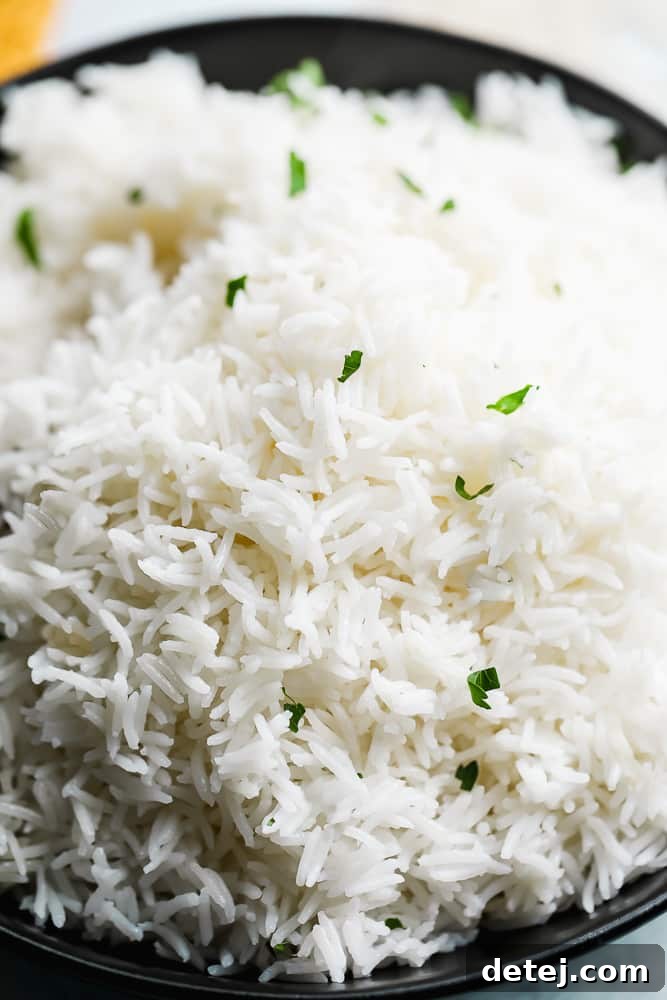
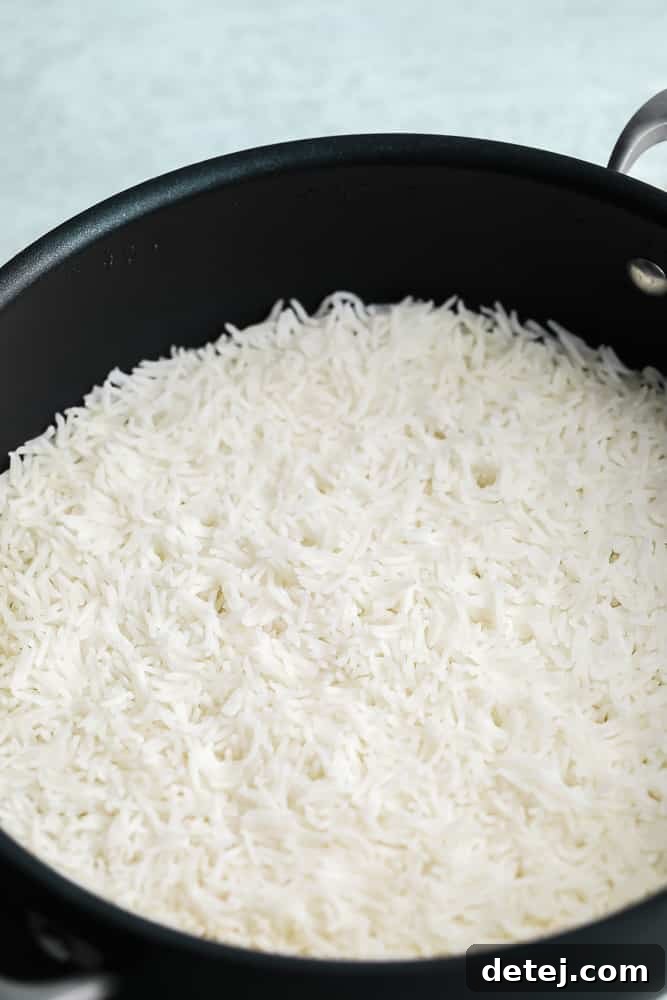
Basmati rice, often mistaken for generic white rice, is in a league of its own. Originating from the foothills of the Himalayas, primarily cultivated in India and Pakistan, this long-grain variety stands out due to its distinct aroma and flavor. The word "Basmati" itself means "fragrant one" in Hindi, a nod to its characteristic nutty and slightly floral scent, attributed to a natural chemical compound called 2-acetyl-1-pyrroline. When cooked, the grains elongate significantly, becoming light, separate, and fluffy, rather than sticky or clumpy. This unique texture and aromatic profile make Basmati rice a preferred choice for countless culinary traditions worldwide.
Beyond its delightful taste and aroma, Basmati rice is incredibly versatile. It pairs exceptionally well with robust and flavorful dishes like hearty curries, comforting soups, and rich tikka masala. It’s my absolute favorite rice for almost every meal because it complements so many different cuisines without overpowering them. Understanding what makes Basmati special is the first step to truly appreciating and mastering its preparation.
The Secret to Perfect Basmati Rice: Key Principles
Achieving perfectly fluffy and aromatic Basmati rice consistently relies on a few fundamental techniques that are often overlooked. Mastering these principles will elevate your rice-cooking skills and ensure every grain is a delight.
1. Rinsing is Key
The very first step, and arguably one of the most crucial, is thoroughly rinsing your Basmati rice. This process isn't just about cleanliness; it's about removing excess surface starch from the grains. When starch cooks, it can cause rice to stick together, resulting in a gummy, clumpy texture. Rinsing ensures that each grain remains separate and fluffy, allowing the true texture and aroma of Basmati to shine. Continue rinsing until the water runs almost clear, a visual cue that most of the superficial starch has been removed.
2. Precise Water-to-Rice Ratio
The magic ratio of 1 cup of Basmati rice to 1 ½ cups of water is paramount. This proportion has been carefully calibrated to provide just enough moisture for the rice to absorb and cook through without becoming waterlogged. Unlike other rice varieties that might require a 1:2 ratio, Basmati's delicate nature and ability to expand mean less water is needed. Deviating too much from this ratio can lead to either mushy or dry, undercooked rice.
3. The Importance of Resting
Once the rice has finished simmering, it's vital to let it rest, undisturbed and covered, off the heat. This resting period allows the steam trapped within the pot to continue cooking the rice gently, ensuring even doneness and allowing the grains to fully absorb any remaining moisture. It prevents the rice from being wet or sticky and contributes significantly to its final fluffy texture. Patience during this phase is a virtue that will be rewarded with superior results.
How to Cook Perfect Basmati Rice: Step-by-Step Methods
With these principles in mind, let's dive into the detailed instructions for cooking Basmati rice using various methods.
Stovetop Method
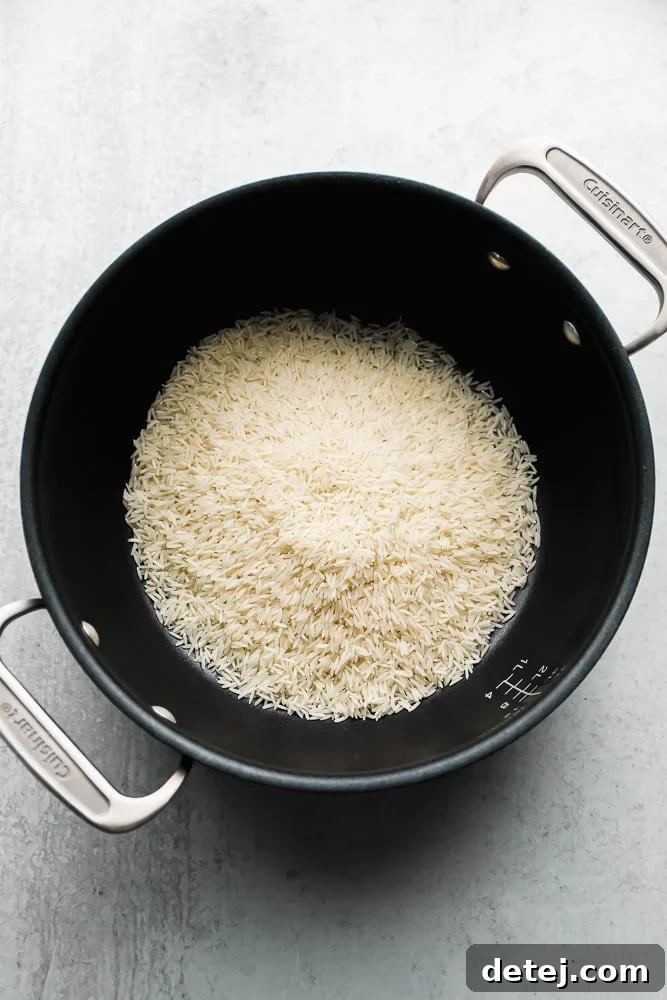
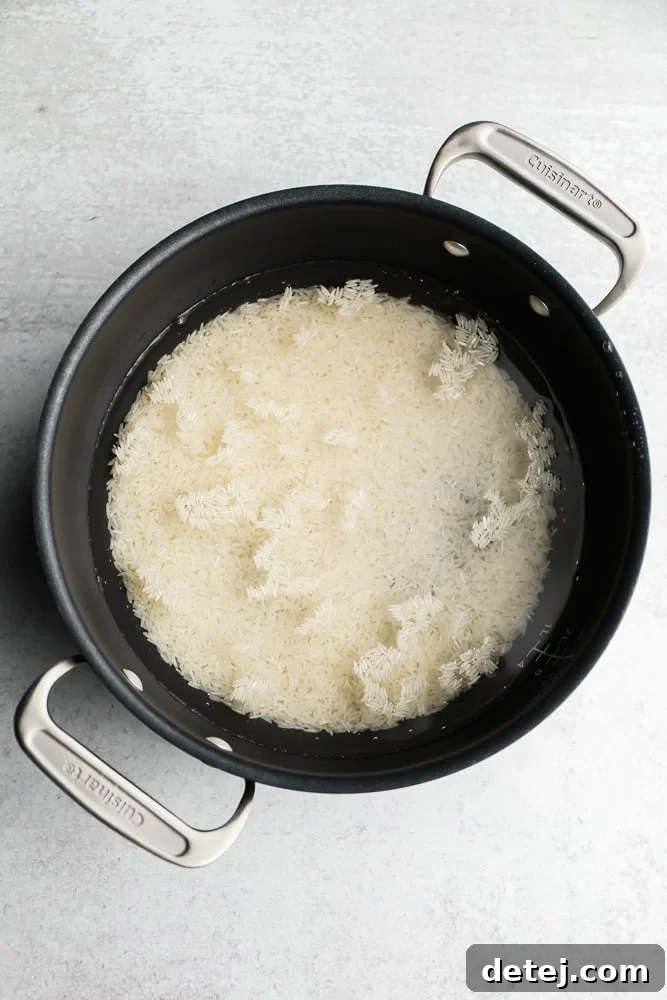
- Rinse the Rice: Place 1 cup of Basmati rice into a medium-sized pot. Add enough water to cover the rice by a few inches. Using your hands, gently swish the rice around. You'll notice the water becoming cloudy. Carefully drain this cloudy water. Repeat this rinsing process 3-4 times until the water you drain is nearly clear. This ensures maximum fluffiness. Once rinsed, drain off any remaining water or use a fine-mesh strainer for a complete drain, then return the clean rice to the pot.
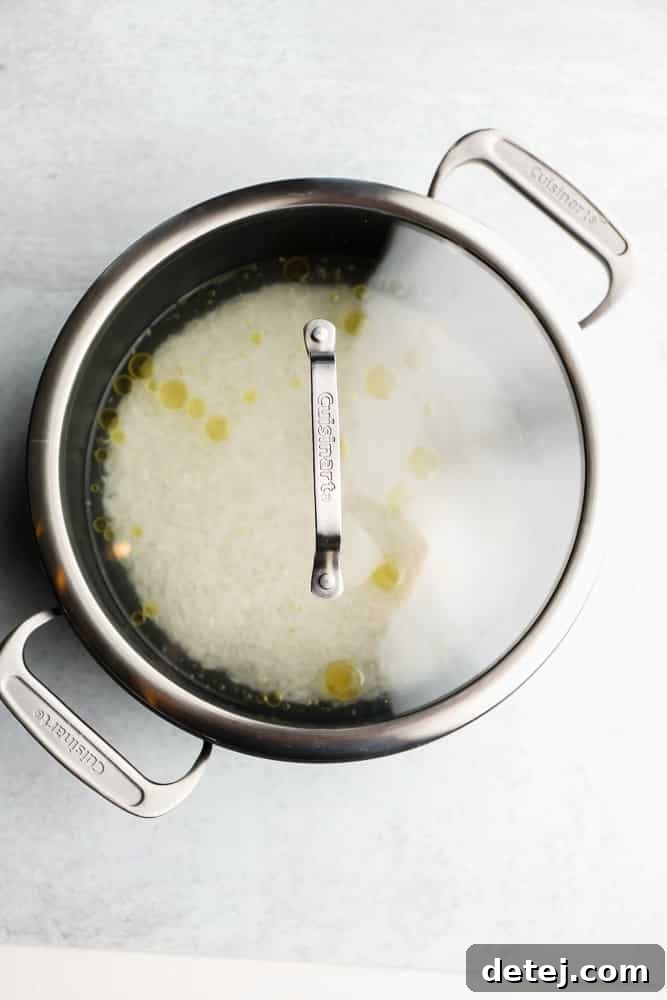
- Add Water, Oil, and Salt: Pour 1 ½ cups of fresh water over the rinsed rice. Add 1 tablespoon of olive oil (or your preferred cooking oil) and ½ teaspoon of salt. The oil helps to keep the grains separate, and the salt enhances the flavor.
- Boil and Simmer: Bring the mixture to a rapid boil over medium-high heat, leaving the pot uncovered. As soon as it reaches a rolling boil, give it a quick stir, then immediately reduce the heat to the lowest setting. Cover the pot tightly with a well-fitting lid.
- Cook: Allow the rice to simmer undisturbed for 15 minutes. It’s crucial not to lift the lid during this time, as releasing the steam will disrupt the cooking process and can lead to unevenly cooked rice. You'll know it's done when all the water appears to be absorbed.
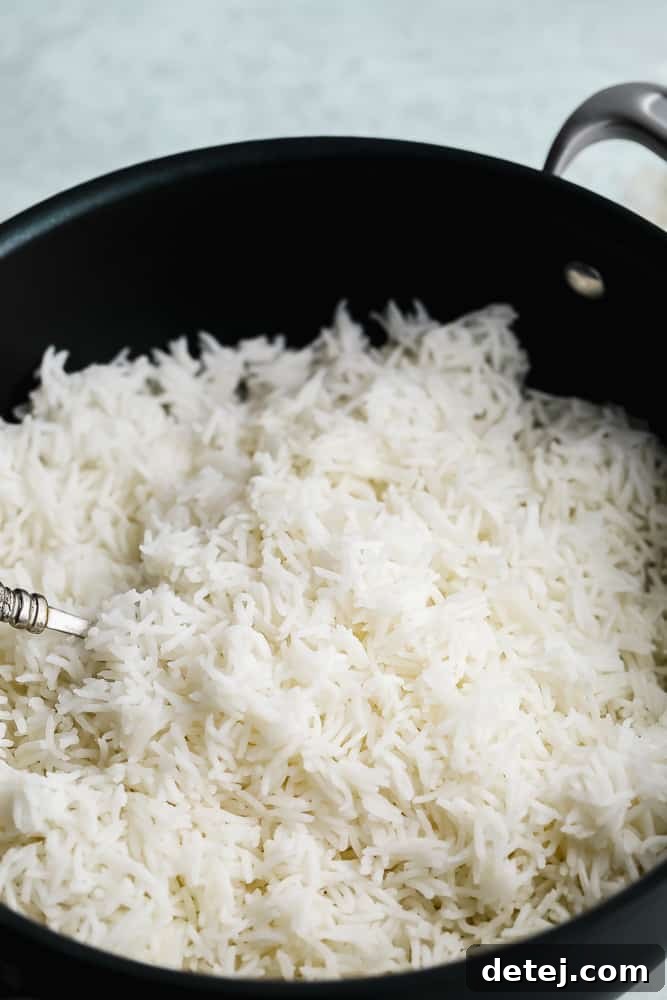
- Rest and Fluff: Once the 15 minutes are up, remove the pot from the heat, but keep the lid on. Let the rice steam for an additional 5-10 minutes. This resting period is essential for the grains to fully plump up and become perfectly fluffy. Finally, remove the lid, gently fluff the finished rice with a fork, and serve immediately.
Rice Cooker Instructions
A rice cooker offers a convenient, hands-off approach to perfect Basmati rice.
- Rinse: Thoroughly rinse 1 cup of Basmati rice following the instructions in the stovetop method until the water runs clear.
- Combine: Transfer the rinsed rice to your rice cooker pot. Add 1 ¾ cups of water. Note that rice cookers typically require a slightly higher water ratio than the stovetop method due to different steam retention.
- Cook: Select the "Normal" (or "Regular/Sushi Rice") setting on your rice cooker. Allow it to complete its cycle.
- Rest and Fluff: Once the cooking cycle is complete, let the rice rest in the closed rice cooker for 5-10 minutes before opening the lid. Then, fluff the rice with a fork and serve.
Instant Pot Instructions
For those who love speed and efficiency, the Instant Pot is an excellent choice for Basmati rice.
- Rinse: Rinse 1 cup of Basmati rice thoroughly until the water is clear, as described above.
- Combine: Place the rinsed rice into the Instant Pot insert. Add 1 cup of water. The Instant Pot uses even less water than other methods due to its pressure cooking environment.
- Pressure Cook: Secure the lid on the Instant Pot and ensure the venting knob is sealed. Cook at High Pressure for 6 minutes.
- Natural Release: Once the cooking time is up, allow for a 10-minute Natural Release. This means letting the pressure dissipate on its own for 10 minutes before manually releasing any remaining pressure. This prevents the rice from drying out and ensures a perfectly tender texture.
- Fluff and Serve: Carefully remove the lid, fluff the rice with a fork, and enjoy!
Essential Tips for Fluffy, Flavorful Basmati Rice
Beyond the core cooking methods, a few extra tips can truly make your Basmati rice exceptional.
- Oil-Free Option: While personally, I find that a touch of olive oil or butter significantly enhances the flavor and helps keep the grains separate, it's completely optional. If you prefer an oil-free dish, you can certainly omit it without compromising the basic fluffy texture, especially if you've rinsed thoroughly.
- Resist the Urge to Peek: This cannot be stressed enough for stovetop cooking. Once the lid is on and the rice is simmering, do not lift it. Each time you lift the lid, precious steam escapes, which is vital for even cooking and proper absorption of water. Releasing steam results in unevenly cooked rice, often leading to a crunchy bottom layer and mushy top.
- The Power of Resting: After cooking, allowing the rice to rest off the heat, covered, for 5-10 minutes is non-negotiable. This crucial step permits the residual steam to redistribute moisture throughout the grains, ensuring they are uniformly tender and fluffy, preventing a wet or sticky outcome.
- Transform into Coconut Rice: For a delightful twist, substitute ½ cup of the water with full-fat coconut milk. This infusion adds a rich, creamy flavor and a subtle sweetness, making it a perfect complement to Southeast Asian or Caribbean-inspired dishes.
- Flavorful Variations: Cooked Basmati rice is a blank canvas for flavor.
- Mexican Inspired: Stir in fresh cilantro and a squeeze of lime juice for a vibrant side that pairs wonderfully with Mexican grain bowls or tacos.
- Indian Inspired: Add frozen peas and a pinch of cumin during the last few minutes of cooking for a classic Indian accompaniment.
- Savory Base: Cook the rice in vegetable stock instead of water, and sauté finely diced garlic and onions before adding the rice to build a rich, savory foundation for any meal.
- Proper Storage for Food Safety: Cooked rice should be stored in an airtight container in the refrigerator as soon as it has cooled sufficiently after serving, ideally within one hour. Do not let cooked rice sit out at room temperature for prolonged periods, as it can quickly become a breeding ground for unhealthy bacteria.
Storing and Freezing Cooked Basmati Rice
Cooked Basmati rice is incredibly convenient for meal prep and future use, provided it's stored correctly.
Can You Freeze Basmati Rice?
Absolutely! Freezing cooked Basmati rice is a fantastic way to have a healthy grain ready at a moment's notice. Once your rice has cooled completely (do not freeze hot rice), transfer it to airtight freezer-safe containers or sturdy sealed freezer bags. Flattening it in bags can save freezer space. Properly stored, Basmati rice will maintain its quality in the freezer for up to 3 months. This makes it an ideal staple for busy weekdays or last-minute meals.
Reheating Frozen Basmati Rice
The best part is, there's no need to thaw it beforehand! You can reheat frozen rice directly. For best results, place the frozen rice in a microwave-safe dish with an additional 1 or 2 tablespoons of water (this prevents it from drying out). Cover the dish loosely and microwave on high for a few minutes, stirring halfway through, until it's heated through and fluffy again. Alternatively, you can reheat it on the stovetop over low heat with a splash of water, covered, until warm.
For refrigerated rice, it will keep well for about 4 days. Simply reheat in the microwave or on the stovetop until warm.
Frequently Asked Questions About Cooking Basmati Rice
- Do I have to rinse the rice? While rinsing is optional if you're in a hurry, it is highly recommended for Basmati rice. It effectively removes excess surface starch, which is the primary culprit behind sticky, clumpy rice. Rinsing contributes significantly to achieving those distinct, separate, and fluffy grains Basmati is known for.
- What kind of Basmati rice should I buy? For the easiest and most consistent results, opt for white long-grain Basmati rice. Look for "aged" Basmati, which has been stored for a period after harvest. Aging further develops its aromatic qualities and enhances its ability to cook into separate, non-sticky grains. Brown Basmati rice is also available, offering a nuttier flavor and more fiber, but it generally requires a longer cooking time and a slightly different water ratio.
- Should I soak Basmati rice before cooking? Soaking Basmati rice for 20-30 minutes can shorten the cooking time slightly and enhance the elongation of the grains. If you choose to soak, you might need to reduce the water ratio by about ¼ cup for every cup of rice to prevent it from becoming too soft. However, for everyday cooking, a thorough rinse is usually sufficient for perfect results.
- How do I prevent sticky Basmati rice? The key to non-sticky Basmati rice lies in three steps: thorough rinsing to remove excess starch, using the correct water-to-rice ratio (1 cup rice to 1.5 cups water for stovetop), and allowing the rice to rest undisturbed after cooking. Adding a small amount of oil can also help keep the grains separate.
Enjoy Your Perfect Basmati Rice with These Delicious Recipes
Basmati rice is the ultimate versatile side dish, ready to complement a variety of flavors. Here are some fantastic recipes that pair beautifully with your perfectly cooked Basmati:
- Chickpea Tikka Masala: The fragrant rice perfectly balances the rich, spicy, and creamy notes of this plant-based Indian classic.
- Vegan Butter Chicken: A flavorful, comforting dish where Basmati rice acts as the ideal absorber for the savory sauce.
- Peanut Tofu: Create a wholesome and satisfying bowl with a base of fluffy Basmati rice soaking up the nutty peanut sauce.
- Red Lentil Dahl: A simple yet incredibly flavorful lentil stew that finds its perfect partner in soft, aromatic Basmati rice.
How to Cook Perfect Basmati Rice
This simple recipe ensures you achieve the most perfect Basmati rice every single time: light, fluffy, and wonderfully aromatic.
Prep Time: 5 mins
Cook Time: 20 mins
Total Time: 25 mins
Servings: 4 servings
Ingredients
- 1 cup Basmati rice
- 1 1/2 cups water
- 1 tablespoon olive oil
- 1/2 teaspoon salt
Instructions
- Rinse the Rice: Place the rice in a medium-sized pot and add enough water to cover by a few inches. Swish the rice around with your hands, then carefully pour off the cloudy water. Repeat this process 3-4 times until the water runs nearly clear. Drain off any remaining water completely, then add the rice back to the pot.
- Cook on Stovetop: Add 1 ½ cups of fresh water to the pot, along with the olive oil and salt. Bring to a boil over medium-high heat, uncovered. Once boiling, cover the pot with a tight-fitting lid and reduce the heat to the lowest setting (simmer). Cook for 15 minutes, or until all the water appears to be absorbed.
- Rest and Fluff: Remove the pot from the heat and let the rice steam, still covered, for another 5-10 minutes. This resting period is crucial for perfect texture. Finally, fluff the rice gently with a fork and serve immediately.
Notes
- For coconut Basmati rice, replace 1/2 cup of water with full-fat coconut milk.
- This recipe can easily be scaled up to feed more people or for meal prepping throughout the week.
- Cooked Basmati rice freezes exceptionally well once cooled. Use freezer-friendly containers (2-3 cup portions work great) for convenient storage.
- Refrigerated rice will keep for about 4 days. Reheat on the stovetop or in the microwave when ready to serve, adding a splash of water if needed to maintain moisture.
Nutrition (per serving, 1 of 4 servings)
- Calories: 200kcal
- Carbohydrates: 37g
- Protein: 3g
- Fat: 4g
- Saturated Fat: 1g
- Sodium: 298mg
- Potassium: 53mg
- Fiber: 1g
- Sugar: 1g
- Calcium: 16mg
- Iron: 1mg
Course: Side Dish
Cuisine: Indian-inspired
Author: Nora Taylor
Did you make this recipe?
Mention @nora_cooks_vegan_ or tag #noracooks!