
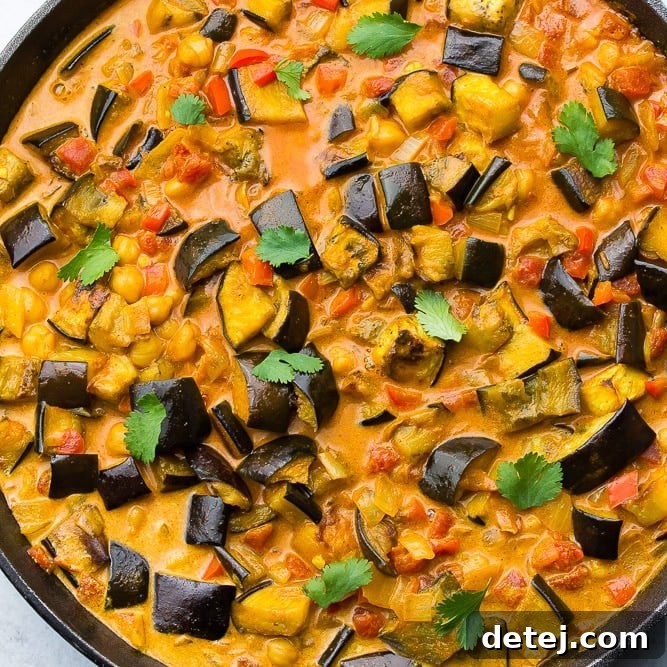
Embark on a culinary journey with this deeply satisfying Roasted Eggplant Curry with Chickpeas. Crafted from a selection of simple, readily available, and incredibly budget-friendly ingredients, this dish transforms into a warmly spiced, rich-flavored masterpiece. It’s the quintessential meal for effortless weeknight dinners, wholesome meal-prepped lunches, or any time you crave a bowl of comforting, plant-based goodness that nourishes both body and soul. Its robust flavors and delightful textures promise a memorable dining experience without breaking the bank.
Craving more plant-based curry inspirations? Don’t miss out on exploring other delicious options like my One Pan Tofu Curry, the wonderfully simple Easy Vegan Curry, and the ever-popular Easy Chickpea Curry.
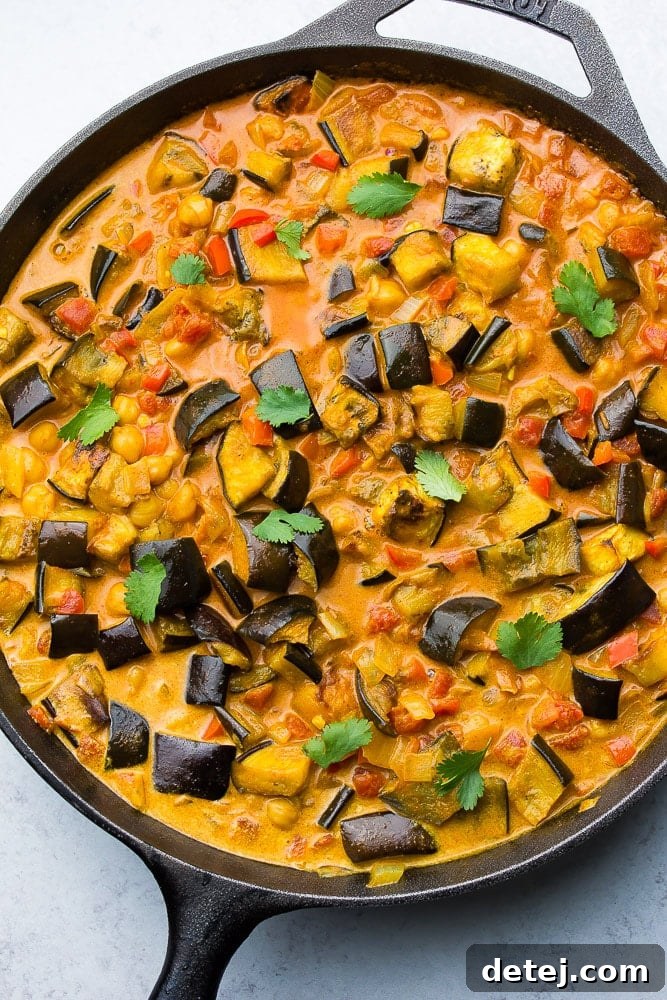
Why This Roasted Eggplant Curry Will Become Your New Favorite
If the thought of adding eggplant to your curry hasn’t crossed your mind, prepare to be delightfully surprised! In this exceptional vegan eggplant curry, cubed eggplant undergoes a transformative roasting process. This slow roasting allows it to practically melt into a luxurious, perfectly spiced curry sauce, contributing a unique chewy yet tender texture that elevates every single bite. The eggplant not only absorbs the incredible flavors of the curry but also adds a substantive richness that makes this dish incredibly satisfying.
- Unveiling Layers of Rich and Complex Flavors: The true secret behind the irresistible depth of flavor in this eggplant curry (also affectionately known as brinjal curry or aubergine curry in different parts of the world) lies in the initial roasting of the eggplant. When roasted slowly in the oven, the gentle heat works its magic, drawing out the eggplant’s inherent sweetness and developing complex, caramelized notes that simply cannot be achieved through quick pan-frying. This technique results in a deeply comforting dish with a sophisticated flavor profile that will tantalize your taste buds and leave you craving more. The edges of the roasted eggplant become slightly crisp, adding another delightful textural dimension.
- A Perfect Harmony with Late-Summer Harvests: Eggplant, the undisputed star of this recipe, typically enjoys its peak season from July through October across North America. This makes it an ideal choice for celebrating the bounty of late summer and early autumn. Take a trip to your local farmer’s market and select a few different varieties – be it globe, Italian, Japanese, or Chinese eggplant – to infuse this comforting brinjal curry with nuanced flavors. Any extra eggplants you might have can be put to excellent use in other delicious creations, such as my acclaimed Vegan Eggplant Parmesan, ensuring no produce goes to waste.
- Remarkably Budget-Friendly for Everyday Meals!: In today’s economy, finding meals that are both delicious and economical is a true win. This vegan curry recipe triumphs on both fronts! It relies on a handful of affordable, wholesome ingredients such as staple vegetables, readily available dry spices, and common canned goods like chickpeas and diced tomatoes. This makes it an incredibly wallet-friendly option for families, students, or anyone looking to enjoy nutritious, flavorful meals without stretching their budget. It’s a smart choice that proves healthy eating doesn’t have to be expensive.
- An Ideal Candidate for Savvy Meal Preparation: One of the most fantastic qualities of this eggplant and chickpea curry is how beautifully it holds up as leftovers. In fact, many would argue that the flavors deepen and meld even more harmoniously over time, making it taste even better the day after it’s made. This makes it absolutely perfect for meal prepping. Dedicate a little time on Sunday to prepare a larger batch, then portion it into individual containers. You’ll have healthy, homemade lunches or dinners ready to enjoy throughout the busy work week, saving you time, money, and ensuring you have nourishing food on hand.
Crafting Your Delicious Eggplant Curry: A Step-by-Step Guide
Preparing this flavorful roasted eggplant curry is straightforward and enjoyable. Follow these steps to create a truly memorable meal that will impress even the most discerning palates.
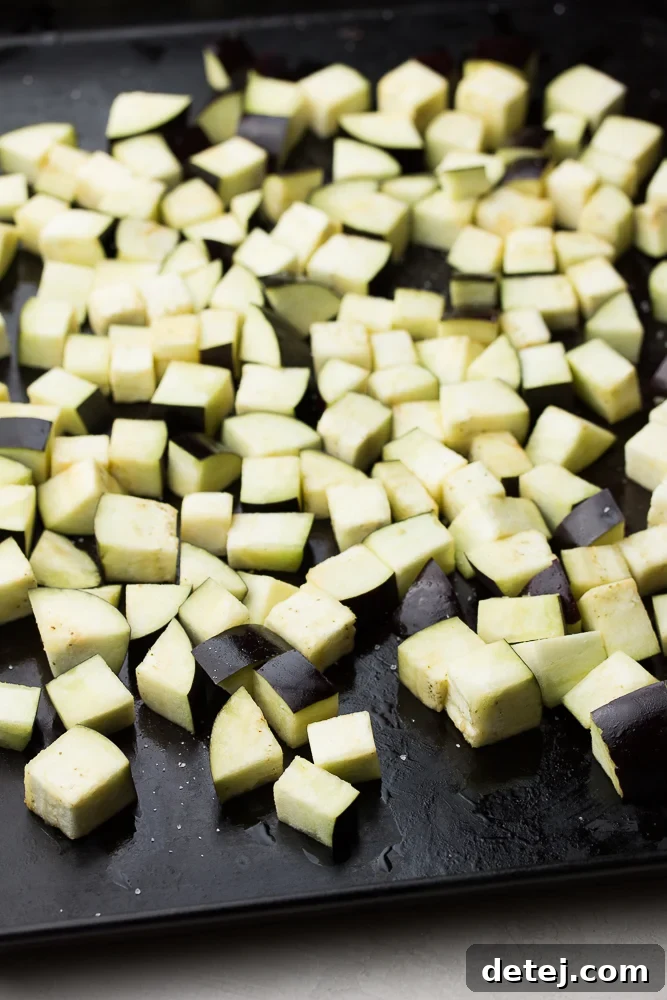
Begin by preheating your oven and preparing the eggplant. Lay the evenly cubed eggplant pieces on a large baking sheet, ensuring they are spread in a single layer for optimal roasting. Drizzle generously with olive oil, then toss gently to ensure every piece is thoroughly coated. Finish with a light sprinkle of salt. Roast in the preheated oven until the eggplant is wonderfully tender and slightly caramelized, developing a rich depth of flavor.
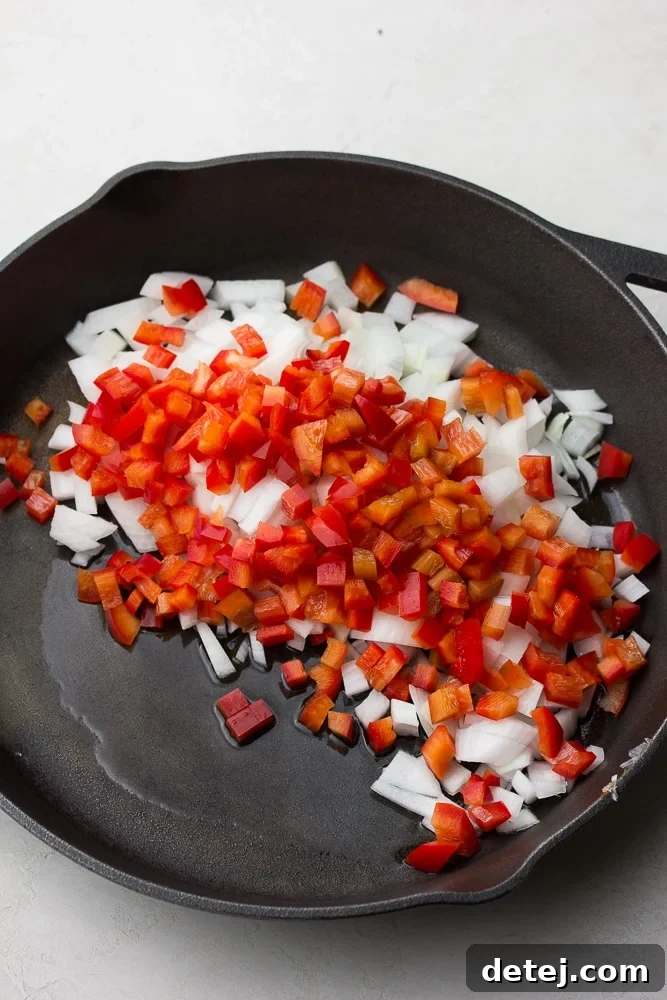
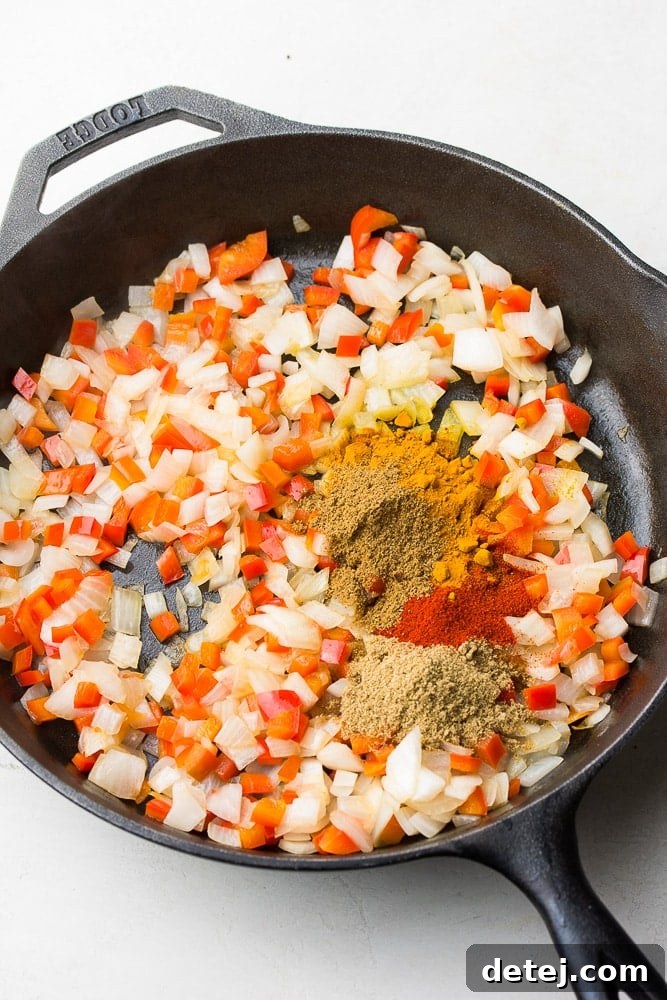
While the eggplant roasts, turn your attention to the aromatic base of the curry. In a spacious, hot skillet, add a touch more olive oil and sauté the finely chopped onion and vibrant red bell pepper. Cook them down until they become soft and translucent, releasing their sweet aromas and forming the perfect foundation for your curry sauce.
Once the onions and peppers have softened, it’s time to introduce the soul of the curry: the spices. Stir in the ground coriander, smoked paprika, ground turmeric, and garam masala (or curry powder for a slightly different profile). Allow these fragrant spices to cook for about a minute, stirring constantly, to “bloom” them and release their full aromatic potential. If the spices begin to stick to the pan, add a small splash of water to deglaze and prevent burning.
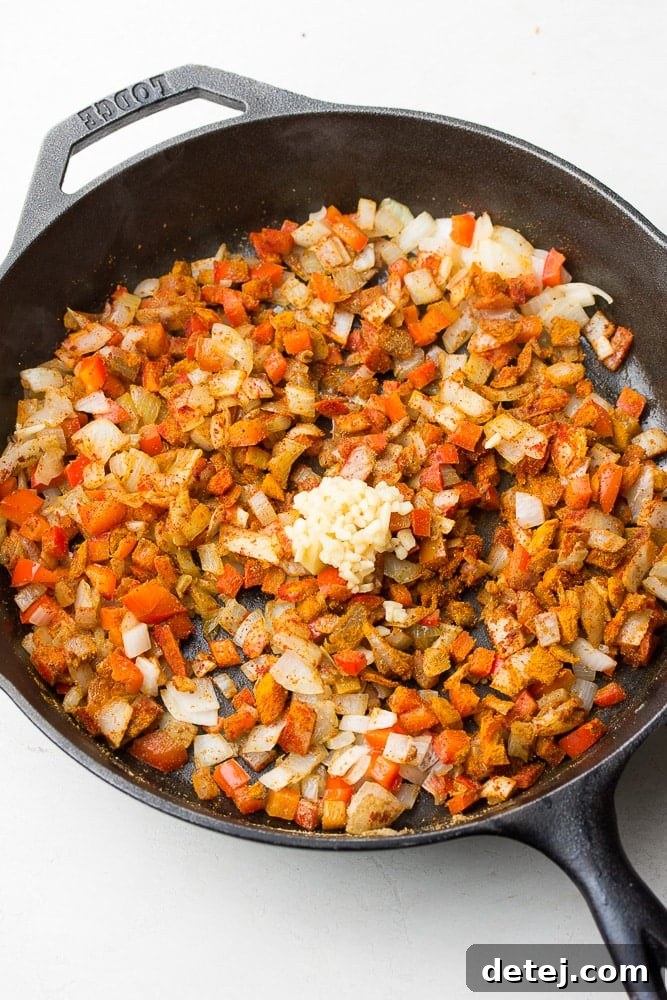
Next, incorporate the minced fresh ginger and garlic into the skillet. Continue to cook for another minute or two, stirring frequently, until their potent fragrance fills your kitchen. Be careful not to burn the garlic, as this can impart a bitter taste to your curry.
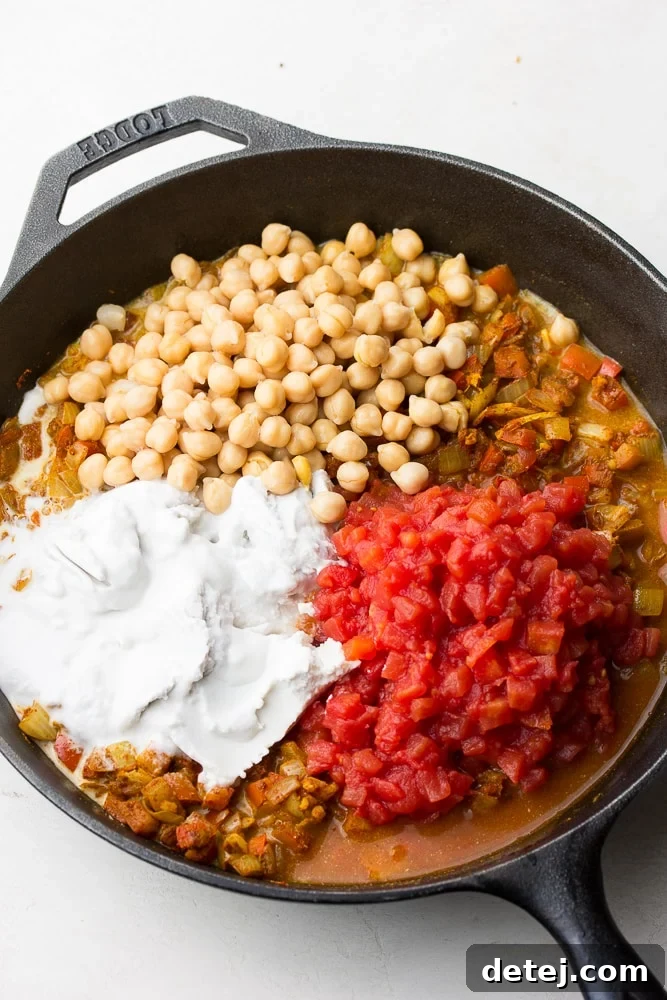
Now, build the rich and creamy curry sauce. Stir the canned diced tomatoes, full-fat coconut milk, and pre-drained and rinsed chickpeas into the spiced onion and pepper mixture. Give everything a good stir to combine these core ingredients, ensuring they are well-incorporated and ready to simmer.
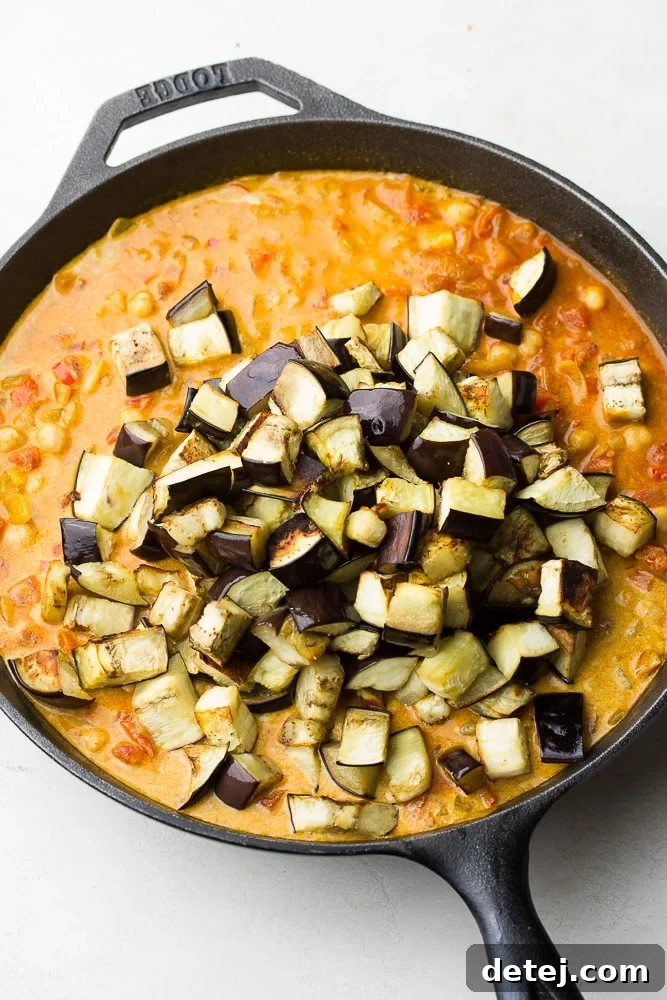
Once your roasted eggplant is tender and beautifully caramelized, carefully transfer the chunks from the baking sheet directly into the skillet with the curry base. Stir gently to integrate the eggplant into the sauce, allowing it to soak up all the wonderful flavors. Bring the entire mixture to a gentle simmer, then reduce the heat to low. Continue to simmer for 15-20 minutes, or until all the ingredients are tender, and the flavors have fully married and deepened. Season with salt to taste, adjusting as needed.
Serve this exquisite vegan eggplant curry piping hot in individual bowls. It pairs exquisitely with fluffy cooked basmati rice, which provides a perfect canvas for the rich sauce. For an authentic experience, accompany it with warm Indian flatbreads. While vegan naan is a personal favorite, roti or chapati also make excellent choices. Garnish with a sprinkle of fresh chopped cilantro or parsley for a burst of freshness. Enjoy every comforting spoonful!
Frequently Asked Questions About Eggplant Curry
The beauty of this recipe is its versatility; you can use virtually any variety of eggplant you can find! American, Italian, Japanese, and Chinese eggplants all perform wonderfully. The most crucial factor is selecting medium-sized eggplants, ideally around 550 grams each, that boast a shiny, vibrant skin free from excessive marks or dents. Freshness and firmness are key to achieving the best texture and flavor in your curry.
Whether or not to peel the eggplant is entirely a matter of personal preference. The skin of the eggplant tenderizes beautifully during the cooking process, becoming soft and easily edible. It also adds a slight textural contrast and retains some of the eggplant’s nutrients. However, if you prefer a smoother consistency or simply dislike the skin, feel free to peel it before cubing and roasting. The curry will still be delicious either way!
While I wholeheartedly recommend roasting the eggplant, as it profoundly deepens its flavors and contributes to an unparalleled tender-chewy texture, it’s not strictly mandatory if you’re facing time constraints or a hot kitchen. If you’re preparing this dish during the sweltering summer months and prefer to avoid turning on your oven, you can sauté the cubed eggplant in a hot skillet on the stovetop until tender. Just be sure to add these sautéed eggplant cubes to the curry alongside the chickpeas and allow it to simmer a bit longer to ensure they are fully cooked and infused with the curry’s robust flavors.
The traditional Indian spices used in this recipe are chosen to impart a wonderful, subtle warmth and rich aromatic profile rather than an overwhelming heat. The goal is a comforting spice, not a fiery one. If you desire to elevate the heat level and introduce a noticeable kick, you can easily customize it. Simply sauté 1 to 3 finely diced green chili peppers (such as serrano or Thai chilies, depending on your heat tolerance) along with the onion and bell pepper at the beginning of the cooking process. This allows their heat to infuse throughout the dish.
Absolutely! While full-fat coconut milk provides an unmatched creaminess and subtle sweetness that beautifully complements the curry spices, you can certainly use alternatives if needed. For a lighter version, replace it with 1 cup of water, adjusting the quantity to achieve your desired consistency. Alternatively, for a similar rich and creamy texture, homemade cashew cream is an excellent choice. Even unsweetened soy milk or almond milk can add a pleasant creaminess, though they will alter the flavor profile slightly.
Chickpeas are a fantastic source of plant-based protein and texture in this curry, but they are by no means your only option! This recipe is incredibly adaptable. You can easily swap them out for other legumes or plant-based proteins. Consider using cannellini beans or black beans for a different earthy flavor, or incorporating baked tofu cubes, flavorful pan-fried tempeh, or even seitan chicken pieces. Each will bring its own unique contribution to the dish, allowing for wonderful customization.
Storing your leftover eggplant curry is simple, and it keeps remarkably well! Once the curry has cooled down to room temperature, transfer it into airtight containers. It will stay fresh and delicious in the refrigerator for 3 to 4 days, making it perfect for meal prepping throughout the week. For longer storage, this curry freezes exceptionally well. Portion it into freezer-safe containers or bags, and it will maintain its quality in the freezer for approximately 3 months. Thaw overnight in the refrigerator and reheat gently on the stovetop or in the microwave.


Roasted Eggplant Curry with Chickpeas
Ingredients
Roasted Eggplant
- 2 medium eggplants
- 3 tablespoons olive oil
The Rest
- 2 tablespoons olive oil, for sautéing
- 1 large onion, chopped
- 1 red bell pepper, seeded and diced
- 2 teaspoons ground coriander
- 2 teaspoons smoked paprika
- 2 teaspoons ground turmeric
- 1 teaspoon garam masala OR use curry powder *I prefer garam masala but curry powder works
- 3 cloves garlic, minced
- 2 teaspoons fresh ginger, grated *or use 1/2 teaspoon ground ginger
- 14.5 ounce can diced tomatoes
- 13.5 ounce can full fat coconut milk
- 15 ounce can chickpeas, drained and rinsed
- 1 teaspoon salt, or more to taste
For Serving
- 1/2 cup fresh chopped cilantro or parsley
- 4 cups cooked white or brown rice
Instructions
-
Preheat oven to 400 degrees Fahrenheit (200 degrees Celsius). Lightly oil a large, rimmed baking sheet.
-
Cut the tops off of the eggplants, then chop them into uniform 1-inch cubes. There is no need to peel the eggplant unless you have a strong personal preference to do so.
-
Add the eggplant chunks to the prepared baking sheet. Drizzle generously with 3 tablespoons of olive oil. Toss well to ensure all eggplant pieces are thoroughly coated in the oil. Spread them out in a single layer and sprinkle with a pinch of salt. Bake for 25-30 minutes, or until the eggplant is tender and slightly golden at the edges.
-
Meanwhile, heat 2 tablespoons of olive oil in a large skillet or Dutch oven over medium heat. Add the chopped onion and red bell pepper. Sauté for 4-5 minutes, stirring occasionally, until they become translucent and soft.
-
Now, stir in the ground spices: coriander, smoked paprika, turmeric, and garam masala (or curry powder). Cook for about 1 minute, stirring constantly, to bloom the spices and release their aroma. If the mixture starts to get too dry or stick to the pan, add a few tablespoons of water to deglaze. Then, add the minced garlic and grated fresh ginger, and cook for 1 more minute until fragrant.
-
To the skillet, add the canned diced tomatoes, full-fat coconut milk, and the drained and rinsed chickpeas. Stir everything thoroughly to combine. Once the eggplant has finished roasting, carefully add the tender chunks to the skillet as well and stir them into the curry base. Bring the mixture to a gentle simmer, then reduce the heat to low. Cover and cook for an additional 15-20 minutes, allowing the flavors to meld and deepen. Taste and add salt as needed to achieve your desired seasoning.
-
Serve this delicious eggplant curry hot over cooked rice (white or brown). Garnish with fresh chopped cilantro or parsley. For an extra treat, serve with a side of warm vegan naan or other Indian flatbreads if desired.
Notes
- Roasting the eggplant is highly recommended as it brings out the best flavor and texture, creating a slightly caramelized and tender result. However, if it’s the peak of summer and you prefer not to use your oven, you can simply cook the cubed eggplant on the stovetop instead. Add it to the skillet when you introduce the chickpeas and simmer for a bit longer until the eggplant is perfectly tender.
- While full-fat coconut milk provides optimal creaminess and richness, light coconut milk can certainly be used for a slightly less creamy, lighter version of the curry. For other creamy alternatives, consider using a homemade cashew cream or even unsweetened almond milk, though these will alter the flavor profile and richness slightly.
- Leftover eggplant curry stores beautifully! Transfer any cooled curry to airtight containers and refrigerate for 3-4 days. It also freezes exceptionally well for longer preservation; portion it into freezer-safe containers and store for up to 3 months. Thaw overnight in the refrigerator before reheating gently.
Nutrition
Did you make this recipe?
Mention @nora_cooks_vegan_ or tag #noracooks!