
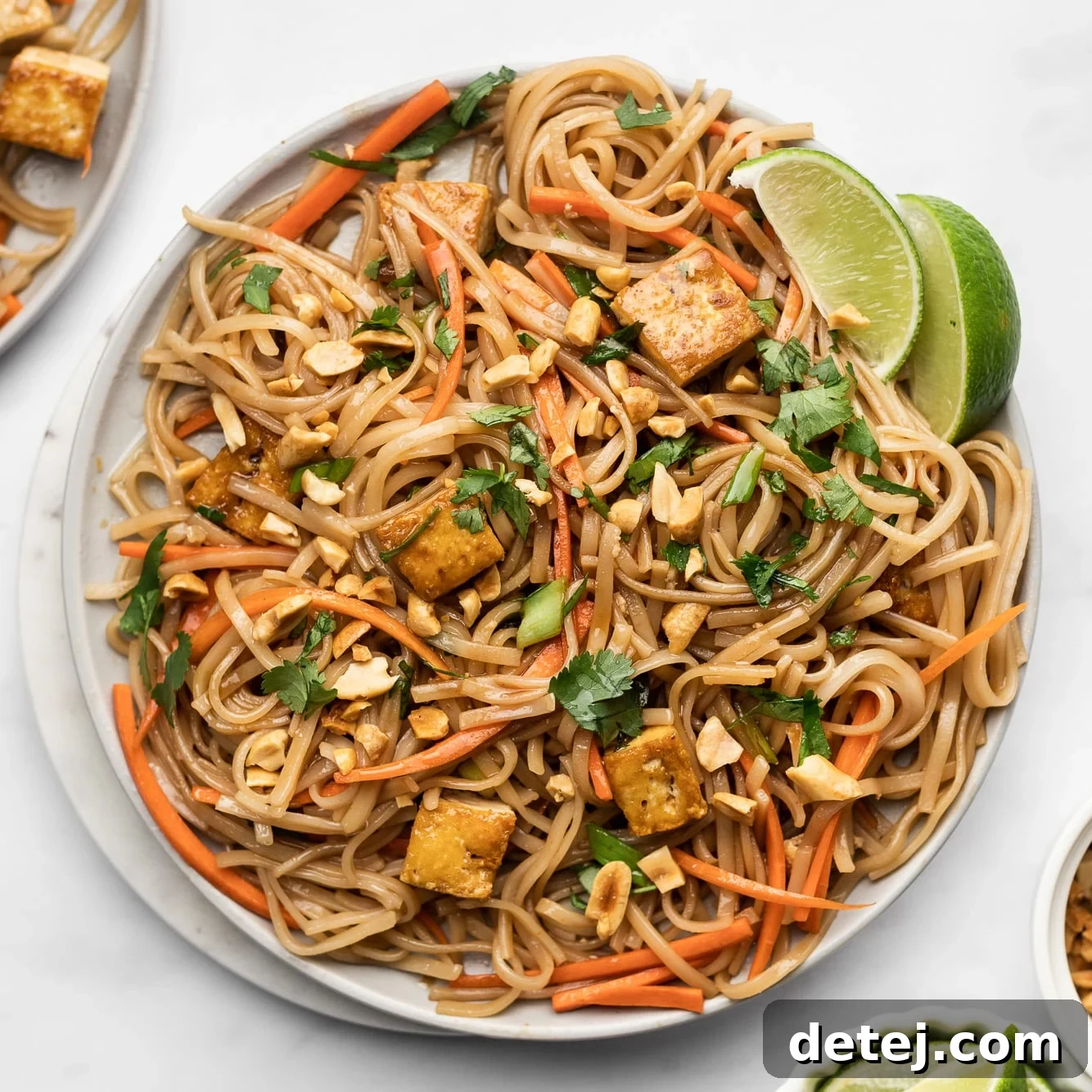
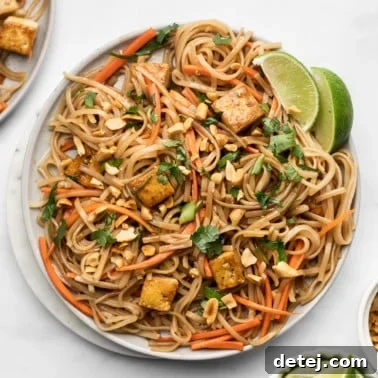
Discover how to make the ultimate 30-Minute Vegan Pad Thai, a flavorful dish packed with tender rice noodles, crispy fried tofu, vibrant vegetables, and an unbelievably simple yet delicious sauce. This recipe uses everyday ingredients to bring authentic Thai-inspired flavors straight to your kitchen, making it perfect for a quick lunch or satisfying dinner!
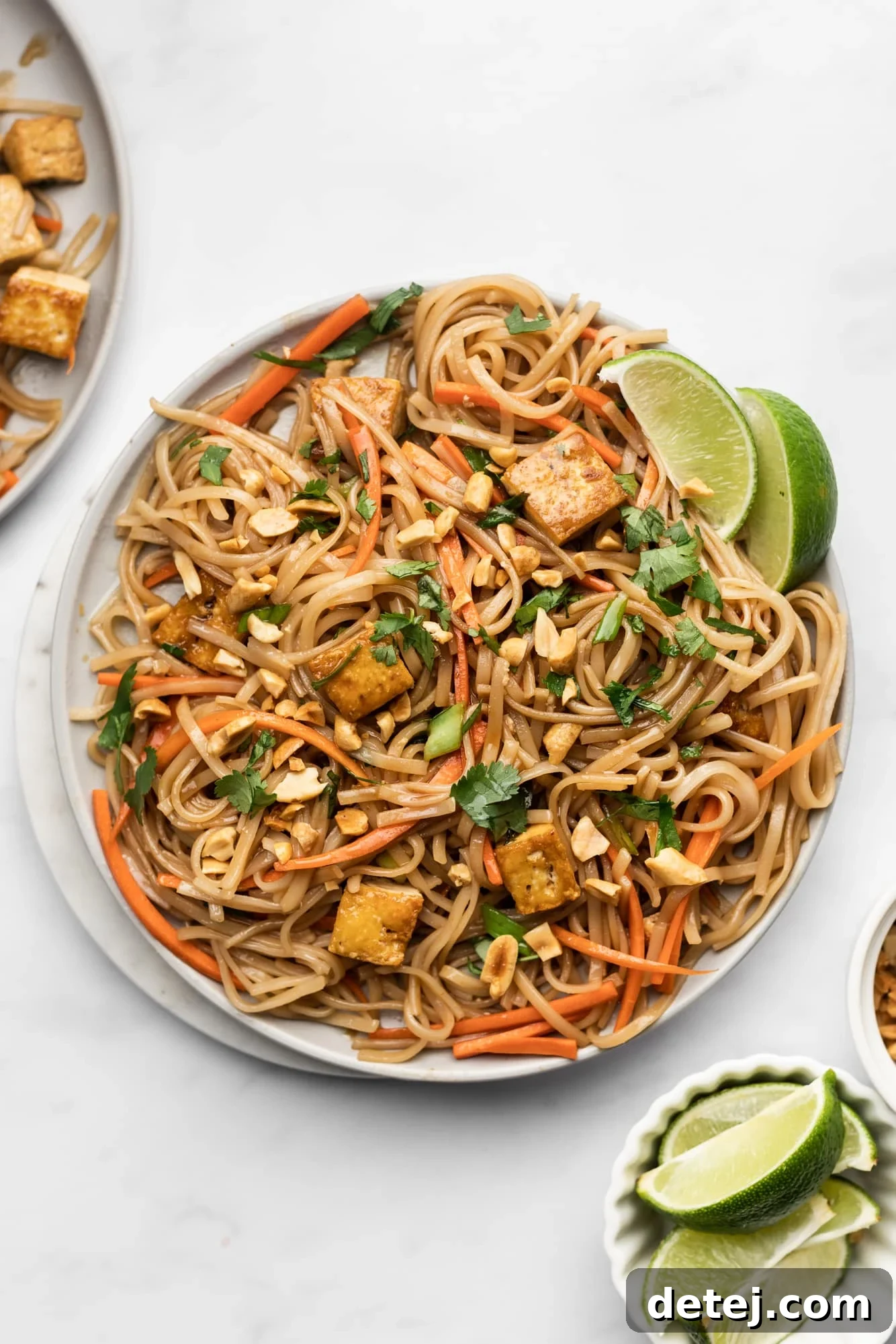
Easy & Authentic 30-Minute Vegan Pad Thai Recipe
Craving a taste of Thailand but short on time? This exceptionally easy Vegan Pad Thai recipe is your answer! In just 30 minutes, you can whip up a truly satisfying plant-based meal featuring perfectly cooked rice noodles, delightfully pan-fried tofu, a medley of fresh vegetables, and a simple, savory, tart, and subtly sweet sauce that will make your taste buds sing. It’s an absolute must-try for anyone seeking a quick, healthy, and incredibly flavorful Thai-inspired dish for any meal of the day.
Traditional Pad Thai is often made with fish sauce and tamarind, ingredients that can be challenging to find or adapt for a vegan diet. Our recipe skillfully bypasses these, using accessible pantry staples to create a remarkably authentic flavor profile. Whether you’re a seasoned vegan chef or just exploring plant-based cuisine, this recipe promises a delicious and hassle-free cooking experience. Get ready to transform everyday ingredients into an extraordinary culinary adventure!
Why This Vegan Pad Thai Will Be Your New Favorite
This isn’t just another Pad Thai recipe; it’s designed for maximum flavor and minimal fuss. Here’s why it’s destined to become a staple in your meal rotation:
- The Best Homemade Sauce: Crafting the perfect Pad Thai sauce is crucial, and traditional versions can be tricky with ingredients like fish sauce and tamarind paste. After extensive testing, we’ve developed a savory, tart, and subtly sweet vegan sauce using easily found ingredients. This balanced flavor profile captures the essence of classic Pad Thai without any complicated sourcing or lengthy preparation. It’s rich, dynamic, and truly makes the dish shine.
- Effortlessly Simple & Accessible: We believe delicious vegan food should be easy to make and accessible to everyone. This recipe prides itself on its straightforward approach, substituting hard-to-find ingredients with readily available alternatives. You won’t need to visit specialty stores; most likely, you already have everything you need in your pantry. This simplicity doesn’t compromise on taste, ensuring a satisfying meal every time.
- Perfect for Meal Prep: While Pad Thai is best enjoyed fresh, this recipe is incredibly adaptable for meal preparation. All the components, from the rich vegan Pad Thai sauce to the perfectly cubed tofu and chopped veggies, can be prepared in advance. This means you can turn a 30-minute recipe into a speedy 15-minute affair on busy weeknights, making healthy eating convenient and stress-free.
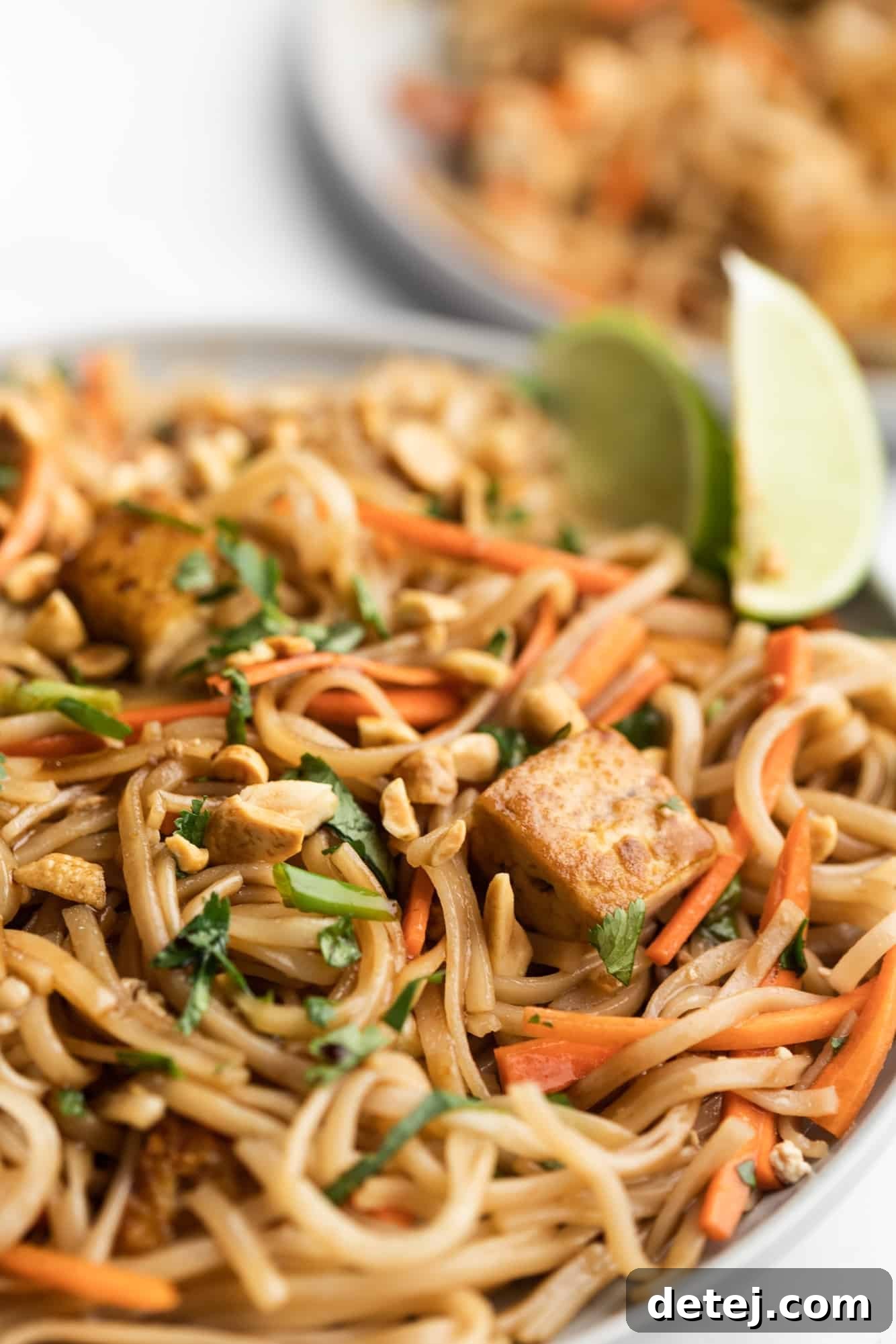
Key Ingredients for Your Vegan Pad Thai & Smart Substitutions
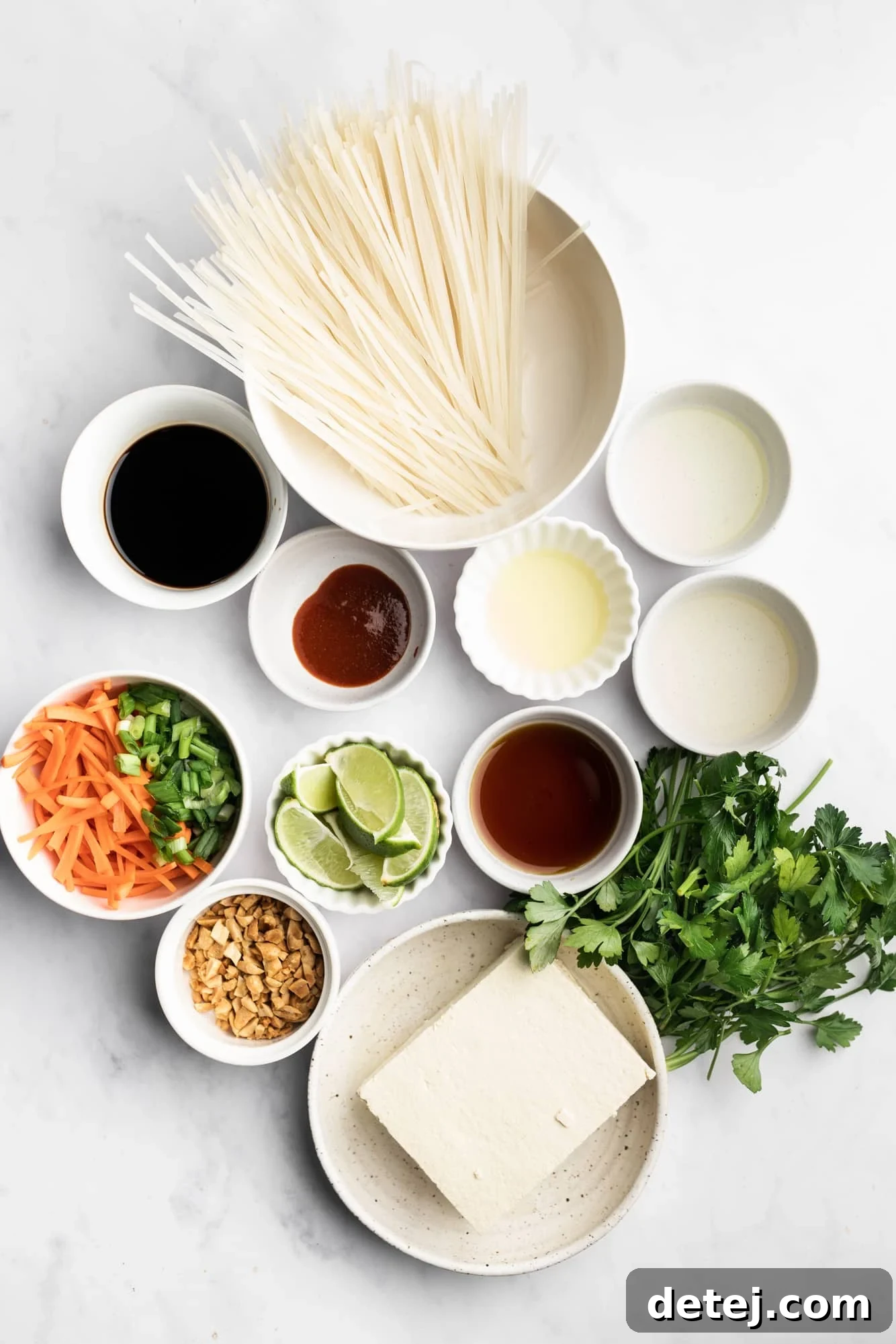
Gathering your ingredients is the first step to a successful and speedy Pad Thai. Here’s what you’ll need, along with some helpful substitution tips:
- Stir-Fry Rice Noodles: These thin, flat rice noodles are the heart of any Pad Thai. They’re naturally gluten-free and vegan, absorbing the sauce beautifully. You can use any size of rice noodles that are typically used for stir-fries; just ensure you follow the package instructions for cooking.
- Vegetable Oil: A neutral oil like vegetable, canola, or grapeseed oil is ideal for stir-frying as it has a high smoke point and won’t impart strong flavors.
- Extra-Firm Tofu: Pressed and fried until golden and crisp, extra-firm tofu provides a wonderful chewy texture and absorbs the sauce’s flavors. If frying isn’t your preference or you want to save time, you can bake it until golden or even air fry it in advance. For other plant-based protein ideas, check out the “Variations” section below.
- Low Sodium Soy Sauce: This forms the savory base of our Pad Thai sauce. Opt for low sodium to better control the saltiness. If you’re following a gluten-free diet, tamari is an excellent 1:1 gluten-free substitute.
- Rice Vinegar: Crucial for adding that essential tartness to the sauce. While traditional Pad Thai often uses tamarind paste, which can be hard to find, rice vinegar provides a fantastic and easily accessible alternative that delivers a similar tangy brightness.
- Pure Maple Syrup: Forget refined sugars! Real maple syrup provides the perfect balance of sweetness and warmth to the sauce, helping to round out the savory and tart notes without overpowering them. Don’t substitute with artificial syrups.
- Fresh Lime Juice: A squeeze of fresh lime juice is non-negotiable! It brightens all the flavors in the sauce and adds a zesty finish that truly elevates the dish. Always use fresh for the best taste.
- Sriracha Hot Sauce: For a touch of heat, Sriracha is our go-to. You can easily adjust the amount to suit your spice preference, adding more for a fiery kick or less for a mild warmth.
- Carrots: Julienned into thin strips, carrots add a lovely crunch, natural sweetness, and vibrant color. To save time, many grocery stores offer pre-sliced julienned carrots, making prep even faster.
- Green Onions (Scallions): Both the white and green parts of chopped green onions add a fresh, mild oniony flavor and a pop of color.
- Essential Toppings: Don’t skip these! Toppings like fresh lime wedges, crisp mung bean sprouts, crunchy chopped peanuts, and aromatic cilantro not only add visual appeal but also provide crucial layers of texture and flavor, transforming each bite.
Step-by-Step Guide: Crafting Your 30-Minute Vegan Pad Thai
This recipe moves quickly, so having all your ingredients prepped and ready (mise en place!) is key to a smooth cooking process. Let’s get started:
- Preparation is Key: Before you even turn on the stove, ensure all your vegetables are chopped, your tofu is pressed (if necessary) and cut into 1/2-inch cubes, and your garnishes are prepared. This “mise en place” approach means you can assemble your Pad Thai seamlessly and keep it within the 30-minute timeframe.
- Cook the Rice Noodles: Bring a large pot of water to a rolling boil. Carefully add your rice noodles and cook them for precisely 1 minute. Immediately remove the pot from the heat and allow the noodles to soak for an additional 5 minutes. This method ensures they are tender but still have a slight bite. Once soaked, drain the noodles thoroughly and rinse them under cold water to prevent them from sticking together. Set them aside.
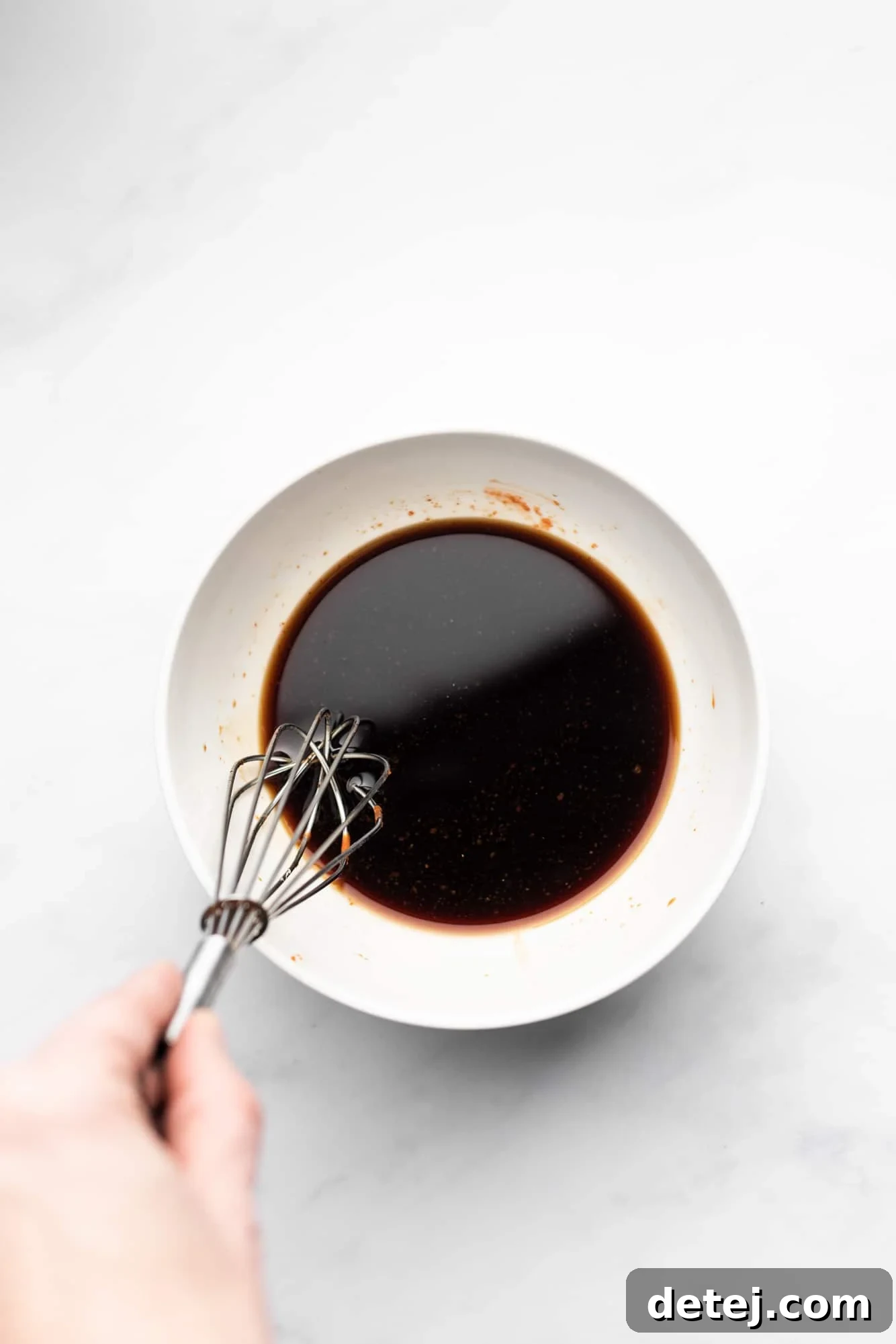
- Whip Up the Signature Sauce: In a small mixing bowl, combine all the sauce ingredients: low sodium soy sauce (or tamari), rice vinegar, pure maple syrup, fresh lime juice, and Sriracha hot sauce. Whisk everything together until the sauce is smooth and thoroughly combined. Take a moment to taste and adjust the flavors to your preference—add a little more Sriracha for heat, lime for tang, or maple syrup for sweetness. Set this flavorful sauce aside.
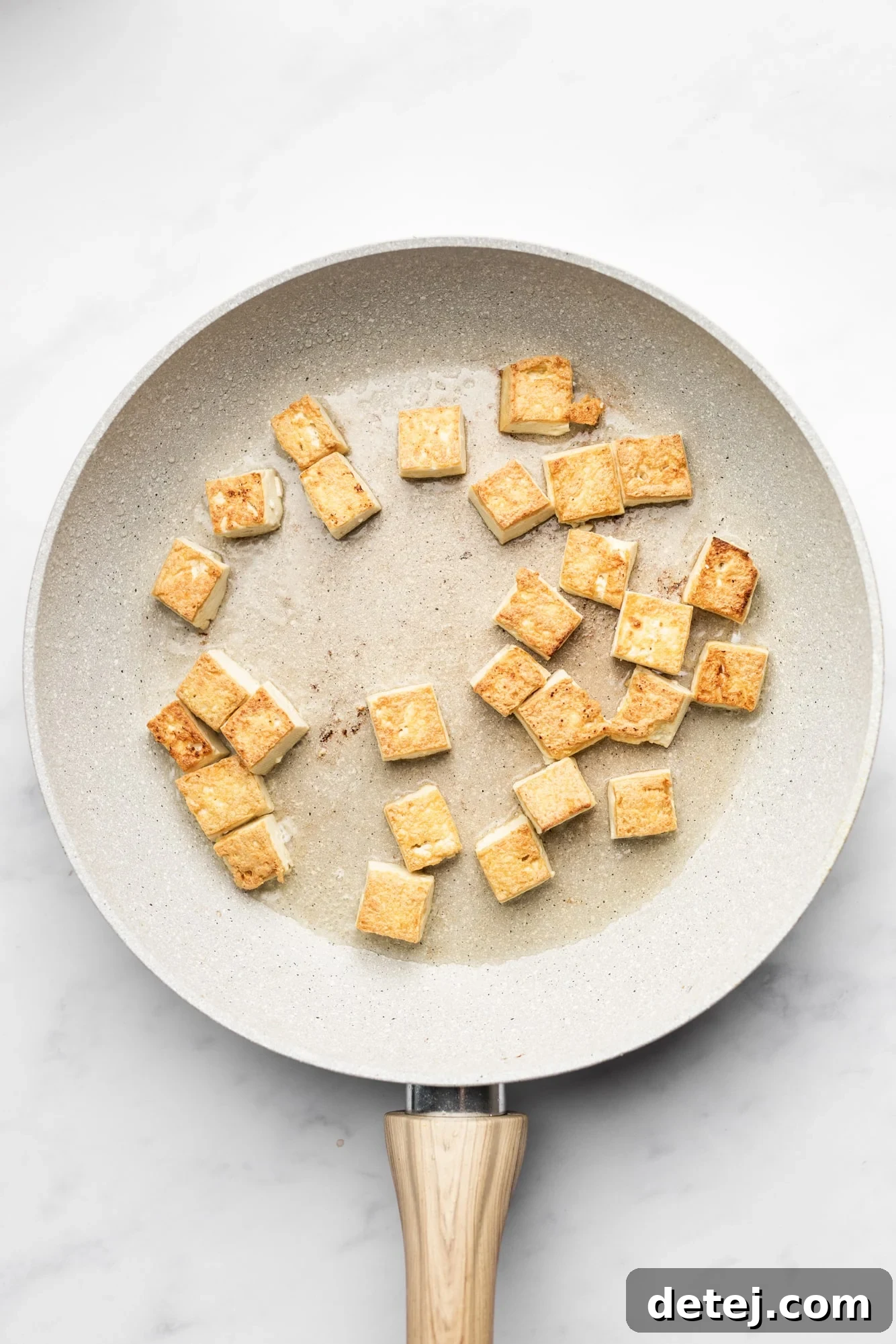
- Perfectly Pan-Fried Tofu: Heat 2-3 tablespoons of vegetable oil in a large pan or wok over medium-high heat. Once the oil is shimmering and hot, carefully add your pressed and cubed tofu. Fry the tofu, turning occasionally, until all sides are beautifully golden brown and crispy. This step gives the tofu its appealing texture and helps it stand up to the sauce.
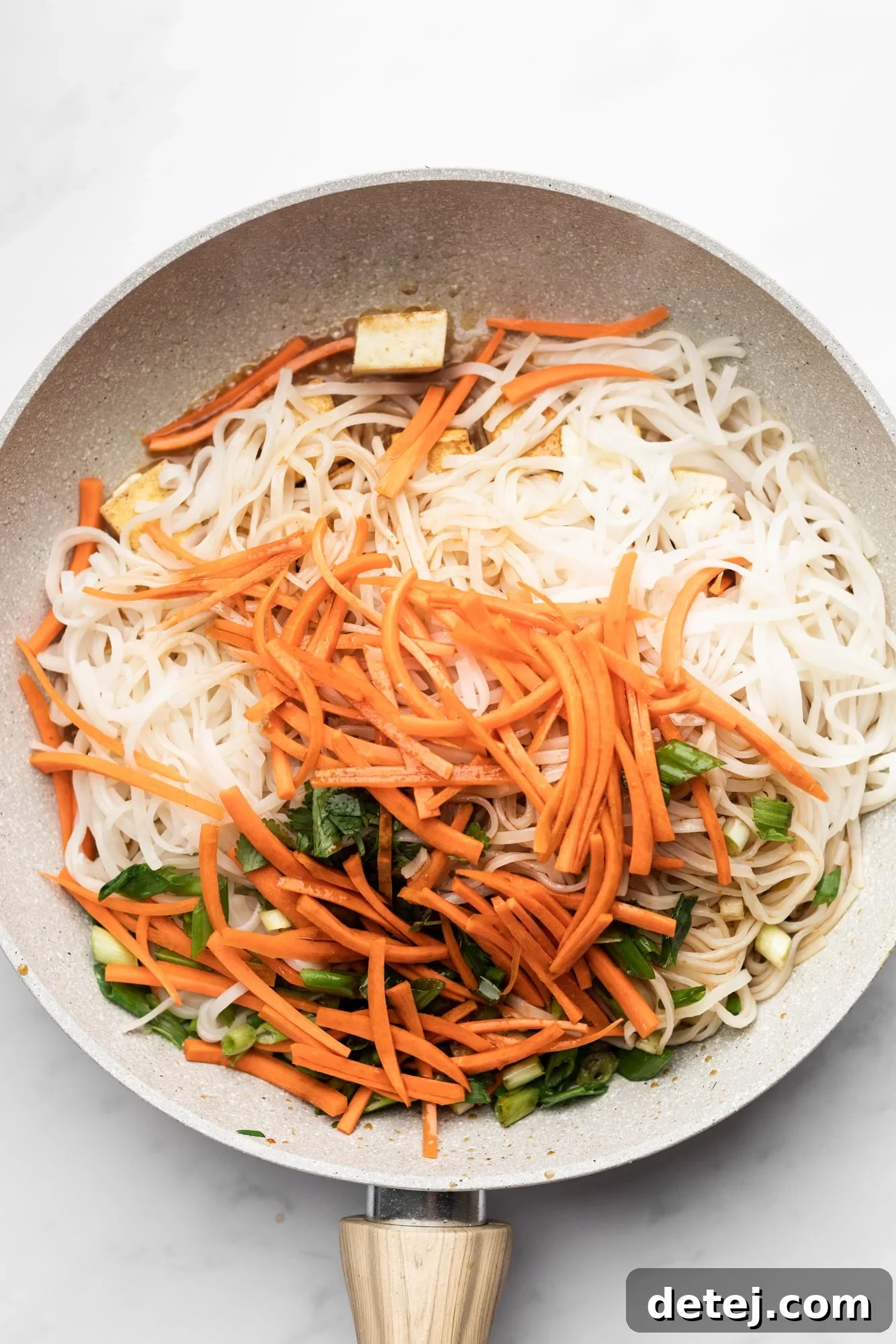
Pro Tip: To save even more time, you can prepare crispy tofu ahead of time using your air fryer while your noodles are cooking. Once done, simply add the pre-cooked tofu to the pan during the combining step. - Combine & Toss: To the pan containing the crispy tofu, add the cooked rice noodles, the prepared Pad Thai sauce, julienned carrots, chopped green onions, and about half of the fresh cilantro. Stir everything together vigorously and continuously over medium-high heat. Your goal is to warm all the ingredients through and ensure every noodle and piece of tofu is thoroughly coated in the delicious sauce. This usually takes just a few minutes.
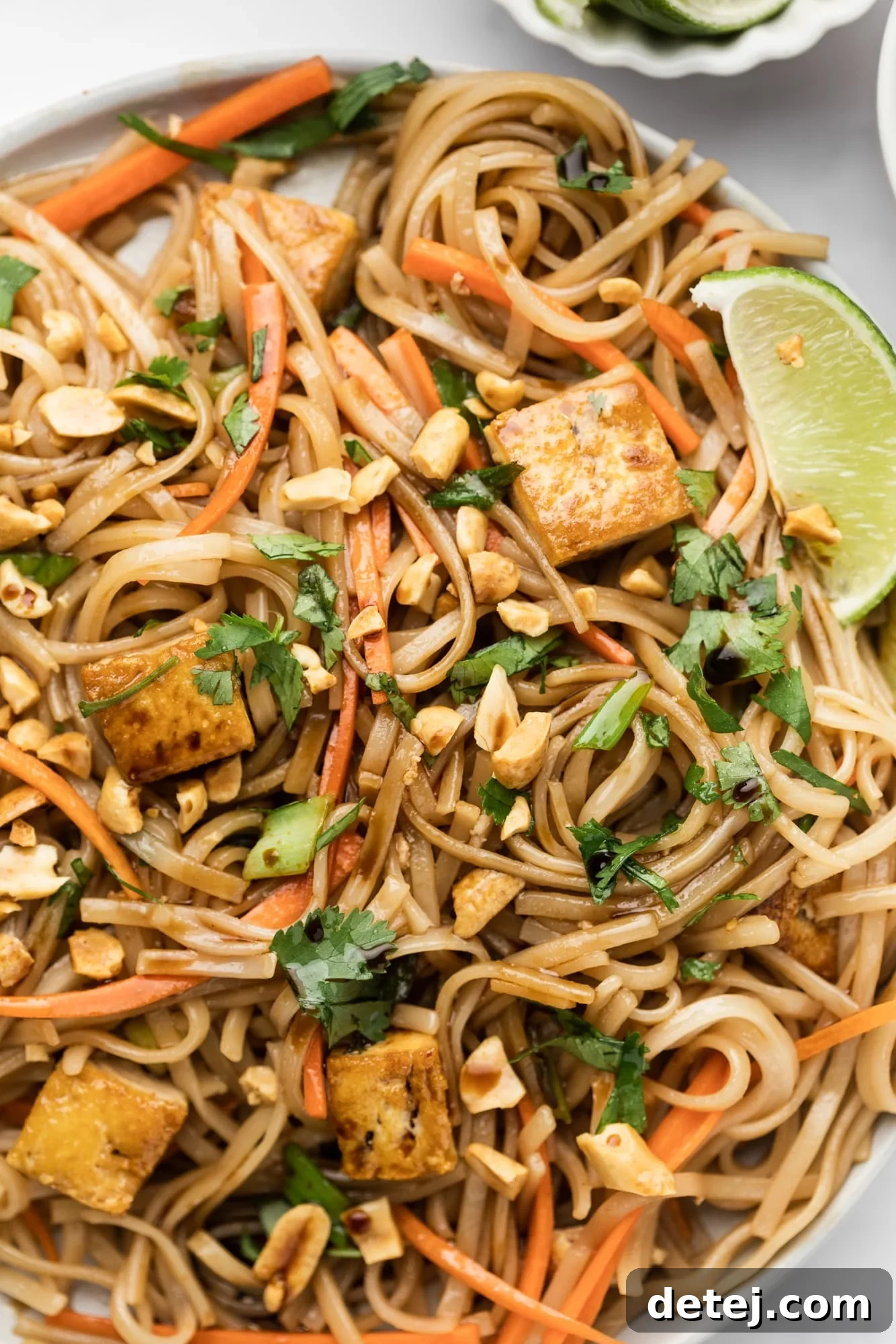
- Serve & Garnish: As soon as the Pad Thai is hot and well-coated, transfer it immediately to serving plates. Finish each plate generously with your favorite toppings: a sprinkle of crushed peanuts, a handful of fresh mung bean sprouts, the remaining fresh cilantro, and a few lime wedges. The final touch? A generous squeeze of fresh lime juice over the top just before eating brightens all the flavors and provides an irresistible zest. Enjoy your homemade, quick, and vibrant Vegan Pad Thai!
Exciting Variations & Customization Ideas
One of the best things about Pad Thai is its versatility! Feel free to customize this recipe to suit your taste and what you have on hand:
- Go Gluten-Free: Making this Vegan Pad Thai gluten-free is incredibly simple. Just swap out the regular low-sodium soy sauce for a certified gluten-free tamari, and ensure your rice noodles are also gluten-free (most are, but it’s always good to check the label). All other ingredients in this recipe are naturally gluten-free.
- Boost Your Veggies: While carrots and green onions provide a great base, Pad Thai is fantastic for incorporating more vegetables. Consider adding strips of colorful red or yellow bell peppers, crisp broccoli florets, thinly sliced mushrooms, crunchy snap peas, or shelled edamame. Stir-fry these harder vegetables alongside the carrots until tender-crisp before adding the noodles and sauce.
- Alternative Plant-Based Proteins: If tofu isn’t your favorite or you want to try something different, there are plenty of other plant-based protein options. Crispy vegan chicken strips, crumbled and pan-fried tempeh, or even additional edamame can be fantastic additions. For a vegetable-only Pad Thai, simply omit the tofu and increase the quantity or variety of other vegetables as suggested above.
- Add Vegan “Eggs”: Did you used to love the scrambled egg component in traditional Pad Thai? You can easily recreate this! Just before you add the sauce and noodles to the pan, pour in some liquid vegan egg substitute (like JUST Egg). Scramble it in the pan until firm, then proceed with the rest of the recipe for an authentic scramble texture.
Smart Make-Ahead Tips for Quick Weeknight Meals
While fresh Pad Thai is truly the best, you can still enjoy this dish in a hurry by preparing certain components ahead of time. This strategy transforms a 30-minute recipe into an even faster meal when you’re pressed for time.
- Noodle Prep: Cooked rice noodles can be stored in an airtight container in the refrigerator for 3 to 4 days. After cooking and rinsing, toss them with a tiny amount of vegetable oil to prevent them from sticking together. This makes them easy to grab and reheat.
- Sauce Storage: Prepare the Pad Thai sauce as directed and store it in a sealed jar or container in the fridge for up to 1 week. This allows the flavors to meld even further, potentially enhancing your dish.
- Veggie Readiness: Chop all your vegetables and prepare your garnishes (like lime wedges, cilantro, and crushed peanuts) 1 to 2 days in advance. Store them in separate airtight containers in the refrigerator to keep them crisp and fresh.
- Tofu Prep: Press and cube your extra-firm tofu up to 1 week ahead of time. Store it covered in the refrigerator. You can even pan-fry or air-fry the tofu in advance and reheat it gently just before assembling the Pad Thai.
With these make-ahead tips, your delicious homemade Vegan Pad Thai is just minutes away from being on your table, even on the busiest days!
More Delicious 30-Minute Vegan Recipes You’ll Love
If you enjoyed this quick and easy Pad Thai, be sure to explore more of our fast and flavorful vegan dishes:
- Easy Vegan Ramen
- Teriyaki Noodles
- Peanut Tempeh Stir Fry
- Vegan Thai Red Curry
- Thai Peanut Noodles
Vegan Pad Thai Recipe
This 30-minute Vegan Pad Thai is a quick and flavorful plant-based take on the classic Thai dish, featuring tender rice noodles, golden fried tofu, crisp vegetables, and a perfectly balanced homemade sauce. It’s an easy, accessible, and utterly delicious weeknight meal!
Prep Time: 10 minutes
Cook Time: 20 minutes
Total Time: 30 minutes
Yields: 4 servings
Ingredients
Main Components
- 7 ounces stir-fry rice noodles
- 2-3 tablespoons vegetable oil
- 14.5 ounce block extra-firm tofu, pressed and cut into 1/2 inch cubes
For the Sauce
- 4 tablespoons low sodium soy sauce (or tamari for gluten-free)
- 2 tablespoons rice vinegar
- 4 tablespoons pure maple syrup
- 2 tablespoons fresh lime juice
- 1 teaspoon Sriracha hot sauce (adjust to taste)
Vegetables
- 1 cup julienned carrots (approx. 3 medium carrots)
- 3 green onions, chopped
For Serving & Garnish
- 2 limes, cut into wedges
- 1/2 cup fresh cilantro, chopped
- 1/2 cup crushed or chopped peanuts
- 1 cup mung bean sprouts (optional)
Instructions
- Prepare All Ingredients: Thoroughly prepare all components before cooking. Slice carrots into julienne strips, chop green onions, cilantro, and crush peanuts. Press your extra-firm tofu (if it’s not vacuum-packed) to remove excess water, then cut it into 1/2-inch cubes. This ensures all ingredients are ready for quick assembly.
- Cook the Noodles: Bring a large pot of water to a vigorous boil. Add the rice noodles and cook for exactly 1 minute. Remove the pot from the heat and allow the noodles to soak in the hot water for an additional 5 minutes until tender-chewy. Drain the noodles thoroughly and rinse them under cold water to prevent sticking. Set aside.
- Whisk the Sauce: In a small bowl, combine the low sodium soy sauce (or tamari), rice vinegar, pure maple syrup, fresh lime juice, and Sriracha hot sauce. Whisk until all ingredients are well combined and the sauce is smooth. Taste and adjust the seasoning as needed, adding more heat, tang, or sweetness to your preference.
- Fry the Tofu: Heat the vegetable oil in a large pan or wok over medium-high heat. Once the oil is hot and shimmering, add the cubed tofu. Fry, turning occasionally, until all sides are golden brown and crispy. This step enhances the tofu’s texture and flavor.
- Combine & Stir-Fry: Add the cooked rice noodles, the prepared Pad Thai sauce, julienned carrots, chopped green onions, and half of the fresh cilantro to the pan with the tofu. Toss everything together continuously to ensure the noodles and tofu are evenly coated with the vibrant sauce. Continue to stir-fry for 2-3 minutes, or until all ingredients are heated through and the noodles have absorbed some of the sauce.
- Serve Immediately: Divide the hot Pad Thai among serving plates. Garnish each portion generously with the remaining fresh cilantro, crushed peanuts, and fresh lime wedges. If using, add a handful of crisp mung bean sprouts. Squeeze fresh lime juice over each serving just before eating for an added burst of freshness that brightens the entire dish. Enjoy!
Chef’s Notes & Tips
- Gluten-Free Perfection: For a completely gluten-free version of this delicious Pad Thai, simply ensure you use gluten-free tamari as a direct substitute for soy sauce.
- Vegetable Customization: Expand on the vegetables used by adding red pepper strips, broccoli florets, sliced mushrooms, or snap peas. Stir-fry these alongside the carrots until they are tender-crisp before incorporating the noodles and sauce.
- Time-Saving Ingredient: To further reduce prep time, look for pre-cut julienned carrots at your local grocery store.
- Add Vegan “Eggs”: For those who miss the scrambled egg texture in traditional Pad Thai, consider adding a plant-based egg substitute like liquid JUST Egg. Pour it into the pan just before adding the noodles and sauce, and scramble until firm.
Nutrition Information (Approximate Per Serving)
- Serving Size:
- 1 serving
- Calories:
- 500 kcal
- Carbohydrates:
- 68g
- Protein:
- 17g
- Fat:
- 19g
- Saturated Fat:
- 8g
- Sodium:
- 754mg
- Potassium:
- 585mg
- Fiber:
- 5g
- Sugar:
- 16g
- Vitamin A:
- 5571 IU
- Vitamin C:
- 13mg
- Calcium:
- 111mg
- Iron:
- 3mg
Recipe Details
- Course:
- Main Course
- Cuisine:
- Thai
- Author:
- Nora Taylor
Did you make this recipe? We’d love to see your creations! Mention @nora_cooks_vegan_ or tag #noracooks on Instagram!