

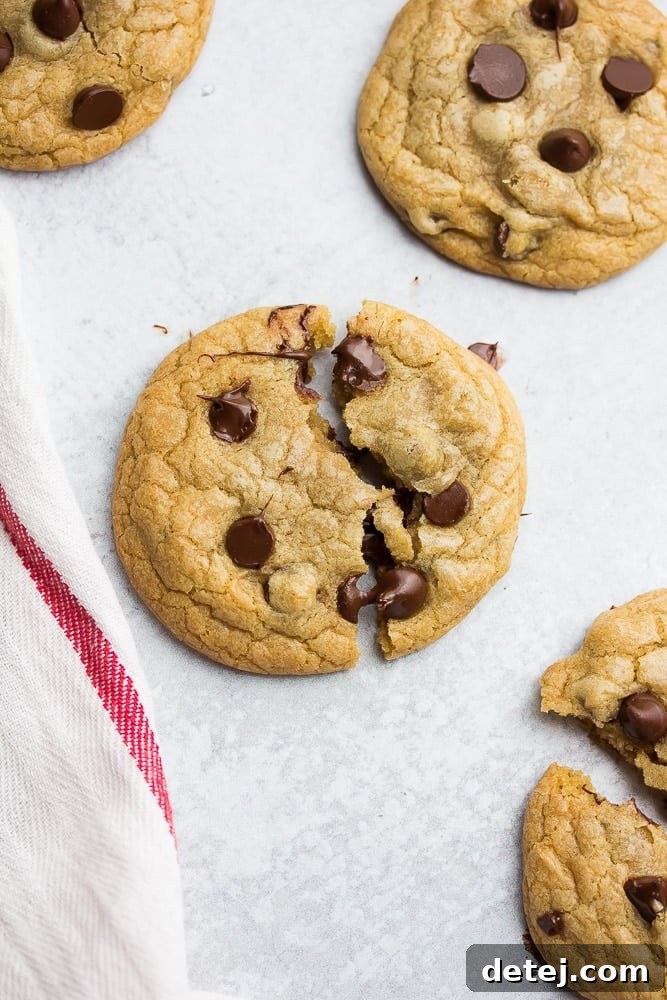
Discover the ultimate **Coconut Oil Chocolate Chip Cookies** – perfectly thick, wonderfully chewy, and entirely butter-free! This amazing recipe is completely vegan, comes together in just one bowl, and is incredibly simple to whip up whenever a sweet craving strikes. Prepare for a plant-based cookie experience that will redefine your expectations.

Irresistible Coconut Oil Chocolate Chip Cookies: Your New Favorite Vegan Treat
Embark on a culinary journey to cookie perfection with our incredible recipe for Coconut Oil Chocolate Chip Cookies. Forget about searching for vegan butter substitutes or complicated ingredients; these cookies are crafted using simple, wholesome coconut oil, delivering a rich, satisfying taste and texture that will leave you amazed. If you’ve been skeptical about baking with coconut oil, prepare to have your mind changed!
For a long time, I believed that cookies made without traditional butter or specialized vegan butter couldn’t quite achieve that classic, comforting profile. But after extensive testing and a few clever adjustments, I’ve perfected a method that yields unbelievably thick, wonderfully soft, and delightfully chewy cookies every single time. The best part? They taste nothing like coconut, thanks to a key ingredient choice, making them universally appealing even to those who aren’t fans of coconut flavor.
While I cherish my recipe for Perfect Vegan Chocolate Chip Cookies, this coconut oil version stands as a strong rival, offering an even simpler and quicker baking process. You won’t need a stand mixer, there’s no need to prepare flax eggs, and the entire batter comes together effortlessly in just one bowl with basic pantry staples. This recipe is designed for maximum flavor and minimal fuss, making it ideal for novice bakers and seasoned pros alike.
Why Coconut Oil is a Game-Changer in Vegan Baking
Coconut oil has emerged as a superstar in plant-based baking, and for good reason. Its unique composition allows it to mimic the properties of butter in many recipes, contributing to structure, moisture, and flavor. In these chocolate chip cookies, coconut oil plays a crucial role in achieving that desirable thick and chewy texture. When melted, it blends seamlessly with the sugars and liquid ingredients, creating an emulsified base that sets the stage for a perfect cookie dough.
One of the common concerns about baking with coconut oil is the potential for a strong coconut flavor. However, by selecting refined coconut oil, you effectively eliminate this worry. Refined coconut oil undergoes a process that removes its distinct coconut aroma and taste, leaving a neutral fat that allows the classic chocolate chip cookie flavors – vanilla, brown sugar, and rich chocolate – to truly shine. This makes it an excellent choice for those who desire butter-free or vegan cookies without any unwanted tropical undertones.
Beyond flavor neutrality, coconut oil contributes to the incredible chewiness of these cookies. Its fat content helps prevent the cookies from becoming overly crisp or cakey, instead promoting a tender crumb and a delightful bend. Plus, using coconut oil simplifies the process significantly, as it melts easily and incorporates into the batter with minimal effort, bypassing the need for creaming butter or chilling dough for extended periods.
Essential Tips & Smart Substitutions for Perfect Cookies
Achieving the perfect batch of butter-free chocolate chip cookies is easy with a few key considerations. Follow these tips and substitution ideas to ensure your cookies are a resounding success:
- Refined vs. Unrefined Coconut Oil: This is perhaps the most critical tip for those who prefer a neutral-tasting cookie. Always opt for refined coconut oil if you want your cookies to have absolutely no coconut flavor. Refined coconut oil is processed to remove the coconut aroma and taste, making it an ideal, flavorless fat for baking. If, however, you enjoy a subtle hint of coconut in your desserts, unrefined (virgin) coconut oil can be used, but be aware it will impart its characteristic flavor.
- Melting and Measuring Coconut Oil: Precision is key. I recommend melting your solid coconut oil in a microwave-safe glass measuring cup or bowl. Heat it in short bursts (e.g., 30-60 seconds) until it’s completely liquid and warm. Once melted, measure precisely to ensure you have exactly 2/3 cup. Over-measuring or under-measuring can affect the cookie’s texture and spread.
- Alternative Fats: While coconut oil is the star of this recipe, you do have options! Melted vegan butter (ensure it’s melted, not just softened) or canola oil can be substituted directly for the coconut oil. These alternatives will yield similarly delicious results, maintaining the thick and chewy texture. Different vegan butters may have slightly varying fat contents, which could subtly impact spread, but generally, they work very well. Canola oil provides a very neutral flavor profile.
- Non-Dairy Milk Options: The recipe calls for soy milk, but you can confidently substitute any other non-dairy milk you prefer. Almond milk, oat milk, or cashew milk will all work beautifully. Whether sweetened, unsweetened, or vanilla-flavored, your choice won’t significantly alter the cookie’s outcome, so use what you have on hand or what you enjoy most.
- Gluten-Free Flour: For those seeking a gluten-free option, an all-purpose gluten-free flour blend *may* work, but please note that this specific recipe hasn’t been tested with GF flour. If you choose to experiment, look for a high-quality all-purpose gluten-free blend that contains xanthan gum (or add 1/2 teaspoon of xanthan gum if your blend doesn’t include it). Gluten-free flours absorb liquids differently than wheat flour, so you might need slight adjustments to liquid content, or expect a slightly different texture.
- Cornstarch for Chewiness: The addition of cornstarch is a secret weapon for achieving that coveted soft and chewy texture. It helps tenderize the cookies and keeps them from becoming too dry. Tapioca starch or arrowroot powder can be used as direct substitutes if cornstarch is unavailable.
- Don’t Overmix: Once you add the dry ingredients to the wet, mix until *just* combined. Overmixing can develop the gluten in the flour (even in regular flour) and lead to tougher cookies. A few streaks of flour are fine; they’ll disappear as you fold in the chocolate chips.
- Underbaking for Chewy Centers: These cookies are best when slightly underbaked. They might look a little soft and underdone when you pull them out of the oven, but they will firm up considerably as they cool on the baking sheet, transforming into perfectly chewy treats. Trust the process!

More Vegan Cookie Creations to Explore
If you’ve fallen in love with these coconut oil chocolate chip cookies, you’ll be thrilled to discover a world of other delicious vegan cookie recipes. Whether you’re in the mood for classic flavors or something wonderfully decadent, we have a recipe to satisfy every cookie craving. Expand your plant-based baking repertoire with these fantastic options:
- Perfect Vegan Chocolate Chip Cookies
- Ultimate Vegan Chocolate Cookies
- Classic Vegan Peanut Butter Cookies
- The Best Vegan Sugar Cookies

Rated 4.48 stars by 46 ratings
Coconut Oil Chocolate Chip Cookies
10 mins
10 mins
20 mins
16
cookies
Pin Recipe
Leave a Comment
Ingredients
- 2/3 cup melted refined coconut oil (for no coconut taste)
- 3/4 cup brown sugar (packed)
- 1/4 cup soy milk (or other non-dairy milk)
- 1 teaspoon pure vanilla extract
- 1 1/2 cups all purpose flour
- 1 tablespoon cornstarch
- 1/2 teaspoon baking soda
- 1/2 teaspoon salt
- 3/4 cup non-dairy chocolate chips (ensure vegan-friendly)
Instructions
-
Preheat your oven to 350 degrees F (175°C). Line two medium-sized baking sheets with parchment paper to prevent sticking and ensure easy cleanup. Alternatively, you can lightly grease the pans if you don’t have parchment paper.
-
Melt the coconut oil. Place the solid coconut oil in a microwave-safe measuring cup or bowl. Microwave on high for 1-2 minutes, checking every 30 seconds, until it is completely liquid and warm. Carefully measure to confirm you have exactly 2/3 cup of melted coconut oil.
-
In a large mixing bowl, combine the warm melted coconut oil with the brown sugar. Whisk thoroughly for about 1 minute until the mixture is well combined and smooth. Next, add the soy milk and vanilla extract. Whisk again until the mixture is completely smooth and emulsified; at this stage, it should have a luscious, caramel-like appearance.
-
To the bowl containing the wet ingredients, add the all-purpose flour, cornstarch, baking soda, and salt. Using a large spoon or spatula, mix gently until the dry ingredients are just incorporated into the wet. Be careful not to overmix the dough. Finally, fold in the non-dairy chocolate chips until they are evenly distributed throughout the dough.
-
Scoop the cookie dough into balls, each approximately 1 1/2 tablespoons in size. Place the dough balls onto the prepared baking sheets, ensuring you leave sufficient space between them (about 2 inches apart) to allow for proper spreading during baking. Bake for 9-11 minutes. The cookies will appear soft and slightly underdone in the center, which is perfect! They will firm up considerably as they cool, developing their signature chewy texture.
-
Once out of the oven, allow the cookies to cool on the baking sheets for at least 10 minutes. This crucial step allows them to set properly and prevents them from breaking. After 10 minutes, carefully transfer them to a wire cooling rack to cool completely. Or, if you can’t resist, enjoy them warm with a glass of your favorite non-dairy milk!
Notes
- Fat Substitutions: If you don’t have coconut oil, melted vegan butter or canola oil can be successfully used as a 1:1 substitute. These alternatives will also deliver wonderful, chewy cookies.
- Non-Dairy Milk Options: Feel free to use any non-dairy milk you prefer in place of soy milk, such as almond, oat, or cashew milk. The type of milk (sweetened, unsweetened, or vanilla flavored) will not significantly impact the final result.
- Starch Alternatives: If you don’t have cornstarch, tapioca starch or arrowroot powder can be used interchangeably to achieve the same tenderizing and chewy effect.
- Gluten-Free Adaptation: While not tested, these cookies may work with a good quality all-purpose gluten-free flour blend. For best results, choose a blend that includes xanthan gum, or add 1/2 teaspoon of xanthan gum per cup of flour if your blend does not contain it. Be mindful that texture might vary slightly.
- Storage: Store leftover cookies in an airtight container at room temperature for up to 3-4 days. For longer storage, you can freeze baked cookies for up to 2 months. Thaw at room temperature or gently warm in the microwave.
- Freezing Dough: You can also freeze the cookie dough! Form balls as directed, then freeze on a parchment-lined tray until solid. Transfer to a freezer-safe bag or container for up to 3 months. Bake from frozen, adding a few extra minutes to the baking time.
Nutrition
Did you make this delicious recipe?
We’d love to see your creations! Mention @nora_cooks_vegan_ or tag #noracooks on Instagram to share your results with our community!