
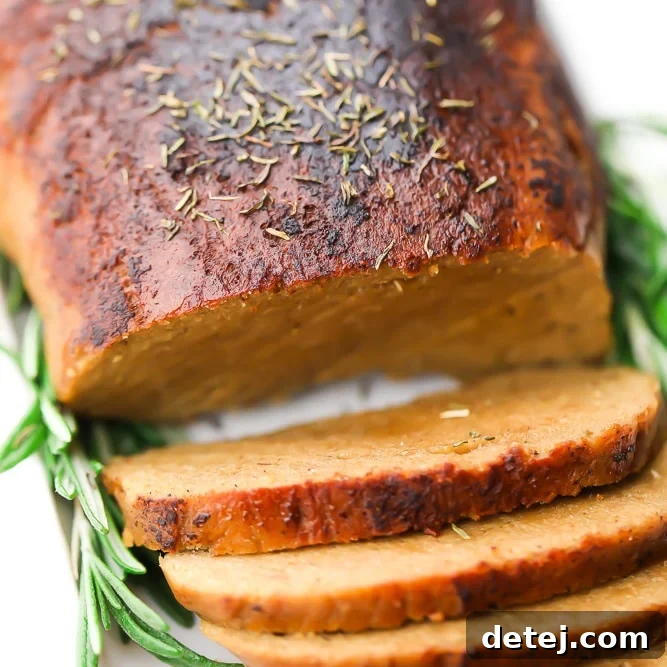
The Ultimate Vegan Turkey Roast: Your Perfect Plant-Based Holiday Centerpiece
Welcome to your new holiday tradition! This incredible Vegan Turkey Roast is not just a substitute; it’s a star in its own right, offering mouthwatering savory flavors, an impressively realistic meaty texture, and a beautiful presentation that will captivate everyone at your table. Ideal for vegan Thanksgiving, Christmas, or any special occasion, this plant-based marvel promises to impress both vegans and non-vegans alike. Get ready to elevate your festive table with this delicious, homemade creation that’s destined to become a staple in your holiday repertoire.
Planning your full vegan holiday feast? Don’t stop at the main course! Complement this magnificent roast with our essential side dishes: try our Creamy Vegan Mashed Potatoes smothered in luscious Easy Vegan Gravy, a comforting Vegan Green Bean Casserole, and a delightful Sweet Potato Casserole. Together, they create an unforgettable holiday meal that’s entirely plant-based and bursting with flavor.
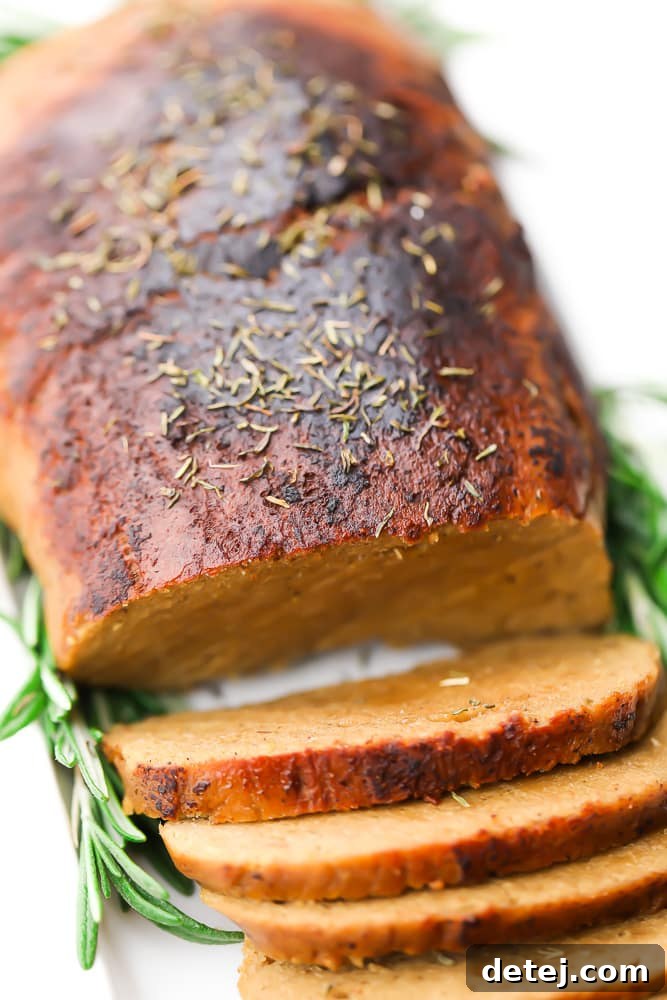
Just like our popular Vegan Chicken and Vegan Glazed Ham recipes, this turkey roast is skillfully crafted from seitan, a wheat-gluten-based protein. It’s infused with classic poultry herbs and seasonings to help it achieve an uncanny resemblance in taste and texture to traditional Thanksgiving turkey. Slice it up and serve it proudly with your favorite holiday accompaniments, or layer it into delicious leftover sandwiches for days after the celebration!
Why This Homemade Vegan Turkey Roast Shines as the Best Holiday Recipe
Discover why this vegan turkey roast isn’t just another plant-based dish, but a culinary triumph that deserves a prime spot on your holiday menu:
- The Ultimate Holiday Centerpiece: Forget about generic, store-bought loaves or bland tofu alternatives. This impressive seitan turkey is not only remarkably easy to prepare from scratch but also offers a visually stunning presentation. Its golden-brown crust and rich texture make it a true showstopper, guaranteed to spark conversation and delight among your guests, vegans and omnivores alike.
- Moist, Flavorful, and Unmistakably Meaty: What truly sets this recipe apart is its incredible taste and texture. A thoughtful combination of savory ‘no-chicken’ broth and classic poultry seasonings—including sage, thyme, and rosemary—imparts the most realistic and robust flavors. The seitan base provides a wonderfully moist, tender, and undeniably meaty bite, closely mimicking traditional turkey and offering a deeply satisfying eating experience.
- Endorsed by Dozens of 5-Star Reviews: Don’t just take our word for it! This epic vegan turkey has garnered over 50 glowing 5-star reviews from happy home cooks. Its consistent success proves that it’s always an instant holiday hit, bringing joy and deliciousness to countless festive tables. Join the community of satisfied food lovers who have made this their go-to vegan holiday roast!
How to Make Your Own Perfect Vegan Turkey Roast: A Detailed Guide
Crafting this delicious plant-based turkey is a straightforward process, resulting in a magnificent roast that’s rich in flavor and satisfyingly meaty. Follow these steps to create your own:
Step 1: Prepare the Flavor Base
In a high-speed blender or food processor, combine the drained chickpeas, 3/4 cup of ‘no-chicken’ broth (or quality vegetable broth), 2 tablespoons of olive oil, 1/4 cup of nutritional yeast, 2 tablespoons of low-sodium soy sauce, 1 teaspoon of dried sage, 1/2 teaspoon of dried thyme, 1/4 teaspoon of dried rosemary, 1 teaspoon of onion powder, and 1/2 teaspoon of garlic powder. Blend or process the mixture until it is completely smooth and creamy. This step is crucial for creating the deeply savory and aromatic foundation of your roast.
Step 2: Form the Seitan Dough
Transfer the smooth, aromatic blended mixture to a large mixing bowl, ensuring you scrape out all the flavorful bits with a spatula. Gradually add 1 1/2 cups of vital wheat gluten to the wet ingredients. Begin mixing gently with a spatula or spoon until the dough starts to come together. Then, switch to using your hands and knead the dough briefly, about 10 times, until it forms a cohesive, smooth loaf. Be careful not to over-knead, as excessive handling can result in a tougher seitan texture.

Step 3: Steam to Perfection (Stovetop Method)
Prepare a large pot with a steamer basket, ideally one with a flat bottom for stability. Pour 3 cups of additional broth into the bottom of the pot for steaming, making sure the liquid level does not touch the seitan loaf directly. Carefully place your shaped loaf onto the steamer basket. Cover the pot tightly and bring the broth to a boil. Once boiling, reduce the heat to a gentle simmer, allowing the roast to steam for 1 hour. It’s essential to monitor the broth level throughout; if it starts to evaporate too quickly, add more broth to prevent the pot from drying out. For added moisture and flavor, you can occasionally pour some hot broth over the top of the loaf during the steaming process.
Did all of the broth evaporate? Don’t worry! Simply pour more broth into the pot if it runs low before the full cook time is up. Maintaining the steaming liquid is key to a moist roast.
Step 4: Achieve a Golden, Crispy Crust
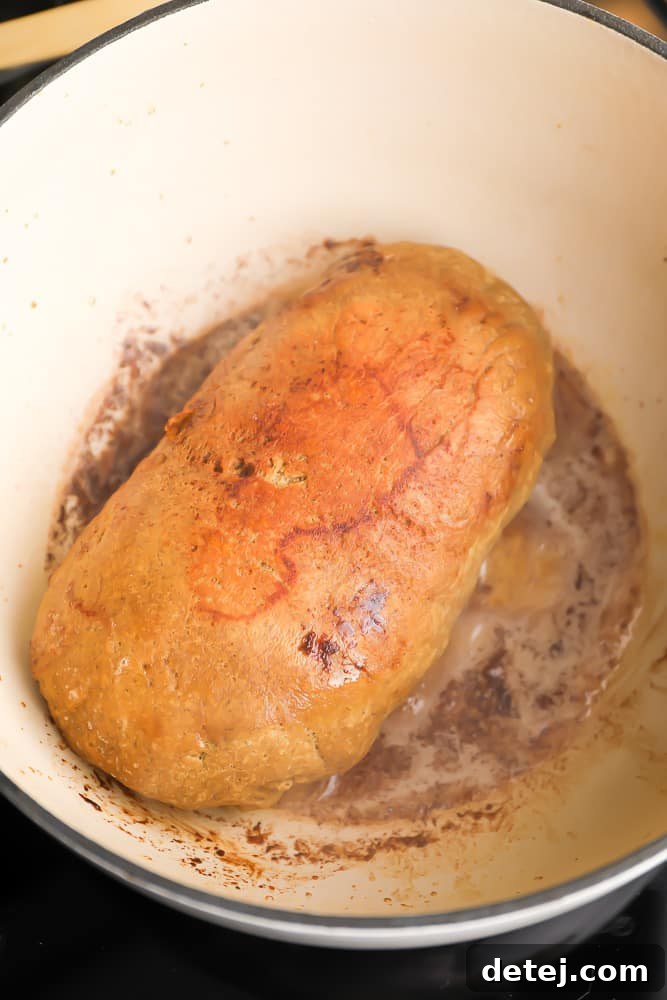
Once the steaming is complete, remove the pot from the heat and carefully lift the lid, allowing the loaf to cool for a few minutes. This helps it firm up slightly. While it cools, heat a large skillet (you can even use the same pot if it’s oven-safe) over medium-high heat. Add 4 tablespoons of vegan butter and let it melt, then stir in 1 tablespoon of low-sodium soy sauce. This creates a rich, savory browning liquid. Carefully place the cooked seitan loaf in the pan and allow it to brown thoroughly on all sides, turning it periodically, until a beautiful golden-brown and slightly crispy crust forms. This crucial step adds incredible depth of flavor and appealing texture to your roast.
Step 5: Slice and Serve
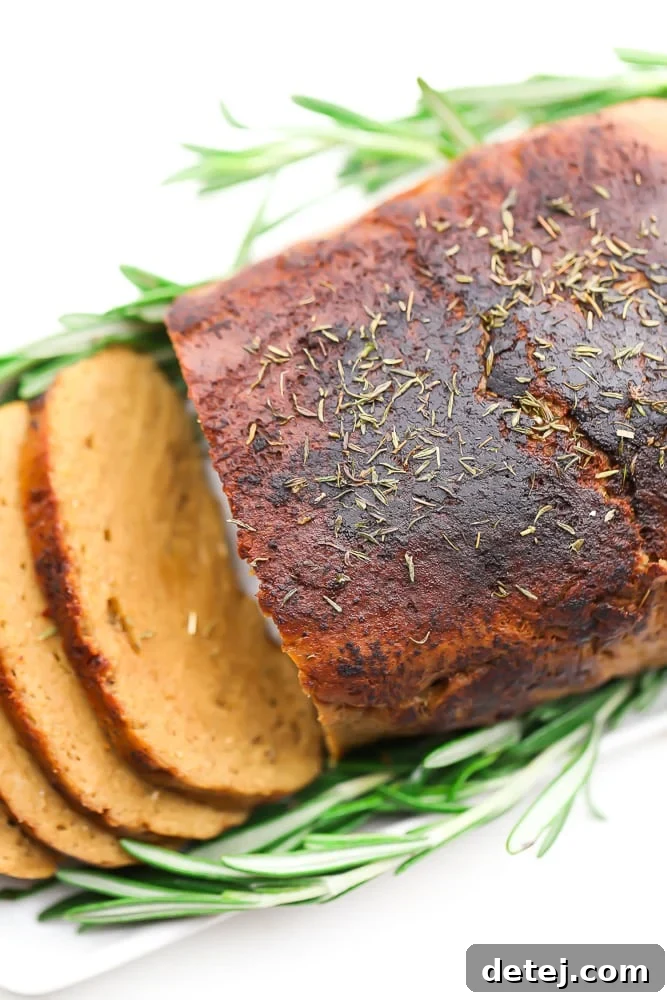
Transfer the beautifully browned roast to a cutting board or a festive serving platter. For an elegant touch, sprinkle with fresh herbs like sage or rosemary. Slice the roast thinly to reveal its tender, meaty interior. Serve immediately with your favorite vegan holiday recipes, such as creamy mashed potatoes and a generous drizzle of rich vegan gravy, for a truly memorable and satisfying meal that will impress everyone at your table!
Instant Pot Instructions: An Effortless Method for Your Vegan Turkey
For those who prefer the convenience of an Instant Pot, steaming your vegetarian turkey is incredibly easy and efficient. This method is suitable for a 6-quart model or larger. Here’s how to do it:
- Prepare the Pot: Place the steaming trivet inside your Instant Pot. Pour 3 to 4 cups of additional broth into the bottom of the pot for steaming.
- Pressure Cook the Loaf: Carefully position the prepared seitan loaf on the trivet. Secure the lid, ensure the vent is set to the sealing position, and cook on high pressure for 50 minutes.
- Release Pressure and Brown: Once the cooking cycle is complete, allow the pressure to release naturally for 10 minutes. After 10 minutes, carefully manually release any remaining pressure. Gently remove the loaf from the Instant Pot. You can then brown it directly in the Instant Pot using the sauté mode with vegan butter and soy sauce, or transfer it to a skillet on the stovetop for browning. Once beautifully golden, slice and serve your delicious vegan turkey.
Essential Tips for Crafting Your Best Vegan Turkey Roast
To ensure your vegan turkey roast turns out perfectly every time, keep these expert tips in mind:
- Choose Your Broth Wisely: The quality of your broth significantly impacts the final flavor. We highly recommend using Better Than Bouillon’s No Chicken Base for its superb depth of flavor and lighter color, which helps achieve a more authentic “turkey” appearance. If this isn’t available, a high-quality vegetable broth will also work wonderfully.
- Don’t Over-Knead the Dough: While vital wheat gluten needs some kneading to develop its elasticity and create that desirable meaty texture, excessive kneading can make the seitan tough and rubbery. Knead just enough until the dough is smooth, cohesive, and forms a unified loaf.
- DIY Steamer Basket Hack: No dedicated steamer basket? No problem! You can easily create a makeshift steamer. Place a few balls of aluminum foil at the bottom of a large pot to elevate a heat-safe plate. Position your loaf on this plate, add broth below, and steam as usual. It works surprisingly well!
- Master the Browning Process: The final browning step is not merely for aesthetics; it’s crucial for developing a rich, savory crust that locks in flavor and adds a fantastic textural contrast to the tender interior. Take your time to ensure all sides are beautifully golden and slightly crispy.
- Season Generously and Taste: The herbs and spices are the heart of this “turkey” flavor. Don’t be shy! Feel free to adjust the amounts of sage, thyme, rosemary, onion powder, and garlic powder to suit your taste preferences. A pinch of smoked paprika can also add an extra layer of savory depth.
Serving Suggestions for a Complete and Memorable Holiday Feast
This versatile Vegan Turkey Roast pairs beautifully with a wide array of holiday classics and creative side dishes, making your festive meal truly unforgettable.
- Classic Holiday Pairings: For a traditional holiday spread, serve thin slices of the roast alongside fluffy, creamy vegan mashed potatoes, generously smothered in rich vegan gravy. A dollop of tangy cranberry sauce provides the perfect counterpoint, and a hearty serving of savory vegan stuffing completes the classic ensemble.
- Elevated Side Dishes: Expand your holiday menu with other delightful vegan sides. Consider roasted root vegetables like carrots, parsnips, and sweet potatoes, crisp Brussels sprouts drizzled with balsamic glaze, or a festive wild rice pilaf studded with cranberries and pecans. A fresh green salad with a light vinaigrette also offers a refreshing contrast.
- Creative Leftover Delights: Don’t let a single slice go to waste! Leftover vegan turkey slices are absolutely divine when piled high in sandwiches. Layer them with a smear of vegan mayo, a touch of leftover gravy, and a spoonful of cranberry sauce for the ultimate post-holiday treat. They also make excellent additions to wraps, chopped into salads, or even repurposed into a hearty vegan shepherd’s pie or pot pie for another comforting meal.
Make-Ahead and Storage Guidance for Stress-Free Holidays
Planning ahead for your holiday meals can significantly reduce stress, and this vegan turkey roast is perfectly suited for advance preparation and easy storage.
- Prepare in Advance: You can fully prepare the vegan turkey loaf, including the steaming step, 1 to 2 days before you plan to serve it. After steaming, allow the roast to cool completely to room temperature. Once cooled, wrap it tightly in plastic wrap or transfer it to a large, airtight container, then refrigerate until needed.
- Reheating for Perfection: When it’s time to serve, remove the chilled loaf from the refrigerator. Wrap it loosely in a layer of aluminum foil and warm it in a preheated 350°F (175°C) oven for 20 to 30 minutes, or until it is heated through to the center. After warming, proceed with the browning step in a skillet with vegan butter and soy sauce to restore its delicious, crispy crust and enhance its flavor. Slice and serve as directed.
- Storing Leftovers: Any leftover slices or the entire roasted loaf can be kept in an airtight container in the refrigerator for 2 to 3 days. Ensure it’s properly sealed to maintain freshness.
- Freezing for Longer Storage: While the vegan turkey roast can be frozen for longer-term storage, we generally recommend serving it fresh for special holiday occasions, as the taste and texture are optimal then. If you do choose to freeze it, wrap the cooled, steamed loaf tightly in plastic wrap and then in foil, or place it in a freezer-safe bag or container. Thaw it completely in the refrigerator overnight before reheating and browning as described above.
Frequently Asked Questions About Vegan Turkey
Q: Can this recipe be made gluten-free?
A: Unfortunately, no. Vital wheat gluten is the core ingredient that provides seitan with its signature meaty, firm, and tender texture. Without it, the roast would have a completely different structure and would not be comparable to a turkey substitute. This recipe is fundamentally gluten-based.
Q: What can I use instead of chickpeas?
A: If chickpeas are not available or preferred, you can easily substitute them with another type of white bean, such as cannellini beans or great northern beans. Pinto beans would also work well, providing a similar binding and textural contribution to the blended base mixture.
Q: I don’t have a steamer basket. What can I use instead?
A: No problem at all! You can easily create a simple DIY steamer. Place a few tightly crumpled balls of aluminum foil (enough to create a stable base) at the bottom of your large pot. Then, place a heat-safe plate on top of these foil balls. This elevates your loaf, allowing you to pour broth underneath for steaming as normal.
Q: Can you make it ahead of time?
A: Yes, absolutely! This turkey roast is excellent for making ahead, which is perfect for busy holiday planning. You can prepare the loaf and steam it 1 to 2 days before serving. After steaming, let it cool completely. Then, wrap it tightly in plastic wrap or transfer it to an airtight container and store it in the refrigerator. Before serving, simply wrap the loaf in a layer of foil and warm it in a 350°F (175°C) oven for 20 to 30 minutes, then proceed with the browning step in a skillet with vegan butter and soy sauce. Slice and serve!
Q: How do you store the leftovers? Can you freeze them?
A: Leftover slices or the whole loaf can be kept in an airtight container in the refrigerator for 2 to 3 days. While it can also be frozen for longer storage, for the absolute best taste and texture, especially for special holiday meals, we recommend serving it fresh. If freezing, thaw thoroughly in the refrigerator before reheating. Leftover vegan turkey slices are fantastic in sandwiches with a little leftover gravy, stuffing, and cranberry sauce!
Q: What is ‘no-chicken’ broth and why is it recommended?
A: ‘No-chicken’ broth is a plant-based bouillon or broth specifically formulated to replicate the savory, umami-rich flavor profile of traditional chicken broth, without any animal ingredients. Brands like Better Than Bouillon No Chicken Base are highly recommended because they provide a deeply savory and authentic “poultry-like” taste that significantly enhances the “turkey” flavor of this seitan roast. While vegetable broth can be used, ‘no-chicken’ broth truly elevates the overall experience and brings it closer to the traditional taste you’re aiming for.
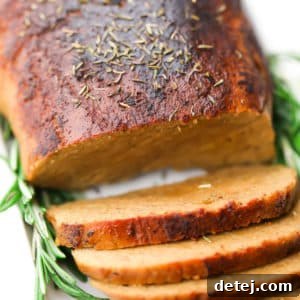
Vegan Turkey Roast
This Vegan Turkey Roast offers mouthwatering savory flavors and a satisfyingly meaty texture, making it the perfect main dish for a memorable vegan Thanksgiving or Christmas celebration. Both stovetop and Instant Pot instructions are included for your convenience.
Rating: 4.98 stars (76 ratings)
Cook Time: 1 hr 10 mins
Total Time: 1 hr 30 mins
Servings: 8 servings
Ingredients
For the Loaf
- 15 ounce can chickpeas, drained and rinsed
- 3/4 cup no-chicken broth (e.g., Better Than Bouillon, or vegetable broth)
- 2 tablespoons olive oil
- 1/4 cup nutritional yeast
- 2 tablespoons low sodium soy sauce
- 1 teaspoon dried sage
- 1/2 teaspoon dried thyme
- 1/4 teaspoon dried rosemary
- 1 teaspoon onion powder
- 1/2 teaspoon garlic powder
- 1 1/2 cups vital wheat gluten
- 3-4 cups additional broth, for steaming
For Browning
- 4 tablespoons vegan butter (olive oil can also be used)
- 1 tablespoon low sodium soy sauce
Instructions
- In a food processor or blender, combine the drained chickpeas, broth, olive oil, nutritional yeast, soy sauce, sage, thyme, rosemary, onion powder, and garlic powder. Blend until completely smooth.
- Transfer the blended mixture to a large mixing bowl, ensuring all bits are scraped out with a spatula.
- Add the vital wheat gluten to the wet ingredients. Mix initially with a spatula or spoon, then switch to your hands to bring the dough together. Sprinkle a little vital wheat gluten on a clean surface, transfer the mixture, and knead about 10 times until it forms a smooth loaf.
- Prepare a large pot with a steamer basket (preferably flat-bottomed). Pour 3 cups of broth into the bottom of the pot for steaming, ensuring it does not touch the loaf.
- Place the loaf on the steamer basket, cover the pot, and bring to a boil. Reduce the heat to a gentle simmer and steam for 1 hour. Replenish broth if it evaporates too soon. You can also pour additional broth over the roast halfway through steaming for extra moisture.
- Remove the pot from heat and slightly open the lid to allow the loaf to cool for a few minutes.
- To brown the exterior, heat a large skillet over medium-high heat (the same pot used for steaming can work). Add the vegan butter and let it melt, then stir in the soy sauce. Place the cooked loaf in the pan and brown thoroughly on all sides until golden.
- Transfer the browned roast to a cutting board or serving platter. Sprinkle with fresh herbs if desired, and slice thinly. Serve immediately with vegan gravy and mashed potatoes.
Notes
- For the best flavor and a lighter color, we highly recommend using Better Than Bouillon’s No Chicken Base for the broth. Vegetable broth is a suitable alternative.
- If you don’t have a flat steaming basket, create a DIY version: place a few balls of foil on the bottom of a large pot, then position a heat-safe plate on top for the loaf to rest on.
- Instant Pot Method: Place a trivet in your Instant Pot with the broth for steaming. Seal the pot and cook on high pressure for 50 minutes. Allow a natural pressure release for 10 minutes, then manually release any remaining pressure. Carefully remove the loaf and brown it in the Instant Pot on sauté mode or a stovetop skillet with vegan butter and soy sauce.
- Make Ahead: The roast can be prepared and steamed 1 to 2 days in advance. Let it cool, then refrigerate wrapped in plastic or in an airtight container. To serve, warm it in a 350°F (175°C) oven for 20-30 minutes (wrapped in foil), then brown it in a skillet before slicing.
- The loaf can be frozen, but for optimal taste and texture, especially for special holiday meals, it is best served fresh.
Nutrition
Serving: 1 of 8 servings | Calories: 193kcal | Carbohydrates: 9g | Protein: 19g | Fat: 9g | Saturated Fat: 2g | Sodium: 426mg | Potassium: 101mg | Fiber: 2g | Sugar: 1g | Vitamin A: 314IU | Calcium: 43mg | Iron: 2mg
Cuisine: American
Author: Nora Taylor
Did you make this recipe? Mention @nora_cooks_vegan_ or tag #noracooks!
Conclusion: Your Best Vegan Holiday Yet!
This homemade Vegan Turkey Roast is more than just a recipe; it’s an invitation to create unforgettable holiday memories, free from animal products but full of incredible flavor and satisfying texture. With its deeply savory taste and impressively realistic consistency, this roast is destined to become a beloved tradition at your holiday table. Enjoy the rewarding process of crafting this magnificent plant-based centerpiece, and delight in the enthusiastic reactions of your family and friends. Here’s to a delicious and compassionate celebration!